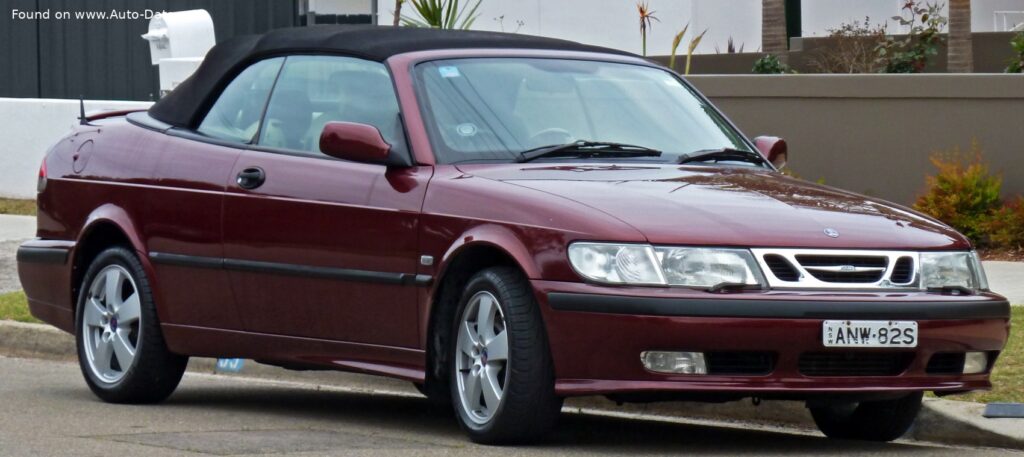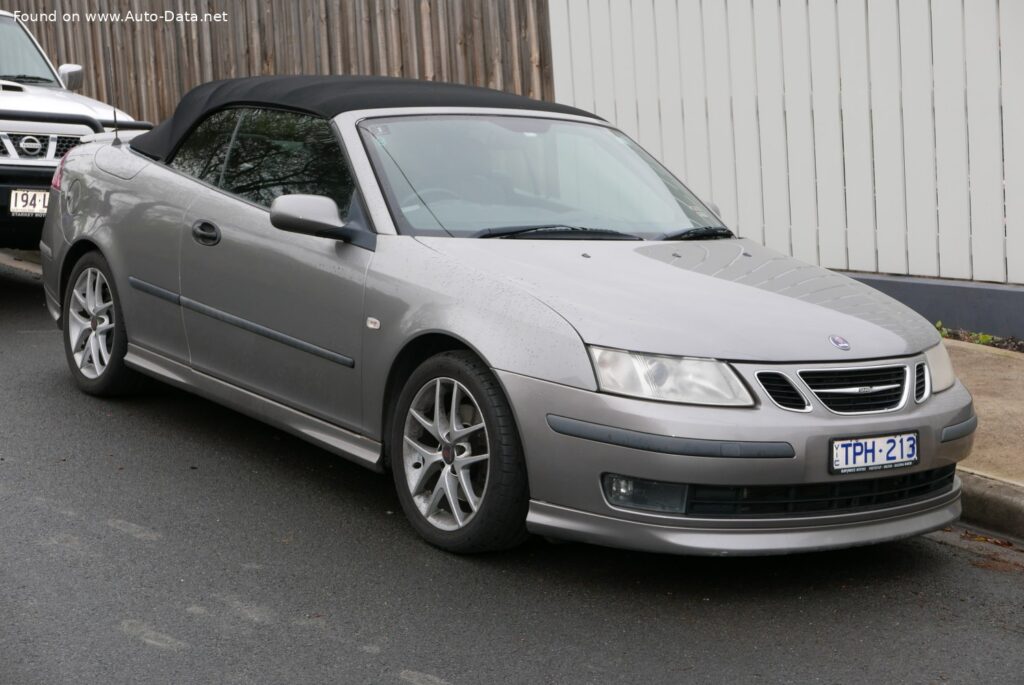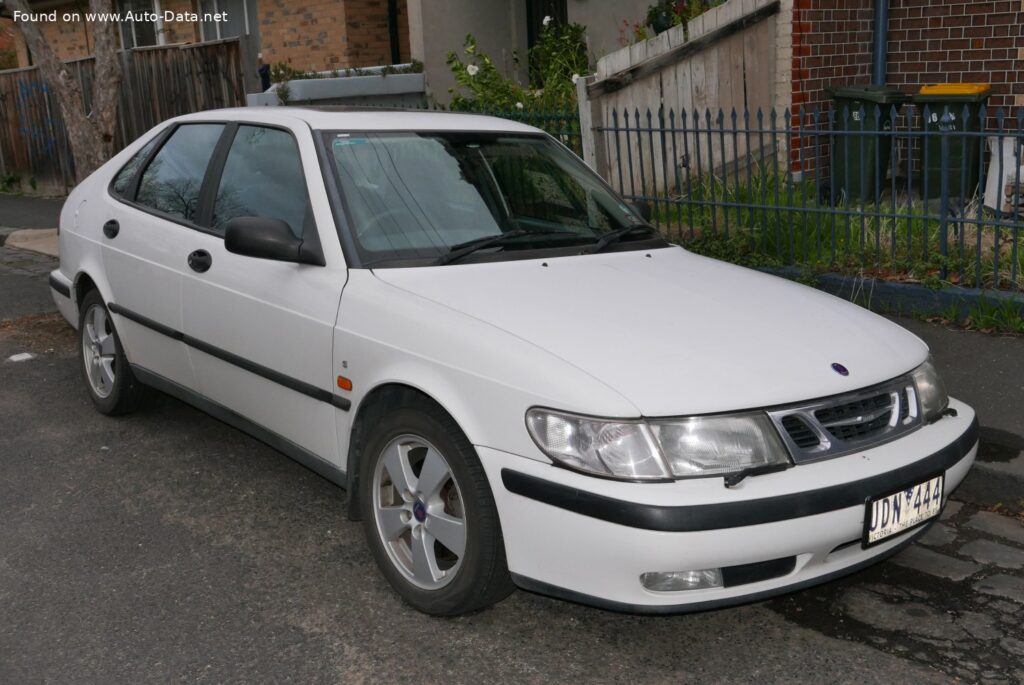
The Saab 9-3, particularly the first generation (1998–2002), represents a pivotal moment for the Swedish automaker. Positioned as a compact executive car, the 9-3 aimed to blend Scandinavian practicality with a sporty driving experience. This generation, known internally as the 9-3 I, replaced the aging Saab 900 and served as a crucial model in Saab’s lineup, competing with vehicles like the Audi A3, BMW 3 Series, and Volvo S40. The 2.0 T variant, equipped with a turbocharged 2.0-liter engine and automatic transmission, was a popular choice, offering a balance of performance and convenience. While Saab catered primarily to European markets, the 9-3 did see limited sales in the United States, appealing to buyers seeking a distinctive and somewhat unconventional alternative to mainstream brands.
Saab 9-3 I 2.0 T: A Detailed Overview
The 9-3 I represented a significant departure from its predecessor, the 900, adopting a more modern and aerodynamic design. It was available in both hatchback (often referred to as a five-door) and sedan (four-door) body styles, catering to different consumer preferences. The 2.0 T model, as the name suggests, featured a 2.0-liter turbocharged engine, which became a hallmark of Saab’s engineering philosophy. This engine provided a noticeable performance boost compared to naturally aspirated alternatives, delivering a spirited driving experience. The availability of an automatic transmission broadened its appeal to a wider range of drivers.
Engine & Performance
At the heart of the Saab 9-3 I 2.0 T lies the B205R engine, a 1,985 cc (121.13 cubic inches) inline-four cylinder powerplant. This engine utilizes a low-pressure turbocharger to deliver 205 horsepower at 5,500 rpm and 280 Nm (206.52 lb-ft) of torque at 2,200 rpm. The turbocharger significantly enhances the engine’s responsiveness and provides strong acceleration across a broad rev range. The engine features multi-port fuel injection and a double overhead camshaft (DOHC) valvetrain with four valves per cylinder, contributing to its efficiency and power output. The 0-60 mph acceleration time is approximately 8.6 seconds, and it achieves a maximum speed of 235 km/h (146.02 mph). The weight-to-power ratio of 6.7 kg/Hp and weight-to-torque ratio of 4.9 kg/Nm demonstrate a respectable power-to-weight balance for its time. Fuel economy is rated at 14.7 l/100 km (16 US mpg) in urban conditions and 7.7 l/100 km (30.5 US mpg) on the extra-urban cycle.
Design & Features
The Saab 9-3 I boasts a distinctive Scandinavian design aesthetic. The hatchback body style, particularly, offers a practical and versatile cargo area. The interior is characterized by a driver-focused layout, reflecting Saab’s commitment to ergonomics and functionality. Safety was a key consideration in the 9-3’s design, and it included features such as Anti-lock Braking System (ABS) as standard equipment. The car’s dimensions are 4,629 mm (182.24 inches) in length, 1,711 mm (67.36 inches) in width, and 1,428 mm (56.22 inches) in height, with a wheelbase of 2,605 mm (102.56 inches). Trunk space ranges from 494 liters (17.45 cubic feet) with the rear seats up to 1,314 liters (46.4 cubic feet) with the seats folded down, providing ample room for luggage and cargo. The car rides on 205/50 R16 tires mounted on 16-inch wheel rims. Hydraulic power steering and a steering rack and pinion system provide responsive and precise handling.
Technical Specifications
| Brand | Saab |
| Model | 9-3 |
| Generation | 9-3 I |
| Type (Engine) | 2.0 T (205 Hp) Automatic |
| Start of production | 2000 |
| End of production | 2002 |
| Powertrain Architecture | Internal Combustion engine |
| Body type | Hatchback |
| Seats | 5 |
| Doors | 3-5 |
| Fuel consumption (urban) | 14.7 l/100 km (16 US mpg, 19.2 UK mpg) |
| Fuel consumption (extra urban) | 7.7 l/100 km (30.5 US mpg, 36.7 UK mpg) |
| Fuel Type | Petrol (Gasoline) |
| Acceleration 0 – 100 km/h | 9 sec |
| Acceleration 0 – 62 mph | 9 sec |
| Acceleration 0 – 60 mph | 8.6 sec |
| Maximum speed | 235 km/h (146.02 mph) |
| Weight-to-power ratio | 6.7 kg/Hp |
| Weight-to-torque ratio | 4.9 kg/Nm |
| Power | 205 Hp @ 5500 rpm |
| Power per litre | 103.3 Hp/l |
| Torque | 280 Nm @ 2200 rpm (206.52 lb.-ft. @ 2200 rpm) |
| Engine layout | Front, Transverse |
| Engine Model/Code | B205R |
| Engine displacement | 1985 cm3 (121.13 cu. in.) |
| Number of cylinders | 4 |
| Engine configuration | Inline |
| Cylinder Bore | 90 mm (3.54 in.) |
| Piston Stroke | 78 mm (3.07 in.) |
| Compression ratio | 8.8:1 |
| Number of valves per cylinder | 4 |
| Fuel injection system | Multi-port manifold injection |
| Engine aspiration | Turbocharger |
| Valvetrain | DOHC |
| Engine oil capacity | 4 l (4.23 US qt | 3.52 UK qt) |
| Coolant capacity | 8.5 l (8.98 US qt | 7.48 UK qt) |
| Kerb Weight | 1380 kg (3042.38 lbs.) |
| Max. weight | 1910 kg (4210.83 lbs.) |
| Max load | 530 kg (1168.45 lbs.) |
| Trunk (boot) space – minimum | 494 l (17.45 cu. ft.) |
| Trunk (boot) space – maximum | 1314 l (46.4 cu. ft.) |
| Fuel tank capacity | 64 l (16.91 US gal | 14.08 UK gal) |
| Length | 4629 mm (182.24 in.) |
| Width | 1711 mm (67.36 in.) |
| Height | 1428 mm (56.22 in.) |
| Wheelbase | 2605 mm (102.56 in.) |
| Front track | 1452 mm (57.17 in.) |
| Rear track | 1442 mm (56.77 in.) |
| Drivetrain Architecture | Front wheel drive |
| Number of gears | 4 |
| Gearbox type | Automatic transmission |
| Front suspension | Spring Strut |
| Rear suspension | Coil spring |
| Front brakes | Ventilated discs |
| Rear brakes | Disc |
| Assisting systems | ABS (Anti-lock braking system) |
| Steering type | Steering rack and pinion |
| Power steering | Hydraulic Steering |
| Tires size | 205/50 R16 |
| Wheel rims size | 16 |
The Saab 9-3 I 2.0 T, while no longer in production, remains a fondly remembered vehicle for its unique character, blend of performance and practicality, and distinctive Scandinavian design. It represents a significant chapter in Saab’s history and continues to appeal to enthusiasts who appreciate its individuality and engineering prowess.