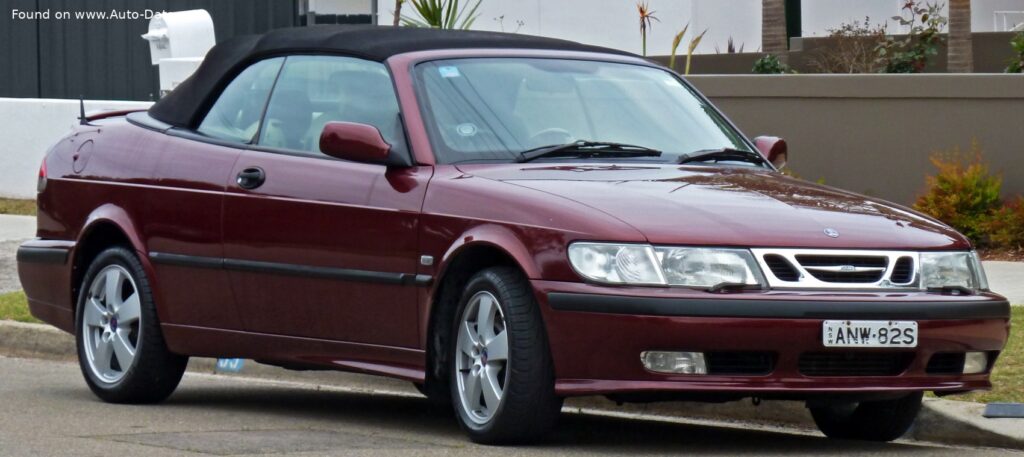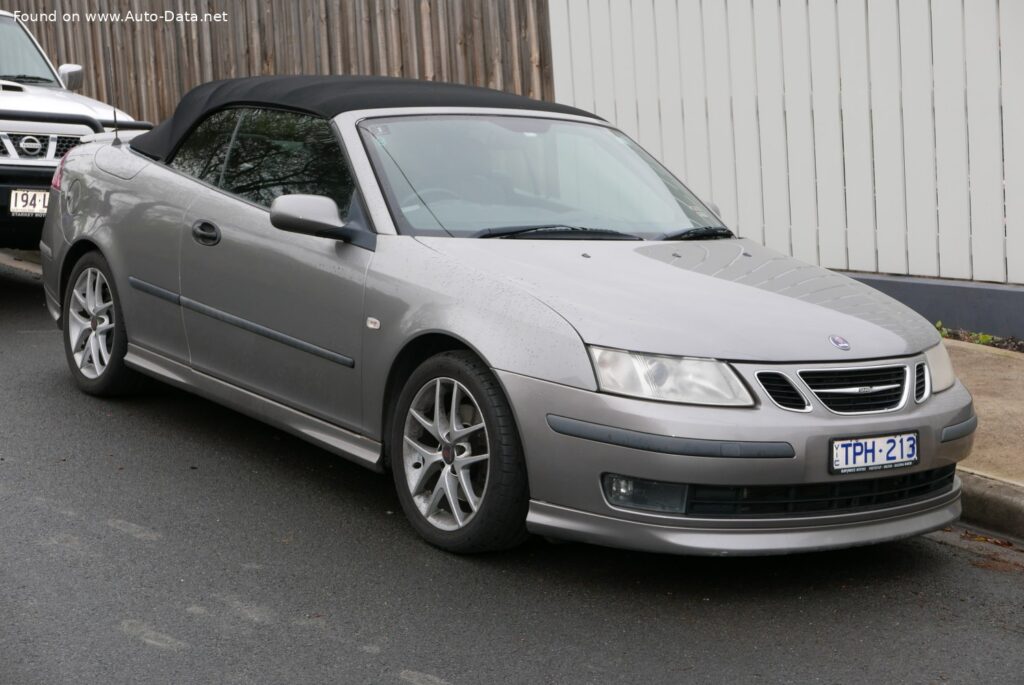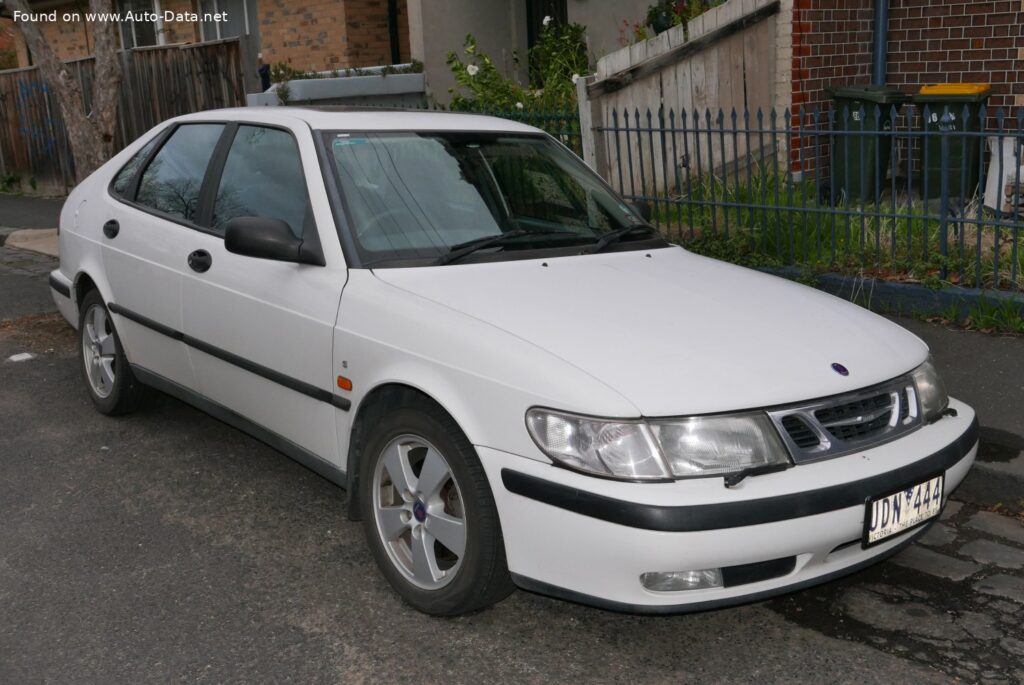
The Saab 9-3 I 2.0i, produced between 1998 and 2002, represents the first generation of Saab’s popular compact executive car. Replacing the Saab 900, the 9-3 aimed to blend Saab’s traditional Scandinavian design principles with a more modern and globally competitive package. Available in both hatchback (often referred to as a “SportSedan” by Saab) and sedan body styles, the 9-3 I was positioned as a premium alternative to mainstream European and Japanese competitors like the Ford Focus, Volkswagen Golf, and Honda Civic. While Saab was a relatively niche brand, particularly in the United States, the 9-3 I established a loyal following due to its distinctive styling, robust engineering, and focus on driver safety.
Saab 9-3 I: A Scandinavian Approach to the Compact Executive Segment
The first generation 9-3 was a crucial model for Saab, marking a transition in design and engineering philosophy. It sought to retain the brand’s unique identity while appealing to a broader audience. The 2.0i variant, equipped with a naturally aspirated 2.0-liter inline-four engine producing 130 horsepower, was a common offering in European markets. It provided a balance of performance and fuel efficiency, catering to drivers seeking a comfortable and refined driving experience. The 9-3 I was never a high-volume seller in the US, but it gained a dedicated following among enthusiasts who appreciated its quirky character and engineering integrity.
Engine & Performance
The heart of the Saab 9-3 I 2.0i is its B204i 1.985-liter inline-four cylinder engine. This naturally aspirated powerplant delivers 130 horsepower at 6,100 rpm and 177 Nm (130.55 lb.-ft.) of torque at 4,300 rpm. The engine features multi-port fuel injection and a double overhead camshaft (DOHC) valvetrain with four valves per cylinder, contributing to its relatively smooth operation and respectable power output for its displacement. Acceleration from 0 to 100 km/h (0-62 mph) takes approximately 11 seconds, while 0 to 60 mph is achieved in around 10.5 seconds. The car boasts a maximum speed of 200 km/h (124.27 mph). The engine’s power-to-weight ratio is 100.4 horsepower per tonne, and the torque-to-weight ratio is 136.7 Nm per tonne. Power per liter is rated at 65.5 hp/l. The engine is transversely mounted at the front of the vehicle, driving the front wheels through a five-speed manual transmission.
Design & Features
The Saab 9-3 I is instantly recognizable by its distinctive styling, characterized by a wraparound dashboard, a sloping hood, and a generally aerodynamic profile. The hatchback body style, in particular, offered a practical and versatile cargo area. The interior prioritized ergonomics and driver comfort, with a focus on clear instrumentation and intuitive controls. Safety was a key consideration in the 9-3’s design, and it included features such as Anti-lock Braking System (ABS) as standard equipment. The car’s dimensions are 4,629 mm (182.24 in) in length, 1,711 mm (67.36 in) in width, and 1,428 mm (56.22 in) in height, with a wheelbase of 2,605 mm (102.56 in). The trunk offers a minimum of 494 liters (17.45 cu. ft.) of space, expanding to 1,314 liters (46.4 cu. ft.) with the rear seats folded down. The kerb weight is 1,295 kg (2,854.99 lbs), with a maximum permissible weight of 1,860 kg (4,100.6 lbs). The fuel tank capacity is 68 liters (17.96 US gal).
Technical Specifications
| Brand | Saab |
| Model | 9-3 |
| Generation | 9-3 I |
| Type (Engine) | 2.0i (130 Hp) |
| Start of production | 1998 |
| End of production | 2002 |
| Powertrain Architecture | Internal Combustion engine |
| Body type | Hatchback |
| Seats | 5 |
| Doors | 3-5 |
| Fuel consumption (urban) | 13.1 l/100 km (18 US mpg, 21.6 UK mpg) |
| Fuel consumption (extra urban) | 6.9 l/100 km (34.1 US mpg, 40.9 UK mpg) |
| Fuel Type | Petrol (Gasoline) |
| Acceleration 0 – 100 km/h | 11 sec |
| Acceleration 0 – 62 mph | 11 sec |
| Acceleration 0 – 60 mph | 10.5 sec |
| Maximum speed | 200 km/h (124.27 mph) |
| Weight-to-power ratio | 10 kg/Hp |
| Weight-to-torque ratio | 7.3 kg/Nm |
| Power | 130 Hp @ 6100 rpm |
| Torque | 177 Nm @ 4300 rpm (130.55 lb.-ft. @ 4300 rpm) |
| Engine layout | Front, Transverse |
| Engine Model/Code | B204i |
| Engine displacement | 1985 cm3 (121.13 cu. in.) |
| Number of cylinders | 4 |
| Engine configuration | Inline |
| Cylinder Bore | 90 mm (3.54 in.) |
| Piston Stroke | 78 mm (3.07 in.) |
| Compression ratio | 10.1:1 |
| Number of valves per cylinder | 4 |
| Fuel injection system | Multi-port manifold injection |
| Engine aspiration | Naturally aspirated engine |
| Valvetrain | DOHC |
| Engine oil capacity | 4 l (4.23 US qt | 3.52 UK qt) |
| Coolant capacity | 8.5 l (8.98 US qt | 7.48 UK qt) |
| Kerb Weight | 1295 kg (2854.99 lbs.) |
| Max. weight | 1860 kg (4100.6 lbs.) |
| Max load | 565 kg (1245.61 lbs.) |
| Trunk (boot) space – minimum | 494 l (17.45 cu. ft.) |
| Trunk (boot) space – maximum | 1314 l (46.4 cu. ft.) |
| Fuel tank capacity | 68 l (17.96 US gal | 14.96 UK gal) |
| Length | 4629 mm (182.24 in.) |
| Width | 1711 mm (67.36 in.) |
| Height | 1428 mm (56.22 in.) |
| Wheelbase | 2605 mm (102.56 in.) |
| Front track | 1452 mm (57.17 in.) |
| Rear (Back) track | 1442 mm (56.77 in.) |
| Drivetrain Architecture | Front wheel drive |
| Number of gears and type of gearbox | 5 gears, manual transmission |
| Front suspension | Spring Strut |
| Rear suspension | Coil spring |
| Front brakes | Ventilated discs |
| Rear brakes | Disc |
| Assisting systems | ABS (Anti-lock braking system) |
| Steering type | Steering rack and pinion |
| Power steering | Hydraulic Steering |
| Tires size | 185/65 R15 |
| Wheel rims size | 6J x 15 |
The Saab 9-3 I 2.0i, while not a performance leader, offered a compelling package of Scandinavian design, practicality, and safety. It remains a fondly remembered model for Saab enthusiasts, representing a unique chapter in the brand’s history.