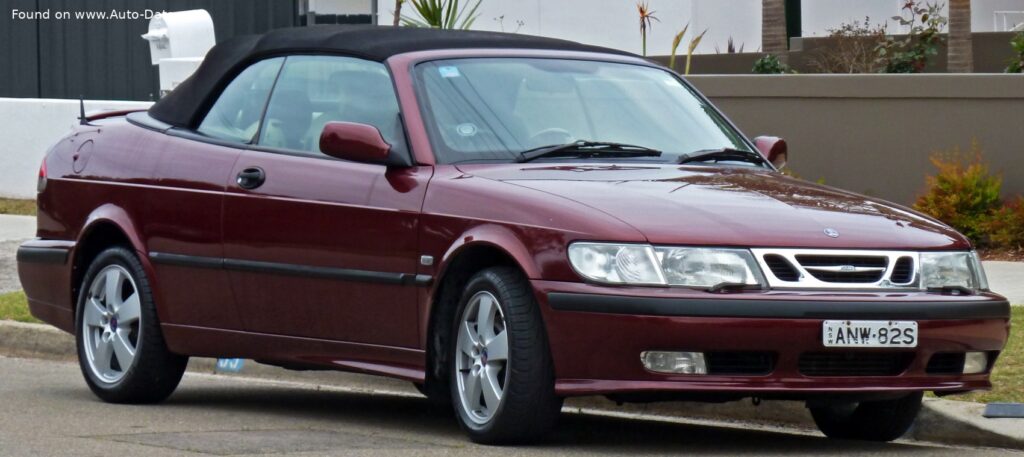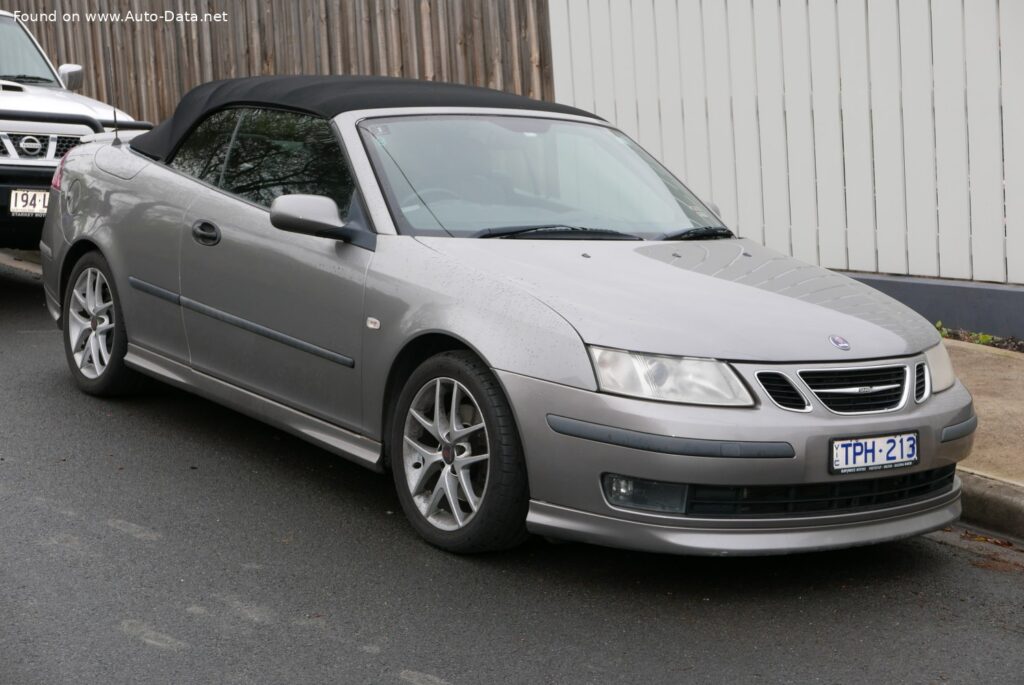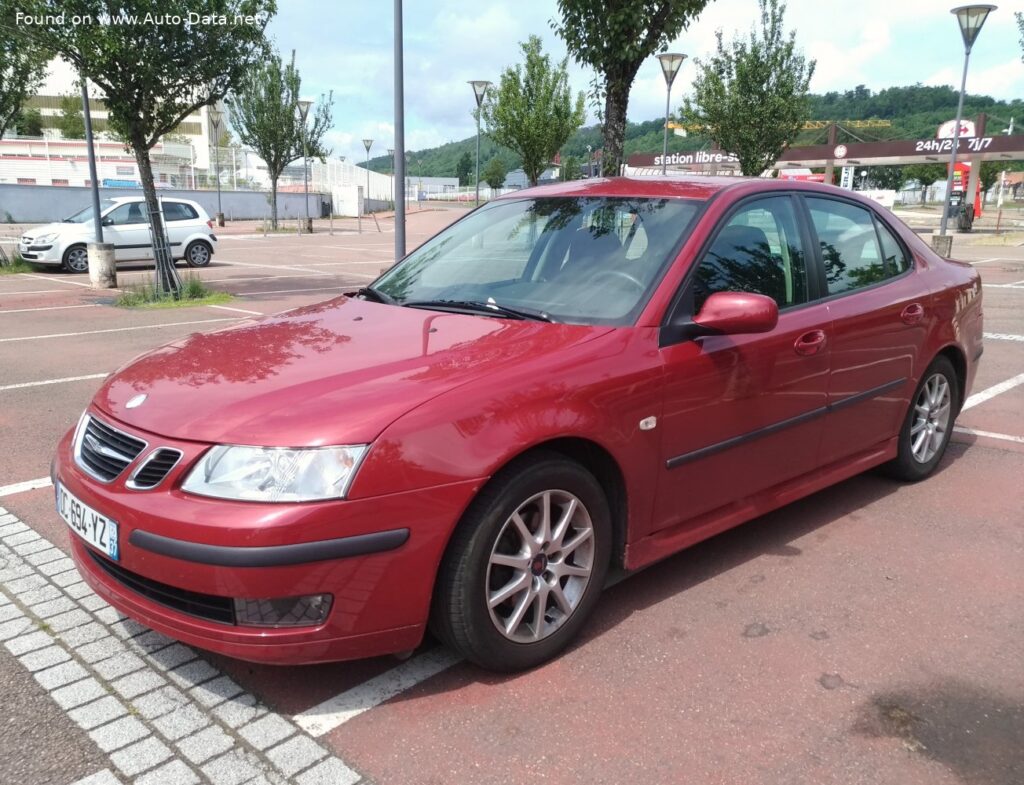
The Saab 9-3 Sedan II 1.8 i 16V, produced between 2005 and 2007, represents a significant iteration in Saab’s compact executive car lineage. This generation of the 9-3, while not achieving the sales success of some competitors, offered a distinctive blend of Scandinavian design, safety innovation, and a focus on driver engagement. Positioned as a four-door sedan, it aimed to provide a practical yet premium alternative within the crowded D-segment, competing with vehicles like the Audi A4, BMW 3 Series, and Mercedes-Benz C-Class. While Saab as a brand ultimately faced financial difficulties, the 9-3 Sedan II remains a notable example of the company’s engineering and design philosophy.
Saab 9-3 Sedan II: A Detailed Overview
The 9-3 Sedan II was a crucial model for Saab during a period of General Motors ownership. GM’s influence is evident in the platform sharing with other GM vehicles, but Saab retained its unique character through distinctive styling and a commitment to a specific driving experience. The 1.8 i 16V variant, equipped with a 1.8-liter naturally aspirated engine, was designed to offer a balance between fuel efficiency and acceptable performance for everyday driving. It served as an entry point into the 9-3 range, appealing to buyers prioritizing practicality and value.
Engine & Performance
The heart of the Saab 9-3 Sedan II 1.8 i 16V is a 1.8-liter inline-four cylinder engine, designated the Z18XE. This engine produces 122 horsepower at 5800 rpm and 167 Nm (123.17 lb.-ft.) of torque at 3800 rpm. While not a powerhouse, the engine provides adequate performance for typical commuting and highway driving. Acceleration from 0 to 100 km/h (0-62 mph) takes 11.5 seconds, and 0 to 60 mph is achieved in approximately 10.9 seconds. The engine’s naturally aspirated design and multi-port fuel injection contribute to a relatively smooth and linear power delivery. The engine’s power-to-weight ratio is 11.3 kg/Hp, and the power per liter is 67.9 Hp/l. The engine is transversely mounted at the front of the vehicle, driving the front wheels through a five-speed manual transmission. Maximum speed is rated at 200 km/h (124.27 mph).
Design & Features
The Saab 9-3 Sedan II boasts a distinctive exterior design characterized by its wraparound windshield, sculpted body lines, and a generally aerodynamic profile. The sedan body style offers a practical combination of passenger space and cargo capacity. Inside, the 9-3 features a driver-focused cockpit, a hallmark of Saab design. The interior prioritizes ergonomics and functionality, with controls logically arranged for ease of use. Standard features typically included air conditioning, power windows, and a basic audio system. Safety was a key consideration, and the 9-3 Sedan II was equipped with ABS (Anti-lock Braking System) as standard. The trunk offers 425 liters (15.01 cu. ft.) of storage space, providing ample room for luggage and other cargo. The vehicle’s dimensions are 4635 mm (182.48 in.) in length, 1762 mm (69.37 in.) in width, and 1466 mm (57.72 in.) in height, with a wheelbase of 2675 mm (105.31 in.).
Technical Specifications
| Brand | Saab |
| Model | 9-3 |
| Generation | 9-3 Sedan II |
| Type (Engine) | 1.8 i 16V (122 Hp) |
| Start of production | 2005 |
| End of production | 2007 |
| Powertrain Architecture | Internal Combustion engine |
| Body type | Sedan |
| Seats | 5 |
| Doors | 4 |
| Fuel consumption (urban) | 10.7 l/100 km (22 US mpg / 26.4 UK mpg / 9.3 km/l) |
| Fuel consumption (extra urban) | 6.2 l/100 km (37.9 US mpg / 45.6 UK mpg / 16.1 km/l) |
| Fuel Type | Petrol (Gasoline) |
| Acceleration 0 – 100 km/h | 11.5 sec |
| Acceleration 0 – 62 mph | 11.5 sec |
| Acceleration 0 – 60 mph | 10.9 sec |
| Maximum speed | 200 km/h (124.27 mph) |
| Weight-to-power ratio | 11.3 kg/Hp |
| Weight-to-torque ratio | 8.3 kg/Nm |
| Power | 122 Hp @ 5800 rpm |
| Torque | 167 Nm @ 3800 rpm (123.17 lb.-ft. @ 3800 rpm) |
| Engine layout | Front, Transverse |
| Engine Model/Code | Z18XE |
| Engine displacement | 1797 cm3 (109.66 cu. in.) |
| Number of cylinders | 4 |
| Engine configuration | Inline |
| Cylinder Bore | 80.5 mm (3.17 in.) |
| Piston Stroke | 88.5 mm (3.48 in.) |
| Compression ratio | 10.5:1 |
| Number of valves per cylinder | 4 |
| Fuel injection system | Multi-port manifold injection |
| Engine aspiration | Naturally aspirated engine |
| Valvetrain | DOHC |
| Engine oil capacity | 4.3 l (4.54 US qt | 3.78 UK qt) |
| Coolant | 6.8 l (7.19 US qt | 5.98 UK qt) |
| Kerb Weight | 1380 kg (3042.38 lbs.) |
| Max. weight | 1910 kg (4210.83 lbs.) |
| Max load | 530 kg (1168.45 lbs.) |
| Trunk (boot) space – minimum | 425 l (15.01 cu. ft.) |
| Fuel tank capacity | 62 l (16.38 US gal | 13.64 UK gal) |
| Length | 4635 mm (182.48 in.) |
| Width | 1762 mm (69.37 in.) |
| Height | 1466 mm (57.72 in.) |
| Wheelbase | 2675 mm (105.31 in.) |
| Front track | 1524 mm (60 in.) |
| Rear (Back) track | 1506 mm (59.29 in.) |
| Drivetrain Architecture | ICE drives front wheels |
| Drive wheel | Front wheel drive |
| Number of gears and type of gearbox | 5 gears, manual transmission |
| Front suspension | Spring Strut |
| Rear suspension | Coil spring |
| Front brakes | Ventilated discs |
| Rear brakes | Disc |
| Assisting systems | ABS (Anti-lock braking system) |
| Steering type | Steering rack and pinion |
| Power steering | Hydraulic Steering |
| Tires size | 215/65 R15 |
| Wheel rims size | 15 |
The Saab 9-3 Sedan II 1.8 i 16V, despite its relatively modest performance figures, offered a compelling package for buyers seeking a stylish, safe, and comfortable compact executive car. While the Saab brand ultimately ceased production, the 9-3 Sedan II remains a testament to the company’s commitment to innovation and its unique approach to automotive design.