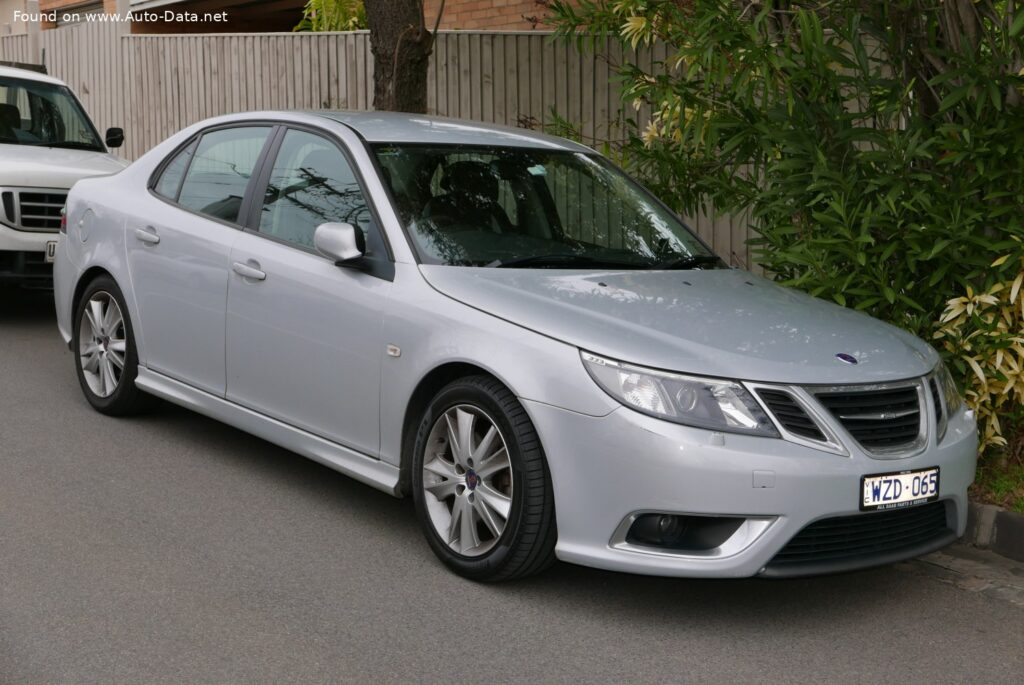
The Saab 9-3 Sedan II, specifically the facelifted version introduced in 2007, represents a significant evolution of Saab’s compact executive car. Positioned as a competitor to vehicles like the BMW 3 Series, Audi A4, and Volvo S60, the 9-3 aimed to deliver a unique blend of Scandinavian design, innovative safety features, and engaging driving dynamics. This generation, produced from 2007 to 2010, saw updates to the exterior styling, interior refinement, and powertrain options, including the 1.8t Biopower variant detailed here. The 9-3 held a particular niche in the European market, where Saab cultivated a loyal following, but saw limited sales success in the United States.
Saab 9-3 Sedan II (2007-2010): A Detailed Overview
The 2007 facelift brought a more contemporary aesthetic to the 9-3, with revised front and rear fascias, updated interior materials, and enhanced equipment levels. The 1.8t Biopower engine was a key offering, particularly in Sweden and other European countries promoting biofuel usage. This engine was designed to run on both gasoline and ethanol (E85), offering drivers a choice based on availability and cost. The Biopower system allowed for optimized performance and reduced emissions when utilizing ethanol blends.
Engine & Performance
The heart of the Saab 9-3 Sedan II 1.8t Biopower is a 1.8-liter turbocharged inline-four cylinder engine, designated the B207E. This engine produces 175 horsepower at 5500 rpm and 265 Nm (195.45 lb.-ft.) of torque at 2500 rpm. The turbocharger and intercooler work in concert to deliver responsive acceleration and a broad torque curve. The engine’s specific output is 97.4 horsepower per liter, demonstrating its relatively high level of tuning. The 1.8t Biopower’s flexibility to run on gasoline or ethanol blends provided a practical advantage in regions with established biofuel infrastructure. Performance figures include a 0-100 km/h (0-62 mph) acceleration time of 8.4 seconds and a maximum speed of 210 km/h (130.49 mph). The engine is transversely mounted at the front of the vehicle, driving the front wheels through a six-speed manual transmission.
Design & Features
The Saab 9-3 Sedan II maintains the brand’s distinctive design language, characterized by clean lines, a wraparound cabin, and a focus on aerodynamic efficiency. The four-door sedan body style offers practical space for five occupants and a trunk capacity of 425 liters (15.01 cubic feet). The 2007 facelift refined the exterior with a more prominent grille, redesigned headlights, and updated taillights. Inside, the cabin prioritized driver comfort and functionality. Key features included a driver-focused dashboard layout, supportive seats, and a range of available options such as leather upholstery, premium audio systems, and navigation. Safety was a core tenet of Saab’s engineering philosophy, and the 9-3 was equipped with ABS (Anti-lock Braking System) as standard. The vehicle’s kerb weight of 1440 kg (3174.66 lbs) contributes to its handling characteristics. The dimensions of the vehicle are 4635 mm (182.48 in) in length, 1762 mm (69.37 in) in width, and 1466 mm (57.72 in) in height.
Technical Specifications
| Brand | Saab |
| Model | 9-3 |
| Generation | 9-3 Sedan II (facelift 2007) |
| Type (Engine) | 1.8t Biopower (175 Hp) |
| Start of production | June, 2007 |
| End of production | December, 2010 |
| Powertrain Architecture | Internal Combustion engine |
| Body type | Sedan |
| Seats | 5 |
| Doors | 4 |
| Fuel consumption (urban) | 13.9 l/100 km (16.9 US mpg, 20.3 UK mpg, 7.2 km/l) |
| Fuel consumption (extra urban) | 7.2 l/100 km (32.7 US mpg, 39.2 UK mpg, 13.9 km/l) |
| Fuel consumption (combined) | 9.6 l/100 km (24.5 US mpg, 29.4 UK mpg, 10.4 km/l) |
| Fuel Type | Petrol (Gasoline) |
| Acceleration 0 – 100 km/h | 8.4 sec |
| Acceleration 0 – 62 mph | 8.4 sec |
| Acceleration 0 – 60 mph | 8 sec |
| Maximum speed | 210 km/h (130.49 mph) |
| Emission standard | Euro 4 |
| Weight-to-power ratio | 8.2 kg/Hp, 121.5 Hp/tonne |
| Weight-to-torque ratio | 5.4 kg/Nm, 184 Nm/tonne |
| Power | 175 Hp @ 5500 rpm |
| Power per litre | 97.4 Hp/l |
| Torque | 265 Nm @ 2500 rpm (195.45 lb.-ft. @ 2500 rpm) |
| Engine layout | Front, Transverse |
| Engine Model/Code | B207E |
| Engine displacement | 1796 cm3 (109.6 cu. in.) |
| Number of cylinders | 4 |
| Engine configuration | Inline |
| Cylinder Bore | 80.5 mm (3.17 in.) |
| Piston Stroke | 88.2 mm (3.47 in.) |
| Compression ratio | 10.5:1 |
| Number of valves per cylinder | 4 |
| Fuel injection system | Multi-port manifold injection |
| Engine aspiration | Turbocharger, Intercooler |
| Valvetrain | DOHC |
| Engine oil capacity | 6 l (6.34 US qt | 5.28 UK qt) |
| Coolant | 7.5 l (7.93 US qt | 6.6 UK qt) |
| Kerb Weight | 1440 kg (3174.66 lbs.) |
| Max. weight | 1970 kg (4343.11 lbs.) |
| Max load | 530 kg (1168.45 lbs.) |
| Trunk (boot) space – minimum | 425 l (15.01 cu. ft.) |
| Fuel tank capacity | 62 l (16.38 US gal | 13.64 UK gal) |
| Length | 4635 mm (182.48 in.) |
| Width | 1762 mm (69.37 in.) |
| Height | 1466 mm (57.72 in.) |
| Wheelbase | 2675 mm (105.31 in.) |
| Front track | 1524 mm (60 in.) |
| Rear (Back) track | 1506 mm (59.29 in.) |
| Drivetrain Architecture | The Internal combustion engine (ICE) drives the front wheels of the vehicle. |
| Drive wheel | Front wheel drive |
| Number of gears and type of gearbox | 6 gears, manual transmission |
| Front suspension | Spring Strut |
| Rear suspension | Coil spring |
| Front brakes | Ventilated discs |
| Rear brakes | Disc |
| Assisting systems | ABS (Anti-lock braking system) |
| Steering type | Steering rack and pinion |
| Power steering | Hydraulic Steering |
| Tires size | 215/60 R15 |
| Wheel rims size | 15 |
The Saab 9-3 Sedan II 1.8t Biopower, despite its relatively short production run, represents a compelling example of Saab’s commitment to innovation and driver-focused engineering. While the brand ultimately faced financial difficulties, the 9-3 remains a sought-after vehicle among enthusiasts who appreciate its unique character and Scandinavian heritage.