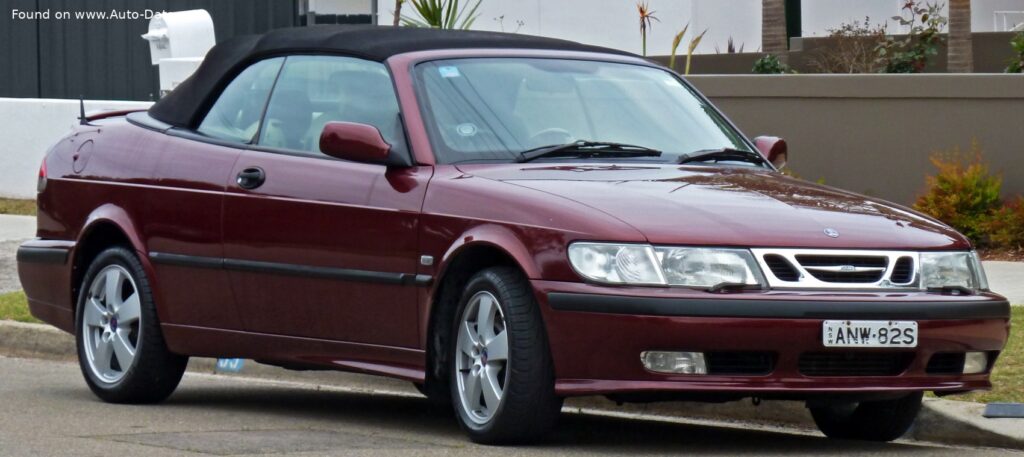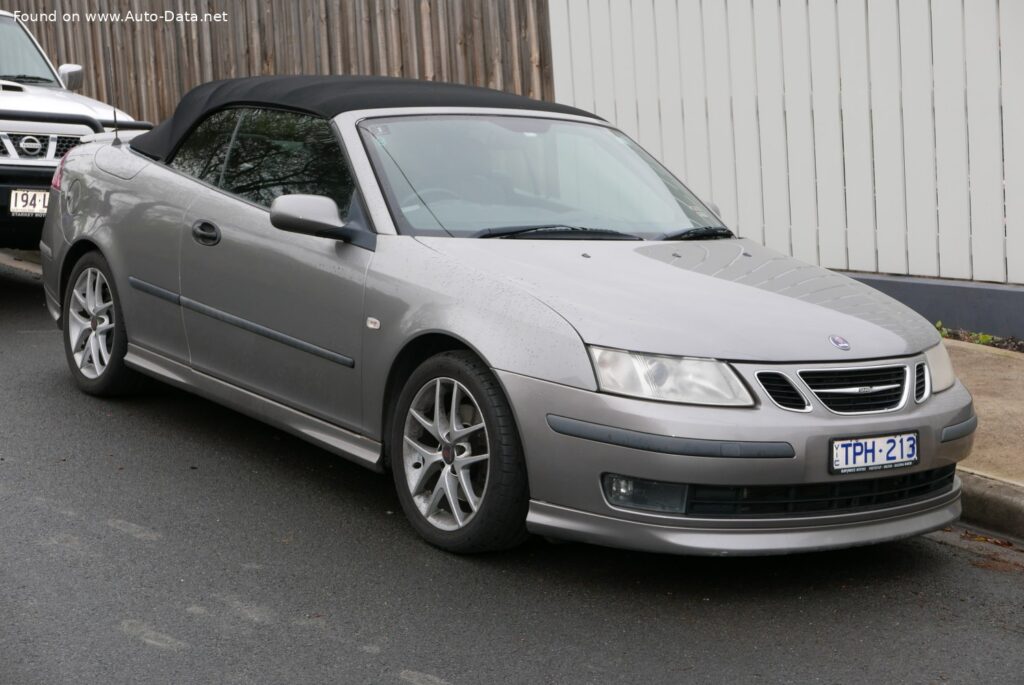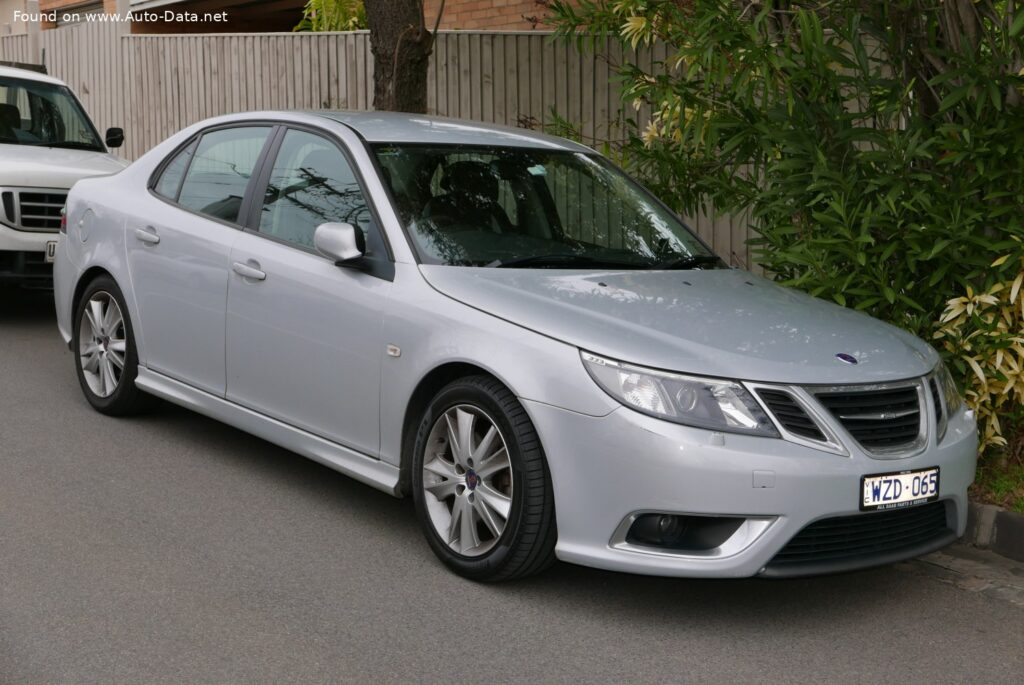
The Saab 9-3 Sedan II, particularly the facelifted version introduced in September 2007, represents a significant iteration of Saab’s compact executive car. Positioned as a competitor to vehicles like the Audi A4, BMW 3 Series, and Mercedes-Benz C-Class, the 9-3 aimed to deliver a unique blend of Scandinavian design, safety innovation, and engaging driving dynamics. This generation, produced through December 2010, saw updates to the exterior styling, interior refinement, and powertrain options, including the 1.9 TiD diesel engine detailed here. The 9-3 held a particular appeal in European markets, where diesel engines were – and continue to be – highly favored for their fuel efficiency and torque characteristics.
Saab 9-3 Sedan II (facelift 2007) 1.9 TiD: Overview
The 1.9 TiD variant of the 9-3 Sedan II was specifically tailored for markets prioritizing fuel economy and lower running costs. It featured a turbocharged diesel engine, offering a balance between performance and efficiency. The 2007 facelift brought subtle but noticeable changes to the front fascia, including a revised grille and headlights, along with interior enhancements focused on improving perceived quality and ergonomics. While Saab as a brand ultimately faced financial difficulties, the 9-3 remained a well-regarded vehicle known for its distinctive character and loyal following.
Engine & Performance
At the heart of the 9-3 1.9 TiD lies a 1.9-liter inline-four cylinder diesel engine, designated the Z19DT. This engine produces 120 horsepower at 3500 rpm and 280 Nm (206.52 lb.-ft.) of torque between 2000 and 2750 rpm. The engine utilizes a turbocharger with an intercooler to enhance power output and improve throttle response. A diesel commonrail fuel injection system ensures precise fuel delivery, contributing to both performance and fuel efficiency. The engine’s 18.01:1 compression ratio is typical for a diesel engine, maximizing combustion efficiency. Paired with a 6-speed manual transmission, the 9-3 1.9 TiD achieves a 0-100 km/h (0-62 mph) acceleration time of 11.5 seconds and a top speed of 200 km/h (124.27 mph). Calculated 0-60 mph acceleration is 10.9 seconds. The engine’s power-to-weight ratio is 13.2 kg/Hp, and the torque-to-weight ratio is 5.6 kg/Nm.
Design & Features
The Saab 9-3 Sedan II is a four-door, five-seat sedan characterized by its clean lines and understated elegance. The 2007 facelift refined the exterior, giving it a more contemporary appearance. Inside, the 9-3 offered a driver-focused cockpit with a distinctive wraparound dashboard design. Safety was a key priority for Saab, and the 9-3 incorporated features such as ABS (Anti-lock Braking System) as standard equipment. The vehicle’s independent suspension – McPherson struts at the front and a multi-link setup at the rear – aimed to provide a comfortable ride and responsive handling. Trunk space is a practical 425 liters (15.01 cu. ft.). The 9-3’s dimensions include a length of 4647 mm (182.95 in.), a width of 1762 mm (69.37 in.), and a height of 1450 mm (57.09 in.).
Technical Specifications
| Brand | Saab |
| Model | 9-3 |
| Generation | 9-3 Sedan II (facelift 2007) |
| Type (Engine) | 1.9 TiD (120 Hp) |
| Start of production | September, 2007 |
| End of production | December, 2010 |
| Powertrain Architecture | Internal Combustion engine |
| Body type | Sedan |
| Seats | 5 |
| Doors | 4 |
| Fuel consumption (urban) | 7.2 l/100 km (32.7 US mpg, 39.2 UK mpg, 13.9 km/l) |
| Fuel consumption (extra urban) | 4.4 l/100 km (53.5 US mpg, 64.2 UK mpg, 22.7 km/l) |
| Fuel consumption (combined) | 5.4 l/100 km (43.6 US mpg, 52.3 UK mpg, 18.5 km/l) |
| CO2 emissions | 147 g/km |
| Fuel Type | Diesel |
| Acceleration 0 – 100 km/h | 11.5 sec |
| Acceleration 0 – 62 mph | 11.5 sec |
| Acceleration 0 – 60 mph | 10.9 sec |
| Maximum speed | 200 km/h (124.27 mph) |
| Emission standard | Euro 4 |
| Weight-to-power ratio | 13.2 kg/Hp |
| Weight-to-torque ratio | 5.6 kg/Nm |
| Power | 120 Hp @ 3500 rpm |
| Torque | 280 Nm @ 2000-2750 rpm (206.52 lb.-ft. @ 2000-2750 rpm) |
| Engine layout | Front, Transverse |
| Engine Model/Code | Z19DT |
| Engine displacement | 1910 cm3 (116.56 cu. in.) |
| Number of cylinders | 4 |
| Engine configuration | Inline |
| Cylinder Bore | 82 mm (3.23 in.) |
| Piston Stroke | 90.4 mm (3.56 in.) |
| Compression ratio | 18.01:1 |
| Number of valves per cylinder | 2 |
| Fuel injection system | Diesel Commonrail |
| Engine aspiration | Turbocharger, Intercooler |
| Valvetrain | SOHC |
| Engine oil capacity | 4.3 l (4.54 US qt | 3.78 UK qt) |
| Coolant | 7.5 l (7.93 US qt | 6.6 UK qt) |
| Kerb Weight | 1580 kg (3483.3 lbs.) |
| Max. weight | 2030 kg (4475.38 lbs.) |
| Max load | 450 kg (992.08 lbs.) |
| Trunk (boot) space (minimum) | 425 l (15.01 cu. ft.) |
| Fuel tank capacity | 58 l (15.32 US gal | 12.76 UK gal) |
| Max. roof load | 100 kg (220.46 lbs.) |
| Permitted trailer load (with brakes) | 1500 kg (3306.93 lbs.) |
| Permitted trailer load (without brakes) | 750 kg (1653.47 lbs.) |
| Length | 4647 mm (182.95 in.) |
| Width | 1762 mm (69.37 in.) |
| Width including mirrors | 2038 mm (80.24 in.) |
| Height | 1450 mm (57.09 in.) |
| Wheelbase | 2675 mm (105.31 in.) |
| Front track | 1524 mm (60 in.) |
| Rear track | 1506 mm (59.29 in.) |
| Number of gears | 6, manual transmission |
The Saab 9-3 Sedan II 1.9 TiD, despite the eventual fate of the Saab brand, remains a compelling example of Scandinavian automotive engineering. Its combination of fuel efficiency, respectable performance, and distinctive styling continues to appeal to enthusiasts and those seeking a vehicle with a unique character.