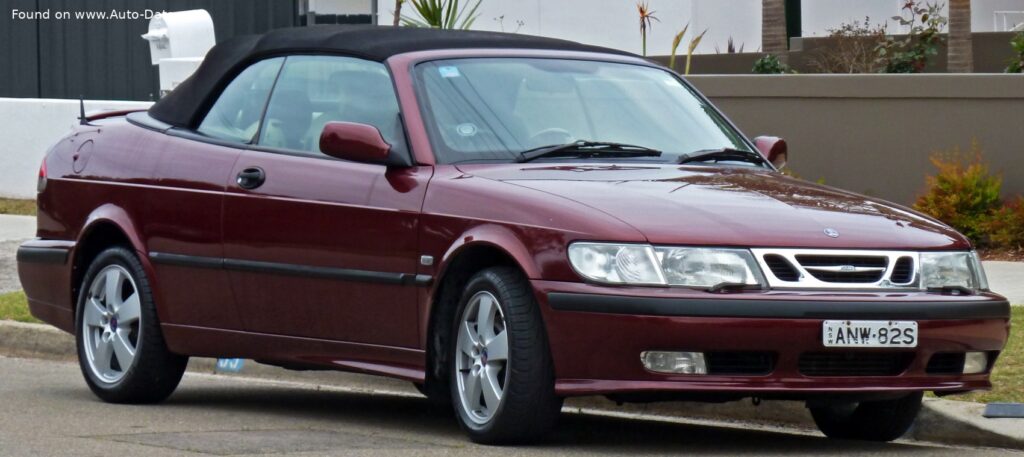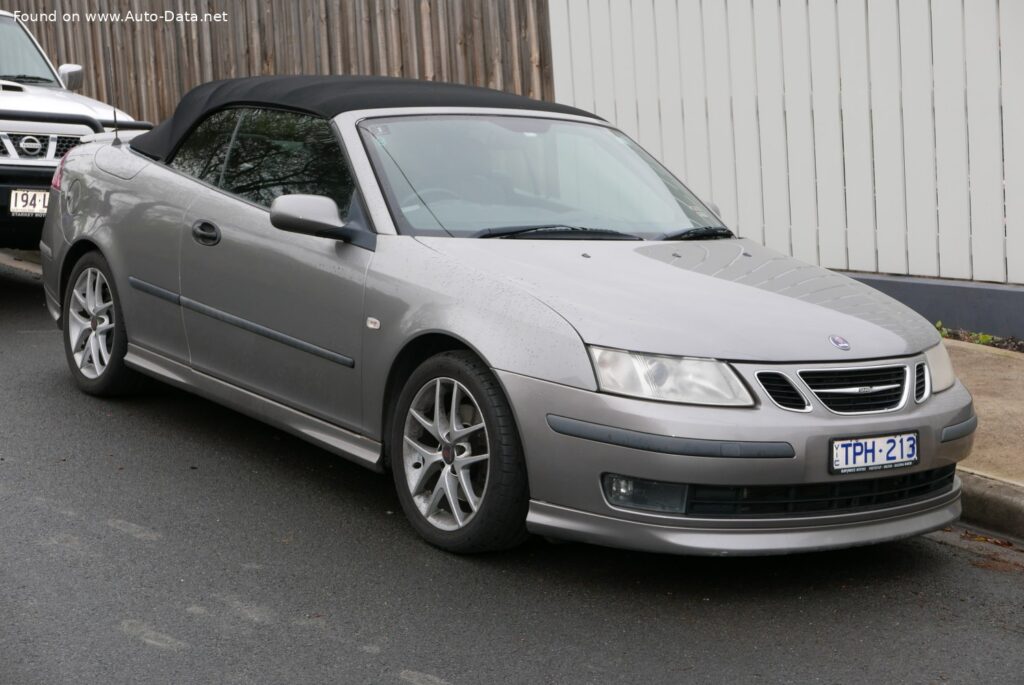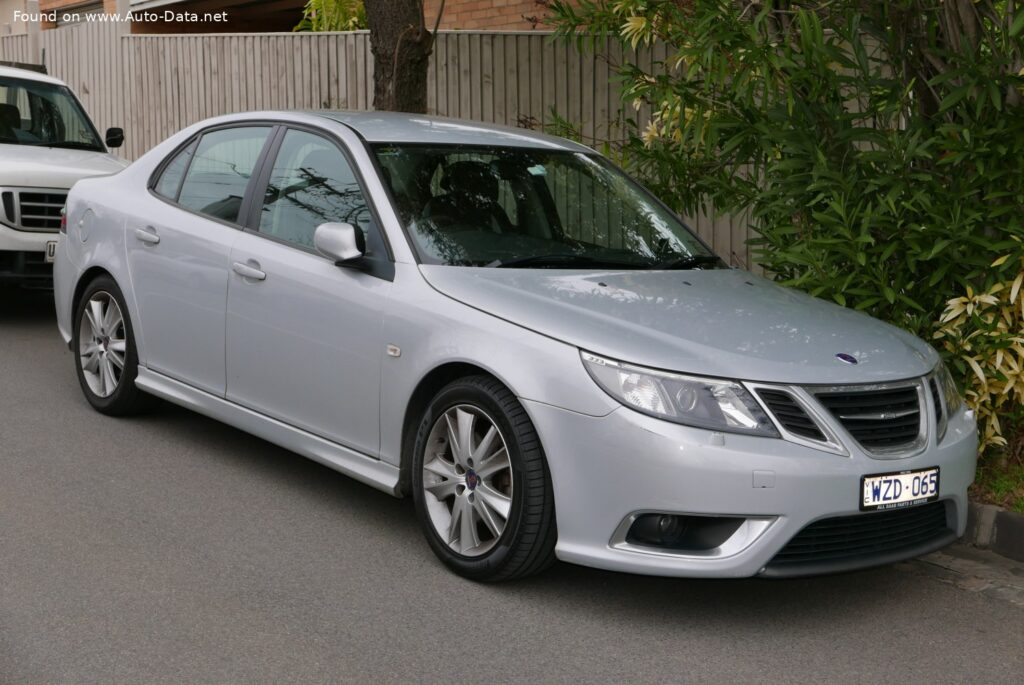
The Saab 9-3 Sedan II, particularly the facelifted version introduced in September 2007, represented a significant evolution of Saab’s compact executive car. Positioned as a competitor to vehicles like the BMW 3 Series, Audi A4, and Volvo S60, the 9-3 aimed to blend Scandinavian design with a focus on safety and driver engagement. This generation, produced through December 2010, saw Saab attempt to modernize its lineup while retaining the brand’s unique character. The 1.9 TTiD variant, powered by a twin-turbo diesel engine, was a key offering in European markets, emphasizing fuel efficiency and strong torque delivery. While Saab ceased production in 2011, the 9-3 remains a notable vehicle for its innovative features and distinctive styling.
Saab 9-3 Sedan II (2007-2010): A Detailed Overview
The 9-3 Sedan II facelift brought subtle but important changes to the original design, including revised front and rear styling, updated interior materials, and improvements to the chassis. The focus was on enhancing the car’s overall refinement and appeal. The 1.9 TTiD model specifically targeted buyers seeking a balance between performance and economy, offering a compelling alternative to gasoline-powered rivals. This model was primarily sold in Europe, where diesel engines held a larger market share and were favored for their fuel efficiency and lower running costs.
Engine & Performance
The heart of the 9-3 1.9 TTiD is its Z19DTR 1.9-liter inline-four cylinder diesel engine. This engine is notable for its twin-turbocharger configuration, which delivers a broad and usable powerband. The twin-turbo setup consists of a low-pressure turbocharger for improved responsiveness at lower engine speeds and a high-pressure turbocharger for increased power at higher RPMs. This results in a maximum power output of 180 horsepower at 4,000 rpm and a substantial 400 Newton-meters (295 lb-ft) of torque available between 1,850 and 2,750 rpm. This torque output provides strong acceleration and effortless cruising. The engine features a diesel commonrail fuel injection system and a compression ratio of 16.5:1. Acceleration from 0 to 100 km/h (0-62 mph) takes 8.5 seconds, while 0 to 60 mph is achieved in a calculated 8.1 seconds. The car boasts a top speed of 225 km/h (139.81 mph). Fuel economy is a strong point, with combined cycle consumption rated at 5.6 liters per 100 kilometers (42 US mpg or 50.4 UK mpg).
Design & Features
The Saab 9-3 Sedan II is a four-door, five-seater sedan characterized by its clean lines and distinctive Saab styling cues. The facelifted model features a more prominent grille and redesigned headlights, giving it a more contemporary appearance. Inside, the cabin is designed with a focus on ergonomics and functionality. The dashboard layout is driver-centric, with controls logically arranged for ease of use. Safety was a key consideration in the 9-3’s design, and the car is equipped with features such as ABS (Anti-lock Braking System). The interior offers a comfortable and spacious environment for both driver and passengers. Trunk space is a practical 425 liters (15.01 cubic feet). The car’s dimensions are 4647 mm (182.95 in) in length, 1762 mm (69.37 in) in width, and 1450 mm (57.09 in) in height. The wheelbase measures 2675 mm (105.31 in).
Technical Specifications
| Brand | Saab |
| Model | 9-3 |
| Generation | 9-3 Sedan II (facelift 2007) |
| Type (Engine) | 1.9 TTiD (180 Hp) |
| Start of production | September, 2007 |
| End of production | December, 2010 |
| Powertrain Architecture | Internal Combustion engine |
| Body type | Sedan |
| Seats | 5 |
| Doors | 4 |
| Fuel consumption (urban) | 7.5 l/100 km (31.4 US mpg, 37.7 UK mpg, 13.3 km/l) |
| Fuel consumption (extra urban) | 4.5 l/100 km (52.3 US mpg, 62.8 UK mpg, 22.2 km/l) |
| Fuel consumption (combined) | 5.6 l/100 km (42 US mpg, 50.4 UK mpg, 17.9 km/l) |
| CO2 emissions | 149 g/km |
| Fuel Type | Diesel |
| Acceleration 0 – 100 km/h | 8.5 sec |
| Acceleration 0 – 62 mph | 8.5 sec |
| Acceleration 0 – 60 mph | 8.1 sec |
| Maximum speed | 225 km/h (139.81 mph) |
| Emission standard | Euro 4 |
| Weight-to-power ratio | 8.9 kg/Hp, 112.1 Hp/tonne |
| Weight-to-torque ratio | 4 kg/Nm, 249.2 Nm/tonne |
| Power | 180 Hp @ 4000 rpm |
| Torque | 400 Nm @ 1850-2750 rpm (295.02 lb.-ft. @ 1850-2750 rpm) |
| Engine layout | Front, Transverse |
| Engine Model/Code | Z19DTR |
| Engine displacement | 1910 cm3 (116.56 cu. in.) |
| Number of cylinders | 4 |
| Engine configuration | Inline |
| Cylinder Bore | 82 mm (3.23 in.) |
| Piston Stroke | 90.4 mm (3.56 in.) |
| Compression ratio | 16.5:1 |
| Number of valves per cylinder | 4 |
| Fuel injection system | Diesel Commonrail |
| Engine aspiration | Twin-Turbo, Intercooler |
| Valvetrain | DOHC |
| Engine oil capacity | 4.5 l (4.76 US qt | 3.96 UK qt) |
| Coolant | 7.4 l (7.82 US qt | 6.51 UK qt) |
| Kerb Weight | 1605 kg (3538.42 lbs.) |
| Max. weight | 2060 kg (4541.52 lbs.) |
| Max load | 455 kg (1003.1 lbs.) |
| Trunk (boot) space (minimum) | 425 l (15.01 cu. ft.) |
| Fuel tank capacity | 62 l (16.38 US gal | 13.64 UK gal) |
| Max. roof load | 100 kg (220.46 lbs.) |
| Permitted trailer load (with brakes) | 1600 kg (3527.4 lbs.) |
| Permitted trailer load (without brakes) | 750 kg (1653.47 lbs.) |
| Length | 4647 mm (182.95 in.) |
| Width | 1762 mm (69.37 in.) |
| Width including mirrors | 2038 mm (80.24 in.) |
| Height | 1450 mm (57.09 in.) |
| Wheelbase | 2675 mm (105.31 in.) |
| Front track | 1524 mm (60 in.) |
| Rear track | 1506 mm (59.29 in.) |
| Front overhang | 981 mm (38.62 in.) |
| Rear overhang | 991 mm (39.02 in.) |
| Ride height (ground clearance) | 127 mm (5 in.) |
| Minimum turning circle | 10.8 m (35.43 ft.) |
| Drivetrain | Front wheel drive |
| Number of gears | 6 gears, manual transmission |
| Front suspension | Independent, type McPherson with coil spring and anti-roll bar |
| Rear suspension | Independent multi-link spring suspension with stabilizer |
| Front brakes | Ventilated discs, 302 mm |
| Rear brakes | Ventilated discs, 292 mm |
| Tires size | 215/65 R16; 225/50 R17; 235/45 R17; 225/45 R18; 235/45 R18; 235/40 R19 |
| Wheel rims size | 6.5J x 16; 7J x 17; 7.5J x 17; 7.5J x 18; 8J x 19 |