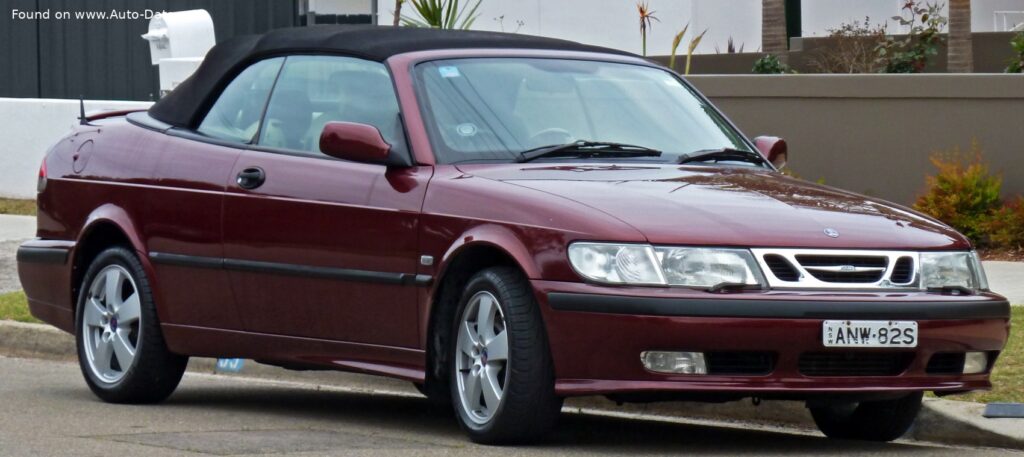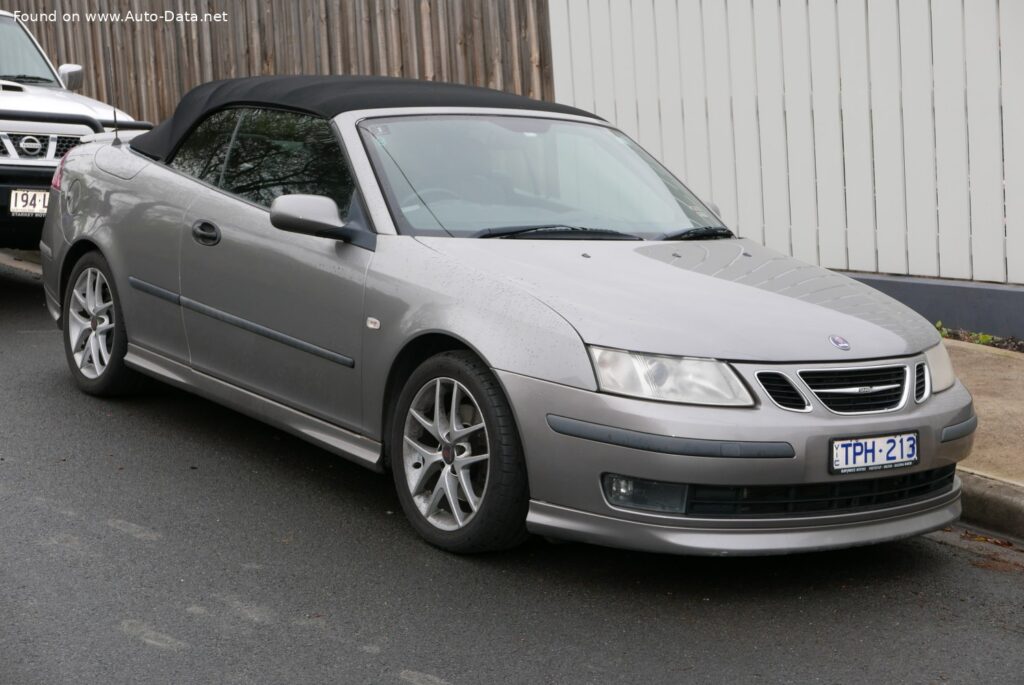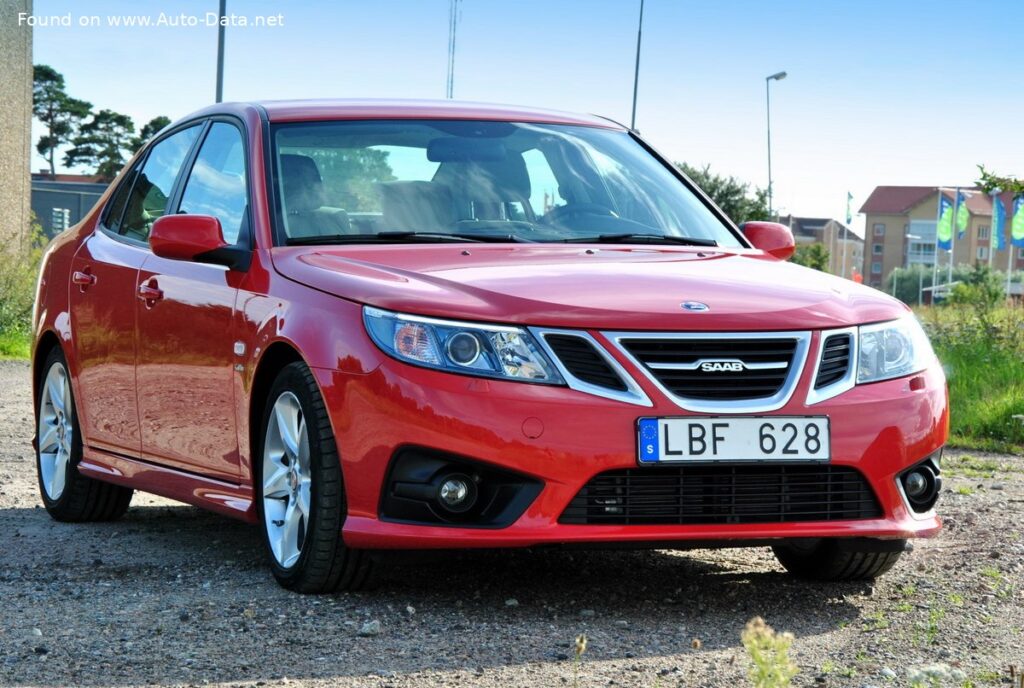
The Saab 9-3 Sedan II Griffin (facelift 2011) 2.0t BioPower XWD represents a final refinement of Saab’s compact executive car before the brand’s unfortunate demise in December 2011. This iteration, produced for a single year, aimed to blend Scandinavian design with performance and fuel efficiency, particularly appealing to the European market where Saab maintained a strong following. The 9-3 competed with vehicles like the Audi A4, BMW 3 Series, and Mercedes-Benz C-Class, offering a distinctive alternative with its focus on safety, innovative features, and a unique driving experience. The “BioPower” designation indicates the engine’s capability to run on both gasoline and ethanol, or a blend of the two, a feature popular in Sweden and other European countries.
Saab 9-3 Sedan II Griffin (2011): A Detailed Overview
The 9-3 Sedan II Griffin facelift, introduced in 2011, brought subtle but significant updates to the second-generation 9-3, which originally debuted in 2007. These changes included revised front and rear styling, interior enhancements, and improvements to the engine lineup. The 2.0t BioPower XWD model specifically combined a turbocharged four-cylinder engine with Saab’s XWD all-wheel-drive system, offering a balance of performance and all-weather capability. The XWD system was a key differentiator for Saab, providing enhanced traction and stability compared to front-wheel-drive competitors.
Engine & Performance
The heart of the 9-3 2.0t BioPower XWD is a 1.998-liter (121.93 cubic inches) inline-four cylinder engine. This engine utilizes direct fuel injection and a twin-scroll turbocharger with an intercooler to produce 163 horsepower at 4,000-6,000 rpm and 320 Nm (236.02 lb.-ft.) of torque between 1,750 and 3,500 rpm. The “BioPower” aspect of the engine allows it to operate efficiently on gasoline, E85 ethanol, or any mixture thereof. When running on E85, the engine’s output can be increased due to the fuel’s higher octane rating and cooling effect. Power is delivered to all four wheels via a six-speed manual transmission and Saab’s XWD all-wheel-drive system. This combination results in a 0-100 km/h (0-62 mph) acceleration time of 8.7 seconds and a 0-60 mph time of approximately 8.3 seconds, with a maximum speed of 210 km/h (130.49 mph). The engine’s power-to-weight ratio is 9.7 kg/Hp, and the torque-to-weight ratio is 5 kg/Nm.
Design & Features
The Saab 9-3 Sedan II Griffin is a four-door, five-seat sedan characterized by its clean lines and understated elegance. The 2011 facelift brought a revised front grille, headlights, and bumper, giving the car a more contemporary appearance. Inside, the 9-3 offered a comfortable and well-appointed cabin, with a focus on ergonomics and driver comfort. Key features included a user-friendly infotainment system, available leather upholstery, and a range of safety technologies. The XWD system, coupled with ABS and electronic stability control, provided a secure and confident driving experience in various conditions. The trunk offers 461 liters (16.28 cubic feet) of storage space. The car’s design reflected Saab’s Scandinavian heritage, prioritizing functionality and simplicity. While not overtly luxurious, the 9-3 aimed to provide a refined and practical driving experience.
Technical Specifications
| Brand | Saab |
| Model | 9-3 |
| Generation | 9-3 Sedan II Griffin (facelift 2011) |
| Type (Engine) | 2.0t BioPower (163 Hp) XWD |
| Start of production | 2011 |
| End of production | December, 2011 |
| Powertrain Architecture | Internal Combustion engine |
| Body type | Sedan |
| Seats | 5 |
| Doors | 4 |
| Fuel consumption (urban) | 12 l/100 km (19.6 US mpg, 23.5 UK mpg, 8.3 km/l) |
| Fuel consumption (extra urban) | 6.2 l/100 km (37.9 US mpg, 45.6 UK mpg, 16.1 km/l) |
| Fuel consumption (combined) | 8.3 l/100 km (28.3 US mpg, 34 UK mpg, 12 km/l) |
| CO2 emissions | 194 g/km |
| Fuel Type | Petrol / Ethanol – E85 |
| Acceleration 0 – 100 km/h | 8.7 sec |
| Acceleration 0 – 62 mph | 8.7 sec |
| Acceleration 0 – 60 mph | 8.3 sec |
| Maximum speed | 210 km/h (130.49 mph) |
| Emission standard | Euro 5 |
| Weight-to-power ratio | 9.7 kg/Hp |
| Weight-to-torque ratio | 5 kg/Nm |
| Power | 163 Hp @ 4000-6000 rpm |
| Torque | 320 Nm @ 1750-3500 rpm (236.02 lb.-ft.) |
| Engine layout | Front, Transverse |
| Engine Model/Code | B207H |
| Engine displacement | 1998 cm3 (121.93 cu. in.) |
| Number of cylinders | 4 |
| Engine configuration | Inline |
| Cylinder Bore | 86 mm (3.39 in.) |
| Piston Stroke | 86 mm (3.39 in.) |
| Number of valves per cylinder | 4 |
| Fuel injection system | Direct injection |
| Engine aspiration | Twin-scroll turbo, Intercooler |
| Valvetrain | DOHC |
| Engine oil capacity | 6 l (6.34 US qt | 5.28 UK qt) |
| Coolant | 7.5 l (7.93 US qt | 6.6 UK qt) |
| Kerb Weight | 1585-1690 kg (3494.33 – 3725.81 lbs.) |
| Max. weight | 2140 kg (4717.89 lbs.) |
| Max load | 450-555 kg (992.08 – 1223.57 lbs.) |
| Trunk (boot) space | 461 l (16.28 cu. ft.) |
| Fuel tank capacity | 61 l (16.11 US gal | 13.42 UK gal) |
| Max. roof load | 100 kg (220.46 lbs.) |
| Permitted trailer load (braked) | 1600 kg (3527.4 lbs.) |
| Permitted trailer load (unbraked) | 750 kg (1653.47 lbs.) |
| Length | 4668 mm (183.78 in.) |
| Width | 1762 mm (69.37 in.) |
| Width including mirrors | 2038 mm (80.24 in.) |
| Height | 1486 mm (58.5 in.) |
| Wheelbase | 2675 mm (105.31 in.) |
| Front track | 1524 mm (60 in.) |
| Rear track | 1506 mm (59.29 in.) |
| Number of gears | 6 |
| Gearbox type | Manual transmission |
The Saab 9-3 Sedan II Griffin (2011) 2.0t BioPower XWD, despite its short production run, represents a compelling example of Saab’s engineering prowess and commitment to innovation. Its blend of performance, efficiency, and all-weather capability made it a desirable choice for drivers seeking a distinctive and capable compact executive car.