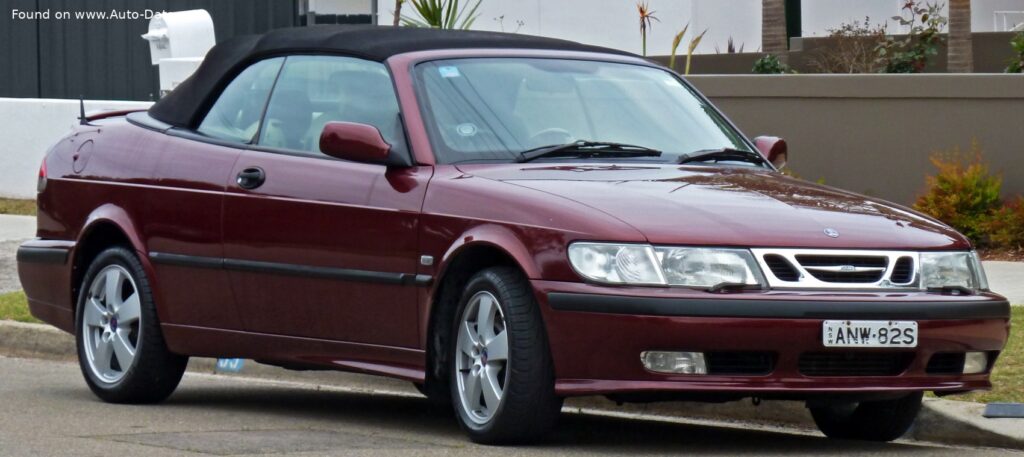
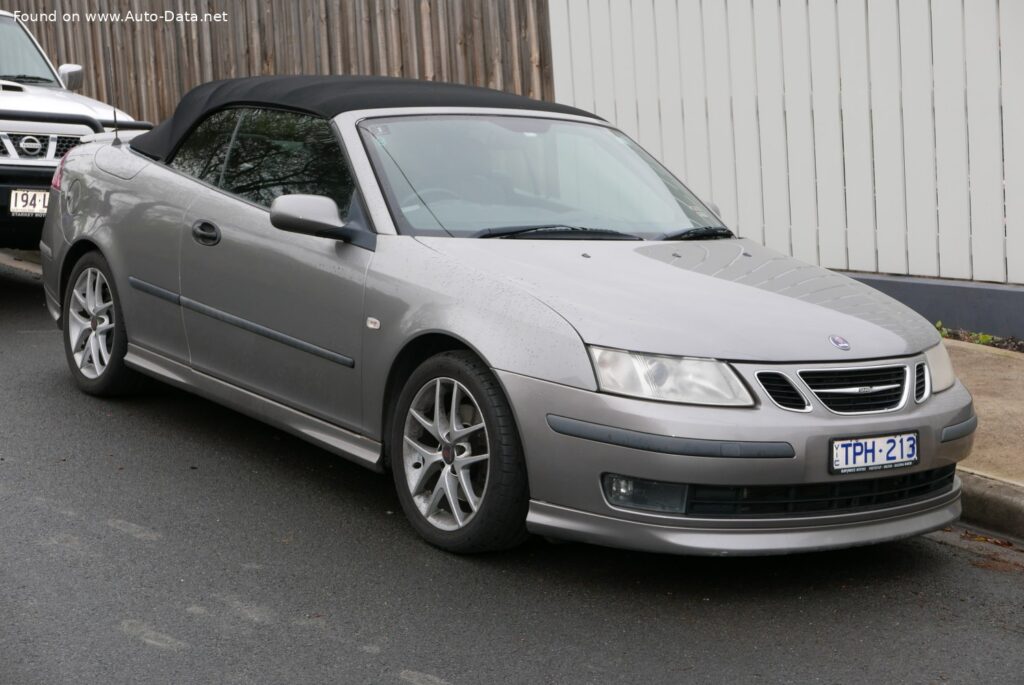
The Saab 9-3 Sport Combi II 1.8 i 16V Bio (175 Hp) is a station wagon that was produced between 2005 and 2007. Representing the second generation of the 9-3, the Sport Combi II offered a practical and stylish alternative to traditional sedans within the compact executive car segment. While Saab as a brand had a relatively small presence in the United States, the 9-3 was its mainstay model, known for its distinctive Scandinavian design and focus on driver experience. The “Bio” designation indicates the engine’s compatibility with biofuels, reflecting a growing environmental awareness during its production run. This model was primarily sold in the European market, where station wagons, or “estates” as they are often called, maintain significant popularity.
Saab 9-3 Sport Combi II: Overview
The 9-3 Sport Combi II aimed to blend practicality with Saab’s reputation for innovative engineering and safety. It served as a direct competitor to vehicles like the Audi A4 Avant, BMW 3 Series Touring, and Volvo V60, offering a unique alternative with its turbocharged engine and distinctive styling. The Sport Combi II was positioned as a versatile vehicle suitable for families and individuals seeking a blend of performance, comfort, and cargo capacity. The 1.8i 16V Bio engine was a key component, offering a balance between fuel efficiency and respectable power output.
Engine & Performance
The Saab 9-3 Sport Combi II 1.8 i 16V Bio is powered by a 1.8-liter inline-four cylinder engine, designated the B207E. This engine produces 175 horsepower at 5500 rpm and 265 Nm (195.45 lb.-ft.) of torque at 2500 rpm. The engine features a turbocharger and intercooler, enhancing performance and providing a responsive driving experience. The engine’s specific output is 97.4 horsepower per liter, demonstrating a relatively high level of power for its displacement. Power is delivered to the front wheels via a five-speed manual transmission. Acceleration from 0 to 100 km/h (0-62 mph) takes 8.7 seconds, while 0 to 60 mph is achieved in approximately 8.3 seconds. The vehicle has a maximum speed of 210 km/h (130.49 mph). The “Bio” designation signifies the engine’s ability to run on blends of gasoline and biofuels, such as ethanol, aligning with contemporary efforts to reduce reliance on fossil fuels.
Design & Features
The Saab 9-3 Sport Combi II boasts a classic station wagon body style, offering a spacious and practical interior. It features five seats and five doors, providing ample room for passengers and cargo. The exterior design incorporates Saab’s signature styling cues, including a wraparound windshield and a distinctive front grille. The Sport Combi II offers 419 liters (14.8 cubic feet) of trunk space with the rear seats up, expanding to 1273 liters (44.96 cubic feet) when the rear seats are folded down. Safety features were a priority for Saab, and the 9-3 Sport Combi II is equipped with an Anti-lock Braking System (ABS) as standard. The vehicle’s suspension utilizes spring struts on both the front and rear axles, providing a comfortable ride. The steering system is a rack and pinion type, offering precise and responsive handling. The vehicle rides on 15-inch wheel rims with 195/65 R15 tires.
Technical Specifications
| Brand | Saab |
| Model | 9-3 |
| Generation | 9-3 Sport Combi II |
| Type (Engine) | 1.8 i 16V Bio (175 Hp) |
| Start of production | 2005 |
| End of production | 2007 |
| Powertrain Architecture | Internal Combustion engine |
| Body type | Station wagon (estate) |
| Seats | 5 |
| Doors | 5 |
| Fuel consumption (urban) | 14.2 l/100 km (16.6 US mpg, 19.9 UK mpg) |
| Fuel consumption (extra urban) | 7.7 l/100 km (30.5 US mpg, 36.7 UK mpg) |
| Fuel consumption (combined) | 10.1 l/100 km (23.3 US mpg, 28 UK mpg) |
| Fuel Type | Petrol (Gasoline) |
| Acceleration 0 – 100 km/h | 8.7 sec |
| Acceleration 0 – 62 mph | 8.7 sec |
| Acceleration 0 – 60 mph | 8.3 sec |
| Maximum speed | 210 km/h (130.49 mph) |
| Emission standard | Euro 4 |
| Weight-to-power ratio | 8 kg/Hp |
| Weight-to-torque ratio | 5.3 kg/Nm |
| Power | 175 Hp @ 5500 rpm |
| Torque | 265 Nm @ 2500 rpm (195.45 lb.-ft. @ 2500 rpm) |
| Engine layout | Front, Transverse |
| Engine Model/Code | B207E |
| Engine displacement | 1796 cm3 (109.6 cu. in.) |
| Number of cylinders | 4 |
| Engine configuration | Inline |
| Cylinder Bore | 80.5 mm (3.17 in.) |
| Piston Stroke | 88.2 mm (3.47 in.) |
| Compression ratio | 10.5:1 |
| Number of valves per cylinder | 4 |
| Fuel injection system | Multi-port manifold injection |
| Engine aspiration | Turbocharger, Intercooler |
| Valvetrain | DOHC |
| Engine oil capacity | 6 l (6.34 US qt | 5.28 UK qt) |
| Coolant | 7.5 l (7.93 US qt | 6.6 UK qt) |
| Kerb Weight | 1405 kg (3097.49 lbs.) |
| Max. weight | 1940 kg (4276.97 lbs.) |
| Max load | 535 kg (1179.47 lbs.) |
| Trunk (boot) space – minimum | 419 l (14.8 cu. ft.) |
| Trunk (boot) space – maximum | 1273 l (44.96 cu. ft.) |
| Fuel tank capacity | 62 l (16.38 US gal | 13.64 UK gal) |
| Length | 4654 mm (183.23 in.) |
| Width | 1782 mm (70.16 in.) |
| Height | 1507 mm (59.33 in.) |
| Wheelbase | 2675 mm (105.31 in.) |
| Front track | 1524 mm (60 in.) |
| Rear (Back) track | 1506 mm (59.29 in.) |
| Drivetrain Architecture | ICE drives front wheels |
| Drive wheel | Front wheel drive |
| Number of gears and type of gearbox | 5 gears, manual transmission |
| Front suspension | Spring Strut |
| Rear suspension | Spring Strut |
| Front brakes | Ventilated discs |
| Rear brakes | Disc |
| Assisting systems | ABS (Anti-lock braking system) |
| Steering type | Steering rack and pinion |
| Tires size | 195/65 R15 |
| Wheel rims size | 15 |
The Saab 9-3 Sport Combi II 1.8 i 16V Bio, while no longer in production due to Saab’s bankruptcy in 2011, remains a testament to the brand’s commitment to innovation and distinctive design. It represents a practical and stylish option for those seeking a compact executive station wagon with a focus on driver enjoyment and environmental consideration.