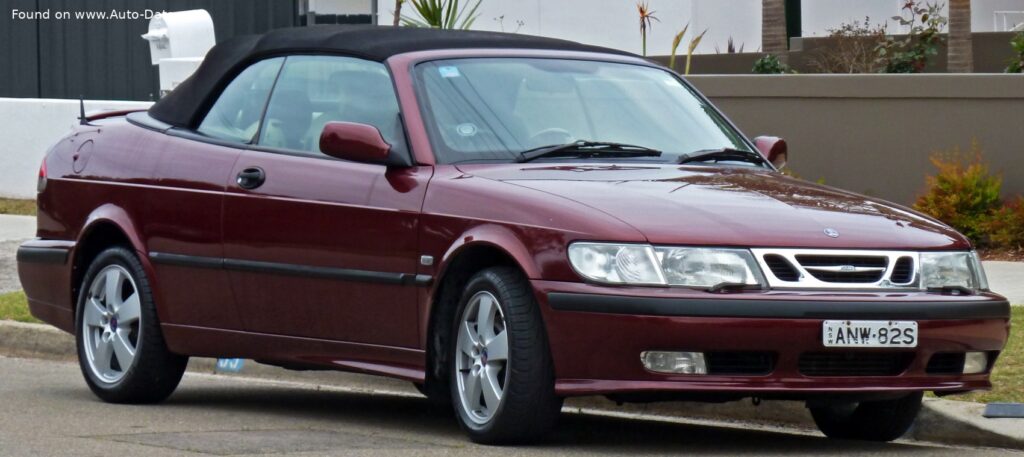
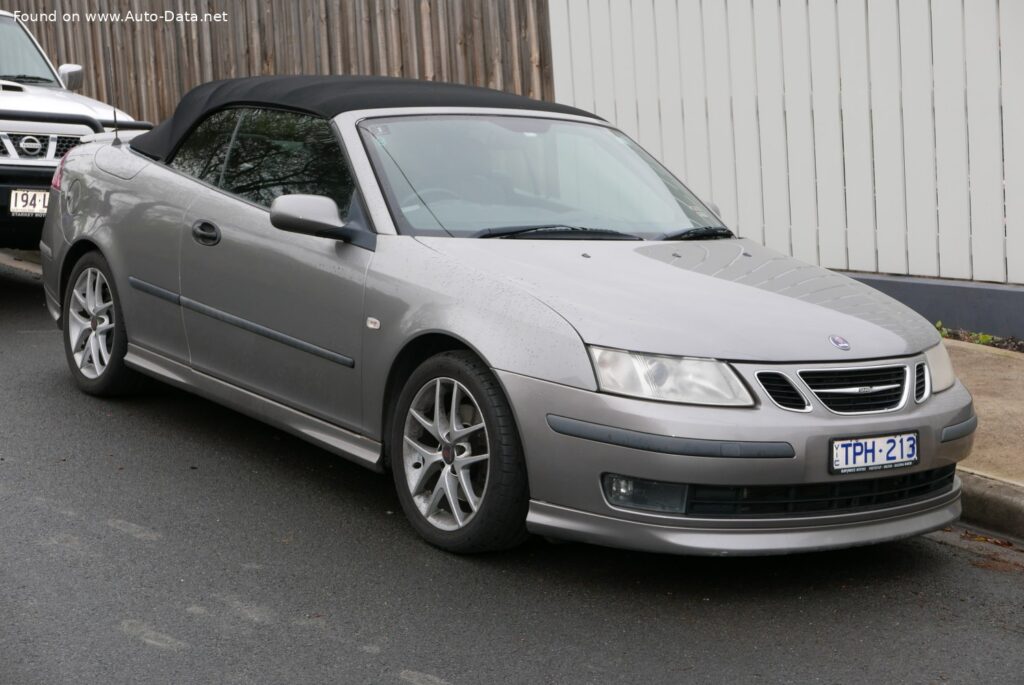
The Saab 9-3 Sport Combi II 1.8t, produced between 2005 and 2007, represents a refined iteration of Saab’s compact executive car. This model, a station wagon (estate) body style, aimed to blend practicality with the brand’s signature Scandinavian design and engineering. While Saab as a brand ultimately faced financial difficulties, the 9-3 series, particularly the Sport Combi, was a popular choice in European markets, offering a distinctive alternative to more mainstream competitors. The 1.8t variant, equipped with a turbocharged engine, provided a balance of performance and fuel efficiency, appealing to drivers seeking a versatile and engaging driving experience.
Saab 9-3 Sport Combi II 1.8t: Overview
The 9-3 Sport Combi II falls within the compact executive car segment, competing with vehicles like the Audi A4 Avant, BMW 3 Series Touring, and Volvo V60. The “II” designation signifies a mid-cycle refresh, bringing styling updates and minor mechanical improvements to the original 9-3 Sport Combi. Saab’s focus on safety, innovative design, and a driver-centric experience were key selling points for this model. Unlike many of its competitors, the 9-3 offered a unique character and a loyal following, particularly among enthusiasts who appreciated its unconventional approach to automotive engineering.
Engine & Performance
The heart of the 9-3 Sport Combi II 1.8t is a 1.998-liter (121.93 cubic inches) inline-four cylinder engine. This engine is turbocharged and intercooled, producing 150 horsepower at 5500 rpm and 240 Nm (177.01 lb.-ft.) of torque at 2000 rpm. The turbocharger significantly enhances the engine’s responsiveness, providing strong acceleration across a wide range of engine speeds. Power per liter is rated at 75.1 hp/l. The engine utilizes multi-port fuel injection and a double overhead camshaft (DOHC) valvetrain with four valves per cylinder. This configuration contributes to both performance and efficiency. The engine’s front, transverse layout optimizes space utilization within the engine bay. The 9-3 1.8t could accelerate from 0 to 100 km/h (0-62 mph) in 9.5 seconds, and reach a maximum speed of 205 km/h (127.38 mph). The car features a 5-speed manual transmission, delivering power to the front wheels.
Design & Features
The Saab 9-3 Sport Combi II is characterized by its distinctive station wagon silhouette. The elongated roofline and generous cargo area provide ample space for passengers and luggage. The vehicle’s design incorporates Saab’s signature styling cues, including a wraparound dashboard and a focus on ergonomic comfort. Inside, the 9-3 offers seating for five passengers and a practical interior layout. The trunk (boot) space is a key feature, offering 419 liters (14.8 cubic feet) with the rear seats up and expanding to 1273 liters (44.96 cubic feet) with the rear seats folded down. Safety features included ABS (Anti-lock Braking System) as standard equipment. The suspension system consists of an independent McPherson strut setup at the front and an independent multi-link spring suspension at the rear, providing a comfortable ride and responsive handling. Hydraulic power steering ensures precise and effortless steering control. The vehicle rides on 215/55 R16 tires mounted on 6.5J x 16 inch wheel rims.
Technical Specifications
| Brand | Saab |
| Model | 9-3 |
| Generation | 9-3 Sport Combi II |
| Type (Engine) | 1.8t (150 Hp) |
| Start of production | 2005 |
| End of production | 2007 |
| Powertrain Architecture | Internal Combustion engine |
| Body type | Station wagon (estate) |
| Seats | 5 |
| Doors | 5 |
| Fuel consumption (urban) | 11.3 l/100 km (20.8 US mpg, 25 UK mpg, 8.8 km/l) |
| Fuel consumption (extra urban) | 6 l/100 km (39.2 US mpg, 47.1 UK mpg, 16.7 km/l) |
| Fuel consumption (combined) | 7.9 l/100 km (29.8 US mpg, 35.8 UK mpg, 12.7 km/l) |
| CO2 emissions | 189 g/km |
| Fuel Type | Petrol (Gasoline) |
| Acceleration 0 – 100 km/h | 9.5 sec |
| Acceleration 0 – 62 mph | 9.5 sec |
| Acceleration 0 – 60 mph | 9 sec |
| Maximum speed | 205 km/h (127.38 mph) |
| Emission standard | Euro 4 |
| Weight-to-power ratio | 9.7 kg/Hp, 102.7 Hp/tonne |
| Weight-to-torque ratio | 6.1 kg/Nm, 164.4 Nm/tonne |
| Power | 150 Hp @ 5500 rpm |
| Power per litre | 75.1 Hp/l |
| Torque | 240 Nm @ 2000 rpm (177.01 lb.-ft. @ 2000 rpm) |
| Engine layout | Front, Transverse |
| Engine Model/Code | B207E |
| Engine displacement | 1998 cm3 (121.93 cu. in.) |
| Number of cylinders | 4 |
| Engine configuration | Inline |
| Cylinder Bore | 86 mm (3.39 in.) |
| Piston Stroke | 86 mm (3.39 in.) |
| Compression ratio | 10.5:1 |
| Number of valves per cylinder | 4 |
| Fuel injection system | Multi-port manifold injection |
| Engine aspiration | Turbocharger, Intercooler |
| Valvetrain | DOHC |
| Engine oil capacity | 6 l (6.34 US qt | 5.28 UK qt) |
| Coolant | 7.5 l (7.93 US qt | 6.6 UK qt) |
| Kerb Weight | 1460 kg (3218.75 lbs.) |
| Max. weight | 1940 kg (4276.97 lbs.) |
| Max load | 480 kg (1058.22 lbs.) |
| Trunk (boot) space – minimum | 419 l (14.8 cu. ft.) |
| Trunk (boot) space – maximum | 1273 l (44.96 cu. ft.) |
| Fuel tank capacity | 58 l (15.32 US gal | 12.76 UK gal) |
| Max. roof load | 100 kg (220.46 lbs.) |
| Length | 4654 mm (183.23 in.) |
| Width | 1762 mm (69.37 in.) |
| Width including mirrors | 2038 mm (80.24 in.) |
| Height | 1492 mm (58.74 in.) |
| Wheelbase | 2675 mm (105.31 in.) |
| Front track | 1524 mm (60 in.) |
| Rear (Back) track | 1506 mm (59.29 in.) |
| Front overhang | 965 mm (37.99 in.) |
| Rear overhang | 1014 mm (39.92 in.) |
| Minimum turning circle (turning diameter) | 11.4 m (37.4 ft.) |
| Drive wheel | Front wheel drive |
| Number of gears and type of gearbox | 5 gears, manual transmission |
| Front suspension | Independent, type McPherson with coil spring and anti-roll bar |
| Rear suspension | Independent multi-link spring suspension with stabilizer |
| Front brakes | Ventilated discs |
| Rear brakes | Ventilated discs |
| Steering type | Steering rack and pinion |
| Power steering | Hydraulic Steering |
| Tires size | 215/55 R16 |
| Wheel rims size | 6.5J x 16 |