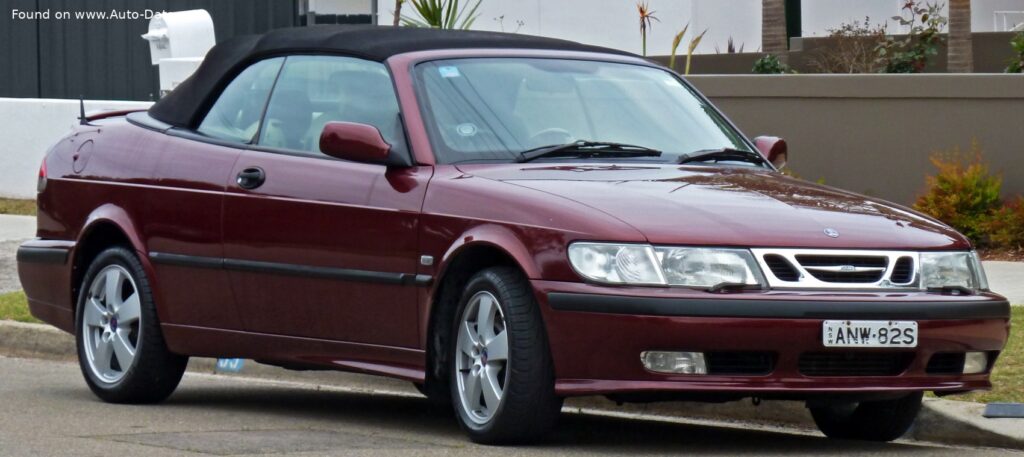
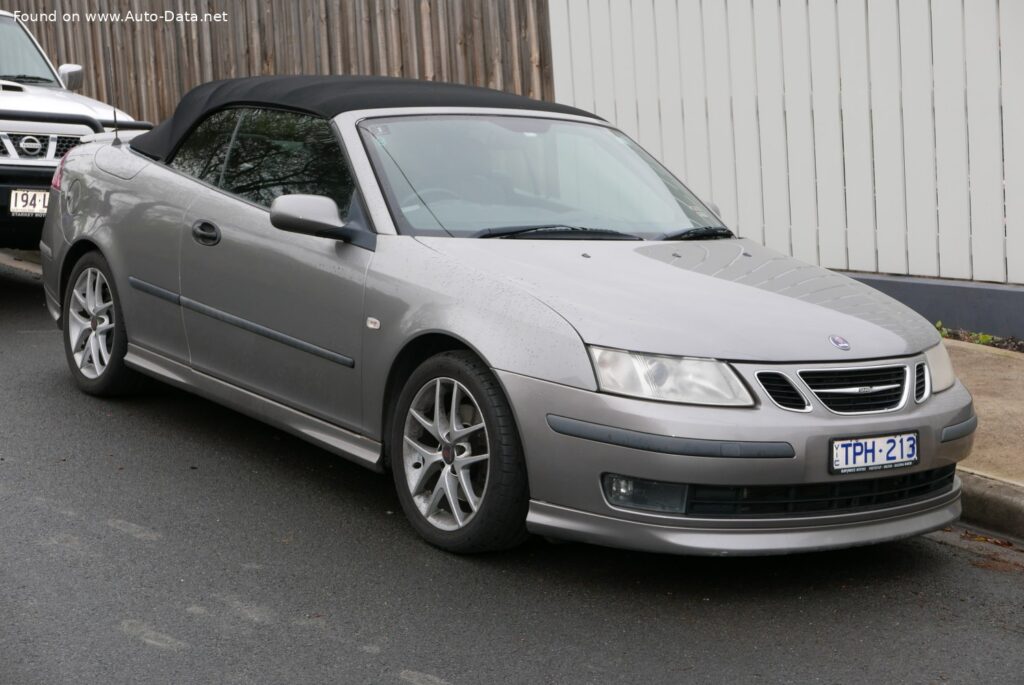
The Saab 9-3 Sport Combi II 1.8t (150 Hp) Sentronic is a station wagon that was produced between 2005 and 2007. Representing the second generation of the 9-3, the Sport Combi II offered Saab’s distinctive blend of Scandinavian design and engineering within the compact executive car segment. While Saab as a brand ultimately ceased production in 2011, the 9-3 series, and particularly the Sport Combi, held a loyal following, especially in Europe, for its practicality, safety, and unique character. This model was not officially sold in the United States, as Saab’s presence in the US market diminished during this period.
Saab 9-3 Sport Combi II: Overview
The 9-3 Sport Combi II aimed to provide a more versatile alternative to the sedan version, catering to buyers needing increased cargo capacity. The “Combi” designation is Saab’s traditional term for its station wagon models. The 1.8t variant, equipped with a turbocharged 1.8-liter engine and Saab’s Sentronic automatic transmission, was positioned as a balance between performance and fuel efficiency within the 9-3 lineup. It competed with other European station wagons like the Audi Avant, BMW Touring, and Volvo V series.
Engine & Performance
The heart of the Saab 9-3 Sport Combi II 1.8t is the B207E engine, a 1.8-liter inline-four cylinder powerplant. This engine utilizes a turbocharger and intercooler to boost power output to 150 horsepower at 5500 rpm and 240 Newton-meters (177 lb-ft) of torque at 2000 rpm. The turbocharging provides a relatively flat torque curve, offering good responsiveness for everyday driving. Power is delivered to the front wheels via a five-speed Sentronic automatic transmission, which allows for both fully automatic operation and manual gear selection. Acceleration from 0 to 100 km/h (0-62 mph) takes 10.7 seconds, while 0 to 60 mph is achieved in approximately 10.2 seconds. The vehicle has a maximum speed of 200 km/h (124 mph). Fuel economy is rated at 9.2 liters per 100 kilometers (25.6 US mpg) combined, with urban consumption at 13.4 l/100km (17.6 US mpg) and extra-urban at 6.8 l/100km (34.6 US mpg). CO2 emissions are rated at 221 g/km, meeting Euro 4 emission standards.
Design & Features
The Saab 9-3 Sport Combi II features a classic station wagon body style, characterized by its elongated roofline and generous cargo area. The design incorporates Saab’s signature styling cues, including a wraparound windshield and a distinctive front grille. The interior is designed with a focus on functionality and ergonomics, offering seating for five passengers. Key features include a spacious trunk with a minimum capacity of 419 liters (14.8 cu ft) expanding to 1273 liters (44.96 cu ft) with the rear seats folded down. Safety features, typical for the era, include ABS (Anti-lock Braking System) and ventilated disc brakes on all four wheels. The vehicle’s suspension utilizes an independent McPherson strut setup at the front and an independent multi-link setup at the rear, providing a balance between ride comfort and handling. Hydraulic power steering is standard. The car’s dimensions are 4654 mm (183.23 in) in length, 1762 mm (69.37 in) in width, and 1492 mm (58.74 in) in height.
Technical Specifications
| Brand | Saab |
| Model | 9-3 |
| Generation | 9-3 Sport Combi II |
| Type (Engine) | 1.8t (150 Hp) Sentronic |
| Start of production | 2005 |
| End of production | 2007 |
| Powertrain Architecture | Internal Combustion engine |
| Body type | Station wagon (estate) |
| Seats | 5 |
| Doors | 5 |
| Fuel consumption (urban) | 13.4 l/100 km (17.6 US mpg) |
| Fuel consumption (extra urban) | 6.8 l/100 km (34.6 US mpg) |
| Fuel consumption (combined) | 9.2 l/100 km (25.6 US mpg) |
| CO2 emissions | 221 g/km |
| Fuel Type | Petrol (Gasoline) |
| Acceleration 0 – 100 km/h | 10.7 sec |
| Acceleration 0 – 62 mph | 10.7 sec |
| Acceleration 0 – 60 mph | 10.2 sec |
| Maximum speed | 200 km/h (124.27 mph) |
| Emission standard | Euro 4 |
| Weight-to-power ratio | 10 kg/Hp |
| Weight-to-torque ratio | 6.2 kg/Nm |
| Power | 150 Hp @ 5500 rpm |
| Torque | 240 Nm @ 2000 rpm (177.01 lb.-ft. @ 2000 rpm) |
| Engine layout | Front, Transverse |
| Engine Model/Code | B207E |
| Engine displacement | 1998 cm3 (121.93 cu. in.) |
| Number of cylinders | 4 |
| Engine configuration | Inline |
| Cylinder Bore | 86 mm (3.39 in.) |
| Piston Stroke | 86 mm (3.39 in.) |
| Compression ratio | 10.5:1 |
| Number of valves per cylinder | 4 |
| Fuel injection system | Multi-port manifold injection |
| Engine aspiration | Turbocharger, Intercooler |
| Valvetrain | DOHC |
| Engine oil capacity | 6 l (6.34 US qt | 5.28 UK qt) |
| Coolant | 7.5 l (7.93 US qt | 6.6 UK qt) |
| Kerb Weight | 1495 kg (3295.91 lbs.) |
| Max. weight | 1940 kg (4276.97 lbs.) |
| Max load | 445 kg (981.06 lbs.) |
| Trunk (boot) space – minimum | 419 l (14.8 cu. ft.) |
| Trunk (boot) space – maximum | 1273 l (44.96 cu. ft.) |
| Fuel tank capacity | 58 l (15.32 US gal | 12.76 UK gal) |
| Max. roof load | 100 kg (220.46 lbs.) |
| Length | 4654 mm (183.23 in.) |
| Width | 1762 mm (69.37 in.) |
| Width including mirrors | 2038 mm (80.24 in.) |
| Height | 1492 mm (58.74 in.) |
| Wheelbase | 2675 mm (105.31 in.) |
| Front track | 1524 mm (60 in.) |
| Rear (Back) track | 1506 mm (59.29 in.) |
| Front overhang | 965 mm (37.99 in.) |
| Rear overhang | 1014 mm (39.92 in.) |
| Minimum turning circle | 11.4 m (37.4 ft.) |
| Drive wheel | Front wheel drive |
| Number of gears | 5 |
| Gearbox type | automatic transmission Sentronic |
| Front suspension | Independent, type McPherson with coil spring and anti-roll bar |
| Rear suspension | Independent multi-link spring suspension with stabilizer |
| Front brakes | Ventilated discs |
| Rear brakes | Ventilated discs |
| Tires size | 215/55 R16 |
| Wheel rims size | 6.5J x 16 |
The Saab 9-3 Sport Combi II 1.8t Sentronic, while no longer in production, remains a testament to Saab’s commitment to innovative design and practical functionality. It represents a unique offering in the compact executive station wagon segment, appealing to those seeking a vehicle with character and versatility.