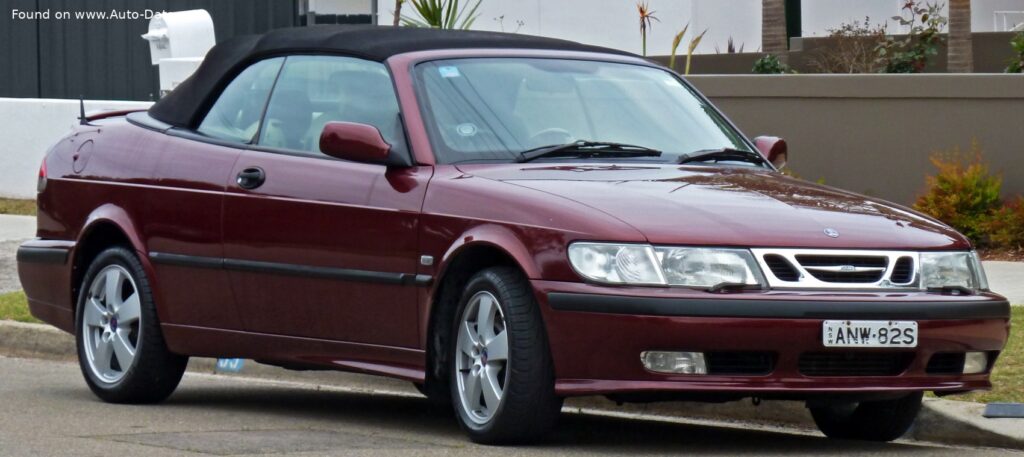
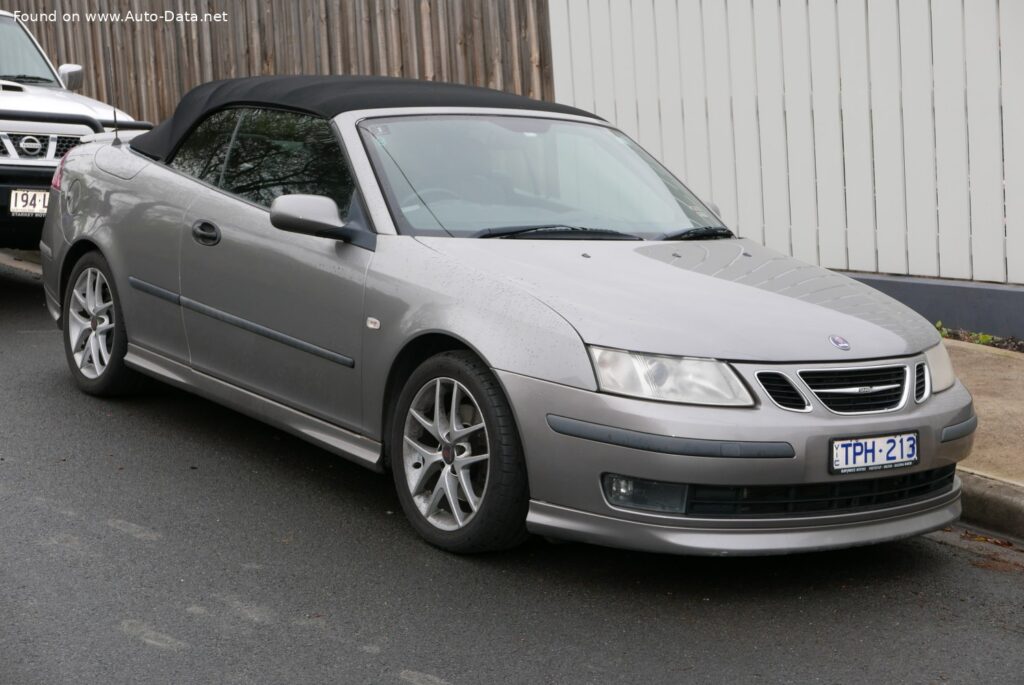
The Saab 9-3 Sport Combi II 1.9 TiD, produced between 2005 and 2007, represents a refined iteration of Saab’s compact executive car. This model, a station wagon (estate) body style, was primarily aimed at the European market, offering a blend of practicality, Scandinavian design, and efficient diesel power. While Saab as a brand ultimately ceased production in 2011, the 9-3 series, and particularly the Sport Combi, remains a fondly remembered vehicle known for its distinctive character and loyal following. The 1.9 TiD variant specifically focused on fuel economy and reasonable performance, making it a popular choice for drivers covering long distances.
Saab 9-3 Sport Combi II: A Detailed Overview
The 9-3 Sport Combi II built upon the foundation laid by its predecessor, offering improvements in refinement, safety, and overall usability. It competed with other European station wagons like the Audi A4 Avant, BMW 3 Series Touring, and Volvo V60, though Saab carved out its own niche with its unique design language and emphasis on driver-focused ergonomics. The “Combi” designation signifies the station wagon body style, offering increased cargo capacity compared to the sedan version. The second generation (II) denotes updates to the original 9-3 design, including styling tweaks and mechanical improvements.
Engine & Performance
The heart of the 9-3 Sport Combi II 1.9 TiD is a 1.9-liter inline-four cylinder diesel engine, designated the Z19DT. This engine produces 120 horsepower at 4000 rpm and 280 Nm (206.52 lb.-ft.) of torque at 2000 rpm. The engine utilizes a turbocharger with an intercooler to enhance power output and efficiency. A diesel commonrail fuel injection system ensures precise fuel delivery, contributing to both performance and reduced emissions. The engine’s 18:1 compression ratio is typical for a diesel engine, maximizing combustion efficiency. Power is delivered to the front wheels via a six-speed manual transmission. Performance figures include a 0-100 km/h (0-62 mph) acceleration time of 12 seconds and a maximum speed of 195 km/h (121.17 mph). The weight-to-power ratio of 12.8 kg/Hp and weight-to-torque ratio of 5.5 kg/Nm indicate a reasonably balanced driving experience.
Design & Features
The Saab 9-3 Sport Combi II boasts a distinctive Scandinavian design aesthetic. The station wagon body style provides a practical and spacious interior, with a focus on maximizing cargo capacity. The vehicle offers seating for five passengers and features five doors for easy access. The trunk (boot) space ranges from a minimum of 419 liters (14.8 cu. ft.) to a maximum of 1273 liters (44.96 cu. ft.) with the rear seats folded down. Safety was a key consideration in the 9-3’s design, and the Sport Combi II is equipped with ABS (Anti-lock Braking System) as standard. The vehicle’s dimensions are 4654 mm (183.23 in.) in length, 1782 mm (70.16 in.) in width, and 1507 mm (59.33 in.) in height. The wheelbase measures 2675 mm (105.31 in.). The interior is characterized by a driver-focused layout, with ergonomically designed controls and comfortable seating. The 15-inch wheel rims are fitted with 215/60 R15 tires.
Technical Specifications
| Brand | Saab |
| Model | 9-3 |
| Generation | 9-3 Sport Combi II |
| Type (Engine) | 1.9 TiD (120 Hp) |
| Start of production | 2005 |
| End of production | 2007 |
| Powertrain Architecture | Internal Combustion engine |
| Body type | Station wagon (estate) |
| Seats | 5 |
| Doors | 5 |
| Fuel consumption (urban) | 7.3 l/100 km (32.2 US mpg) |
| Fuel consumption (extra urban) | 4.5 l/100 km (52.3 US mpg) |
| Fuel Type | Diesel |
| Acceleration 0 – 100 km/h | 12 sec |
| Acceleration 0 – 62 mph | 12 sec |
| Acceleration 0 – 60 mph | 11.4 sec |
| Maximum speed | 195 km/h (121.17 mph) |
| Weight-to-power ratio | 12.8 kg/Hp |
| Weight-to-torque ratio | 5.5 kg/Nm |
| Power | 120 Hp @ 4000 rpm |
| Torque | 280 Nm @ 2000 rpm (206.52 lb.-ft. @ 2000 rpm) |
| Engine layout | Front, Transverse |
| Engine Model/Code | Z19DT |
| Engine displacement | 1910 cm3 (116.56 cu. in.) |
| Number of cylinders | 4 |
| Engine configuration | Inline |
| Cylinder Bore | 82 mm (3.23 in.) |
| Piston Stroke | 90.4 mm (3.56 in.) |
| Compression ratio | 18:1 |
| Number of valves per cylinder | 2 |
| Fuel injection system | Diesel Commonrail |
| Engine oil capacity | 4.3 l (4.54 US qt | 3.78 UK qt) |
| Coolant capacity | 7.4 l (7.82 US qt | 6.51 UK qt) |
| Kerb Weight | 1530 kg (3373.07 lbs.) |
| Max. weight | 2100 kg (4629.71 lbs.) |
| Max load | 570 kg (1256.63 lbs.) |
| Trunk (boot) space – minimum | 419 l (14.8 cu. ft.) |
| Trunk (boot) space – maximum | 1273 l (44.96 cu. ft.) |
| Fuel tank capacity | 62 l (16.38 US gal | 13.64 UK gal) |
| Length | 4654 mm (183.23 in.) |
| Width | 1782 mm (70.16 in.) |
| Height | 1507 mm (59.33 in.) |
| Wheelbase | 2675 mm (105.31 in.) |
| Front track | 1524 mm (60 in.) |
| Rear track | 1506 mm (59.29 in.) |
| Drivetrain Architecture | Front wheel drive |
| Number of gears | 6 |
| Gearbox type | Manual transmission |
| Front suspension | Spring Strut |
| Rear suspension | Spring Strut |
| Front brakes | Ventilated discs |
| Rear brakes | Disc |
| Assisting systems | ABS (Anti-lock braking system) |
| Steering type | Steering rack and pinion |
| Tires size | 215/60 R15 |
| Wheel rims size | 15 |
The Saab 9-3 Sport Combi II 1.9 TiD, while no longer in production, remains a testament to Saab’s commitment to innovative design and practical functionality. Its blend of fuel efficiency, spaciousness, and distinctive styling continues to appeal to enthusiasts and those seeking a unique alternative in the compact executive station wagon segment.