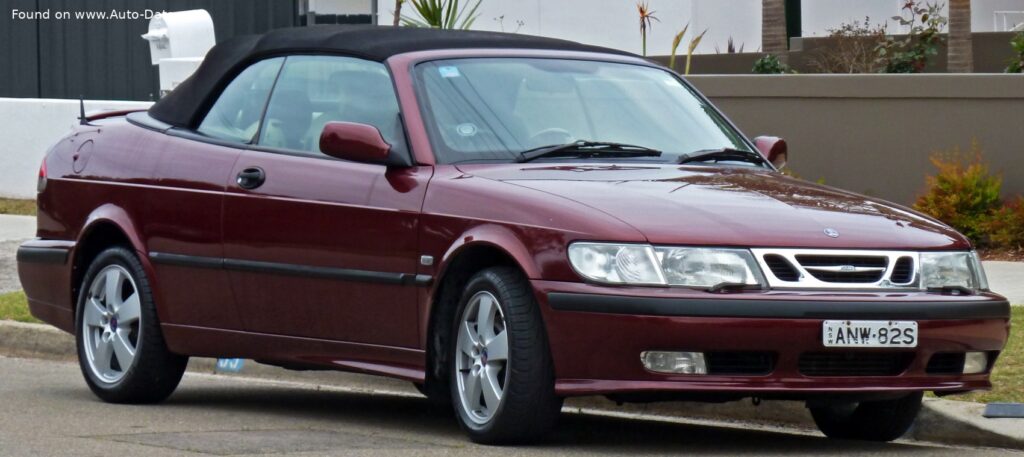
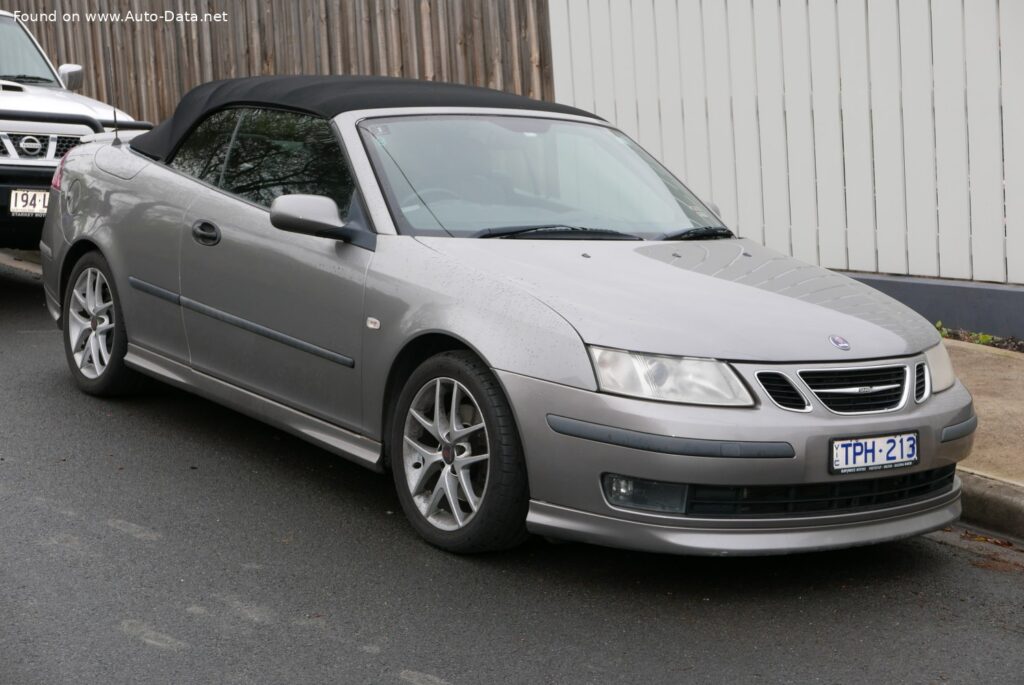
The Saab 9-3 Sport Combi II 2.0 i 16V Bio, produced from 2005 to 2007, represents a refined iteration of Saab’s compact executive car. This model, a station wagon (estate) body style, was primarily marketed in Europe as a practical and stylish alternative to more conventional offerings. While Saab as a brand didn’t have a significant presence in the US market during this period, the 9-3 series, including the Sport Combi, was known for its distinctive Scandinavian design and focus on driver-centric engineering. The “Bio” designation indicates the engine’s compatibility with biofuels, reflecting a growing environmental awareness at the time.
Saab 9-3 Sport Combi II: A Detailed Overview
The 9-3 Sport Combi II occupied a niche segment, blending the practicality of a wagon with Saab’s reputation for safety and a somewhat unconventional approach to automotive design. It aimed to appeal to buyers seeking a vehicle that stood out from the crowd while offering ample space and versatility. The second generation Sport Combi (hence the “II” designation) brought styling updates and refinements to the original 9-3 wagon, enhancing its appeal.
Engine & Performance
Powering the Saab 9-3 Sport Combi II 2.0 i 16V Bio is a 2.0-liter inline-four cylinder engine, turbocharged and intercooled. This engine produced 200 horsepower at 5500 rpm and 280 Nm (206.52 lb.-ft.) of torque at 2200 rpm. The turbocharger and intercooler significantly boosted performance, providing a responsive driving experience. The engine’s specific output was a respectable 100.8 horsepower per liter. The engine utilized multi-port fuel injection and a double overhead camshaft (DOHC) valvetrain, contributing to its efficiency and power delivery. A six-speed manual transmission was standard, allowing for precise control and engaging driving dynamics. Acceleration from 0 to 100 km/h (0-62 mph) took 8.1 seconds, while 0-60 mph was achieved in a calculated 7.7 seconds. The vehicle had a maximum speed of 225 km/h (139.81 mph).
Design & Features
The Saab 9-3 Sport Combi II is instantly recognizable by its distinctive styling. The station wagon body style offered a generous 419 liters (14.8 cu. ft.) of trunk space with the rear seats up, expanding to a substantial 1273 liters (44.96 cu. ft.) when folded down. This made it a practical choice for families or those needing to transport larger items. The vehicle’s design prioritized both aesthetics and functionality. Safety was a key consideration, with standard features including an Anti-lock Braking System (ABS). The interior was designed with a focus on ergonomics and driver comfort, typical of Saab’s philosophy. The vehicle seats five passengers comfortably. The overall dimensions of the vehicle are 4654 mm (183.23 in.) in length, 1782 mm (70.16 in.) in width, and 1507 mm (59.33 in.) in height. It rides on a wheelbase of 2675 mm (105.31 in.).
Technical Specifications
| Brand | Saab |
| Model | 9-3 |
| Generation | 9-3 Sport Combi II |
| Type (Engine) | 2.0 i 16V Bio (200 Hp) |
| Start of production | 2005 |
| End of production | 2007 |
| Powertrain Architecture | Internal Combustion engine |
| Body type | Station wagon (estate) |
| Seats | 5 |
| Doors | 5 |
| Fuel consumption (urban) | 15 l/100 km (15.7 US mpg, 18.8 UK mpg, 6.7 km/l) |
| Fuel consumption (extra urban) | 8.3 l/100 km (28.3 US mpg, 34 UK mpg, 12 km/l) |
| Fuel consumption (combined) | 10.8 l/100 km (21.8 US mpg, 26.2 UK mpg, 9.3 km/l) |
| Fuel Type | Petrol (Gasoline) |
| Acceleration 0 – 100 km/h | 8.1 sec |
| Acceleration 0 – 62 mph | 8.1 sec |
| Acceleration 0 – 60 mph | 7.7 sec |
| Maximum speed | 225 km/h (139.81 mph) |
| Emission standard | Euro 4 |
| Weight-to-power ratio | 7.3 kg/Hp, 137.5 Hp/tonne |
| Weight-to-torque ratio | 5.2 kg/Nm, 192.4 Nm/tonne |
| Power | 200 Hp @ 5500 rpm |
| Power per litre | 100.8 Hp/l |
| Torque | 280 Nm @ 2200 rpm (206.52 lb.-ft. @ 2200 rpm) |
| Engine layout | Front, Transverse |
| Engine Model/Code | B207L |
| Engine displacement | 1985 cm3 (121.13 cu. in.) |
| Number of cylinders | 4 |
| Engine configuration | Inline |
| Cylinder Bore | 90 mm (3.54 in.) |
| Piston Stroke | 78 mm (3.07 in.) |
| Compression ratio | 8.8:1 |
| Number of valves per cylinder | 4 |
| Fuel injection system | Multi-port manifold injection |
| Engine aspiration | Turbocharger, Intercooler |
| Valvetrain | DOHC |
| Engine oil capacity | 6 l (6.34 US qt | 5.28 UK qt) |
| Coolant | 7.5 l (7.93 US qt | 6.6 UK qt) |
| Kerb Weight | 1455 kg (3207.73 lbs.) |
| Max. weight | 2010 kg (4431.29 lbs.) |
| Max load | 555 kg (1223.57 lbs.) |
| Trunk (boot) space – minimum | 419 l (14.8 cu. ft.) |
| Trunk (boot) space – maximum | 1273 l (44.96 cu. ft.) |
| Fuel tank capacity | 62 l (16.38 US gal | 13.64 UK gal) |
| Length | 4654 mm (183.23 in.) |
| Width | 1782 mm (70.16 in.) |
| Height | 1507 mm (59.33 in.) |
| Wheelbase | 2675 mm (105.31 in.) |
| Front track | 1524 mm (60 in.) |
| Rear (Back) track | 1506 mm (59.29 in.) |
| Drivetrain Architecture | The Internal combustion engine (ICE) drives the front wheels of the vehicle. |
| Drive wheel | Front wheel drive |
| Number of gears and type of gearbox | 6 gears, manual transmission |
| Front suspension | Spring Strut |
| Rear suspension | Spring Strut |
| Front brakes | Ventilated discs |
| Rear brakes | Disc |
| Assisting systems | ABS (Anti-lock braking system) |
| Steering type | Steering rack and pinion |
| Tires size | 215/55 R16 |
| Wheel rims size | 16 |
The Saab 9-3 Sport Combi II 2.0 i 16V Bio, while no longer in production, remains a testament to Saab’s commitment to innovative design and driver-focused engineering. Its blend of practicality, performance, and distinctive styling continues to appeal to enthusiasts and collectors.