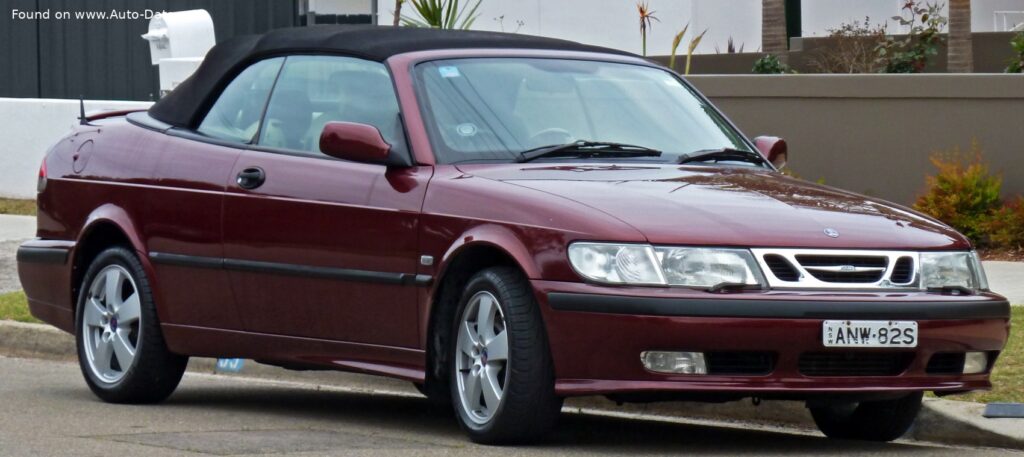
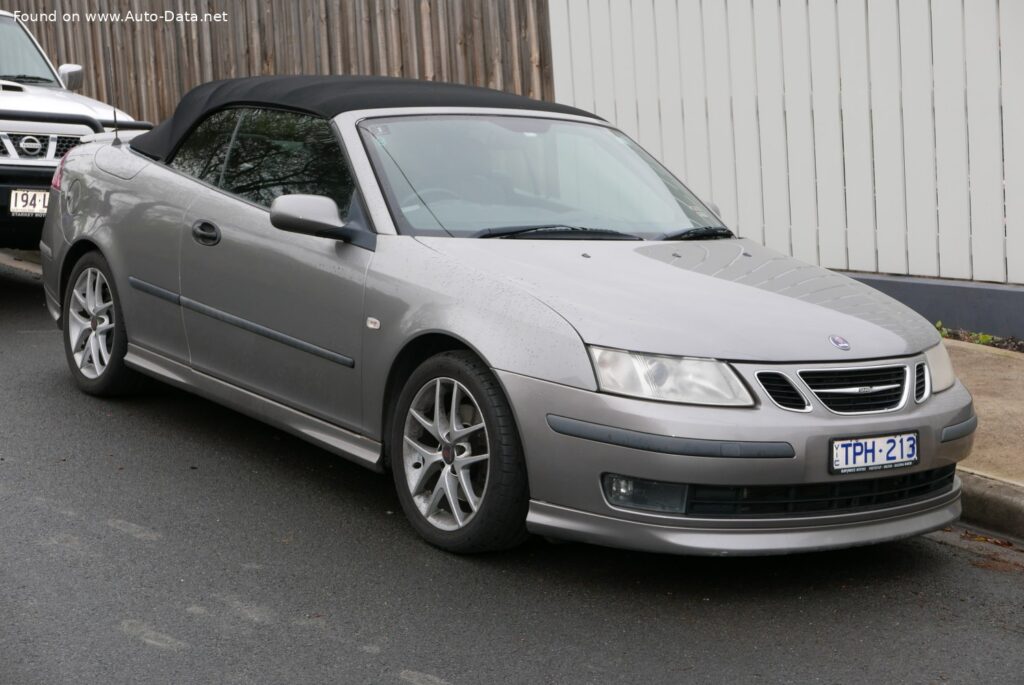
The Saab 9-3 Sport Combi II 2.8T V6, produced from 2006 to 2007, represents a refined iteration of Saab’s compact executive car. This model, a station wagon (estate) body style, aimed to blend practicality with the brand’s signature Scandinavian design and performance characteristics. While Saab as a brand ultimately ceased production in 2011, the 9-3 series, and particularly the Sport Combi II, remains a notable example of Swedish automotive engineering, offering a unique alternative within the competitive European market. It was never officially sold in the United States, but represents a compelling offering for those seeking a sporty and functional vehicle.
Saab 9-3 Sport Combi II: Overview and Market Position
The 9-3 Sport Combi II occupied the compact executive car segment, competing with vehicles like the Audi A4 Avant, BMW 3 Series Touring, and Volvo V60. However, Saab differentiated itself through its distinctive styling, focus on safety, and turbocharged engine options. The “Sport Combi” designation highlights the vehicle’s wagon body style, emphasizing its increased cargo capacity and versatility compared to the sedan version. The second generation (II) brought styling updates and refinements to the original 9-3 design, enhancing its appeal to a broader audience. Saab’s market position in Europe centered around offering a premium, yet somewhat unconventional, alternative to the German dominance in the executive car segment.
Engine & Performance
The heart of the 9-3 Sport Combi II 2.8T V6 is a 2.8-liter V6 engine, turbocharged and intercooled, producing 275 horsepower at 5500 rpm and 400 Newton-meters (295 lb-ft) of torque at 2000 rpm. This powertrain delivers a spirited driving experience, evidenced by a 0-100 km/h (0-62 mph) acceleration time of 6.5 seconds and a 0-60 mph time of approximately 6.2 seconds. The engine’s transverse front-engine layout contributes to balanced handling. Power is delivered to the front wheels via a 6-speed manual transmission. The engine’s specific output is impressive, generating 98.5 horsepower per liter. Despite the performance capabilities, fuel economy is rated at 10.5 liters per 100 kilometers (22.4 US mpg) combined, with urban consumption reaching 15.7 l/100km (15 US mpg). The vehicle meets Euro 4 emission standards.
Design & Features
The Saab 9-3 Sport Combi II boasts a sleek, wagon body style characterized by clean lines and a distinctive rear end. The vehicle offers seating for five passengers and features five doors for easy access. Key design elements include Saab’s signature wraparound windshield and a focus on aerodynamic efficiency. Inside, the cabin prioritizes functionality and driver comfort. Safety was a core tenet of Saab’s design philosophy, and the 9-3 Sport Combi II is equipped with ABS (Anti-lock Braking System) as standard. The interior offers a practical and well-designed space, with a focus on ergonomics. The trunk provides a minimum of 419 liters (14.8 cubic feet) of cargo space, expanding to a substantial 1273 liters (44.96 cubic feet) with the rear seats folded down. The vehicle’s dimensions are 4654 mm (183.23 in) in length, 1762 mm (69.37 in) in width, and 1492 mm (58.74 in) in height.
Technical Specifications
| Brand | Saab |
| Model | 9-3 |
| Generation | 9-3 Sport Combi II |
| Type (Engine) | 2.8T V6 (275 Hp) |
| Start of production | 2006 |
| End of production | 2007 |
| Powertrain Architecture | Internal Combustion engine |
| Body type | Station wagon (estate) |
| Seats | 5 |
| Doors | 5 |
| Fuel consumption (urban) | 15.7 l/100 km (15 US mpg, 18 UK mpg, 6.4 km/l) |
| Fuel consumption (extra urban) | 7.5 l/100 km (31.4 US mpg, 37.7 UK mpg, 13.3 km/l) |
| Fuel consumption (combined) | 10.5 l/100 km (22.4 US mpg, 26.9 UK mpg, 9.5 km/l) |
| CO2 emissions | 251 g/km |
| Fuel Type | Petrol (Gasoline) |
| Acceleration 0 – 100 km/h | 6.5 sec |
| Acceleration 0 – 62 mph | 6.5 sec |
| Acceleration 0 – 60 mph | 6.2 sec |
| Maximum speed | 255 km/h (158.45 mph) |
| Emission standard | Euro 4 |
| Weight-to-power ratio | 5.7 kg/Hp, 175.2 Hp/tonne |
| Weight-to-torque ratio | 3.9 kg/Nm, 254.8 Nm/tonne |
| Power | 275 Hp @ 5500 rpm |
| Power per litre | 98.5 Hp/l |
| Torque | 400 Nm @ 2000 rpm (295.02 lb.-ft. @ 2000 rpm) |
| Engine layout | Front, Transverse |
| Engine displacement | 2792 cm3 (170.38 cu. in.) |
| Number of cylinders | 6 |
| Engine configuration | V-engine |
| Cylinder Bore | 89 mm (3.5 in.) |
| Piston Stroke | 74.8 mm (2.94 in.) |
| Compression ratio | 9.5:1 |
| Number of valves per cylinder | 4 |
| Fuel injection system | Multi-port manifold injection |
| Engine aspiration | Turbocharger, Intercooler |
| Valvetrain | DOHC |
| Engine oil capacity | 6 l (6.34 US qt | 5.28 UK qt) |
| Coolant | 9 l (9.51 US qt | 7.92 UK qt) |
| Kerb Weight | 1570 kg (3461.26 lbs.) |
| Max. weight | 2120 kg (4673.8 lbs.) |
| Max load | 550 kg (1212.54 lbs.) |
| Trunk (boot) space – minimum | 419 l (14.8 cu. ft.) |
| Trunk (boot) space – maximum | 1273 l (44.96 cu. ft.) |
| Fuel tank capacity | 58 l (15.32 US gal | 12.76 UK gal) |
| Max. roof load | 100 kg (220.46 lbs.) |
| Length | 4654 mm (183.23 in.) |
| Width | 1762 mm (69.37 in.) |
| Width including mirrors | 2038 mm (80.24 in.) |
| Height | 1492 mm (58.74 in.) |
| Wheelbase | 2675 mm (105.31 in.) |
| Front track | 1524 mm (60 in.) |
| Rear (Back) track | 1506 mm (59.29 in.) |
| Front overhang | 965 mm (37.99 in.) |
| Rear overhang | 1014 mm (39.92 in.) |
| Minimum turning circle | 12.2 m (40.03 ft.) |
| Drivetrain Architecture | Front wheel drive |
| Number of gears | 6 gears, manual transmission |
| Front suspension | Independent, type McPherson with coil spring and anti-roll bar |
| Rear suspension | Independent multi-link spring suspension with stabilizer |
| Front brakes | Ventilated discs |
| Rear brakes | Ventilated discs |
| Tires size | 235/40 R18 |
| Wheel rims size | 8J x 18 |