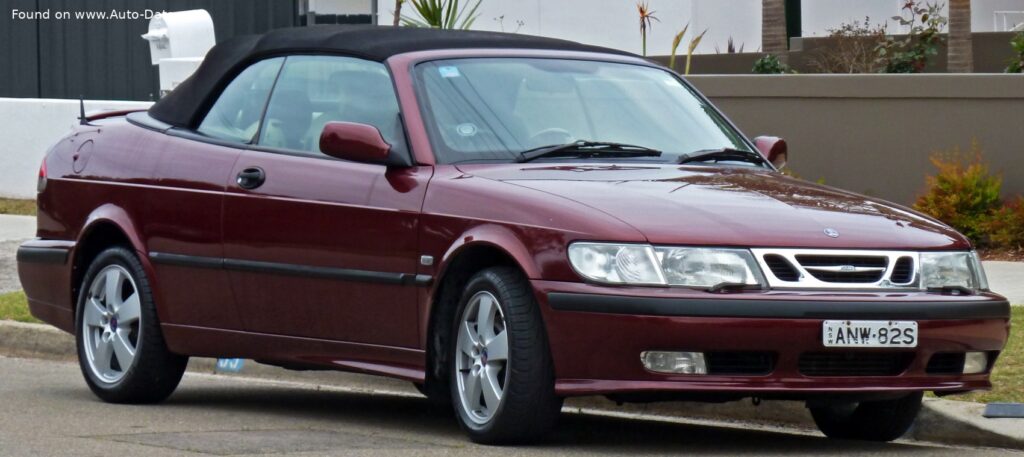
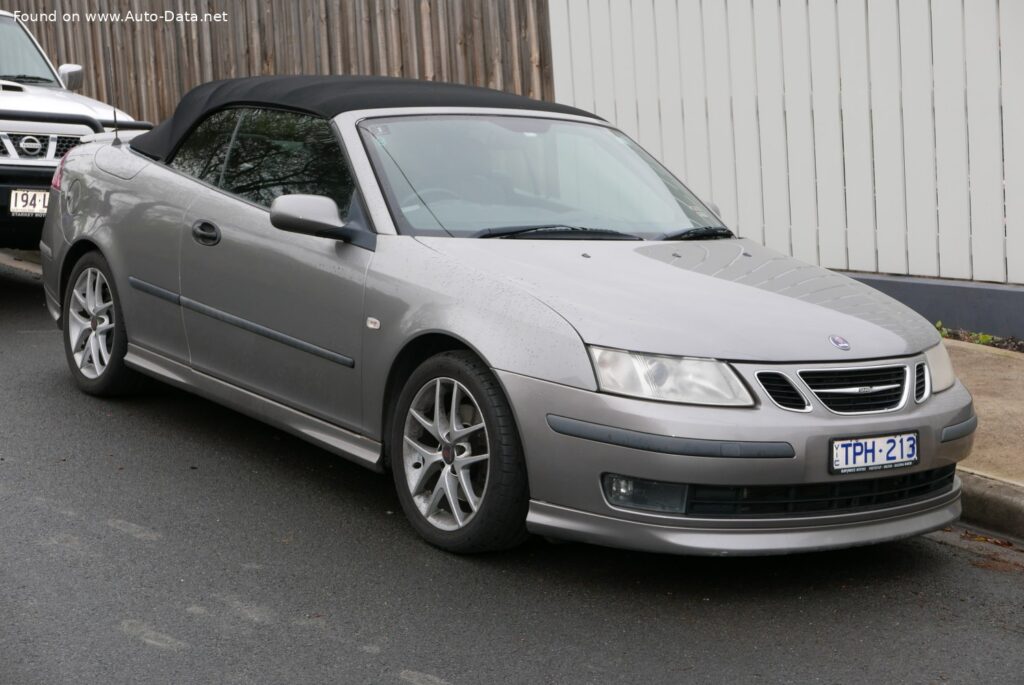
The Saab 9-3 Sport Combi II 2.8T V6 (275 Hp) Sentronic represents a compelling, if somewhat niche, offering from the Swedish automaker during its final years of independence. Produced between 2006 and 2007, this variant of the second-generation 9-3 aimed to blend Saab’s distinctive design philosophy with a potent powertrain and the practicality of a station wagon (estate) body style. While Saab never achieved mainstream success in the United States, the 9-3 Sport Combi II, particularly in its turbocharged V6 guise, appealed to enthusiasts seeking a unique and capable vehicle. It occupied the compact executive car segment, competing with models like the Audi A4 Avant, BMW 3 Series Touring, and Volvo V60, though often offering a more unconventional alternative.
Saab 9-3 Sport Combi II: A Detailed Overview
The 9-3 Sport Combi II was a crucial model for Saab, representing an attempt to modernize its lineup and broaden its appeal. The “Combi” designation signified the station wagon body style, a popular choice in Europe where practicality and cargo space are highly valued. The second-generation 9-3, launched in 2002, brought a more refined and contemporary aesthetic to the Saab brand, moving away from the more angular designs of its predecessors. The 2.8T V6 Sentronic model, however, stood out with its powerful engine and sophisticated automatic transmission.
Engine & Performance
At the heart of the 9-3 Sport Combi II 2.8T V6 lies a 2.8-liter V6 engine, turbocharged and intercooled, producing 275 horsepower at 5500 rpm and 400 Nm (295 lb-ft) of torque at 2000 rpm. This engine, sourced from General Motors (Saab was partially owned by GM during this period), provided brisk acceleration. The 0-60 mph sprint took approximately 6.4 seconds, and the car boasted a top speed of 255 km/h (158.45 mph). The Sentronic automatic transmission, a six-speed unit, offered smooth and responsive gear changes. Despite the performance capabilities, fuel economy was relatively modest, with combined fuel consumption of 10.3 l/100 km (22.8 US mpg). The engine’s power-to-weight ratio of 5.8 kg/Hp and torque-to-weight ratio of 4 kg/Nm contributed to its spirited driving experience.
Design & Features
The 9-3 Sport Combi II’s exterior design was characterized by its sleek lines, distinctive wraparound rear window, and Saab’s signature grille. The station wagon body style offered a generous 419 liters (14.8 cu ft) of trunk space, expandable to 1273 liters (44.96 cu ft) with the rear seats folded down. Inside, the cabin was designed with a focus on ergonomics and driver comfort, reflecting Saab’s human-centric design philosophy. Standard features included ABS, ventilated disc brakes on all wheels, and hydraulic power steering. The car’s dimensions – 4654 mm (183.23 in) in length, 1762 mm (69.37 in) in width, and 1492 mm (58.74 in) in height – positioned it squarely within the compact executive segment. Safety was a key consideration, with the 9-3 incorporating a robust safety cell and advanced braking systems for its time.
Technical Specifications
| Brand | Saab |
| Model | 9-3 |
| Generation | 9-3 Sport Combi II |
| Type (Engine) | 2.8T V6 (275 Hp) Sentronic |
| Start of production | 2006 |
| End of production | 2007 |
| Powertrain Architecture | Internal Combustion engine |
| Body type | Station wagon (estate) |
| Seats | 5 |
| Doors | 5 |
| Fuel consumption (urban) | 15.8 l/100 km (14.9 US mpg, 17.9 UK mpg, 6.3 km/l) |
| Fuel consumption (extra urban) | 7.1 l/100 km (33.1 US mpg, 39.8 UK mpg, 14.1 km/l) |
| Fuel consumption (combined) | 10.3 l/100 km (22.8 US mpg, 27.4 UK mpg, 9.7 km/l) |
| CO2 emissions | 248 g/km |
| Fuel Type | Petrol (Gasoline) |
| Acceleration 0 – 100 km/h | 6.7 sec |
| Acceleration 0 – 62 mph | 6.7 sec |
| Acceleration 0 – 60 mph | 6.4 sec |
| Maximum speed | 255 km/h (158.45 mph) |
| Emission standard | Euro 4 |
| Weight-to-power ratio | 5.8 kg/Hp |
| Weight-to-torque ratio | 4 kg/Nm |
| Power | 275 Hp @ 5500 rpm |
| Power per litre | 98.5 Hp/l |
| Torque | 400 Nm @ 2000 rpm (295.02 lb.-ft. @ 2000 rpm) |
| Engine layout | Front, Transverse |
| Engine displacement | 2792 cm3 (170.38 cu. in.) |
| Number of cylinders | 6 |
| Engine configuration | V-engine |
| Cylinder Bore | 89 mm (3.5 in.) |
| Piston Stroke | 74.8 mm (2.94 in.) |
| Compression ratio | 9.5:1 |
| Number of valves per cylinder | 4 |
| Fuel injection system | Multi-port manifold injection |
| Engine aspiration | Turbocharger, Intercooler |
| Valvetrain | DOHC |
| Engine oil capacity | 6 l (6.34 US qt | 5.28 UK qt) |
| Coolant | 9 l (9.51 US qt | 7.92 UK qt) |
| Kerb Weight | 1595 kg (3516.37 lbs.) |
| Max. weight | 2140 kg (4717.89 lbs.) |
| Max load | 545 kg (1201.52 lbs.) |
| Trunk (boot) space – minimum | 419 l (14.8 cu. ft.) |
| Trunk (boot) space – maximum | 1273 l (44.96 cu. ft.) |
| Fuel tank capacity | 58 l (15.32 US gal | 12.76 UK gal) |
| Max. roof load | 100 kg (220.46 lbs.) |
| Length | 4654 mm (183.23 in.) |
| Width | 1762 mm (69.37 in.) |
| Width including mirrors | 2038 mm (80.24 in.) |
| Height | 1492 mm (58.74 in.) |
| Wheelbase | 2675 mm (105.31 in.) |
| Front track | 1524 mm (60 in.) |
| Rear (Back) track | 1506 mm (59.29 in.) |
| Front overhang | 965 mm (37.99 in.) |
| Rear overhang | 1014 mm (39.92 in.) |
| Minimum turning circle | 12.2 m (40.03 ft.) |
| Drivetrain Architecture | Front wheel drive |
| Number of gears and type of gearbox | 6 gears, automatic transmission Sentronic |
| Front suspension | Independent, type McPherson with coil spring and anti-roll bar |
| Rear suspension | Independent multi-link spring suspension with stabilizer |
| Front brakes | Ventilated discs |
| Rear brakes | Ventilated discs |
| Assisting systems | ABS (Anti-lock braking system) |
| Steering type | Steering rack and pinion |
| Power steering | Hydraulic Steering |
| Tires size | 235/40 R18 |
| Wheel rims size | 8J x 18 |
The Saab 9-3 Sport Combi II 2.8T V6 Sentronic, while short-lived, remains a testament to Saab’s engineering prowess and distinctive design. It offered a compelling blend of performance, practicality, and Scandinavian style, appealing to a dedicated following of enthusiasts who appreciated its unique character.