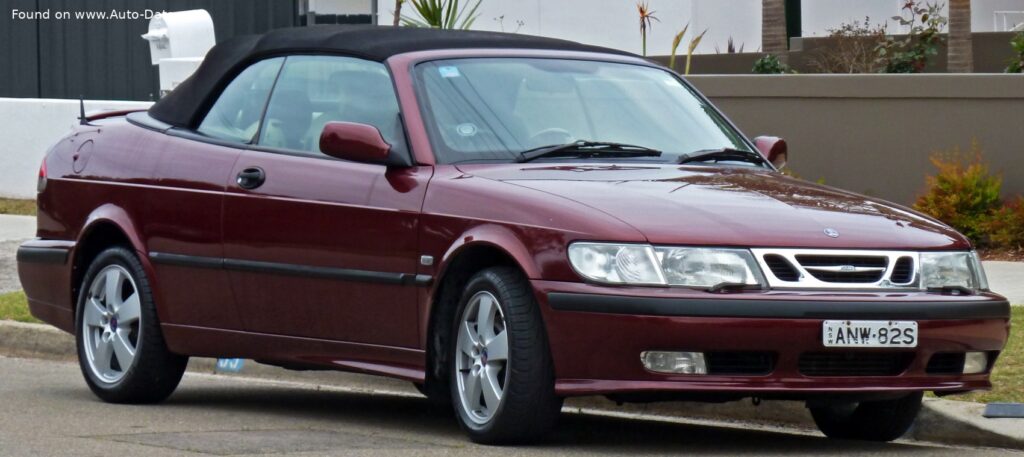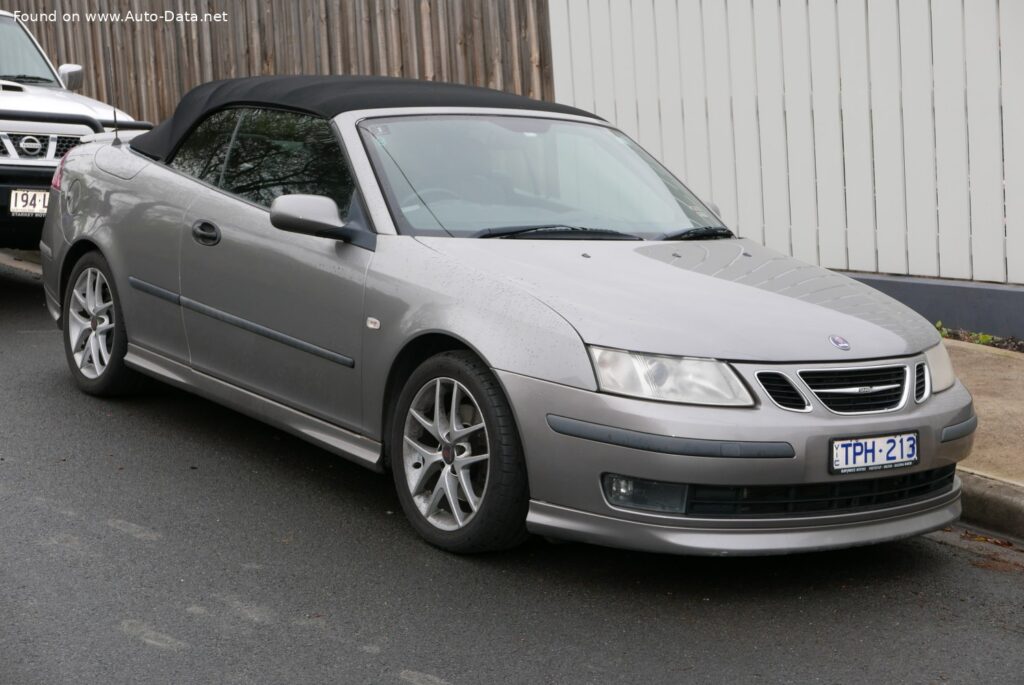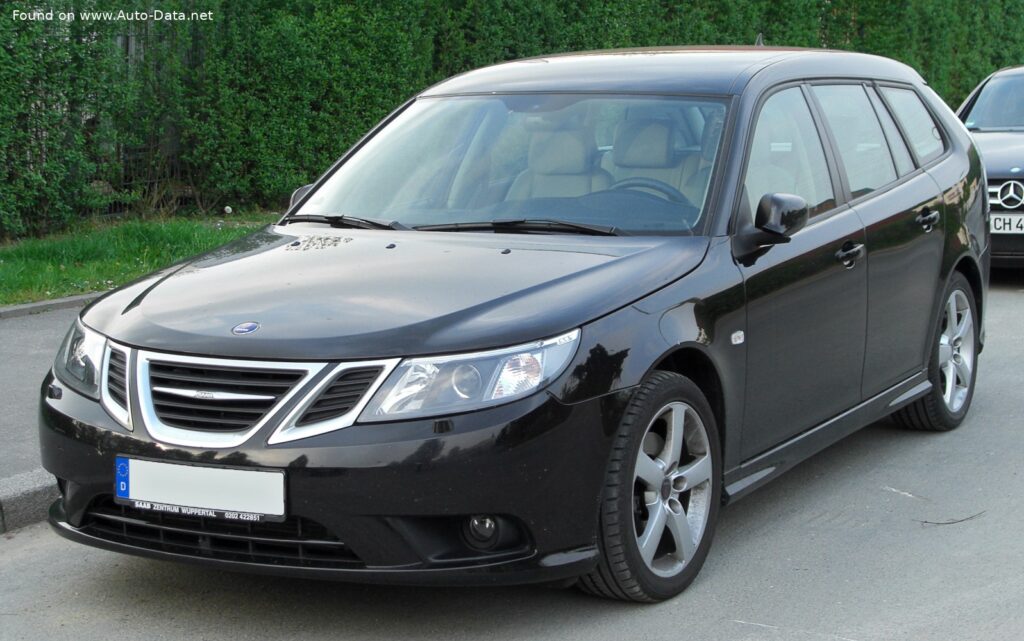
The Saab 9-3 Sport Combi II, specifically the facelifted version introduced in 2007 with the 1.8-liter engine producing 122 horsepower, represents a significant iteration of Saab’s compact executive car. Positioned as a five-door station wagon (estate), this model aimed to blend practicality with Saab’s characteristic Scandinavian design and engineering. While not widely sold in the United States due to Saab’s limited presence in the American market during this period, the 9-3 Sport Combi II was a popular choice in Europe for buyers seeking a stylish and versatile vehicle. This version, produced from 2007 to 2009, offered a refreshed aesthetic and continued Saab’s commitment to safety and driver-focused design.
Saab 9-3 Sport Combi II (2007-2009) 1.8L Overview
The 9-3 Sport Combi II facelift built upon the foundation of the original 9-3, which was introduced in 2002. The “Combi” designation signifies the station wagon body style, offering increased cargo capacity compared to the sedan version. The 2007 facelift brought subtle but noticeable changes to the exterior, including revised front and rear fascias, headlights, and taillights. The interior also received minor updates, focusing on improved materials and ergonomics. The 1.8-liter engine option was intended to provide a balance between fuel efficiency and acceptable performance for everyday driving, making it a competitive offering in the European market.
Engine & Performance
The heart of the 2007-2009 Saab 9-3 Sport Combi II 1.8 is a 1.796-liter (109.6 cubic inches) inline four-cylinder gasoline engine. This naturally aspirated engine, designated Z18XE, produces 122 horsepower at 6000 rpm and 167 Nm (123.17 lb.-ft.) of torque at 3800 rpm. While not a performance-oriented engine, it provided adequate power for typical commuting and highway driving. The engine features multi-port fuel injection and a double overhead camshaft (DOHC) valvetrain with four valves per cylinder. Power is delivered to the front wheels via a five-speed manual transmission. Acceleration from 0 to 100 km/h (0-62 mph) takes 12.5 seconds, and 0 to 60 mph is achieved in approximately 11.9 seconds. The vehicle has a maximum speed of 195 km/h (121.17 mph). The engine’s power-to-weight ratio is 12.5 kg/Hp, and the torque-to-weight ratio is 9.1 kg/Nm.
Design & Features
The Saab 9-3 Sport Combi II is a five-door station wagon designed with a focus on practicality and Scandinavian aesthetics. The body style offers a generous cargo area, making it suitable for families and individuals needing to transport larger items. The trunk provides 419 liters (14.8 cubic feet) of space with the rear seats up, expanding to 1273 liters (44.96 cubic feet) when the rear seats are folded down. The vehicle’s dimensions are 4670 mm (183.86 inches) in length, 1762 mm (69.37 inches) in width, and 1496 mm (58.9 inches) in height.
Safety features were a key consideration in the 9-3’s design. The vehicle is equipped with an Anti-lock Braking System (ABS) as standard. The chassis features independent suspension – McPherson struts at the front and a multi-link setup at the rear – providing a comfortable ride and stable handling. Electric power steering contributes to ease of maneuverability. Standard tire size is 195/65 R15 or 215/55 R16, mounted on 6.5J x 15 or 6.5J x 16 wheels respectively. The 9-3 Sport Combi II also offers a reasonable towing capacity, with a maximum braked trailer load of 1400 kg (3086.47 lbs) and an unbraked trailer load of 735 kg (1620.4 lbs).
Technical Specifications
| Brand | Saab |
| Model | 9-3 |
| Generation | 9-3 Sport Combi II (facelift 2007) |
| Type (Engine) | 1.8 (122 Hp) |
| Start of production | 2007 |
| End of production | 2009 |
| Powertrain Architecture | Internal Combustion engine |
| Body type | Station wagon (estate) |
| Seats | 5 |
| Doors | 5 |
| Fuel consumption (urban) | 10.5 l/100 km (22.4 US mpg, 26.9 UK mpg, 9.5 km/l) |
| Fuel consumption (extra urban) | 6.1 l/100 km (38.6 US mpg, 46.3 UK mpg, 16.4 km/l) |
| Fuel consumption (combined) | 7.8 l/100 km (30.2 US mpg, 36.2 UK mpg, 12.8 km/l) |
| CO2 emissions | 185 g/km |
| Fuel Type | Petrol (Gasoline) |
| Acceleration 0 – 100 km/h | 12.5 sec |
| Acceleration 0 – 62 mph | 12.5 sec |
| Acceleration 0 – 60 mph | 11.9 sec |
| Maximum speed | 195 km/h (121.17 mph) |
| Emission standard | Euro 4 |
| Weight-to-power ratio | 12.5 kg/Hp |
| Weight-to-torque ratio | 9.1 kg/Nm |
| Power | 122 Hp @ 6000 rpm |
| Torque | 167 Nm @ 3800 rpm (123.17 lb.-ft. @ 3800 rpm) |
| Engine layout | Front, Transverse |
| Engine Model/Code | Z18XE |
| Engine displacement | 1796 cm3 (109.6 cu. in.) |
| Number of cylinders | 4 |
| Engine configuration | Inline |
| Cylinder Bore | 80.5 mm (3.17 in.) |
| Piston Stroke | 88.5 mm (3.48 in.) |
| Compression ratio | 10.5:1 |
| Number of valves per cylinder | 4 |
| Fuel injection system | Multi-port manifold injection |
| Engine aspiration | Naturally aspirated |
| Valvetrain | DOHC |
| Engine oil capacity | 4.3 l (4.54 US qt | 3.78 UK qt) |
| Coolant capacity | 6.5 l (6.87 US qt | 5.72 UK qt) |
| Kerb Weight | 1525 kg (3362.05 lbs.) |
| Max. weight | 1970 kg (4343.11 lbs.) |
| Max load | 445 kg (981.06 lbs.) |
| Trunk (boot) space – minimum | 419 l (14.8 cu. ft.) |
| Trunk (boot) space – maximum | 1273 l (44.96 cu. ft.) |
| Fuel tank capacity | 58 l (15.32 US gal | 12.76 UK gal) |
| Max. roof load | 100 kg (220.46 lbs.) |
| Permitted trailer load (braked) | 1400 kg (3086.47 lbs.) |
| Permitted trailer load (unbraked) | 735 kg (1620.4 lbs.) |
| Length | 4670 mm (183.86 in.) |
| Width | 1762 mm (69.37 in.) |
| Width including mirrors | 2038 mm (80.24 in.) |
| Height | 1496 mm (58.9 in.) |
| Wheelbase | 2675 mm (105.31 in.) |
| Front track | 1524 mm (60 in.) |
| Rear track | 1506 mm (59.29 in.) |
| Ride height (ground clearance) | 127 mm (5 in.) |
| Minimum turning circle | 10.8 m (35.43 ft.) |
| Drive wheel | Front wheel drive |
| Number of gears | 5 |
| Gearbox type | Manual transmission |