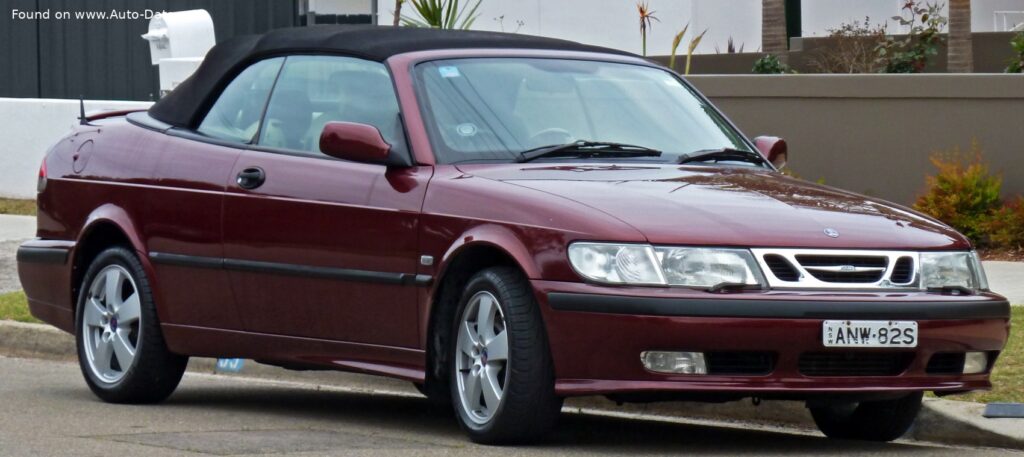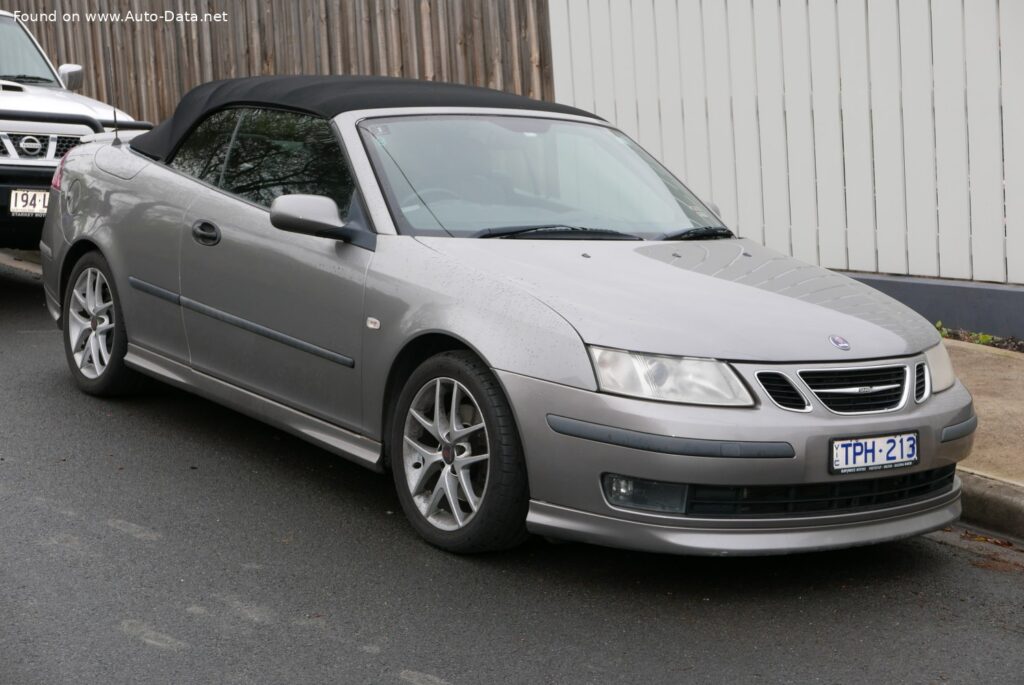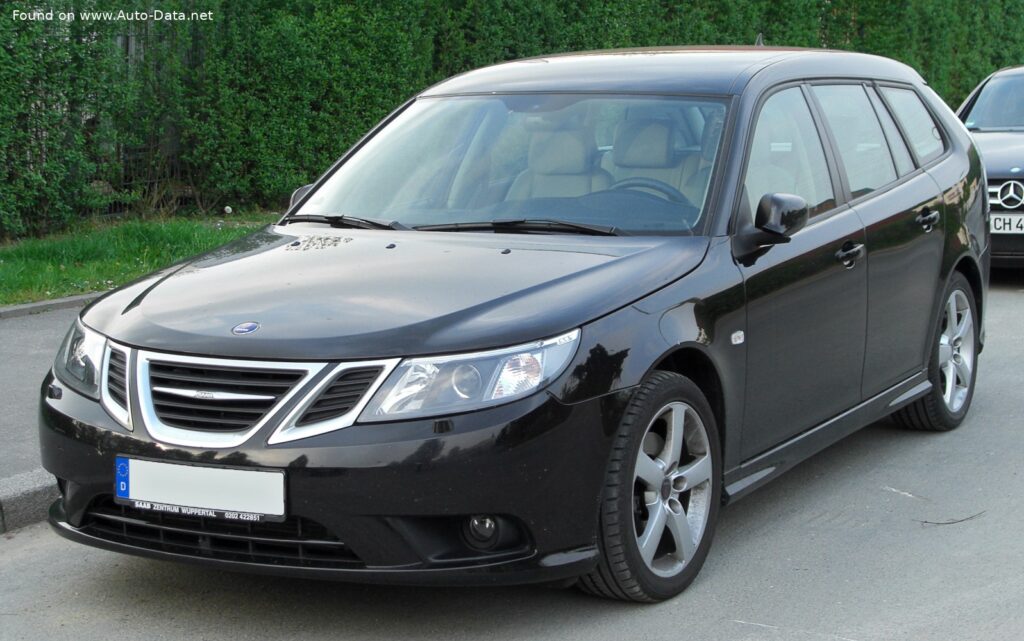
The Saab 9-3 Sport Combi II, specifically the facelifted version introduced in September 2007 and produced through December 2010, represents a significant iteration of Saab’s compact executive car. Positioned as a five-door, five-seat station wagon (estate), the 9-3 Sport Combi aimed to blend practicality with Saab’s characteristic Scandinavian design and engineering. This version, powered by a 1.9 TiD diesel engine producing 120 horsepower, was primarily marketed in Europe, where the station wagon body style enjoys considerable popularity. While Saab as a brand ultimately ceased production, the 9-3 Sport Combi remains a notable example of the company’s commitment to innovative design and a unique driving experience.
Saab 9-3 Sport Combi II (2007-2010) 1.9 TiD
The 2007 facelift brought subtle but important changes to the 9-3 Sport Combi, refining its aesthetics and enhancing its overall appeal. The 1.9 TiD model, equipped with a turbocharged diesel engine, offered a balance of fuel efficiency and reasonable performance, making it a popular choice for drivers seeking a practical and economical vehicle. The Sport Combi body style provided increased cargo capacity compared to the sedan version, catering to families and individuals with active lifestyles. It’s important to note that Saab never had a substantial presence in the US market, and the 9-3 Sport Combi was not officially sold there. However, a dedicated enthusiast base imported examples, appreciating the car’s distinctive character.
Engine & Performance
The heart of the 9-3 Sport Combi 1.9 TiD is a 1.9-liter inline-four cylinder diesel engine, designated the Z19DT. This engine utilizes a common rail direct fuel injection system and is equipped with a turbocharger and intercooler to boost power and efficiency. It produces 120 horsepower at 3500 rpm and 280 Nm (206.52 lb.-ft.) of torque between 2000 and 2750 rpm. This torque output provides good low-end responsiveness, making the car relatively easy to drive in everyday conditions. The engine is transversely mounted at the front of the vehicle. Performance figures include a 0-100 km/h (0-62 mph) acceleration time of 12 seconds and a maximum speed of 195 km/h (121.17 mph). The 6-speed manual transmission allows for driver engagement, while the front-wheel-drive configuration contributes to fuel economy. Fuel consumption is rated at 5.5 l/100 km (42.8 US mpg) combined, with urban and extra-urban figures of 7.3 l/100 km (32.2 US mpg) and 4.5 l/100 km (52.3 US mpg) respectively. CO2 emissions are rated at 149 g/km, meeting Euro 4 emission standards.
Design & Features
The Saab 9-3 Sport Combi II boasts a sleek and functional station wagon design. The 2007 facelift included revisions to the front fascia, headlights, and grille, giving the car a more contemporary appearance. The interior is characterized by a driver-focused layout, reflecting Saab’s commitment to ergonomics and safety. Key features include comfortable seating for five passengers, a spacious cargo area with a minimum capacity of 419 liters (14.8 cu. ft.) expanding to 1273 liters (44.96 cu. ft.) with the rear seats folded down. Safety features, typical for a vehicle of this era, include ABS (Anti-lock Braking System). The car’s suspension consists of an independent McPherson strut setup at the front and an independent multi-link spring suspension at the rear, providing a comfortable ride and stable handling. Available wheel sizes range from 16 to 19 inches, with tire sizes varying accordingly. The vehicle’s dimensions are: length 4670 mm (183.86 in), width 1762 mm (69.37 in), and height 1496 mm (58.9 in).
Technical Specifications
| Brand | Saab |
| Model | 9-3 |
| Generation | 9-3 Sport Combi II (facelift 2007) |
| Type (Engine) | 1.9 TiD (120 Hp) |
| Start of production | September, 2007 |
| End of production | December, 2010 |
| Powertrain Architecture | Internal Combustion engine |
| Body type | Station wagon (estate) |
| Seats | 5 |
| Doors | 5 |
| Fuel consumption (economy) – urban (NEDC) | 7.3 l/100 km (32.2 US mpg) |
| Fuel consumption (economy) – extra urban (NEDC) | 4.5 l/100 km (52.3 US mpg) |
| Fuel consumption (economy) – combined (NEDC) | 5.5 l/100 km (42.8 US mpg) |
| CO2 emissions (NEDC) | 149 g/km |
| Fuel Type | Diesel |
| Acceleration 0 – 100 km/h | 12 sec |
| Acceleration 0 – 62 mph | 12 sec |
| Acceleration 0 – 60 mph | 11.4 sec |
| Maximum speed | 195 km/h (121.17 mph) |
| Emission standard | Euro 4 |
| Weight-to-power ratio | 13.7 kg/Hp |
| Weight-to-torque ratio | 5.9 kg/Nm |
| Power | 120 Hp @ 3500 rpm |
| Torque | 280 Nm @ 2000-2750 rpm (206.52 lb.-ft.) |
| Engine layout | Front, Transverse |
| Engine Model/Code | Z19DT |
| Engine displacement | 1910 cm3 (116.56 cu. in.) |
| Number of cylinders | 4 |
| Engine configuration | Inline |
| Cylinder Bore | 82 mm (3.23 in.) |
| Piston Stroke | 90.4 mm (3.56 in.) |
| Compression ratio | 18.01:1 |
| Number of valves per cylinder | 2 |
| Fuel injection system | Diesel Commonrail |
| Engine aspiration | Turbocharger, Intercooler |
| Valvetrain | SOHC |
| Engine oil capacity | 4.3 l (4.54 US qt | 3.78 UK qt) |
| Coolant | 7.5 l (7.93 US qt | 6.6 UK qt) |
| Kerb Weight | 1640 kg (3615.58 lbs.) |
| Max. weight | 2090 kg (4607.66 lbs.) |
| Max load | 450 kg (992.08 lbs.) |
| Trunk (boot) space – minimum | 419 l (14.8 cu. ft.) |
| Trunk (boot) space – maximum | 1273 l (44.96 cu. ft.) |
| Fuel tank capacity | 58 l (15.32 US gal | 12.76 UK gal) |
| Length | 4670 mm (183.86 in.) |
| Width | 1762 mm (69.37 in.) |
| Height | 1496 mm (58.9 in.) |
| Wheelbase | 2675 mm (105.31 in.) |
| Number of gears and type of gearbox | 6 gears, manual transmission |