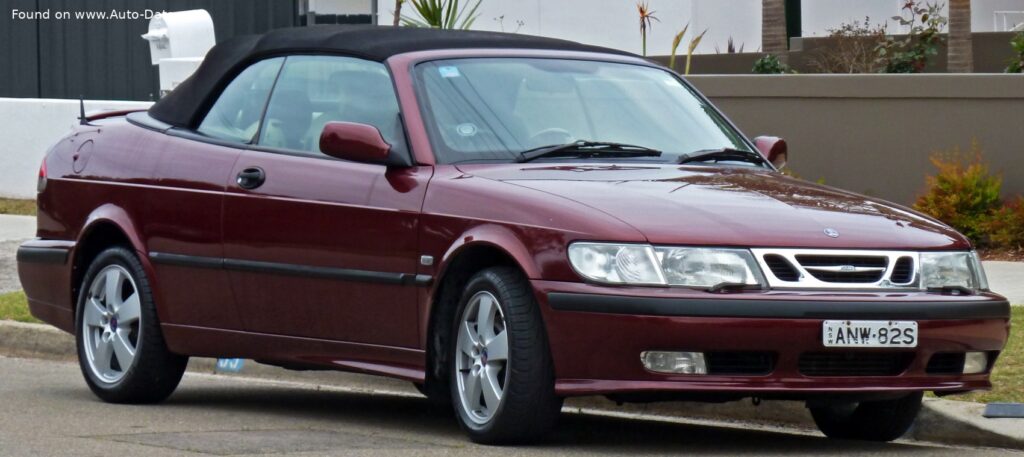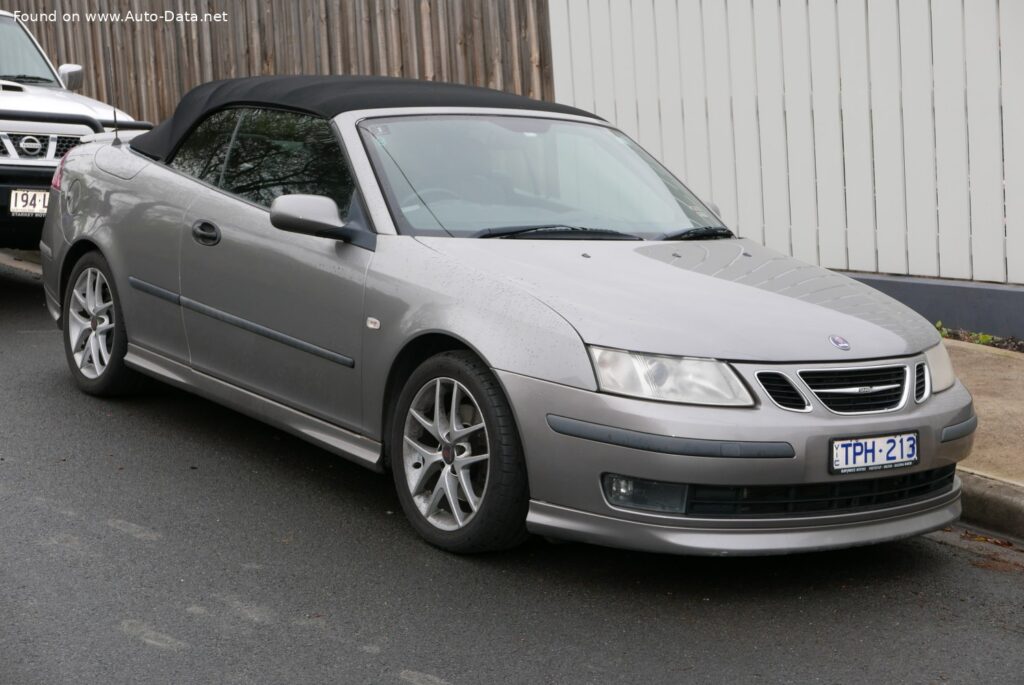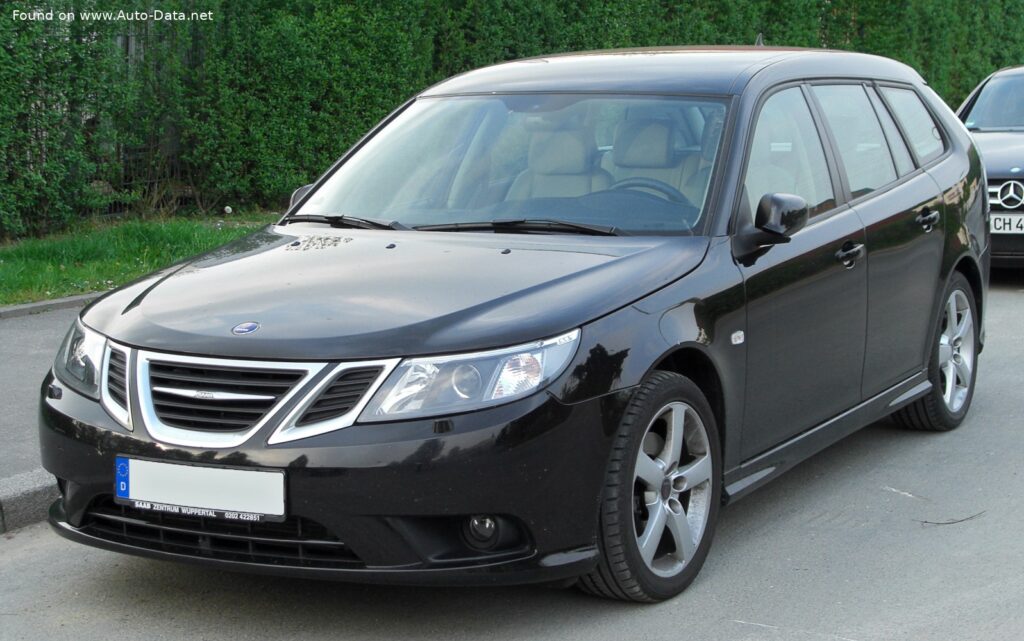
The Saab 9-3 Sport Combi II, specifically the facelifted version introduced in September 2007, represents a significant iteration of Saab’s compact executive car. Positioned as a five-door, five-seat station wagon (estate), the 9-3 Sport Combi aimed to blend practicality with Saab’s characteristic Scandinavian design and engineering. This generation, produced through December 2010, offered a compelling alternative in the European market, emphasizing versatility and a more refined driving experience compared to its predecessor. The 1.9 TTiD variant, equipped with a twin-turbo diesel engine and Sentronic automatic transmission, was a popular choice for buyers seeking a balance of performance and fuel efficiency.
Saab 9-3 Sport Combi II (2007-2010): A Detailed Overview
The 9-3 Sport Combi II facelift brought subtle but important changes to the original design, including revised front and rear styling, interior enhancements, and updated engine options. The focus was on improving the car’s overall appeal and competitiveness within the crowded compact executive segment. While Saab was ultimately acquired by National Electric Vehicle Sweden (NEVS) and production ceased, the 9-3 Sport Combi II remains a notable example of Saab’s commitment to innovative design and engineering.
Engine & Performance
The heart of the 9-3 Sport Combi II 1.9 TTiD is its 1.9-liter inline-four cylinder diesel engine, designated Z19DTR. This engine is notable for its twin-turbocharger configuration, which delivers a robust 180 horsepower at 4000 rpm and a substantial 370 Nm (272.9 lb.-ft.) of torque between 1750 and 3250 rpm. The twin-turbo setup allows for minimal turbo lag and a broad, usable powerband, contributing to responsive acceleration. Paired with a six-speed Sentronic automatic transmission, the 9-3 TTiD achieves a 0-100 km/h (0-62 mph) time of 9.2 seconds, and a 0-60 mph time of 8.7 seconds. Maximum speed is electronically limited to 215 km/h (133.59 mph). The engine’s 16.5:1 compression ratio is typical for a direct-injection diesel, and the common rail fuel injection system ensures precise fuel delivery for optimal combustion and efficiency. The engine’s power-to-litre ratio is 94.2 hp/l.
Design & Features
The Saab 9-3 Sport Combi II is a classically proportioned station wagon, characterized by its long roofline and practical cargo area. The 2007 facelift brought a revised front grille, headlights, and bumper, giving the car a more contemporary appearance. Inside, the cabin features a driver-focused layout with comfortable seating for five passengers. The Sport Combi’s key strength lies in its cargo capacity, offering 419 liters (14.8 cu. ft.) with the rear seats up and expanding to 1273 liters (44.96 cu. ft.) with the seats folded down. Safety features were a priority, including ABS (Anti-lock Braking System) and a robust chassis design. The vehicle’s dimensions – 4670 mm (183.86 in.) in length, 1762 mm (69.37 in.) in width, and 1496 mm (58.9 in.) in height – provide a spacious and comfortable interior. The suspension utilizes an independent McPherson strut setup at the front and an independent multi-link system at the rear, providing a balance of ride comfort and handling precision. Hydraulic power steering contributes to a responsive and engaging driving experience.
Technical Specifications
| Brand | Saab |
| Model | 9-3 |
| Generation | 9-3 Sport Combi II (facelift 2007) |
| Type (Engine) | 1.9 TTiD (180 Hp) Sentronic |
| Start of production | September, 2007 |
| End of production | December, 2010 |
| Powertrain Architecture | Internal Combustion engine |
| Body type | Station wagon (estate) |
| Seats | 5 |
| Doors | 5 |
| Fuel consumption (urban) | 9.7 l/100 km (24.2 US mpg, 29.1 UK mpg, 10.3 km/l) |
| Fuel consumption (extra urban) | 5.2 l/100 km (45.2 US mpg, 54.3 UK mpg, 19.2 km/l) |
| Fuel consumption (combined) | 6.9 l/100 km (34.1 US mpg, 40.9 UK mpg, 14.5 km/l) |
| CO2 emissions | 182 g/km |
| Fuel Type | Diesel |
| Acceleration 0 – 100 km/h | 9.2 sec |
| Acceleration 0 – 62 mph | 9.2 sec |
| Acceleration 0 – 60 mph | 8.7 sec |
| Maximum speed | 215 km/h (133.59 mph) |
| Emission standard | Euro 4 |
| Weight-to-power ratio | 9.4 kg/Hp, 106.5 Hp/tonne |
| Weight-to-torque ratio | 4.6 kg/Nm, 218.9 Nm/tonne |
| Power | 180 Hp @ 4000 rpm |
| Torque | 370 Nm @ 1750-3250 rpm (272.9 lb.-ft. @ 1750-3250 rpm) |
| Engine layout | Front, Transverse |
| Engine Model/Code | Z19DTR |
| Engine displacement | 1910 cm3 (116.56 cu. in.) |
| Number of cylinders | 4 |
| Engine configuration | Inline |
| Cylinder Bore | 82 mm (3.23 in.) |
| Piston Stroke | 90.4 mm (3.56 in.) |
| Compression ratio | 16.5:1 |
| Number of valves per cylinder | 4 |
| Fuel injection system | Diesel Commonrail |
| Engine aspiration | Twin-Turbo, Intercooler |
| Valvetrain | DOHC |
| Engine oil capacity | 4.5 l (4.76 US qt | 3.96 UK qt) |
| Coolant capacity | 7.4 l (7.82 US qt | 6.51 UK qt) |
| Kerb Weight | 1690 kg (3725.81 lbs.) |
| Max. weight | 2150 kg (4739.94 lbs.) |
| Max load | 460 kg (1014.13 lbs.) |
| Trunk (boot) space – minimum | 419 l (14.8 cu. ft.) |
| Trunk (boot) space – maximum | 1273 l (44.96 cu. ft.) |
| Fuel tank capacity | 62 l (16.38 US gal | 13.64 UK gal) |
| Max. roof load | 100 kg (220.46 lbs.) |
| Permitted trailer load with brakes (12%) | 1600 kg (3527.4 lbs.) |
| Permitted trailer load without brakes | 750 kg (1653.47 lbs.) |
| Length | 4670 mm (183.86 in.) |
| Width | 1762 mm (69.37 in.) |
| Width including mirrors | 2038 mm (80.24 in.) |
| Height | 1496 mm (58.9 in.) |
| Wheelbase | 2675 mm (105.31 in.) |
| Front track | 1524 mm (60 in.) |
| Rear track | 1506 mm (59.29 in.) |
| Front overhang | 981 mm (38.62 in.) |
| Rear overhang | 1014 mm (39.92 in.) |
| Ride height (ground clearance) | 127 mm (5 in.) |
| Minimum turning circle | 10.8 m (35.43 ft.) |
| Drive wheel | Front wheel drive |
| Number of gears | 6 |
| Gearbox type | automatic transmission Sentronic |
| Front brakes | Ventilated discs, 302 mm |
| Rear brakes | Ventilated discs, 292 mm |
| Tires size | 215/65 R16; 225/50 R17; 235/45 R17; 225/45 R18; 235/45 R18; 235/40 R19 |
The Saab 9-3 Sport Combi II 1.9 TTiD, despite the eventual fate of the Saab brand, remains a compelling example of a practical, efficient, and stylish European station wagon. Its combination of a powerful diesel engine, spacious interior, and distinctive design continues to appeal to enthusiasts and those seeking a versatile vehicle.