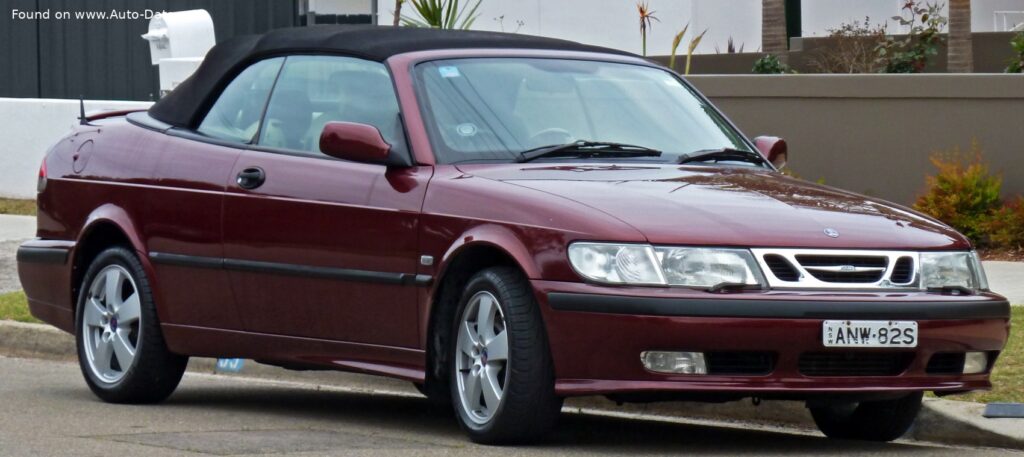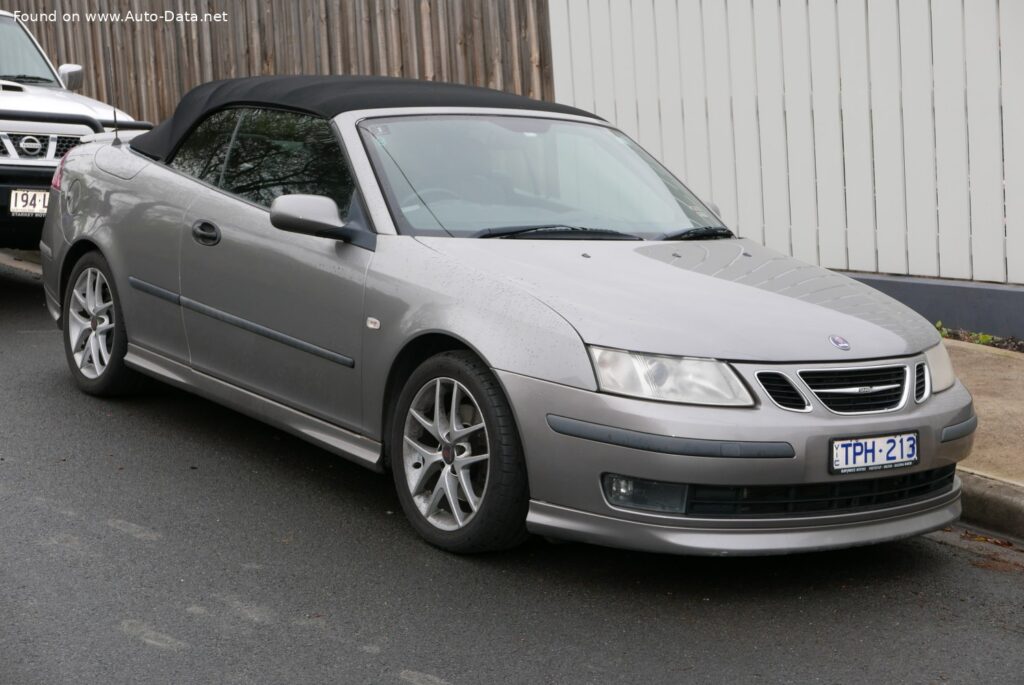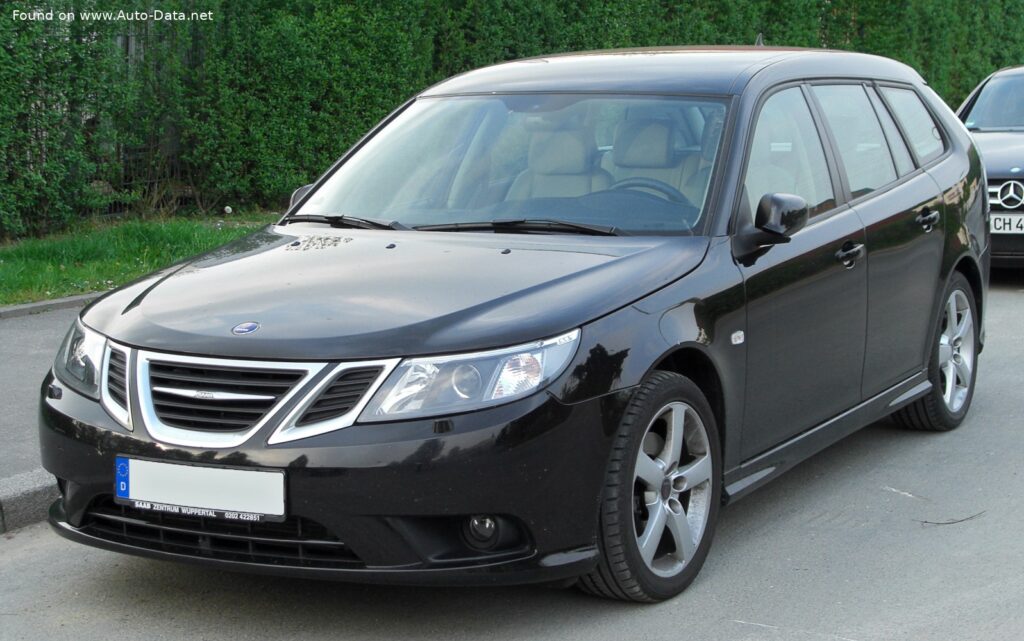
The Saab 9-3 Sport Combi II, specifically the 2.0t BioPower variant produced from 2007 to 2010, represents a significant iteration of Saab’s compact executive car. This facelifted second-generation 9-3 aimed to refine the model’s appeal, offering a blend of Scandinavian design, practical estate car functionality, and a focus on flexible-fuel capability. While Saab as a brand ultimately ceased production in 2011, the 9-3 Sport Combi II remains a notable example of the company’s engineering and design philosophy, particularly its commitment to innovative technology and driver-focused experiences. The 2.0t BioPower model was primarily sold in European markets, where demand for flexible-fuel vehicles was higher, offering owners the option to run on petrol or a blend of petrol and ethanol (E85).
Saab 9-3 Sport Combi II: A Detailed Overview
The 9-3 Sport Combi II occupied the compact executive estate car segment, competing with vehicles like the Audi A4 Avant, BMW 3 Series Touring, and Volvo V60. It distinguished itself through its unique styling, spacious interior for its class, and the availability of the BioPower engine, which allowed for reduced emissions and potential fuel cost savings when utilizing ethanol. The “Combi” designation within Saab’s naming convention specifically denoted the estate (station wagon) body style.
Engine & Performance
The heart of the 9-3 2.0t BioPower is a 1.998-liter (121.93 cubic inches) inline-four cylinder engine. This engine, designated the B207M, produces 200 horsepower at 5500 rpm and 300 Newton-meters (221.27 lb.-ft.) of torque at 2500 rpm. The “BioPower” designation indicates the engine’s capability to run on petrol, E85 (a blend of 85% ethanol and 15% petrol), or any mixture thereof. This flexibility is achieved through modifications to the fuel system and engine management software to accommodate the different fuel properties of ethanol. The engine features a turbocharger with an intercooler, enhancing power output and responsiveness. Power is delivered to the front wheels via a five-speed Sentronic automatic transmission. Performance figures include a 0-100 km/h (0-62 mph) acceleration time of 9.2 seconds and a maximum speed of 220 km/h (136.7 mph). The weight-to-power ratio of 8.1 kg/Hp and weight-to-torque ratio of 5.4 kg/Nm contribute to a reasonably spirited driving experience.
Design & Features
The 9-3 Sport Combi II boasts a classic station wagon body style, offering a practical and versatile cargo area. The 2007 facelift brought subtle styling updates to the front and rear fascias, including revised headlights and taillights, and a redesigned grille. Inside, the 9-3 prioritizes driver comfort and ergonomics, a hallmark of Saab design. The interior features a clean and functional layout with supportive seats and intuitive controls. Key features include a spacious cabin for five passengers, a generous trunk capacity ranging from 419 liters (14.8 cubic feet) with the rear seats up to 1273 liters (44.96 cubic feet) with the rear seats folded down. Safety features, typical for a vehicle of this era, include ABS (Anti-lock Braking System) and a robust chassis design. The car’s dimensions are 4670 mm (183.86 inches) in length, 1762 mm (69.37 inches) in width, and 1496 mm (58.9 inches) in height. The wheelbase measures 2675 mm (105.31 inches).
Technical Specifications
| Brand | Saab |
| Model | 9-3 |
| Generation | 9-3 Sport Combi II (facelift 2007) |
| Type (Engine) | 2.0t BioPower (200 Hp) Sentronic |
| Start of production | 2007 |
| End of production | December, 2010 |
| Powertrain Architecture | Internal Combustion engine |
| Body type | Station wagon (estate) |
| Seats | 5 |
| Doors | 5 |
| Fuel consumption (economy) – urban (NEDC) | 13.3 l/100 km (17.7 US mpg, 21.2 UK mpg, 7.5 km/l) |
| Fuel consumption (economy) – extra urban (NEDC) | 6.9 l/100 km (34.1 US mpg, 40.9 UK mpg, 14.5 km/l) |
| Fuel consumption (economy) – combined (NEDC) | 9.3 l/100 km (25.3 US mpg, 30.4 UK mpg, 10.8 km/l) |
| CO2 emissions (NEDC) | 222 g/km |
| Fuel Type | Petrol / Ethanol – E85 |
| Acceleration 0 – 100 km/h | 9.2 sec |
| Acceleration 0 – 62 mph | 9.2 sec |
| Acceleration 0 – 60 mph | 8.7 sec |
| Maximum speed | 220 km/h (136.7 mph) |
| Emission standard | Euro 4 |
| Weight-to-power ratio | 8.1 kg/Hp, 123.8 Hp/tonne |
| Weight-to-torque ratio | 5.4 kg/Nm, 185.8 Nm/tonne |
| Power | 200 Hp @ 5500 rpm |
| Power per litre | 100.1 Hp/l |
| Torque | 300 Nm @ 2500 rpm (221.27 lb.-ft. @ 2500 rpm) |
| Engine layout | Front, Transverse |
| Engine Model/Code | B207M |
| Engine displacement | 1998 cm3 (121.93 cu. in.) |
| Number of cylinders | 4 |
| Engine configuration | Inline |
| Cylinder Bore | 86 mm (3.39 in.) |
| Piston Stroke | 86 mm (3.39 in.) |
| Compression ratio | 9.5:1 |
| Number of valves per cylinder | 4 |
| Fuel injection system | Multi-port manifold injection |
| Engine aspiration | Turbocharger, Intercooler |
| Valvetrain | DOHC |
| Engine oil capacity | 6 l (6.34 US qt | 5.28 UK qt) |
| Coolant | 7.1 l (7.5 US qt | 6.25 UK qt) |
| Kerb Weight | 1615 kg (3560.47 lbs.) |
| Max. weight | 2060 kg (4541.52 lbs.) |
| Max load | 445 kg (981.06 lbs.) |
| Trunk (boot) space – minimum | 419 l (14.8 cu. ft.) |
| Trunk (boot) space – maximum | 1273 l (44.96 cu. ft.) |
| Fuel tank capacity | 61 l (16.11 US gal | 13.42 UK gal) |
| Max. roof load | 100 kg (220.46 lbs.) |
| Permitted trailer load with brakes (12%) | 1600 kg (3527.4 lbs.) |
| Permitted trailer load without brakes | 750 kg (1653.47 lbs.) |
| Length | 4670 mm (183.86 in.) |
| Width | 1762 mm (69.37 in.) |
| Width including mirrors | 2038 mm (80.24 in.) |
| Height | 1496 mm (58.9 in.) |
| Wheelbase | 2675 mm (105.31 in.) |
| Front track | 1524 mm (60 in.) |
| Rear (Back) track | 1506 mm (59.29 in.) |
| Front overhang | 981 mm (38.62 in.) |
| Rear overhang | 1014 mm (39.92 in.) |
| Ride height (ground clearance) | 127 mm (5 in.) |
| Minimum turning circle (turning diameter) | 10.8 m (35.43 ft.) |
| Drive wheel | Front wheel drive |
| Number of gears and type of gearbox | 5 gears, automatic transmission Sentronic |
| Front suspension | Independent type McPherson, Transverse stabilizer |
| Rear suspension | Independent multi-link suspension, Transverse stabilizer |
| Front brakes | Ventilated discs, 302 mm |
| Rear brakes | Ventilated discs, 292 mm |
| Assisting systems | ABS (Anti-lock braking system) |
| Steering type | Steering rack and pinion |
| Power steering | Hydraulic Steering |
| Tires size | 195/65 R15; 215/55 R16; 235/45 R17 |
| Wheel rims size | 6.5J x 15; 6.5J x 16; 7.5J x 17 |
The Saab 9-3 Sport Combi II 2.0t BioPower, while no longer in production, remains a compelling option for those seeking a practical, stylish, and technologically advanced estate car with a unique Scandinavian flair. Its flexible-fuel capability and focus on driver experience continue to set it apart from its competitors.