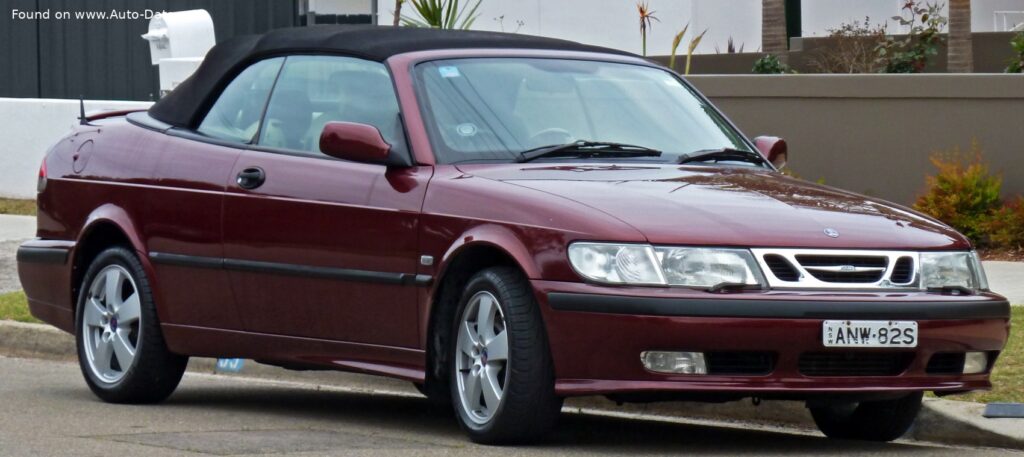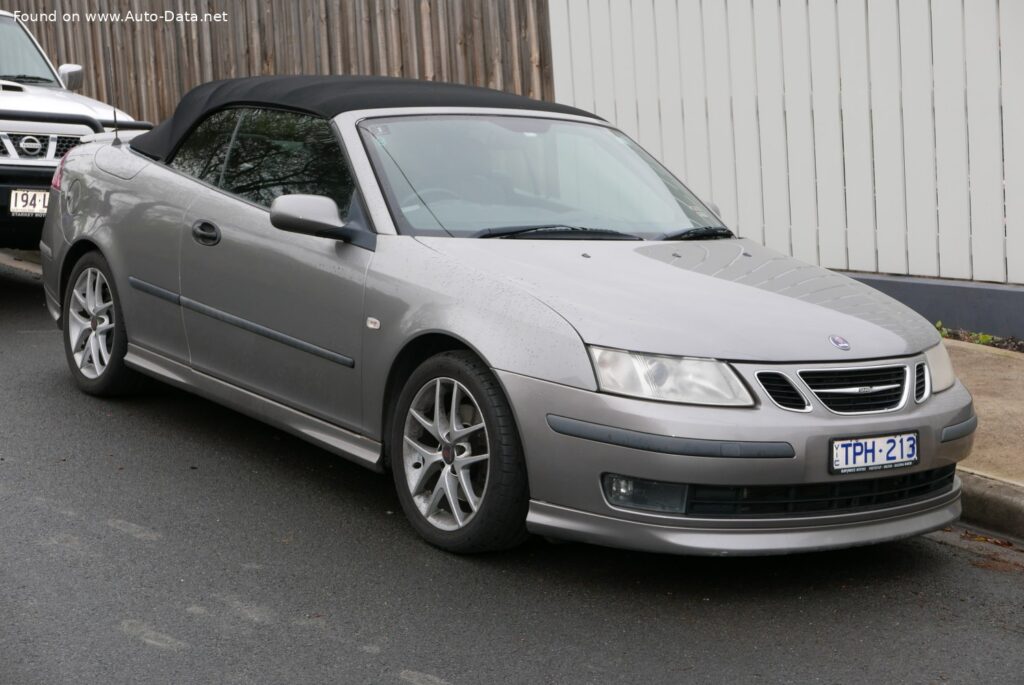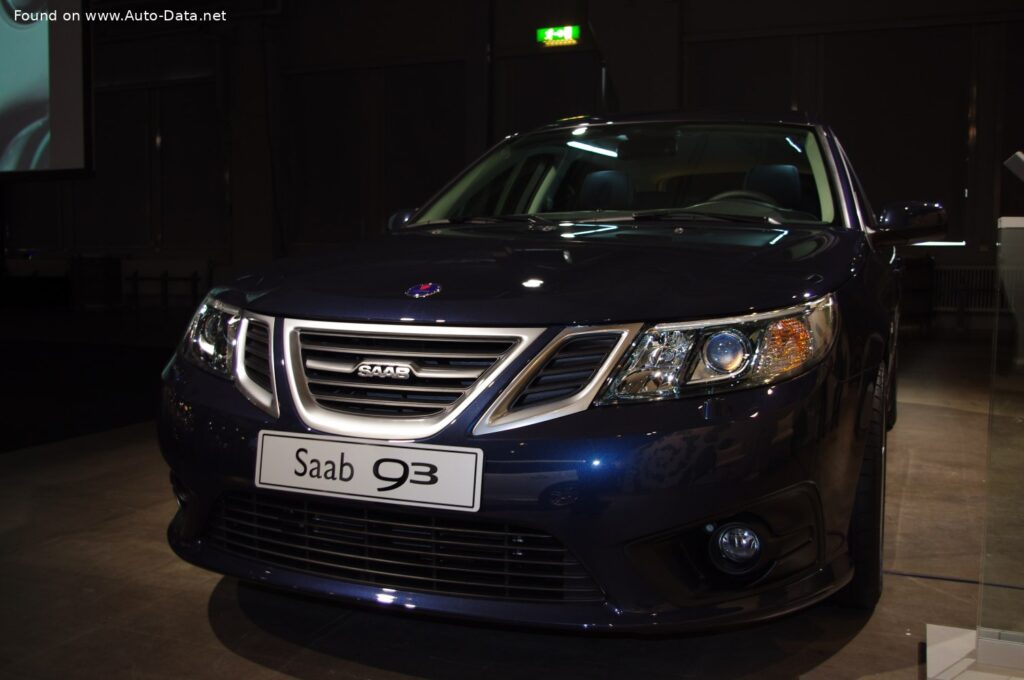
The Saab 9-3 Sport Combi II Griffin, specifically the 1.9 TTiD variant produced during the brief 2011 model year, represents a final iteration of Saab’s popular compact executive car before the brand’s unfortunate demise. This model, a facelift of the second-generation 9-3 Sport Combi (estate/wagon), aimed to refine the vehicle’s appeal with updated styling and efficient powertrain options. While Saab was a Swedish marque, the 9-3 found a niche audience across Europe, offering a distinctive alternative to more mainstream German and British competitors. The Sport Combi body style prioritized practicality and cargo space, making it a popular choice for families and those requiring versatile transportation. This particular version, powered by a twin-turbo diesel engine, focused on balancing performance with fuel economy, a key consideration in the European market.
Saab 9-3 Sport Combi II Griffin (2011) 1.9 TTiD: An Overview
The 2011 facelift, often referred to as the “Griffin” edition, brought subtle cosmetic changes to the 9-3 range, including revised front and rear bumpers, a new grille, and updated interior trim. However, the core of the vehicle remained largely unchanged, retaining the strengths of the second-generation 9-3 platform. The 1.9 TTiD engine was a key component of Saab’s efforts to meet increasingly stringent European emissions standards while still delivering competitive performance. The Sport Combi body style offered a generous cargo capacity, making it a practical choice for everyday use. The 9-3, throughout its lifespan, was known for its focus on driver engagement and a unique Scandinavian design aesthetic.
Engine & Performance
The heart of the 2011 Saab 9-3 Sport Combi II Griffin 1.9 TTiD is a 1.9-liter inline-four cylinder diesel engine, designated A19DTR. This engine is notable for its twin-turbocharger configuration, which helps to mitigate turbo lag and deliver a broad torque curve. The engine produces 180 horsepower at 4,000 rpm and a substantial 400 Nm (295 lb-ft) of torque between 1,800 and 3,000 rpm. This torque output provides strong acceleration and effortless cruising. The engine features a diesel commonrail fuel injection system and a compression ratio of 16.5:1. The engine’s power per liter is rated at 94.2 hp/l. Acceleration from 0 to 100 km/h (0-62 mph) takes 8.7 seconds, while 0-60 mph is achieved in approximately 8.3 seconds. The vehicle boasts a maximum speed of 225 km/h (139.81 mph). The engine meets Euro 5 emission standards, reflecting Saab’s commitment to environmental responsibility. The drivetrain is front-wheel drive, coupled with a six-speed manual transmission.
Design & Features
The Saab 9-3 Sport Combi II Griffin is a five-door station wagon (estate) designed to accommodate five passengers. Its exterior styling is characterized by clean lines and a distinctive Saab grille. The Sport Combi body style offers a practical and spacious interior, with a minimum trunk capacity of 477 liters (16.85 cubic feet) expanding to a maximum of 1331 liters (47 cubic feet) with the rear seats folded down. The vehicle’s dimensions are: length 4691 mm (184.69 in), width 1762 mm (69.37 in), and height 1492 mm (58.74 in). The wheelbase measures 2675 mm (105.31 in). Safety features, typical for a vehicle of this era, include ABS (Anti-lock Braking System). The interior is designed with a focus on ergonomics and driver comfort, reflecting Saab’s commitment to creating a user-friendly driving experience. The vehicle’s kerb weight ranges from 1530 to 1695 kg (3373.07 to 3736.84 lbs), depending on the specific equipment and options.
Technical Specifications
| Brand | Saab |
| Model | 9-3 |
| Generation | 9-3 Sport Combi II Griffin (facelift 2011) |
| Type (Engine) | 1.9 TTiD (180 Hp) |
| Start of production | 2011 |
| End of production | December, 2011 |
| Powertrain Architecture | Internal Combustion engine |
| Body type | Station wagon (estate) |
| Seats | 5 |
| Doors | 5 |
| Fuel consumption (urban) | 5.6-6.4 l/100 km (42 – 36.8 US mpg) |
| Fuel consumption (extra urban) | 3.9-4.4 l/100 km (60.3 – 53.5 US mpg) |
| Fuel consumption (combined) | 4.5-5.1 l/100 km (52.3 – 46.1 US mpg) |
| CO2 emissions | 119-135 g/km |
| Fuel Type | Diesel |
| Acceleration 0 – 100 km/h | 8.7 sec |
| Acceleration 0 – 62 mph | 8.7 sec |
| Acceleration 0 – 60 mph | 8.3 sec |
| Maximum speed | 225 km/h (139.81 mph) |
| Emission standard | Euro 5 |
| Weight-to-power ratio | 8.5 kg/Hp |
| Weight-to-torque ratio | 3.8 kg/Nm |
| Power | 180 Hp @ 4000 rpm |
| Torque | 400 Nm @ 1800-3000 rpm (295.02 lb.-ft.) |
| Engine layout | Front, Transverse |
| Engine Model/Code | A19DTR |
| Engine displacement | 1910 cm3 (116.56 cu. in.) |
| Number of cylinders | 4 |
| Engine configuration | Inline |
| Cylinder Bore | 82 mm (3.23 in.) |
| Piston Stroke | 90.4 mm (3.56 in.) |
| Compression ratio | 16.5:1 |
| Number of valves per cylinder | 4 |
| Fuel injection system | Diesel Commonrail |
| Engine aspiration | Twin-Turbo, Intercooler |
| Valvetrain | DOHC |
| Engine oil capacity | 4.5 l (4.76 US qt | 3.96 UK qt) |
| Coolant capacity | 7.4 l (7.82 US qt | 6.51 UK qt) |
| Kerb Weight | 1530-1695 kg (3373.07 – 3736.84 lbs.) |
| Max. weight | 2120 kg (4673.8 lbs.) |
| Max load | 425-590 kg (936.96 – 1300.73 lbs.) |
| Trunk (boot) space – minimum | 477 l (16.85 cu. ft.) |
| Trunk (boot) space – maximum | 1331 l (47 cu. ft.) |
| Fuel tank capacity | 58 l (15.32 US gal | 12.76 UK gal) |
| Max. roof load | 100 kg (220.46 lbs.) |
| Permitted trailer load with brakes (12%) | 1600 kg (3527.4 lbs.) |
| Permitted trailer load without brakes | 750 kg (1653.47 lbs.) |
| Length | 4691 mm (184.69 in.) |
| Width | 1762 mm (69.37 in.) |
| Width including mirrors | 2038 mm (80.24 in.) |
| Height | 1492 mm (58.74 in.) |
| Wheelbase | 2675 mm (105.31 in.) |
| Front track | 1524 mm (60 in.) |
| Rear track | 1506 mm (59.29 in.) |
| Minimum turning circle | 10.8 m (35.43 ft.) |
| Drive wheel | Front wheel drive |
| Number of gears | 6 gears, manual transmission |
| Front brakes | Ventilated discs, 302 mm |
| Rear brakes | Ventilated discs, 292 mm |
| Tires size | 225/45 R17; 235/45 R17; 225/45 R18; 235/45 R18; 235/40 R19 |
The 2011 Saab 9-3 Sport Combi II Griffin 1.9 TTiD, while a relatively short-lived model, represents a compelling blend of Scandinavian design, practical functionality, and efficient diesel power. Its demise alongside the Saab brand itself makes it a poignant reminder of a unique and innovative automaker.