
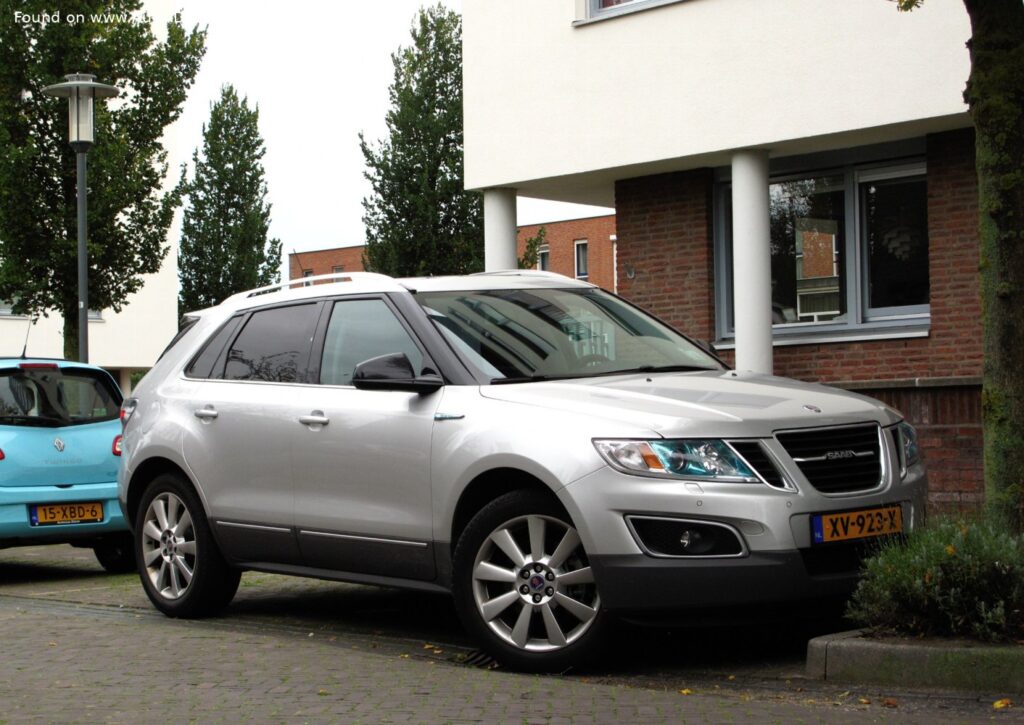
The Saab 9-4X is a compact luxury crossover SUV that was produced by the Swedish manufacturer Saab Automobile for the 2011 and 2012 model years. Positioned above the Saab 9-3 in the company’s lineup, the 9-4X represented Saab’s attempt to enter the growing luxury SUV market, primarily targeting North America. Despite positive reviews for its driving dynamics and interior quality, the 9-4X suffered from limited production numbers and was ultimately discontinued following Saab’s bankruptcy in 2011. The 3.0i V6 XWD Automatic model, producing 265 horsepower, was a key variant within the 9-4X range.
Saab 9-4X: A Brief History and Market Positioning
Developed under General Motors ownership, the 9-4X shared its platform with the Cadillac SRX and Chevrolet Equinox. However, Saab engineers focused on refining the chassis and suspension to deliver a more engaging driving experience, consistent with the brand’s reputation for sporty handling. The vehicle was intended to broaden Saab’s appeal and attract customers seeking a premium SUV with a distinctive Scandinavian design. The 9-4X was never widely available globally, with sales concentrated in the United States, Canada, and select European markets. Its short production run makes it a relatively rare vehicle today, sought after by Saab enthusiasts.
Engine & Performance
The Saab 9-4X 3.0i V6 XWD Automatic is powered by a 3.0-liter, naturally aspirated V6 engine, designated the LF1. This engine produces 265 horsepower at 6,950 rpm and 302 Nm (222.74 lb-ft) of torque at 5,100 rpm. The engine features direct fuel injection and a double overhead camshaft (DOHC) valvetrain with four valves per cylinder. This configuration delivers a power output of 88.4 horsepower per liter. The engine’s transverse mounting and the vehicle’s all-wheel-drive system contribute to balanced handling. The six-speed automatic transmission provides smooth and responsive gear changes. The weight-to-power ratio of 7.3 kg/Hp and a weight-to-torque ratio of 6.4 kg/Nm contribute to respectable acceleration. Fuel economy is rated at 13.8 l/100 km (17 US mpg) in urban driving and 10.2 l/100 km (23.1 US mpg) in extra-urban conditions.
Design & Features
The Saab 9-4X boasts a distinctive Scandinavian design aesthetic, characterized by clean lines and a focus on functionality. As a five-door SUV with seating for five passengers, it offers a practical and spacious interior. The exterior styling incorporates Saab’s signature wraparound rear window and a prominent grille. Inside, the cabin is well-appointed with quality materials and a driver-focused layout. Key features include leather upholstery, a premium audio system, and a navigation system. Safety was a priority, with standard features such as anti-lock brakes (ABS), stability control, and multiple airbags. The XWD all-wheel-drive system provides enhanced traction and stability in various driving conditions. The trunk offers a generous 827 liters (29.21 cu. ft.) of cargo space. The vehicle’s ride height of 200 mm (7.87 in) provides adequate ground clearance for light off-road use.
Technical Specifications
| Brand | Saab |
| Model | 9-4X |
| Generation | 9-4X |
| Type (Engine) | 3.0i V6 (265 Hp) XWD Automatic |
| Start of production | 2010 |
| End of production | 2011 |
| Powertrain Architecture | Internal Combustion engine |
| Body type | SUV |
| Seats | 5 |
| Doors | 5 |
| Fuel consumption (urban) | 13.8 l/100 km (17 US mpg) |
| Fuel consumption (extra urban) | 10.2 l/100 km (23.1 US mpg) |
| Fuel Type | Petrol (Gasoline) |
| Weight-to-power ratio | 7.3 kg/Hp |
| Weight-to-torque ratio | 6.4 kg/Nm |
| Power | 265 Hp @ 6950 rpm |
| Power per litre | 88.4 Hp/l |
| Torque | 302 Nm @ 5100 rpm (222.74 lb.-ft. @ 5100 rpm) |
| Engine layout | Front, Transverse |
| Engine Model/Code | LF1 |
| Engine displacement | 2997 cm3 (182.89 cu. in.) |
| Number of cylinders | 6 |
| Engine configuration | V-engine |
| Cylinder Bore | 89 mm (3.5 in.) |
| Piston Stroke | 80.26 mm (3.16 in.) |
| Compression ratio | 11.7:1 |
| Number of valves per cylinder | 4 |
| Fuel injection system | Direct injection |
| Engine aspiration | Naturally aspirated engine |
| Valvetrain | DOHC |
| Engine oil capacity | 5.7 l (6.02 US qt | 5.02 UK qt) |
| Coolant capacity | 11.7 l (12.36 US qt | 10.29 UK qt) |
| Kerb Weight | 1928-1975 kg (4250.51 – 4354.13 lbs.) |
| Trunk (boot) space (minimum) | 827 l (29.21 cu. ft.) |
| Fuel tank capacity | 80 l (21.13 US gal | 17.6 UK gal) |
| Permitted trailer load with brakes (12%) | 1588 kg (3500.94 lbs.) |
| Length | 4829 mm (190.12 in.) |
| Width | 1905 mm (75 in.) |
| Height | 1679 mm (66.1 in.) |
| Wheelbase | 2807 mm (110.51 in.) |
| Front track | 1622 mm (63.86 in.) |
| Rear track | 1623 mm (63.9 in.) |
| Front overhang | 1006 mm (39.61 in.) |
| Rear overhang | 1016 mm (40 in.) |
| Ride height (ground clearance) | 200 mm (7.87 in.) |
| Drag coefficient (Cd) | 0.38 |
| Minimum turning circle | 11.9 m (39.04 ft.) |
| Drivetrain Architecture | All wheel drive (4×4) |
| Number of gears | 6 |
| Gearbox type | Automatic transmission |
| Front suspension | Independent, McPherson with coil spring and anti-roll bar |
| Rear suspension | Spring Strut, Wishbone, Transverse stabilizer |
| Front brakes | Ventilated discs, 345 mm |
| Rear brakes | Ventilated discs, 315 mm |
| Assisting systems | ABS (Anti-lock braking system) |
| Steering type | Steering rack and pinion |
| Power steering | Hydraulic Steering |
The Saab 9-4X, despite its short lifespan, remains a compelling example of Saab’s engineering prowess and design philosophy. While its commercial success was limited, it continues to be appreciated by enthusiasts for its unique blend of Scandinavian style, engaging driving dynamics, and practical SUV functionality.
