
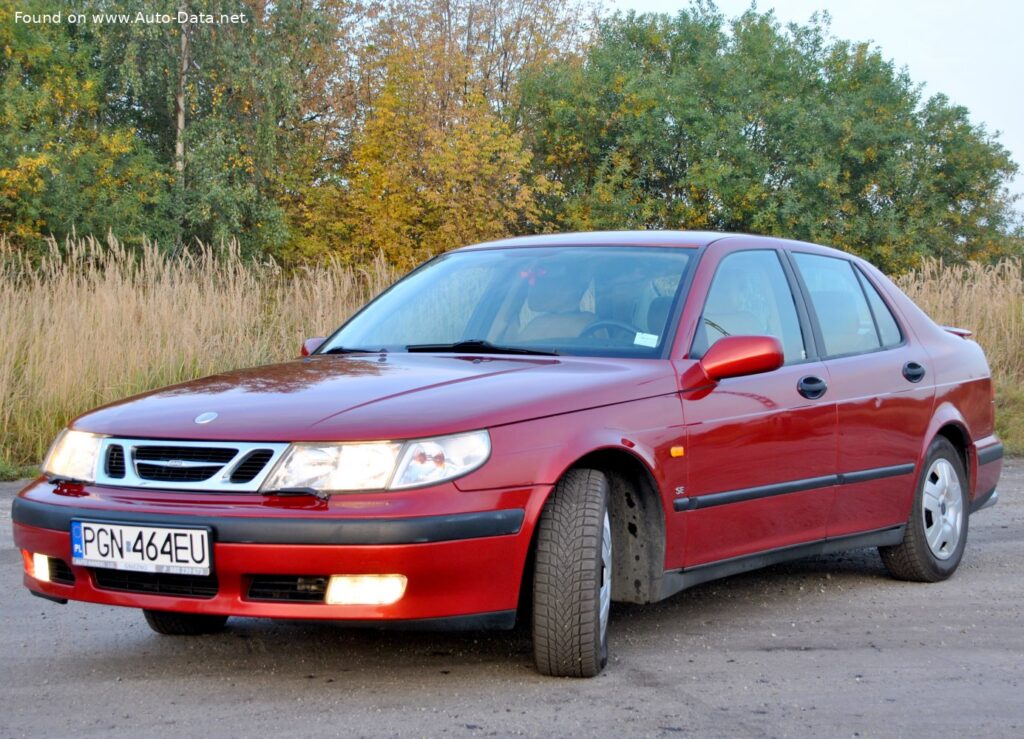
The Saab 9-5 2.3T, produced between 1999 and 2001, represents a significant evolution in the Swedish automaker’s mid-size sedan offering. Positioned as a competitor to vehicles like the BMW 5 Series, Audi A6, and Volvo S80, the 9-5 aimed to blend Scandinavian practicality with a sporty driving experience. This generation, the first to bear the 9-5 designation, established a new design language and incorporated advanced technology for its time, solidifying Saab’s reputation for innovation and safety. The 2.3T model, equipped with a turbocharged four-cylinder engine, was a popular choice, offering a compelling balance of performance and fuel efficiency.
The Saab 9-5 2.3T: A Detailed Overview
The first-generation Saab 9-5 was a pivotal model for the brand, replacing the aging 9000. It marked a departure in styling, moving away from the boxier designs of the past towards a more contemporary and aerodynamic profile. The 9-5 was designed to appeal to a broader audience while retaining the core Saab values of safety, functionality, and a unique driving experience. The 2.3T variant, with its potent turbocharged engine, became a cornerstone of the 9-5 lineup, offering a spirited driving experience that set it apart from many of its competitors.
Engine & Performance
At the heart of the Saab 9-5 2.3T lies the B235R engine, a 2.3-liter inline-four cylinder powerplant. This engine is characterized by its robust construction and, crucially, its Mitsubishi TD04HL-13C turbocharger. This combination allows the engine to produce 230 horsepower at 5500 rpm and 350 Nm (258.15 lb.-ft.) of torque at a relatively low 1900 rpm. The high torque output provides strong acceleration and effortless cruising. The engine features multi-port fuel injection and a double overhead camshaft (DOHC) valvetrain, contributing to its efficient operation and responsive performance.
The 9-5 2.3T’s performance figures are noteworthy for its era. Acceleration from 0 to 60 mph is achieved in approximately 6.6 seconds, while 0-100 km/h takes 6.9 seconds. The car boasts a maximum speed of 240 km/h (149.13 mph). The weight-to-power ratio of 6.7 kg/Hp and a weight-to-torque ratio of 4.4 kg/Nm further highlight the engine’s effectiveness. Power delivery is smooth and linear, making the 9-5 2.3T a pleasurable vehicle to drive in a variety of conditions. The standard transmission is a 5-speed manual, offering precise gear changes and driver engagement.
Design & Features
The Saab 9-5 2.3T is a four-door sedan with a sleek and aerodynamic design. Its flowing lines and distinctive front grille immediately identify it as a Saab. The interior is designed with a focus on ergonomics and functionality, reflecting the brand’s Scandinavian heritage. The cabin offers comfortable seating for five passengers and provides ample space for both front and rear occupants. The trunk offers a generous 500 liters (17.66 cu. ft.) of cargo space, making it practical for everyday use.
Safety was a paramount concern for Saab, and the 9-5 incorporates several advanced safety features for its time. These include an Anti-lock Braking System (ABS) to prevent wheel lockup during hard braking, and a robust body structure designed to absorb impact energy in the event of a collision. The hydraulic power steering provides precise and responsive handling. The vehicle rides on 215/55 R17 tires mounted on 6.5J x 17 inch wheel rims. The 9-5’s design prioritized both form and function, creating a vehicle that is both aesthetically pleasing and practical to use.
Technical Specifications
| Brand | Saab |
| Model | 9-5 |
| Generation | 9-5 |
| Type (Engine) | 2.3 T (230 Hp) |
| Start of production | 1999 |
| End of production | 2001 |
| Powertrain Architecture | Internal Combustion engine |
| Body type | Sedan |
| Seats | 5 |
| Doors | 4 |
| Fuel consumption (urban) | 13.5 l/100 km (17.4 US mpg / 20.9 UK mpg) |
| Fuel consumption (extra urban) | 7.2 l/100 km (32.7 US mpg / 39.2 UK mpg) |
| Fuel Type | Petrol (Gasoline) |
| Acceleration 0 – 100 km/h | 6.9 sec |
| Acceleration 0 – 62 mph | 6.9 sec |
| Acceleration 0 – 60 mph | 6.6 sec |
| Maximum speed | 240 km/h (149.13 mph) |
| Weight-to-power ratio | 6.7 kg/Hp |
| Weight-to-torque ratio | 4.4 kg/Nm |
| Power | 230 Hp @ 5500 rpm |
| Torque | 350 Nm @ 1900 rpm (258.15 lb.-ft. @ 1900 rpm) |
| Engine layout | Front, Transverse |
| Engine Model/Code | B235R |
| Engine displacement | 2290 cm3 (139.74 cu. in.) |
| Number of cylinders | 4 |
| Engine configuration | Inline |
| Cylinder Bore | 90 mm (3.54 in.) |
| Piston Stroke | 90 mm (3.54 in.) |
| Compression ratio | 9.3:1 |
| Number of valves per cylinder | 4 |
| Fuel injection system | Multi-port manifold injection |
| Engine aspiration | Turbocharger |
| Valvetrain | DOHC |
| Engine oil capacity | 4 l (4.23 US qt | 3.52 UK qt) |
| Coolant | 7.4 l (7.82 US qt | 6.51 UK qt) |
| Kerb Weight | 1540 kg (3395.12 lbs.) |
| Max. weight | 2110 kg (4651.75 lbs.) |
| Max load | 570 kg (1256.63 lbs.) |
| Trunk (boot) space – maximum | 500 l (17.66 cu. ft.) |
| Fuel tank capacity | 75 l (19.81 US gal | 16.5 UK gal) |
| Length | 4805 mm (189.17 in.) |
| Width | 1792 mm (70.55 in.) |
| Height | 1449 mm (57.05 in.) |
| Wheelbase | 2703 mm (106.42 in.) |
| Front track | 1522 mm (59.92 in.) |
| Rear (Back) track | 1522 mm (59.92 in.) |
| Drivetrain Architecture | Front wheel drive |
| Number of gears and type of gearbox | 5 gears, manual transmission |
| Front suspension | Spring Strut |
| Rear suspension | Spring Strut |
| Front brakes | Ventilated discs |
| Rear brakes | Disc |
| Assisting systems | ABS (Anti-lock braking system) |
| Steering type | Steering rack and pinion |
| Power steering | Hydraulic Steering |
| Tires size | 215/55 R17 |
| Wheel rims size | 6.5J x 17 |
