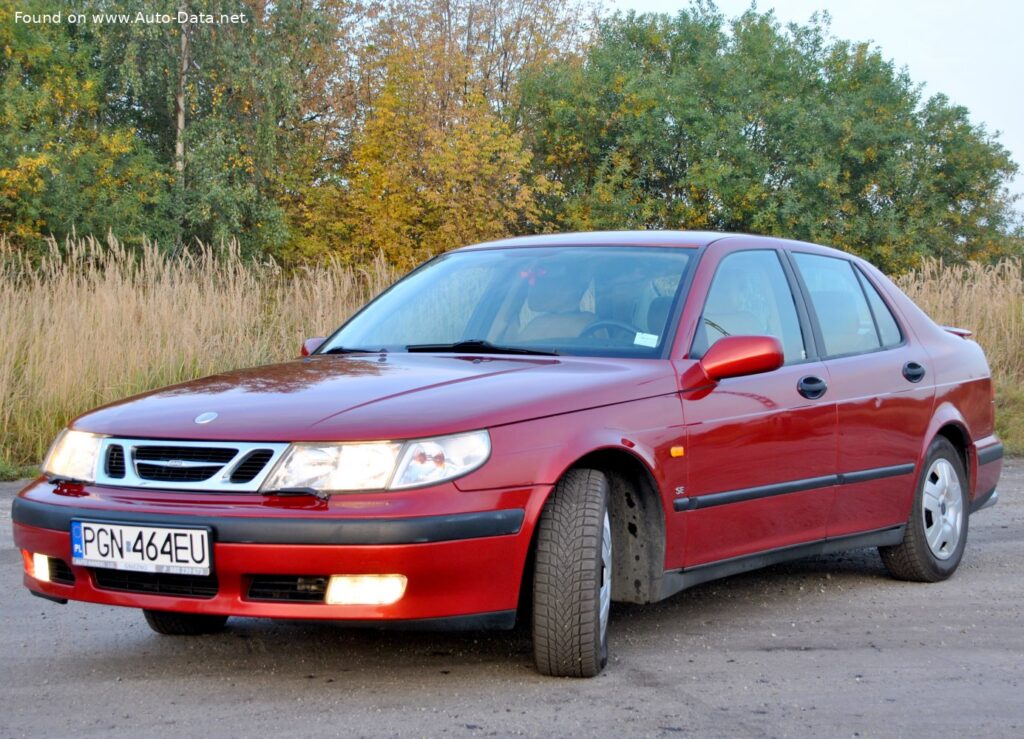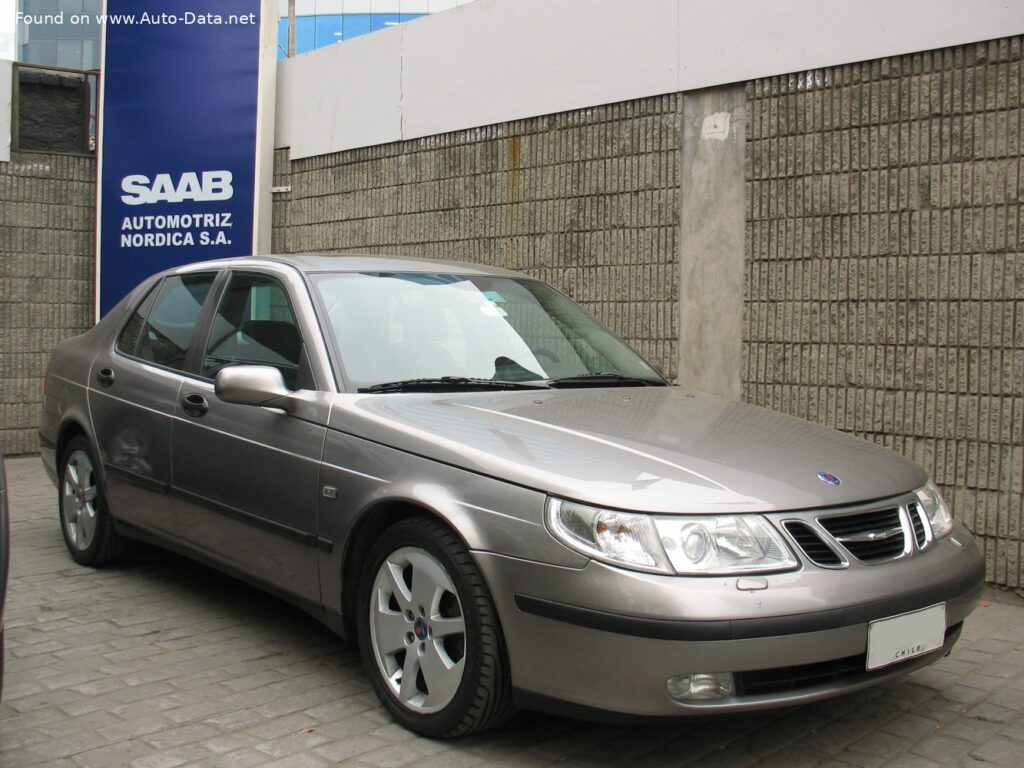
The Saab 9-5, a quintessential executive sedan from the Swedish automaker, represented the pinnacle of Saab’s engineering philosophy, blending distinctive Scandinavian design with advanced turbocharged performance and a steadfast commitment to safety. The {Saab 9-5 (facelift 2001)} generation, produced from 2001 to 2005, marked a significant refresh for the model, solidifying its position in the competitive mid-size luxury segment. This particular iteration continued Saab’s tradition of offering a unique alternative to more conventional European and Japanese competitors, appealing to drivers who valued individuality, robust build quality, and a spirited driving experience. The 2.3t variant, with its 185 horsepower engine, stood as a compelling option within the lineup, offering a balanced blend of power and efficiency for discerning consumers in markets ranging from Europe to North America, where it carved out a niche for its distinct character and engineering prowess.
Engine and Performance of the {Saab 9-5 (facelift 2001)}
At the heart of the {Saab 9-5 (facelift 2001)} 2.3t lies a sophisticated 2.3-liter (2290 cm3 or 139.74 cu. in.) inline-four engine, designated B235E, a testament to Saab’s long-standing expertise in turbocharging technology. This powerplant delivers a robust 185 horsepower at 5500 rpm, translating to an impressive 80.8 horsepower per liter. More significantly, its torque output is a substantial 206.52 lb.-ft. (280 Nm), available remarkably low in the rev range at just 1800 rpm. This characteristic low-end torque, a hallmark of Saab’s turbocharged engines, provides exceptional drivability and responsive acceleration, making the vehicle feel effortless in daily driving conditions and during highway overtaking maneuvers. The engine’s configuration features a DOHC (Double Overhead Camshaft) valvetrain with four valves per cylinder, ensuring efficient breathing and combustion. Fuel is delivered via a multi-port manifold injection system, optimized for both performance and fuel efficiency.
The turbocharger, coupled with an intercooler, is instrumental in achieving these performance figures, allowing the relatively small displacement engine to produce power levels typically associated with larger, naturally aspirated units. With a compression ratio of 9.3:1, the engine strikes a balance between power generation and thermal efficiency. Power is channeled to the front wheels through a precise 5-speed manual transmission, offering an engaging driving experience for those who appreciate direct control over gear selection. This drivetrain architecture, combined with the engine’s output, enables the 9-5 2.3t to accelerate from 0 to 60 mph in a brisk 8.9 seconds (0-100 km/h in 9.4 seconds) and achieve a maximum speed of 139.81 mph (225 km/h). Despite its spirited performance, the vehicle maintains a respectable combined fuel economy of 25 US mpg (9.4 l/100 km), showcasing Saab’s commitment to balancing power with practical efficiency. The engine oil capacity is 4 liters (4.23 US qt), and the cooling system holds 7.4 liters (7.82 US qt) of coolant, ensuring optimal operating temperatures under varying conditions.
Design and Features of the {Saab 9-5 (facelift 2001)}
The {Saab 9-5 (facelift 2001)} presented a refined evolution of its distinctive design language, maintaining a sophisticated yet understated aesthetic that set it apart from its contemporaries. As a 4-door sedan with seating for five, it prioritized passenger comfort and safety, reflecting Saab’s core values. The facelift introduced subtle yet impactful changes, including revised front and rear fascias, updated lighting elements, and new wheel designs, all contributing to a fresher, more contemporary appearance while retaining the classic Saab identity. The vehicle’s dimensions—190.04 inches in length, 70.55 inches in width, and 58.07 inches in height—contributed to a substantial road presence and a spacious interior.
Inside, the 9-5 continued Saab’s tradition of ergonomic excellence and a “cockpit-like” environment for the driver. Key features included the innovative “Night Panel” function, which allowed the driver to dim all non-essential instrument lighting at night, reducing distraction and enhancing focus. Material quality and fit-and-finish were of a high standard, with a focus on durability and user-friendliness. Safety, a paramount concern for Saab, was comprehensively addressed with a robust body structure, advanced crumple zones, and the standard inclusion of ABS (Anti-lock Braking System). The suspension system, featuring Spring Struts at both the front and rear, was tuned to provide a comfortable ride quality while maintaining competent handling dynamics. The steering system utilized a hydraulic rack and pinion setup, offering precise feedback and a confident feel to the driver. Braking performance was assured by ventilated discs at the front and solid discs at the rear.
Practicality was also a strong suit of the 9-5. The trunk offered a generous minimum capacity of 17.66 cu. ft. (500 liters), expanding to an impressive 33.34 cu. ft. (944 liters) with the rear seats folded, making it highly versatile for luggage or larger items. The fuel tank capacity of 19.81 US gallons (75 liters) provided a substantial cruising range. With a curb weight of 3780.93 lbs. (1715 kg) and a maximum permissible weight of 4607.66 lbs. (2090 kg), the 9-5 was a solid and well-built vehicle. The standard tire size of 215/55 R16 provided a good balance of grip, comfort, and durability, further enhancing the overall driving experience of this distinctive Swedish executive sedan.
Technical Specifications
| Brand | Saab |
| Model | 9-5 |
| Generation | 9-5 (facelift 2001) |
| Type (Engine) | 2.3 t (185 Hp) |
| Start of production | 2001 year |
| End of production | 2005 year |
| Powertrain Architecture | Internal Combustion engine |
| Body type | Sedan |
| Seats | 5 |
| Doors | 4 |
| Fuel consumption (economy) – combined | 9.4 l/100 km (25 US mpg, 30.1 UK mpg) |
| Fuel Type | Petrol (Gasoline) |
| Acceleration 0 – 60 mph (Calculated) | 8.9 sec |
| Acceleration 0 – 100 km/h | 9.4 sec |
| Maximum speed | 139.81 mph (225 km/h) |
| Weight-to-power ratio | 9.3 kg/Hp, 107.9 Hp/tonne |
| Weight-to-torque ratio | 6.1 kg/Nm, 163.3 Nm/tonne |
| Power | 185 Hp @ 5500 rpm |
| Power per litre | 80.8 Hp/l |
| Torque | 206.52 lb.-ft. (280 Nm) @ 1800 rpm |
| Engine layout | Front, Transverse |
| Engine Model/Code | B235E |
| Engine displacement | 2.3 l (2290 cm3, 139.74 cu. in.) |
| Number of cylinders | 4 |
| Engine configuration | Inline |
| Cylinder Bore | 3.54 in. (90 mm) |
| Piston Stroke | 3.54 in. (90 mm) |
| Compression ratio | 9.3:1 |
| Number of valves per cylinder | 4 |
| Fuel injection system | Multi-port manifold injection |
| Engine aspiration | Turbocharger, Intercooler |
| Valvetrain | DOHC |
| Engine oil capacity | 4 l (4.23 US qt) |
| Coolant | 7.4 l (7.82 US qt) |
| Kerb Weight | 3780.93 lbs. (1715 kg) |
| Max. weight | 4607.66 lbs. (2090 kg) |
| Max load | 826.73 lbs. (375 kg) |
| Trunk (boot) space – minimum | 17.66 cu. ft. (500 l) |
| Trunk (boot) space – maximum | 33.34 cu. ft. (944 l) |
| Fuel tank capacity | 19.81 US gal (75 l) |
| Length | 190.04 in. (4827 mm) |
| Width | 70.55 in. (1792 mm) |
| Height | 58.07 in. (1475 mm) |
| Wheelbase | 106.42 in. (2703 mm) |
| Front track | 59.92 in. (1522 mm) |
| Rear (Back) track | 59.92 in. (1522 mm) |
| Drivetrain Architecture | The Internal combustion engine (ICE) drives the front wheels of the vehicle. |
| Drive wheel | Front wheel drive |
| Number of gears and type of gearbox | 5 gears, manual transmission |
| Front suspension | Spring Strut |
| Rear suspension | Spring Strut |
| Front brakes | Ventilated discs |
| Rear brakes | Disc |
| Assisting systems | ABS (Anti-lock braking system) |
| Steering type | Steering rack and pinion |
| Power steering | Hydraulic Steering |
| Tires size | 215/55 R16 |