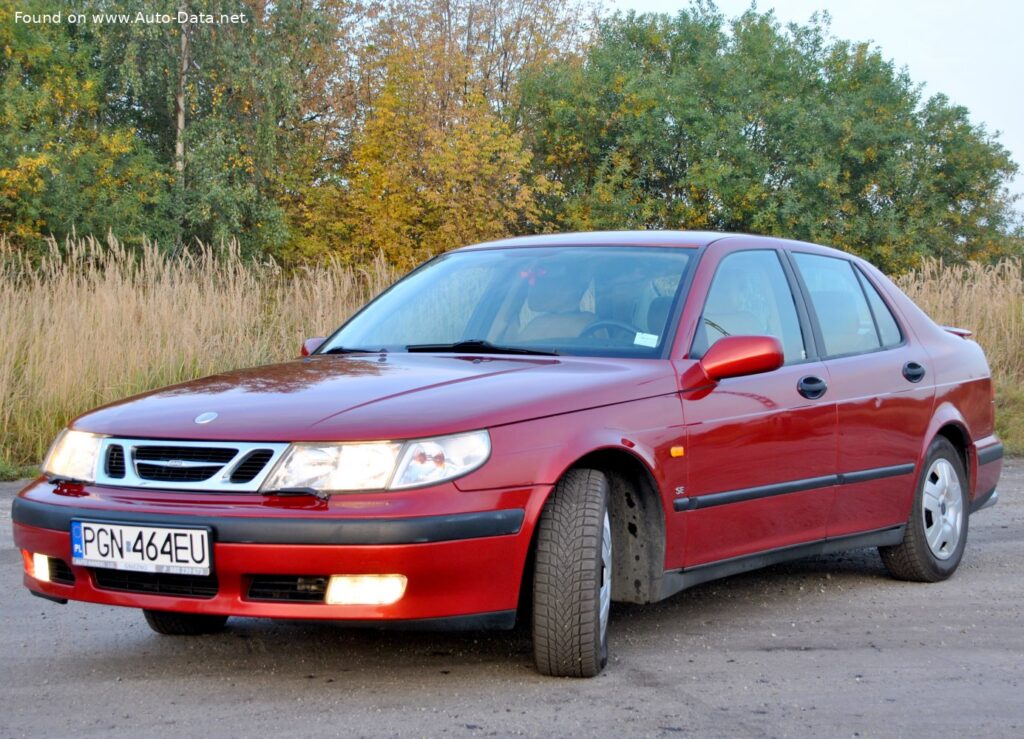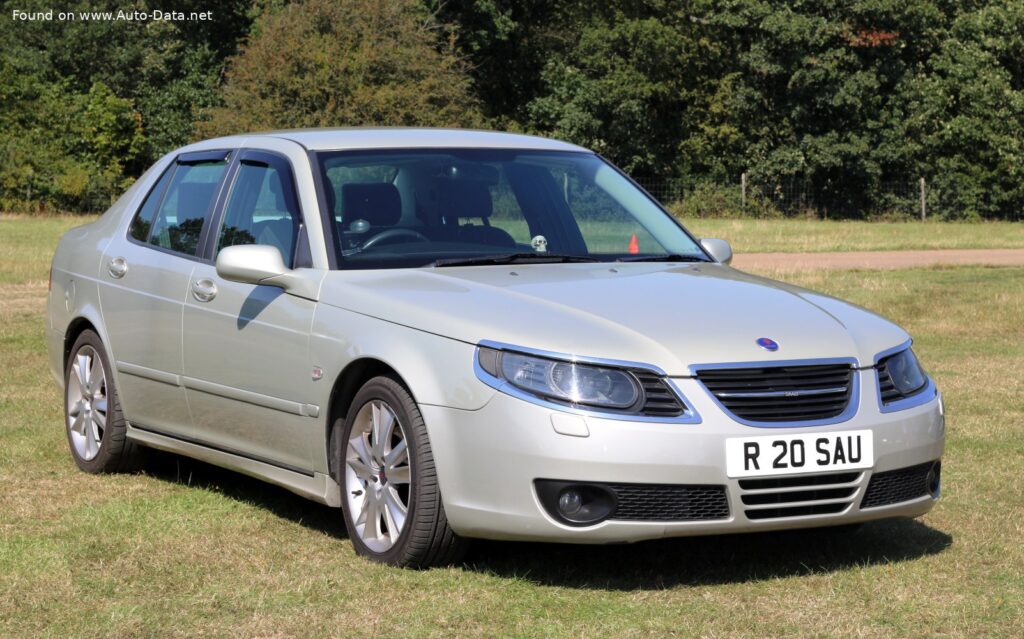
The Saab 9-5, particularly the facelifted version introduced in 2005, represents a significant chapter in the Swedish automaker’s history. Positioned as a mid-size executive car, the 9-5 aimed to compete with established German rivals like the BMW 5 Series and Audi A6, offering a distinctive blend of Scandinavian design, innovative safety features, and turbocharged performance. The 2005 facelift brought updated styling, improved interior materials, and refinements to the engine lineup, solidifying the 9-5’s position as a compelling, if often overlooked, alternative in the premium sedan segment. Production continued until 2009, marking the end of the line for the original 9-5 platform.
Saab 9-5 (Facelift 2005): A Detailed Overview
The 9-5, launched in 1997, was Saab’s attempt to move further upmarket and establish itself as a serious contender in the executive car class. The 2005 facelift was a crucial update, addressing some criticisms of the original design and enhancing the car’s overall appeal. While Saab ultimately faced financial difficulties and was later acquired by Spyker Cars (and subsequently National Electric Vehicle Sweden – NEVS), the 9-5 facelift remains a well-regarded vehicle among Saab enthusiasts, appreciated for its unique character and robust engineering.
Engine & Performance
The 2.3t engine, producing 185 horsepower at 5500 rpm and 280 Nm (206.52 lb.-ft.) of torque between 1800-3500 rpm, was a cornerstone of the 9-5 range. This inline-four cylinder engine, designated B235E, featured a turbocharger and intercooler, providing a responsive and engaging driving experience. The engine’s transverse front-wheel-drive layout contributed to good handling characteristics. Acceleration from 0 to 100 km/h (0-62 mph) took 8.3 seconds, while the 0-60 mph sprint was achieved in a calculated 7.9 seconds. The 9-5 2.3t had a top speed of 230 km/h (142.92 mph). Fuel economy, as measured by the NEDC standard, was rated at 8.9 l/100 km (26.4 US mpg) combined, with 12.8 l/100 km (18.4 US mpg) in urban conditions and 6.6 l/100 km (35.6 US mpg) on the extra-urban cycle. CO2 emissions were 212 g/km, meeting Euro 4 emission standards.
Design & Features
The Saab 9-5 facelift retained the distinctive styling cues of the original model, characterized by a wraparound cabin design and a focus on aerodynamic efficiency. The 2005 update brought a revised front fascia with a new grille and headlights, as well as updated taillights and interior trim. The sedan body style offered seating for five passengers and a trunk capacity of 500 liters (17.66 cu. ft.). Safety was a key priority for Saab, and the 9-5 was equipped with ABS (Anti-lock Braking System) as standard. The interior focused on ergonomic design, aiming to provide a comfortable and driver-focused environment. Features like hydraulic power steering and independent suspension (McPherson struts at the front and a multi-link setup at the rear) contributed to a refined driving experience. The 9-5 offered a practical blend of space, comfort, and performance, appealing to drivers seeking a sophisticated and individualistic vehicle.
Technical Specifications
| Brand | Saab |
| Model | 9-5 |
| Generation | 9-5 (facelift 2005) |
| Type (Engine) | 2.3t (185 Hp) |
| Start of production | 2005 |
| End of production | 2009 |
| Powertrain Architecture | Internal Combustion engine |
| Body type | Sedan |
| Seats | 5 |
| Doors | 4 |
| Fuel consumption (economy) – urban (NEDC) | 12.8 l/100 km (18.4 US mpg, 22.1 UK mpg, 7.8 km/l) |
| Fuel consumption (economy) – extra urban (NEDC) | 6.6 l/100 km (35.6 US mpg, 42.8 UK mpg, 15.2 km/l) |
| Fuel consumption (economy) – combined (NEDC) | 8.9 l/100 km (26.4 US mpg, 31.7 UK mpg, 11.2 km/l) |
| CO2 emissions (NEDC) | 212 g/km |
| Fuel Type | Petrol (Gasoline) |
| Acceleration 0 – 100 km/h | 8.3 sec |
| Acceleration 0 – 62 mph | 8.3 sec |
| Acceleration 0 – 60 mph | 7.9 sec |
| Maximum speed | 230 km/h (142.92 mph) |
| Emission standard | Euro 4 |
| Power | 185 Hp @ 5500 rpm |
| Power per litre | 80.8 Hp/l |
| Torque | 280 Nm @ 1800-3500 rpm (206.52 lb.-ft. @ 1800-3500 rpm) |
| Engine layout | Front, Transverse |
| Engine Model/Code | B235E |
| Engine displacement | 2290 cm3 (139.74 cu. in.) |
| Number of cylinders | 4 |
| Engine configuration | Inline |
| Cylinder Bore | 90 mm (3.54 in.) |
| Piston Stroke | 90 mm (3.54 in.) |
| Number of valves per cylinder | 4 |
| Fuel injection system | Multi-port manifold injection |
| Engine aspiration | Turbocharger, Intercooler |
| Valvetrain | DOHC |
| Engine oil capacity | 4 l (4.23 US qt | 3.52 UK qt) |
| Coolant | 7.4 l (7.82 US qt | 6.51 UK qt) |
| Trunk (boot) space – minimum | 500 l (17.66 cu. ft.) |
| Fuel tank capacity | 75 l (19.81 US gal | 16.5 UK gal) |
| Max. roof load | 100 kg (220.46 lbs.) |
| Permitted trailer load with brakes (12%) | 1800 kg (3968.32 lbs.) |
| Permitted trailer load without brakes | 750 kg (1653.47 lbs.) |
| Length | 4836 mm (190.39 in.) |
| Width | 1792 mm (70.55 in.) |
| Width including mirrors | 2070 mm (81.5 in.) |
| Height | 1448 mm (57.01 in.) |
| Wheelbase | 2703 mm (106.42 in.) |
| Front track | 1522 mm (59.92 in.) |
| Rear (Back) track | 1528 mm (60.16 in.) |
| Front overhang | 1031 mm (40.59 in.) |
| Rear overhang | 1102 mm (43.39 in.) |
| Minimum turning circle (turning diameter) | 10.8 m (35.43 ft.) |
| Drivetrain Architecture | The Internal combustion engine (ICE) drives the front wheels of the vehicle. |
| Drive wheel | Front wheel drive |
| Number of gears and type of gearbox | 5 gears, manual transmission |
| Front suspension | Independent type McPherson, Transverse stabilizer |
| Rear suspension | Independent multi-link suspension, Transverse stabilizer |
| Front brakes | Ventilated discs, 308 mm |
| Rear brakes | Disc, 286 mm |
| Assisting systems | ABS (Anti-lock braking system) |
| Steering type | Steering rack and pinion |
| Power steering | Hydraulic Steering |
| Tires size | 215/55 R16; 225/45 R17 |
| Wheel rims size | 6.5J x 16; 7J x 17 |