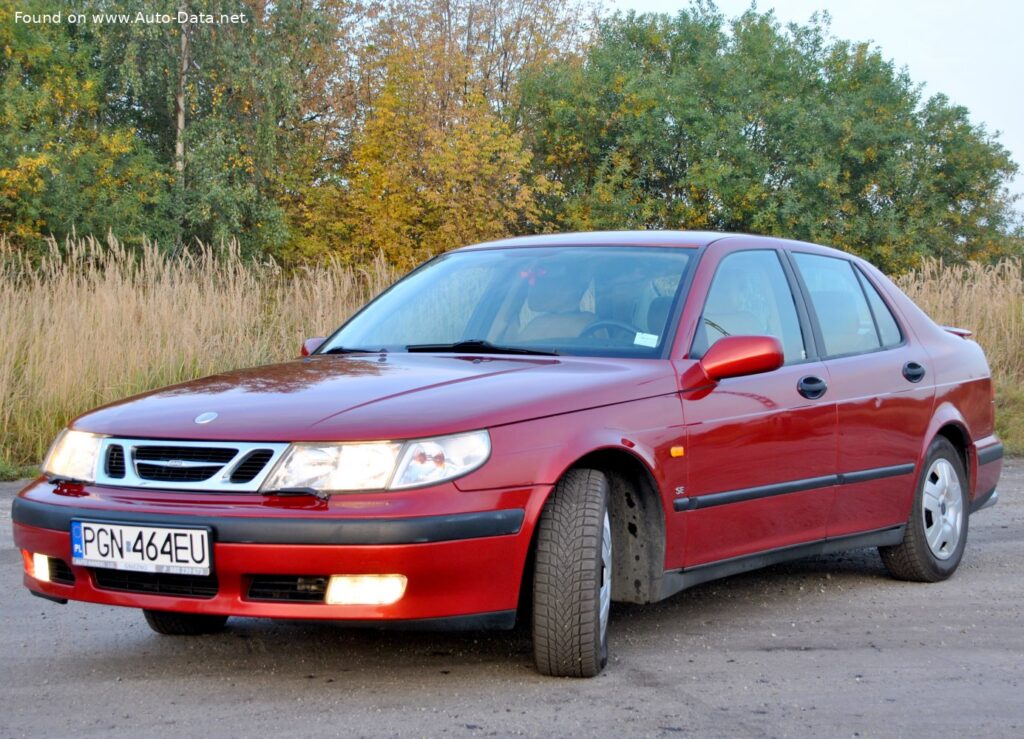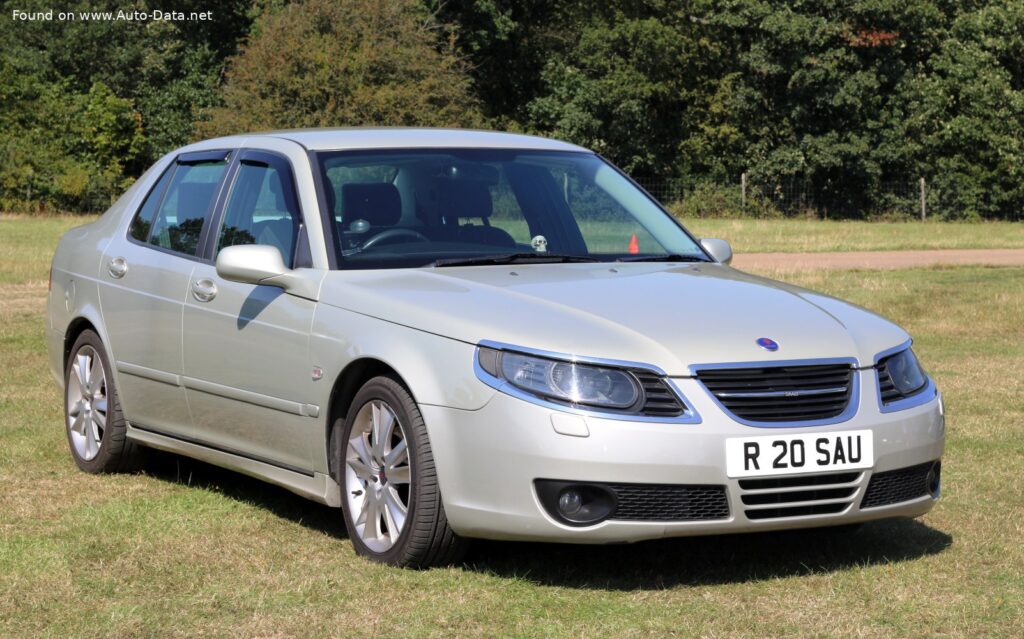
The Saab 9-5, particularly the facelifted model introduced in 2005, represents a significant chapter in the history of the Swedish automaker, embodying a unique blend of Scandinavian design, pragmatic engineering, and a distinctive focus on turbocharging. This particular variant, the Saab 9-5 (facelift 2005) 2.3T (220 Hp), served as a compelling offering in the executive sedan segment from its production start in 2005 until its discontinuation in 2007. Positioned as a premium alternative to more conventional German and Japanese competitors, the 9-5 appealed to a discerning clientele seeking individuality, robust performance, and a high degree of safety. While Saab’s primary market was Europe, the brand cultivated a loyal following in the United States, celebrated for its unconventional approach to luxury and performance. This specific generation, the final iteration before the model’s eventual redesign, showcased Saab’s commitment to refining its established platform, delivering a driving experience that was both comfortable and engaging, underscored by its potent turbocharged engine architecture.
Engine and Performance of the Saab 9-5 (facelift 2005)
At the heart of the Saab 9-5 (facelift 2005) 2.3T (220 Hp) lies a robust and characteristically Saab powertrain. The vehicle is propelled by an internal combustion engine, specifically the B235L, a 2.3-liter (2290 cm3 or 139.74 cu. in.) inline four-cylinder unit. This engine is renowned for its sophisticated turbocharger and intercooler system, a hallmark of Saab engineering that provided impressive power delivery and efficiency for its time. The DOHC (Double Overhead Camshaft) valvetrain with four valves per cylinder, combined with a multi-port manifold injection system, optimized combustion for both performance and fuel economy.
The 2.3T engine generates a substantial 220 horsepower at 5500 rpm, translating to a power-per-liter output of 96.1 Hp/l, a respectable figure for a turbocharged engine of this era. More significantly, it delivers a robust 310 Nm (228.64 lb.-ft.) of torque, available across a broad rev range from 1800 to 4500 rpm. This wide torque band is crucial for real-world driving, providing strong acceleration from low speeds and effortless highway cruising without constant downshifting. Mated to a 5-speed manual transmission, this powertrain sends power to the front wheels, offering a direct and engaging driving experience.
Performance figures for the Saab 9-5 (facelift 2005) 2.3T were competitive within its segment. It could accelerate from 0 to 60 mph in a swift 7.4 seconds (0-100 km/h in 7.8 seconds), making it a surprisingly quick sedan. The maximum speed was rated at 146.02 mph (235 km/h), demonstrating its capability on unrestricted roads. Despite its performance orientation, Saab also paid attention to fuel efficiency, especially for its time. The combined fuel consumption (NEDC) was rated at 26.4 US mpg (8.9 l/100 km), with extra-urban figures reaching 35.6 US mpg (6.6 l/100 km). Urban consumption stood at 18.2 US mpg (12.9 l/100 km). The vehicle complied with the Euro 4 emission standard, emitting 213 g/km of CO2, reflecting its engineering for environmental responsibility within the context of early 21st-century regulations.
Design, Features, and Engineering of the Saab 9-5 (facelift 2005)
The Saab 9-5 (facelift 2005) retained the distinctive sedan body type, offering four doors and comfortable seating for five occupants. The facelift introduced subtle yet impactful changes to the exterior, aiming to modernize the vehicle’s aesthetic while preserving its iconic Saab identity. These updates included revised front and rear fascias, updated lighting signatures, and new wheel designs, lending the car a sharper, more contemporary presence. The overall dimensions remained generous, with a length of 190.39 inches (4836 mm), a width of 70.55 inches (1792 mm), and a height of 57.01 inches (1448 mm). A wheelbase of 106.42 inches (2703 mm) contributed to a stable ride and ample interior space.
Inside, the 9-5 continued Saab’s tradition of driver-centric ergonomics and aviation-inspired design. While not explicitly detailed in the specifications, Saab interiors of this era were known for their logical layouts, high-quality materials, and innovative features like the ‘Night Panel’ function, which dimmed all non-essential dashboard lights to reduce driver distraction. Safety, a paramount concern for Saab, was integral to the 9-5’s design. The vehicle featured a robust chassis and standard ABS (Anti-lock Braking System) for enhanced stopping power and control. The braking system utilized ventilated discs measuring 308 mm at the front and solid discs of 286 mm at the rear, ensuring confident deceleration.
The driving dynamics of the Saab 9-5 (facelift 2005) were carefully engineered for a balance of comfort and agility. It featured an independent MacPherson strut front suspension with a transverse stabilizer, paired with an independent multi-link rear suspension, also incorporating a transverse stabilizer. This setup provided precise handling and a compliant ride, capable of absorbing road imperfections while maintaining composure during spirited driving. The hydraulic rack and pinion steering system offered direct feedback to the driver, enhancing the connection to the road. The car was fitted with 225/45 R17 tires on 7J x 17 wheel rims, contributing to both its aesthetic appeal and handling prowess. Practicality was also a strong suit, with a generous trunk space of 17.66 cubic feet (500 liters) and a fuel tank capacity of 19.81 US gallons (75 liters), providing ample range for long journeys.
Technical Specifications
| Brand | Saab |
| Model | 9-5 |
| Generation | 9-5 (facelift 2005) |
| Type (Engine) | 2.3T (220 Hp) |
| Start of production | 2005 year |
| End of production | 2007 year |
| Powertrain Architecture | Internal Combustion engine |
| Body type | Sedan |
| Seats | 5 |
| Doors | 4 |
| Fuel consumption (economy) – urban (NEDC) | 18.2 US mpg (12.9 l/100 km) |
| Fuel consumption (economy) – extra urban (NEDC) | 35.6 US mpg (6.6 l/100 km) |
| Fuel consumption (economy) – combined (NEDC) | 26.4 US mpg (8.9 l/100 km) |
| CO2 emissions (NEDC) | 213 g/km |
| Fuel Type | Petrol (Gasoline) |
| Acceleration 0 – 60 mph | 7.4 sec |
| Acceleration 0 – 62 mph (0-100 km/h) | 7.8 sec |
| Maximum speed | 146.02 mph (235 km/h) |
| Emission standard | Euro 4 |
| Power | 220 Hp @ 5500 rpm. |
| Power per liter | 96.1 Hp/l |
| Torque | 228.64 lb.-ft. @ 1800-4500 rpm (310 Nm) |
| Engine layout | Front, Transverse |
| Engine Model/Code | B235L |
| Engine displacement | 139.74 cu. in. (2290 cm3) |
| Number of cylinders | 4 |
| Engine configuration | Inline |
| Cylinder Bore | 3.54 in. (90 mm) |
| Piston Stroke | 3.54 in. (90 mm) |
| Compression ratio | 9.3:1 |
| Number of valves per cylinder | 4 |
| Fuel injection system | Multi-port manifold injection |
| Engine aspiration | Turbocharger, Intercooler |
| Valvetrain | DOHC |
| Engine oil capacity | 4.23 US qt (4 l) |
| Coolant | 7.82 US qt (7.4 l) |
| Trunk (boot) space – minimum | 17.66 cu. ft. (500 l) |
| Fuel tank capacity | 19.81 US gal (75 l) |
| Max. roof load | 220.46 lbs. (100 kg) |
| Permitted trailer load with brakes (12%) | 3968.32 lbs. (1800 kg) |
| Permitted trailer load without brakes | 1653.47 lbs. (750 kg) |
| Length | 190.39 in. (4836 mm) |
| Width | 70.55 in. (1792 mm) |
| Width including mirrors | 81.5 in. (2070 mm) |
| Height | 57.01 in. (1448 mm) |
| Wheelbase | 106.42 in. (2703 mm) |
| Front track | 59.92 in. (1522 mm) |
| Rear (Back) track | 60.16 in. (1528 mm) |
| Front overhang | 40.59 in. (1031 mm) |
| Rear overhang | 43.39 in. (1102 mm) |
| Minimum turning circle (turning diameter) | 35.43 ft. (10.8 m) |
| Drivetrain Architecture | The Internal combustion engine (ICE) drives the front wheels of the vehicle. |
| Drive wheel | Front wheel drive |
| Number of gears and type of gearbox | 5 gears, manual transmission |
| Front suspension | Independent type McPherson, Transverse stabilizer |
| Rear suspension | Independent multi-link suspension, Transverse stabilizer |
| Front brakes | Ventilated discs, 308 mm |
| Rear brakes | Disc, 286 mm |
| Assisting systems | ABS (Anti-lock braking system) |
| Steering type | Steering rack and pinion |
| Power steering | Hydraulic Steering |
| Tires size | 225/45 R17 |
| Wheel rims size | 7J x 17 |