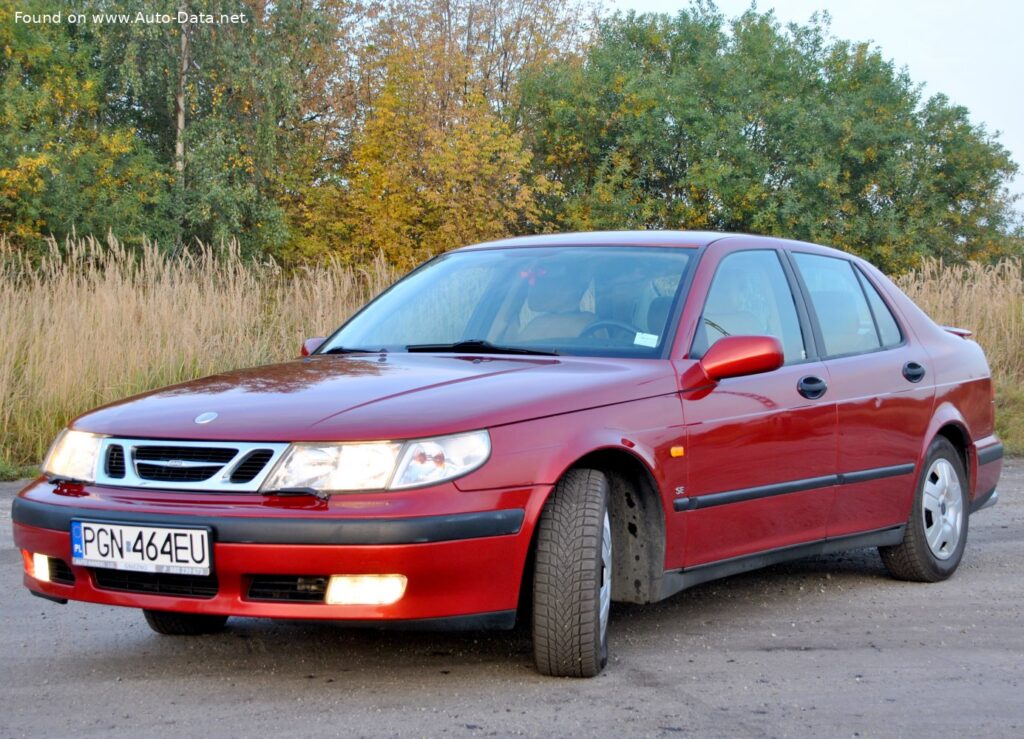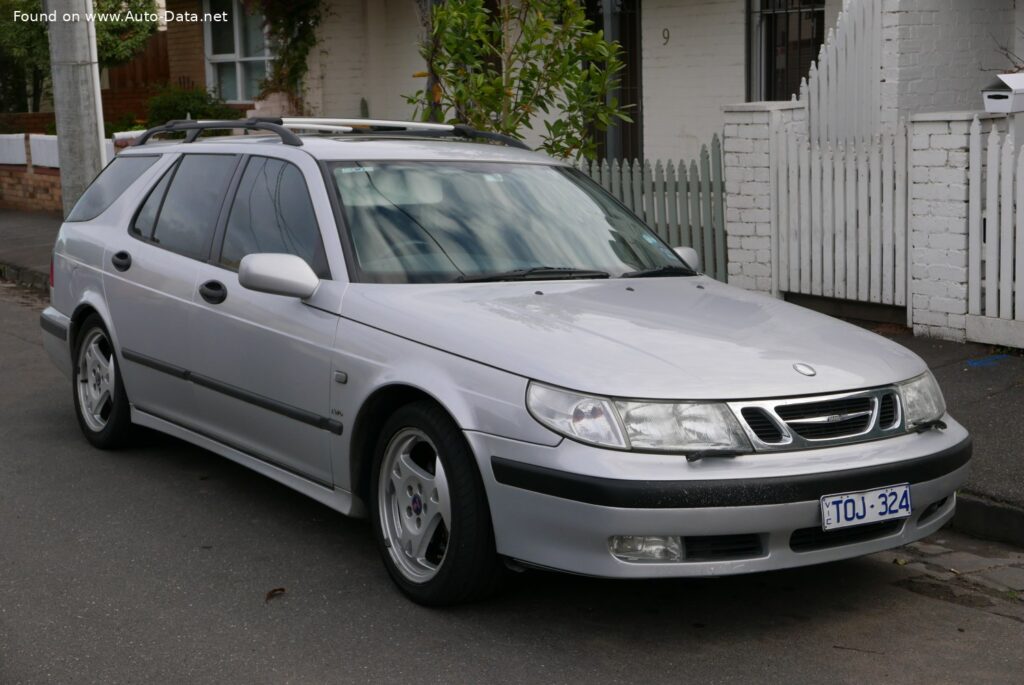
The Saab 9-5 Sport Combi 3.0 i V6 24V (200 Hp) represents a distinctive chapter in the history of the Swedish automaker, embodying Saab’s unique blend of avant-garde design, practical utility, and robust engineering. Introduced in 1998 as part of the first-generation 9-5 series, this particular variant, the Sport Combi, carved out a niche in the premium mid-size station wagon segment. While Saab vehicles were appreciated globally for their idiosyncratic charm and focus on real-world safety, the 9-5 Sport Combi was particularly well-received in markets across Europe and North America, offering a compelling alternative to more conventional German rivals. Its production run for this specific engine configuration spanned from 1998 to 2001, making it a relatively short-lived but memorable offering. The vehicle’s powertrain architecture centers around an internal combustion engine, driving the front wheels, a hallmark of Saab’s engineering philosophy aimed at predictable handling and efficient packaging. The Sport Combi body type, with its five doors and seating for five, underscored its practical aspirations, providing ample cargo space without compromising on the brand’s signature aerodynamic styling.
Engineering and Performance of the Saab 9-5 Sport Combi 3.0 i V6 24V (200 Hp)
At the heart of the Saab 9-5 Sport Combi 3.0 i V6 24V (200 Hp) lies a powerplant that perfectly illustrates Saab’s innovative approach to automotive engineering. The B308i engine, a 3.0-liter (2962 cm3 or 180.75 cu. in.) V6 unit, was a notable departure from Saab’s traditional inline-four turbocharged engines. This V6 configuration, featuring 24 valves (four per cylinder) and a Double Overhead Camshaft (DOHC) valvetrain, delivered a robust 200 horsepower at 5000 rpm. What truly set this engine apart, especially in the context of Saab’s heritage, was its aspiration via a turbocharger. While many V6 engines of the era relied on natural aspiration, Saab integrated forced induction to enhance power delivery and torque characteristics, a signature move for the brand even on larger displacement engines. This allowed the engine to produce an impressive 310 Nm (228.64 lb.-ft.) of torque at a remarkably low 2100 rpm, ensuring strong, accessible pulling power from early in the rev range.
The performance figures for this Sport Combi variant were commendable for its class and era. The vehicle could accelerate from 0 to 60 mph in a brisk 8.3 seconds (0-100 km/h in 8.7 seconds), demonstrating its capability for confident highway merging and overtaking. Its maximum speed of 142.92 mph (230 km/h) further underscored its touring prowess. Power was transmitted to the front wheels via a 4-speed automatic transmission, which, while not as sophisticated as later multi-speed units, was tuned to provide smooth and comfortable shifts suitable for a premium family wagon. The engine’s layout, front and transverse, contributed to efficient space utilization and predictable front-wheel-drive dynamics. With a compression ratio of 9.5:1 and a multi-port manifold injection system, the engine was designed for a balance of performance and efficiency, running on gasoline. The weight-to-power ratio stood at 8.3 kg per horsepower (121.2 Hp/tonne), indicating a well-balanced power output relative to its kerb weight of 3637.63 lbs (1650 kg).
Fuel economy, while not the primary focus of a 3.0-liter V6, was respectable for the period. The combined fuel consumption was rated at 20.8 US mpg (11.3 l/100 km), with urban driving yielding 13.8 US mpg (17 l/100 km) and extra-urban figures reaching 29 US mpg (8.1 l/100 km). These figures, while not groundbreaking by today’s standards, were competitive for a powerful, turbocharged V6 in a mid-size wagon at the turn of the millennium. The 70-liter (18.49 US gallons) fuel tank provided a decent cruising range, enhancing its suitability for long-distance travel, a common use case for station wagons.
Design and Features of the Saab 9-5 Sport Combi
The design of the Saab 9-5 Sport Combi, particularly this 1998-2001 generation, was a testament to Saab’s distinctive aesthetic philosophy. Unlike its more conservative European counterparts, the 9-5 Sport Combi boasted a sleek, aerodynamic profile that was both functional and visually unique. Its five-door station wagon body type offered exceptional practicality, characterized by a long roofline that gracefully tapered towards the rear, culminating in a signature wraparound tailgate glass. The exterior dimensions—a length of 189.29 inches (4808 mm), width of 70.55 inches (1792 mm), and height of 58.94 inches (1497 mm)—provided a substantial road presence and a spacious interior. The 106.42-inch (2703 mm) wheelbase contributed to a stable ride and generous cabin room for five occupants.
Inside, Saab continued its tradition of designing interiors with an emphasis on ergonomics, safety, and a pilot-like cockpit feel. While specific luxury features varied by trim, the 9-5 Sport Combi typically included comfortable, supportive seating and intuitive controls. Safety was a paramount concern for Saab, and this model incorporated advanced (for its time) features such as ABS (Anti-lock Braking System) as standard. The braking system comprised ventilated discs at the front and solid discs at the rear, providing reliable stopping power. Steering was handled by a hydraulic rack and pinion system, offering direct feedback and a connected driving experience. The suspension system utilized spring struts at both the front and rear, tuned for a balance of comfort and dynamic stability, characteristic of a European touring car.
Practicality was a strong suit of the Sport Combi. The cargo area, or “trunk space,” offered a minimum of 14.66 cubic feet (415 liters) with all seats in place, expanding significantly to a cavernous 52.62 cubic feet (1490 liters) when the rear seats were folded down. This flexibility made it an ideal vehicle for families, enthusiasts with gear, or anyone needing substantial hauling capability. The vehicle’s maximum load capacity was 1168.45 lbs (530 kg), further enhancing its utility. The choice of tire sizes, 205/65 R15 or 215/55 R16, mounted on 15 or 16-inch wheel rims, provided a comfortable ride while maintaining competent handling characteristics. The overall design and feature set of the Saab 9-5 Sport Combi 3.0 i V6 24V (200 Hp) underscored Saab’s commitment to creating vehicles that were both uniquely stylish and eminently practical, offering a distinct alternative in the competitive premium segment.
Technical Specifications: Saab 9-5 Sport Combi 3.0 i V6 24V (200 Hp)
| Brand | Saab |
| Model | 9-5 |
| Generation | 9-5 Sport Combi |
| Type (Engine) | 3.0 i V6 24V (200 Hp) |
| Start of production | 1998 year |
| End of production | 2001 year |
| Powertrain Architecture | Internal Combustion engine |
| Body type | Station wagon (estate) |
| Seats | 5 |
| Doors | 5 |
| Fuel consumption (economy) – urban | 17 l/100 km (13.8 US mpg) |
| Fuel consumption (economy) – extra urban | 8.1 l/100 km (29 US mpg) |
| Fuel consumption (economy) – combined | 11.3 l/100 km (20.8 US mpg) |
| Fuel Type | Petrol (Gasoline) |
| Acceleration 0 – 60 mph | 8.3 sec |
| Acceleration 0 – 100 km/h | 8.7 sec |
| Maximum speed | 230 km/h (142.92 mph) |
| Weight-to-power ratio | 8.3 kg/Hp (121.2 Hp/tonne) |
| Weight-to-torque ratio | 5.3 kg/Nm (187.9 Nm/tonne) |
| Power | 200 Hp @ 5000 rpm |
| Power per litre | 67.5 Hp/l |
| Torque | 310 Nm @ 2100 rpm (228.64 lb.-ft. @ 2100 rpm) |
| Engine layout | Front, Transverse |
| Engine Model/Code | B308i |
| Engine displacement | 2962 cm3 (180.75 cu. in.) |
| Number of cylinders | 6 |
| Engine configuration | V-engine |
| Cylinder Bore | 86 mm (3.39 in.) |
| Piston Stroke | 85 mm (3.35 in.) |
| Compression ratio | 9.5:1 |
| Number of valves per cylinder | 4 |
| Fuel injection system | Multi-port manifold injection |
| Engine aspiration | Turbocharger |
| Valvetrain | DOHC |
| Engine oil capacity | 4.5 l (4.76 US qt) |
| Coolant | 7.2 l (7.61 US qt) |
| Kerb Weight | 1650 kg (3637.63 lbs) |
| Max. weight | 2180 kg (4806.08 lbs) |
| Max load | 530 kg (1168.45 lbs) |
| Trunk (boot) space – minimum | 415 l (14.66 cu. ft.) |
| Trunk (boot) space – maximum | 1490 l (52.62 cu. ft.) |
| Fuel tank capacity | 70 l (18.49 US gal) |
| Length | 4808 mm (189.29 in.) |
| Width | 1792 mm (70.55 in.) |
| Height | 1497 mm (58.94 in.) |
| Wheelbase | 2703 mm (106.42 in.) |
| Front track | 1522 mm (59.92 in.) |
| Rear (Back) track | 1522 mm (59.92 in.) |
| Drivetrain Architecture | Internal combustion engine drives front wheels |
| Drive wheel | Front wheel drive |
| Number of gears and type of gearbox | 4 gears, automatic transmission |
| Front suspension | Spring Strut |
| Rear suspension | Spring Strut |
| Front brakes | Ventilated discs |
| Rear brakes | Disc |
| Assisting systems | ABS (Anti-lock braking system) |
| Steering type | Steering rack and pinion |
| Power steering | Hydraulic Steering |
| Tires size | 205/65 R15; 215/55 R16 |
| Wheel rims size | 15; 16 |