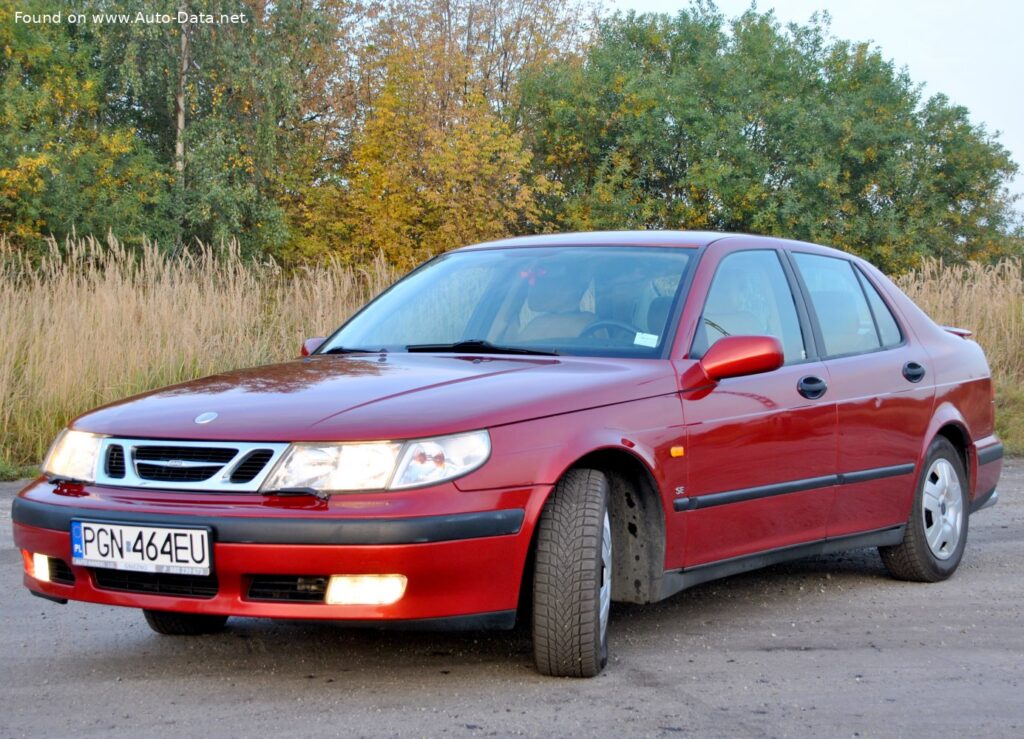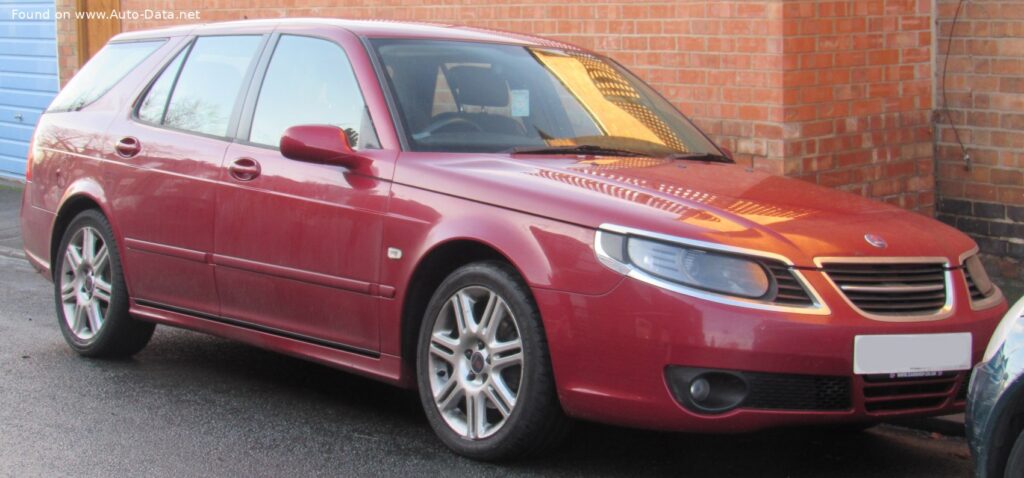
The Saab 9-5 Sport Combi (facelift 2005) represented a significant iteration of the Swedish automaker’s executive-class offering, particularly in its estate or “Sport Combi” guise. Introduced as part of a comprehensive refresh in 2005, this model continued Saab’s tradition of blending distinctive Scandinavian design with advanced turbocharged powertrains and a strong emphasis on safety and practicality. While Saab’s presence in the United States market was more niche compared to European luxury brands, the 9-5 Sport Combi carved out a loyal following among buyers seeking an unconventional yet sophisticated alternative. This particular variant, equipped with the 2.0t (150 Hp) engine, was a cornerstone of the lineup, offering a balanced combination of performance and efficiency suitable for everyday driving and long-distance touring.
The 9-5 generation, first launched in 1997, received its final major facelift in 2005, giving it a more contemporary and aggressive aesthetic that Saab enthusiasts affectionately dubbed the “Dame Edna” front end, due to its distinctive headlamp design. This facelift aimed to modernize the car’s appearance and keep it competitive in a fiercely contested segment dominated by German rivals. The Sport Combi body style, with its characteristic wraparound rear window and practical cargo capabilities, remained a hallmark of Saab’s design philosophy, prioritizing both form and function. Production of this facelifted model ran from 2005 until 2010, marking the final chapter for the first-generation 9-5 before the introduction of its successor.
Engine and Performance: The 2.0t (150 Hp) in the Saab 9-5 Sport Combi (facelift 2005)
At the heart of the Saab 9-5 Sport Combi (facelift 2005) 2.0t variant was Saab’s venerable B205E engine, an inline four-cylinder powerplant renowned for its robust construction and turbocharged delivery. This 1,985 cubic inch (121.13 cu. in.) unit was a prime example of Saab’s long-standing commitment to forced induction technology, which allowed for impressive power output from a relatively modest displacement. The engine produced a healthy 150 horsepower at 5,500 revolutions per minute, translating to a specific output of 75.6 horsepower per liter, a respectable figure for its time.
More notably, the 2.0t engine delivered a generous 177.01 pound-feet of torque, available across a broad and accessible rev range from 1,800 to 3,500 rpm. This wide torque band, facilitated by the turbocharger and intercooler, ensured strong, linear acceleration and excellent drivability in various conditions, making the Sport Combi feel responsive and capable. Mated to a 5-speed manual transmission, the front-wheel-drive powertrain allowed the vehicle to accelerate from 0 to 60 miles per hour in a respectable 9.7 seconds. The maximum speed achieved by this configuration was 130.49 mph (210 km/h), demonstrating its capability for sustained highway cruising.
Fuel efficiency for the 2.0t engine was also competitive for a mid-size wagon of its era. According to NEDC (New European Driving Cycle) standards, the combined fuel consumption was rated at 25.6 US miles per gallon (9.2 liters per 100 km). Urban driving yielded 18.4 US mpg (12.8 l/100 km), while extra-urban conditions saw consumption improve to 33.6 US mpg (7.0 l/100 km). Emissions performance was rated at 218 grams of CO2 per kilometer, meeting the Euro 4 emission standard, reflecting Saab’s efforts to balance performance with environmental considerations.
Advanced Engineering and Powertrain Architecture
The technical sophistication of the 2.0t engine extended beyond its turbocharging. It featured a DOHC (Dual Overhead Camshaft) valvetrain with four valves per cylinder, optimizing airflow and combustion efficiency. Fuel delivery was handled by a multi-port manifold injection system, ensuring precise fuel metering. The engine’s layout was front, transverse, driving the front wheels, a typical configuration for maximizing interior space and cost-effectiveness in a car of this class. The engine oil capacity was 4 US quarts (4 liters), and the cooling system held 7.82 US quarts (7.4 liters) of coolant, indicating a well-engineered thermal management system. The combination of these elements created a powertrain that was not only powerful but also refined and durable, embodying Saab’s engineering principles.
Design and Features: The Practicality and Style of the Saab 9-5 Sport Combi (facelift 2005)
The Saab 9-5 Sport Combi (facelift 2005) truly excelled in its design and feature set, particularly for those who appreciated understated elegance combined with exceptional practicality. As a station wagon (or estate), its five-door, five-seat configuration made it an ideal family vehicle or a spacious companion for active lifestyles. The facelift introduced a sharper, more assertive front fascia, characterized by redesigned headlights and a bolder grille that integrated seamlessly with the “clamshell” hood – a signature Saab styling cue.
Measuring 190.59 inches in length, 70.55 inches in width (or 81.5 inches including mirrors), and 57.44 inches in height, the 9-5 Sport Combi commanded a substantial road presence. Its generous 106.42-inch wheelbase contributed to a stable ride and ample interior room. Saab’s commitment to safety was evident even in this model, with standard features like ABS (Anti-lock Braking System) providing crucial stopping power and control. While the data provided doesn’t detail every interior amenity, typical Saab interiors of this era were known for their ergonomic excellence, aircraft-inspired controls (such as the “Night Panel” function that dimmed non-essential dashboard lights), and high-quality materials.
Interior Versatility and Driving Dynamics
The Sport Combi’s primary appeal lay in its versatility. The trunk space offered a minimum of 14.69 cubic feet (416 liters) with all seats in place, expanding significantly to a cavernous 52.62 cubic feet (1490 liters) when the rear seats were folded down. This made it highly capable for hauling luggage, sports equipment, or even furniture. Further enhancing its utility were a maximum roof load capacity of 220.46 pounds (100 kg) and impressive towing capabilities: 3,968.32 pounds (1800 kg) with brakes and 1,653.47 pounds (750 kg) without brakes.
Driving dynamics were refined, thanks to a sophisticated suspension setup. The front featured an independent McPherson type with a transverse stabilizer, while the rear employed an independent multi-link suspension, also with a transverse stabilizer. This combination provided a comfortable ride quality without sacrificing handling prowess. Braking was handled by ventilated discs measuring 308 mm at the front and solid discs of 286 mm at the rear, ensuring confident stopping power. Steering was managed by a hydraulic rack and pinion system, offering tactile feedback to the driver. The vehicle was equipped with tires sized 215/55 R16 or optional 225/45 R17, mounted on 6.5J x 16 or 7J x 17 wheel rims, respectively, providing a choice between comfort and slightly sportier aesthetics.
Overall, the Saab 9-5 Sport Combi (facelift 2005) 2.0t (150 Hp) was more than just a car; it was a statement of individuality and intelligent design. It offered a compelling package for those who valued distinctive styling, robust engineering, and practical functionality, all wrapped in a uniquely Swedish interpretation of the executive station wagon.
Technical Specifications: Saab 9-5 Sport Combi (facelift 2005) 2.0t (150 Hp)
| Brand | Saab |
| Model | 9-5 |
| Generation | 9-5 Sport Combi (facelift 2005) |
| Type (Engine) | 2.0t (150 Hp) |
| Start of production | 2005 year |
| End of production | 2010 year |
| Powertrain Architecture | Internal Combustion engine |
| Body type | Station wagon (estate) |
| Seats | 5 |
| Doors | 5 |
| Fuel consumption (economy) – urban (NEDC) | 18.4 US mpg (12.8 l/100 km) |
| Fuel consumption (economy) – extra urban (NEDC) | 33.6 US mpg (7.0 l/100 km) |
| Fuel consumption (economy) – combined (NEDC) | 25.6 US mpg (9.2 l/100 km) |
| CO2 emissions (NEDC) | 218 g/km |
| Fuel Type | Petrol (Gasoline) |
| Acceleration 0 – 62 mph | 10.2 sec |
| Acceleration 0 – 60 mph (Calculated) | 9.7 sec |
| Maximum speed | 130.49 mph (210 km/h) |
| Emission standard | Euro 4 |
| Power | 150 Hp @ 5500 rpm |
| Power per liter | 75.6 Hp/l |
| Torque | 177.01 lb.-ft. @ 1800-3500 rpm (240 Nm) |
| Engine layout | Front, Transverse |
| Engine Model/Code | B205E |
| Engine displacement | 121.13 cu. in. (1985 cm3) |
| Number of cylinders | 4 |
| Engine configuration | Inline |
| Cylinder Bore | 3.54 in. (90 mm) |
| Piston Stroke | 3.07 in. (78 mm) |
| Number of valves per cylinder | 4 |
| Fuel injection system | Multi-port manifold injection |
| Engine aspiration | Turbocharger, Intercooler |
| Valvetrain | DOHC |
| Engine oil capacity | 4.23 US qt (4 l) |
| Coolant | 7.82 US qt (7.4 l) |
| Trunk (boot) space – minimum | 14.69 cu. ft. (416 l) |
| Trunk (boot) space – maximum | 52.62 cu. ft. (1490 l) |
| Fuel tank capacity | 19.81 US gal (75 l) |
| Max. roof load | 220.46 lbs. (100 kg) |
| Permitted trailer load with brakes (12%) | 3968.32 lbs. (1800 kg) |
| Permitted trailer load without brakes | 1653.47 lbs. (750 kg) |
| Length | 190.59 in. (4841 mm) |
| Width | 70.55 in. (1792 mm) |
| Width including mirrors | 81.5 in. (2070 mm) |
| Height | 57.44 in. (1459 mm) |
| Wheelbase | 106.42 in. (2703 mm) |
| Front track | 59.92 in. (1522 mm) |
| Rear (Back) track | 60.16 in. (1528 mm) |
| Front overhang | 40.59 in. (1031 mm) |
| Rear overhang | 43.54 in. (1106 mm) |
| Minimum turning circle (turning diameter) | 35.43 ft. (10.8 m) |
| Drivetrain Architecture | Internal combustion engine (ICE) drives the front wheels |
| Drive wheel | Front wheel drive |
| Number of gears and type of gearbox | 5 gears, manual transmission |
| Front suspension | Independent type McPherson, Transverse stabilizer |
| Rear suspension | Independent multi-link suspension, Transverse stabilizer |
| Front brakes | Ventilated discs, 308 mm |
| Rear brakes | Disc, 286 mm |
| Assisting systems | ABS (Anti-lock braking system) |
| Steering type | Steering rack and pinion |
| Power steering | Hydraulic Steering |
| Tires size | 215/55 R16; 225/45 R17 |
| Wheel rims size | 6.5J x 16; 7J x 17 |