
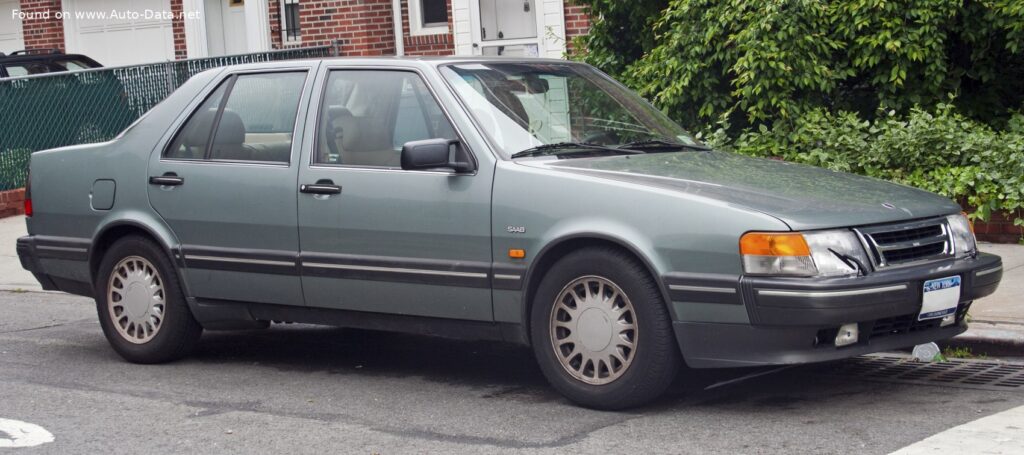
The Saab 9000 2.0 16V, produced between 1989 and 1993, represents a significant evolution in Saab’s model lineup. Positioned as a larger, more sophisticated alternative to the Saab 900, the 9000 aimed to compete in the executive car segment, offering a blend of Scandinavian practicality, safety, and performance. This generation of the 9000, particularly the 2.0 16V variant with automatic transmission, was a popular choice for those seeking a comfortable and capable family sedan with a distinctive character. While not initially a major seller in the United States, the 9000 established Saab’s reputation for innovative engineering and a loyal following among enthusiasts.
The Saab 9000 2.0 16V: A Detailed Overview
The 9000 was Saab’s first foray into a genuinely larger class of vehicle, moving beyond the compact offerings that had defined the brand for years. It was designed to offer a more spacious interior, improved ride quality, and a wider range of features compared to its predecessor. The 2.0 16V model, equipped with a four-cylinder, sixteen-valve engine, provided a balance between performance and fuel efficiency, making it a versatile option for daily driving. The availability of an automatic transmission further broadened its appeal to a wider range of buyers.
Engine & Performance
At the heart of the Saab 9000 2.0 16V lies a 1985 cc (121.13 cu. in.) inline-four cylinder engine. This naturally aspirated engine, designated the B202, produces 128 horsepower at 5500 rpm and 173 Nm (127.6 lb.-ft.) of torque at 3750 rpm. The engine features multi-port fuel injection and a double overhead camshaft (DOHC) valvetrain, contributing to its relatively high power output for its displacement – 64.5 hp per liter. The engine’s transverse mounting and front-wheel drive configuration were typical for European cars of this era, optimizing space utilization and handling characteristics. Performance figures include a 0-100 km/h (0-62 mph) acceleration time of 9.4 seconds and a 0-60 mph time of 8.9 seconds. The top speed is rated at 185 km/h (114.95 mph). The weight-to-power ratio of 11.6 kg/Hp and weight-to-torque ratio of 8.6 kg/Nm indicate a reasonably efficient powertrain for its time.
Design & Features
The Saab 9000 is a four-door sedan with a distinctive, aerodynamic profile. Its design, while not overtly flashy, was characterized by clean lines and a focus on functionality. The interior prioritized ergonomics and driver comfort, a hallmark of Saab design. The 9000 offered seating for five passengers and a generous trunk capacity, ranging from 625 liters (22.07 cu. ft.) with the rear seats up to 1600 liters (56.5 cu. ft.) with them folded down. Safety was a key consideration in the 9000’s design, and it was equipped with an Anti-lock Braking System (ABS) as standard, a relatively advanced feature for the late 1980s and early 1990s. Other notable features included hydraulic power steering and a comfortable ride, thanks to its wishbone front suspension and suspension with traction connecting levers at the rear. The car’s dimensions are 4794 mm (188.74 in.) in length, 1764 mm (69.45 in.) in width, and 1420 mm (55.91 in.) in height, with a wheelbase of 2672 mm (105.2 in.).
Technical Specifications
| Brand | Saab |
| Model | 9000 |
| Type (Engine) | 2.0 16V (128 Hp) Automatic |
| Start of production | 1989 |
| End of production | 1993 |
| Powertrain Architecture | Internal Combustion engine |
| Body type | Sedan |
| Seats | 5 |
| Doors | 4 |
| Fuel consumption (urban) | 15.9 l/100 km (14.8 US mpg, 17.8 UK mpg, 6.3 km/l) |
| Fuel consumption (extra urban) | 8.4 l/100 km (28 US mpg, 33.6 UK mpg, 11.9 km/l) |
| Fuel consumption (combined) | 8.9 l/100 km (26.4 US mpg, 31.7 UK mpg, 11.2 km/l) |
| Fuel Type | Petrol (Gasoline) |
| Acceleration 0 – 100 km/h | 9.4 sec |
| Acceleration 0 – 62 mph | 9.4 sec |
| Acceleration 0 – 60 mph | 8.9 sec |
| Maximum speed | 185 km/h (114.95 mph) |
| Weight-to-power ratio | 11.6 kg/Hp |
| Weight-to-torque ratio | 8.6 kg/Nm |
| Power | 128 Hp @ 5500 rpm |
| Torque | 173 Nm @ 3750 rpm (127.6 lb.-ft. @ 3750 rpm) |
| Engine layout | Front, Transverse |
| Engine Model/Code | B202 |
| Engine displacement | 1985 cm3 (121.13 cu. in.) |
| Number of cylinders | 4 |
| Engine configuration | Inline |
| Cylinder Bore | 90 mm (3.54 in.) |
| Piston Stroke | 78 mm (3.07 in.) |
| Compression ratio | 10:1 |
| Number of valves per cylinder | 4 |
| Fuel injection system | Multi-port manifold injection |
| Engine aspiration | Naturally aspirated |
| Valvetrain | DOHC |
| Engine oil capacity | 4.2 l (4.44 US qt | 3.7 UK qt) |
| Coolant capacity | 9 l (9.51 US qt | 7.92 UK qt) |
| Kerb Weight | 1490 kg (3284.89 lbs.) |
| Max. weight | 1910 kg (4210.83 lbs.) |
| Max load | 420 kg (925.94 lbs.) |
| Trunk (boot) space – minimum | 625 l (22.07 cu. ft.) |
| Trunk (boot) space – maximum | 1600 l (56.5 cu. ft.) |
| Fuel tank capacity | 66 l (17.44 US gal | 14.52 UK gal) |
| Length | 4794 mm (188.74 in.) |
| Width | 1764 mm (69.45 in.) |
| Height | 1420 mm (55.91 in.) |
| Wheelbase | 2672 mm (105.2 in.) |
| Front track | 1522 mm (59.92 in.) |
| Rear track | 1492 mm (58.74 in.) |
| Drivetrain Architecture | Front wheel drive |
| Number of gears | 4 |
| Gearbox type | Automatic transmission |
| Front suspension | Wishbone |
| Rear suspension | Suspension with traction connecting levers |
| Front brakes | Ventilated discs |
| Rear brakes | Disc |
| Assisting systems | ABS (Anti-lock braking system) |
| Steering type | Steering rack and pinion |
| Power steering | Hydraulic |
| Tires size | 185/65 R15 |
| Wheel rims size | 6J x 15 |
The Saab 9000 2.0 16V, while not a high-volume seller, remains a fondly remembered vehicle for its blend of Scandinavian design, practicality, and understated performance. It represents a pivotal moment in Saab’s history, marking its move into a more competitive segment of the automotive market and solidifying its reputation for innovation and driver-focused engineering.
