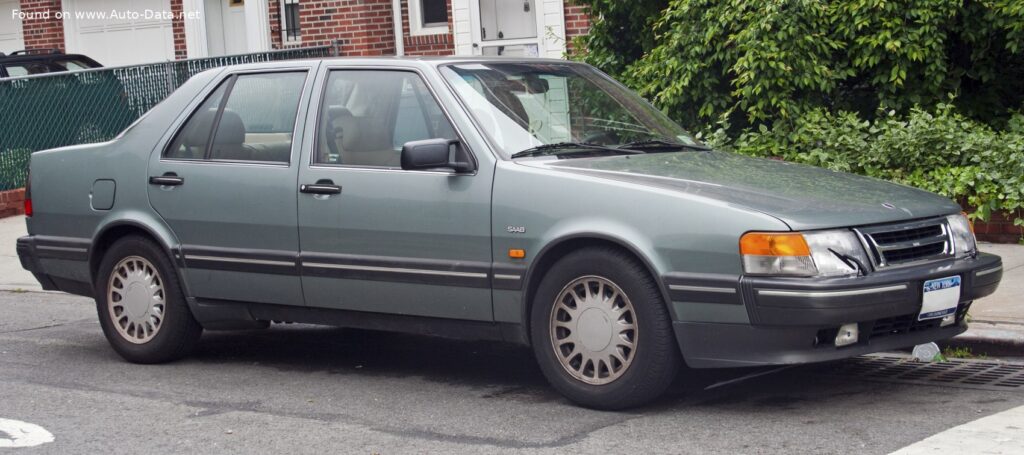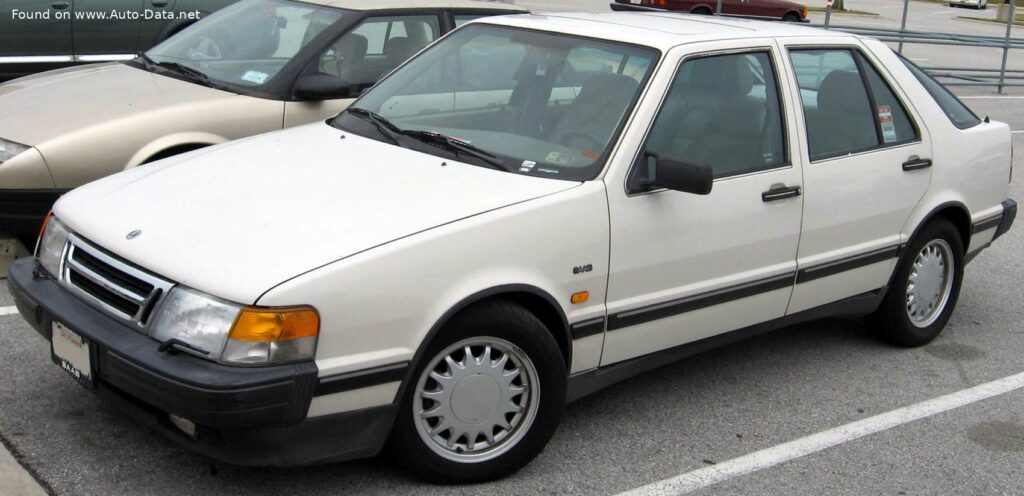
The Saab 9000 Hatchback, specifically the 2.3 16V CSE Eco Power variant produced between 1993 and 1998, represents a significant evolution in Saab’s model lineup. Positioned as a larger, more sophisticated alternative to the Saab 900, the 9000 aimed to compete in the executive car segment, offering a blend of Scandinavian practicality, innovative safety features, and turbocharged performance. While never a massive seller in the United States, the 9000 cultivated a loyal following among enthusiasts who appreciated its unique character and engineering. The “Eco Power” designation indicated a focus on reduced emissions and improved fuel efficiency, reflecting growing environmental concerns of the time.
Saab 9000: A Legacy of Innovation
The Saab 9000 was a pivotal model for the Swedish automaker. Introduced in 1984, it was the first Saab to utilize a completely new chassis and engine family, moving away from the platform shared with the earlier 900. The hatchback body style, while not initially available in the US market, proved popular in Europe, offering increased versatility and cargo capacity. The 2.3 16V CSE Eco Power model, launched in 1993, represented a refinement of the 9000 formula, combining a potent turbocharged engine with features designed to minimize environmental impact. It was a car designed for long-distance comfort and driver engagement.
Engine & Performance
At the heart of the 9000 2.3 16V CSE Eco Power lies a 2.3-liter inline-four cylinder engine, designated the B234. This engine is characterized by its robust construction and the incorporation of a Mitsubishi TD04HL-13C turbocharger with intercooling. Producing 170 horsepower at 5500 rpm and 280 Nm (206.52 lb.-ft.) of torque at 1800 rpm, the engine delivers strong performance across a broad rev range. The multi-port fuel injection system and double overhead camshaft (DOHC) valvetrain contribute to efficient combustion and responsive power delivery. The 9.3:1 compression ratio strikes a balance between performance and fuel economy. Performance figures include a 0-60 mph acceleration time of approximately 8.1 seconds and a top speed of 220 km/h (136.7 mph). The weight-to-power ratio of 8.1 kg/Hp and weight-to-torque ratio of 4.9 kg/Nm further highlight the car’s performance capabilities. The engine’s 5-liter oil capacity and 9-liter coolant capacity reflect its robust design and cooling requirements.
Design & Features
The Saab 9000 Hatchback boasts a distinctive, aerodynamic design that prioritizes both form and function. The five-door hatchback configuration provides easy access to a spacious interior and a versatile cargo area. The interior is known for its ergonomic design, comfortable seating for five occupants, and a driver-focused layout. Safety was a key consideration in the 9000’s design, and the 2.3 16V CSE Eco Power model included Anti-lock Braking System (ABS) as standard equipment. The hydraulic power steering provides precise and responsive handling. The car rides on 15-inch wheels with 195/65 R15 tires. The trunk offers a minimum of 488 liters (17.23 cu. ft.) of space, expanding to 883 liters (31.18 cu. ft.) with the rear seats folded down. The overall length of the vehicle is 4761 mm (187.44 in.), with a width of 1778 mm (70 in.) and a height of 1420 mm (55.91 in.).
Technical Specifications
| Brand | Saab |
| Model | 9000 |
| Generation | 9000 Hatchback |
| Type (Engine) | 2.3 16V CSE Eco Power (170 Hp) |
| Start of production | 1993 |
| End of production | 1998 |
| Powertrain Architecture | Internal Combustion engine |
| Body type | Hatchback |
| Seats | 5 |
| Doors | 5 |
| Fuel consumption (combined) | 8.8 l/100 km |
| Fuel consumption (US mpg) | 26.7 US mpg |
| Fuel consumption (UK mpg) | 32.1 UK mpg |
| Fuel consumption (km/l) | 11.4 km/l |
| Fuel Type | Petrol (Gasoline) |
| Acceleration 0 – 100 km/h | 8.5 sec |
| Acceleration 0 – 62 mph | 8.5 sec |
| Acceleration 0 – 60 mph | 8.1 sec |
| Maximum speed | 220 km/h (136.7 mph) |
| Weight-to-power ratio | 8.1 kg/Hp |
| Weight-to-torque ratio | 4.9 kg/Nm |
| Power | 170 Hp @ 5500 rpm |
| Power per litre | 74.2 Hp/l |
| Torque | 280 Nm @ 1800 rpm (206.52 lb.-ft. @ 1800 rpm) |
| Engine layout | Front, Transverse |
| Engine Model/Code | B234 |
| Engine displacement | 2290 cm3 (139.74 cu. in.) |
| Number of cylinders | 4 |
| Engine configuration | Inline |
| Cylinder Bore | 90 mm (3.54 in.) |
| Piston Stroke | 90 mm (3.54 in.) |
| Compression ratio | 9.3:1 |
| Number of valves per cylinder | 4 |
| Fuel injection system | Multi-port manifold injection |
| Engine aspiration | Turbocharger |
| Valvetrain | DOHC |
| Engine oil capacity | 5 l (5.28 US qt | 4.4 UK qt) |
| Coolant | 9 l (9.51 US qt | 7.92 UK qt) |
| Kerb Weight | 1375 kg (3031.36 lbs.) |
| Max. weight | 1930 kg (4254.92 lbs.) |
| Max load | 555 kg (1223.57 lbs.) |
| Trunk (boot) space – minimum | 488 l (17.23 cu. ft.) |
| Trunk (boot) space – maximum | 883 l (31.18 cu. ft.) |
| Fuel tank capacity | 66 l (17.44 US gal | 14.52 UK gal) |
| Length | 4761 mm (187.44 in.) |
| Width | 1778 mm (70 in.) |
| Height | 1420 mm (55.91 in.) |
| Wheelbase | 2672 mm (105.2 in.) |
| Front track | 1522 mm (59.92 in.) |
| Rear (Back) track | 1492 mm (58.74 in.) |
| Drivetrain Architecture | ICE drives front wheels |
| Drive wheel | Front wheel drive |
| Number of gears and type of gearbox | 5 gears, manual transmission |
| Front suspension | Wishbone |
| Rear suspension | Suspension with traction connecting levers |
| Front brakes | Ventilated discs |
| Rear brakes | Disc |
| Assisting systems | ABS (Anti-lock braking system) |
| Steering type | Steering rack and pinion |
| Power steering | Hydraulic Steering |
| Tires size | 195/65 R15 |
| Wheel rims size | 15 |
The Saab 9000 2.3 16V CSE Eco Power remains a compelling example of Scandinavian automotive engineering. Its blend of performance, practicality, and safety features, combined with its distinctive styling, continues to attract a dedicated following among car enthusiasts. While production ended in 1998, the 9000’s legacy as a comfortable, capable, and uniquely styled vehicle endures.