
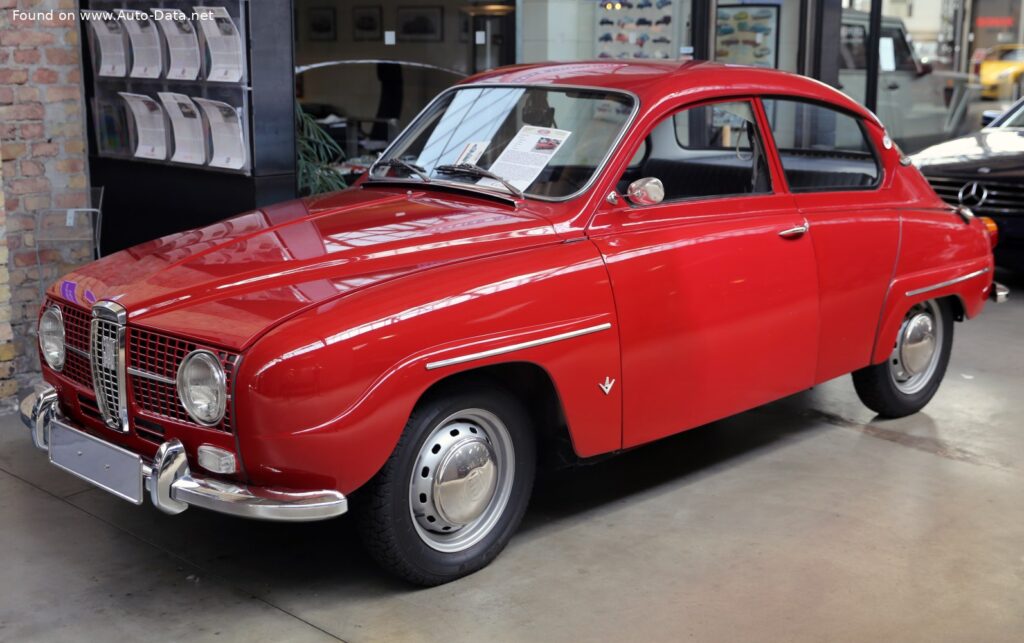
The Saab 96, produced between 1960 and 1980, represents a pivotal chapter in the history of the Swedish automaker. While the initial models differed significantly, the 96 evolved into a distinctive and enduring design, particularly noted for its aerodynamic profile and robust engineering. The 1.5 V4 variant, manufactured from 1966 to 1975, marked a significant upgrade in powertrain sophistication, replacing the earlier two-stroke engines with a more conventional, albeit innovative, four-stroke V4 engine sourced from Ford. This model found its primary market in Europe, where Saab cultivated a loyal following amongst drivers seeking a safe, reliable, and uniquely styled vehicle. The Saab 96 wasn’t officially sold in the United States during its production run, but it gained a cult following among enthusiasts who appreciated its quirky charm and advanced features for its time.
The Saab 96 1.5 V4: A Detailed Overview
The 96 1.5 V4 was a key model in establishing Saab’s reputation for innovation and safety. It was a compact sedan, characterized by its free-flowing lines and relatively spacious interior for its size. The switch to the Ford V4 engine was a strategic move, providing increased power and torque compared to the earlier two-stroke engines, while maintaining the front-wheel-drive layout that became a Saab hallmark. The V4 configuration, though unusual for the time, offered a good balance of power and smoothness in a compact package. The 96’s design prioritized practicality and durability, making it a popular choice for drivers in colder climates and challenging road conditions.
Engine & Performance
The heart of the Saab 96 1.5 V4 is its 1.5-liter (1498 cm3 or 91.41 cu. in.) Ford V4 engine. This engine produced 65 horsepower at 4600 rpm and 115 Nm (84.82 lb.-ft.) of torque at 2500 rpm. While not a powerhouse by modern standards, this output provided adequate performance for the vehicle’s weight and intended use. The engine featured a 9:1 compression ratio and utilized a carburetor fuel injection system. The transverse engine layout, coupled with front-wheel drive, contributed to the 96’s good handling characteristics, particularly in slippery conditions. The power-to-weight ratio of 13.4 kg/Hp (74.5 Hp/tonne) and torque-to-weight ratio of 7.6 kg/Nm (131.7 Nm/tonne) demonstrate a reasonably efficient powertrain for the era. The engine’s 43.4 Hp/l specific output was respectable for a naturally aspirated engine of the 1960s and 70s.
Design & Features
The Saab 96 is instantly recognizable by its distinctive silhouette. The two-door sedan body style offered seating for five passengers, although rear passenger space was somewhat limited. The car’s aerodynamic shape, influenced by aircraft design principles, was a key feature, contributing to reduced drag and improved fuel efficiency. Safety was a significant consideration in the 96’s design. It featured a robust safety cage construction and a split-circuit braking system, innovations that were relatively uncommon in cars of this period. The interior was functional and practical, with a focus on driver visibility. Features like a heated rear window and optional radio were available, enhancing comfort and convenience. The 96’s design, while unconventional, proved to be remarkably durable and adaptable, contributing to its long production run. The car’s relatively simple construction also made it relatively easy to maintain and repair.
Technical Specifications
| Brand | Saab |
| Model | 96 |
| Generation | 96 |
| Type (Engine) | 1.5 V4 (65 Hp) |
| Start of production | 1966 |
| End of production | 1975 |
| Powertrain Architecture | Internal Combustion engine |
| Body type | Sedan |
| Seats | 5 |
| Doors | 2 |
| Fuel Type | Petrol (Gasoline) |
| Maximum speed | 147 km/h (91.34 mph) |
| Weight-to-power ratio | 13.4 kg/Hp, 74.5 Hp/tonne |
| Weight-to-torque ratio | 7.6 kg/Nm, 131.7 Nm/tonne |
| Power | 65 Hp @ 4600 rpm |
| Power per litre | 43.4 Hp/l |
| Torque | 115 Nm @ 2500 rpm (84.82 lb.-ft. @ 2500 rpm) |
| Engine layout | Front, Transverse |
| Engine Model/Code | Ford V-4 |
| Engine displacement | 1498 cm3 (91.41 cu. in.) |
| Number of cylinders | 4 |
| Engine configuration | V-engine |
| Cylinder Bore | 90 mm (3.54 in.) |
| Piston Stroke | 58.86 mm (2.32 in.) |
| Compression ratio | 9:1 |
| Number of valves per cylinder | 2 |
| Fuel injection system | Carburettor |
| Engine aspiration | Naturally aspirated engine |
| Engine oil capacity | 3.3 l (3.49 US qt | 2.9 UK qt) |
| Coolant | 7.1 l (7.5 US qt | 6.25 UK qt) |
| Kerb Weight | 873 kg (1924.64 lbs.) |
| Fuel tank capacity | 38 l (10.04 US gal | 8.36 UK gal) |
| Length | 4170 mm (164.17 in.) |
| Width | 1575 mm (62.01 in.) |
| Height | 1473 mm (57.99 in.) |
| Wheelbase | 2498 mm (98.35 in.) |
| Front track | 1219 mm (47.99 in.) |
| Rear (Back) track | 1219 mm (47.99 in.) |
| Drivetrain Architecture | The Internal combustion engine (ICE) drives the front wheels of the vehicle. |
| Drive wheel | Front wheel drive |
| Number of gears and type of gearbox | 4 gears, manual transmission |
| Front brakes | Disc |
| Rear brakes | Drum |
| Steering type | Steering rack and pinion |
The Saab 96 1.5 V4, though not widely available in the US market, remains a significant vehicle in automotive history. Its innovative design, focus on safety, and durable construction cemented its place as a beloved classic, particularly in Europe. The model represents a crucial step in Saab’s development as an independent and forward-thinking automaker, paving the way for future generations of distinctive and technologically advanced vehicles.
