
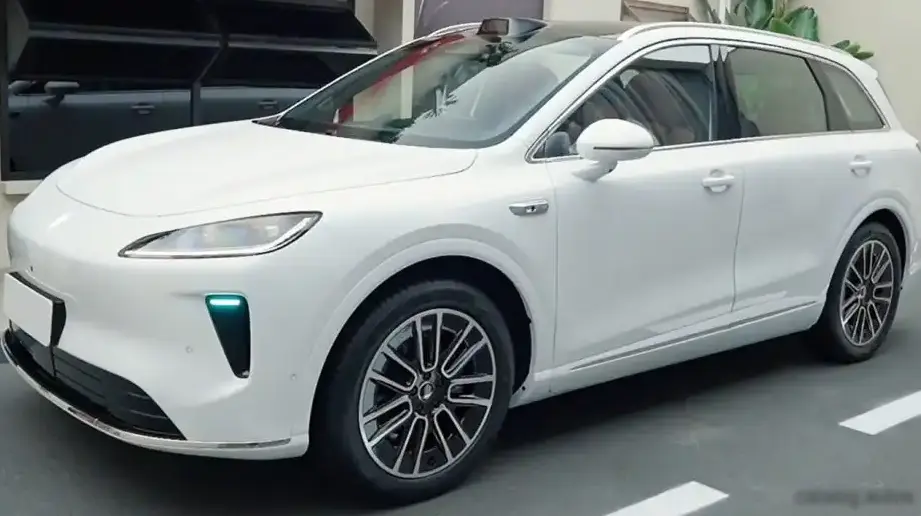
The SAIC H5 80 kWh is an all-electric sport utility vehicle (SUV) introduced by SAIC Motor in September 2025. Positioned as a mid-range offering within SAIC’s growing electric vehicle lineup, the H5 aims to provide a balance of range, performance, and practicality for the burgeoning Chinese and potentially international EV markets. It represents SAIC’s commitment to electrification and its ambition to compete with established global automakers in the EV space. The H5 is built upon a dedicated electric vehicle platform, prioritizing battery integration and efficient packaging.
Technical Specifications
| Brand | SAIC |
| Model | H5 |
| Generation | H5 |
| Type (Engine) | 80 kWh (245 Hp) Electric |
| Start of production | September, 2025 |
| Powertrain Architecture | BEV (Electric Vehicle) |
| Body type | SUV |
| Seats | 5 |
| Doors | 5 |
| Fuel Type | Electricity |
| Acceleration 0 – 100 km/h | 7.3 sec |
| Acceleration 0 – 62 mph | 7.3 sec |
| Acceleration 0 – 60 mph | 6.9 sec |
| Maximum speed | 200 km/h (124.27 mph) |
| 100 km/h – 0 | 35.12 m |
| Weight-to-power ratio | 8 kg/Hp, 125 Hp/tonne |
| Weight-to-torque ratio | 5.6 kg/Nm, 178.6 Nm/tonne |
| Gross battery capacity | 80 kWh |
| Battery voltage | 400 V |
| Battery technology | Lithium nickel manganese cobalt oxides (Li-NMC) |
| Battery location | Below the floor |
| All-electric range (CLTC) | 640-655 km (397.68 – 407 mi) |
| Average Energy consumption (CLTC) | 13.4-13.6 kWh/100 km (21.57 – 21.89 kWh/100 mi) |
| MPGe | 156 – 154 |
| km/kWh | 7.5 – 7.4 |
| mi/kWh | 4.6 – 4.6 |
| Electric motor power | 245 Hp |
| Electric motor Torque | 350 Nm (258.15 lb.-ft.) |
| Electric motor model/code | TZ204XS1352 |
| Electric motor location | Rear axle, Transverse |
| Electric motor type | Synchronous |
| System power | 245 Hp |
| System torque | 350 Nm (258.15 lb.-ft.) |
| Kerb Weight | 1960 kg (4321.06 lbs.) |
| Max. weight | 2370 kg (5224.96 lbs.) |
| Max load | 410 kg (903.9 lbs.) |
| Trunk (boot) space – minimum | 601 l (21.22 cu. ft.) |
| Trunk (boot) space – maximum | 1837 l (64.87 cu. ft.) |
| Length | 4780 mm (188.19 in.) |
| Width | 1910 mm (75.2 in.) |
| Height | 1657-1664 mm (65.24 – 65.51 in.) |
| Wheelbase | 2840 mm (111.81 in.) |
| Front track | 1622 mm (63.86 in.) |
| Rear (Back) track | 1612 mm (63.46 in.) |
| Minimum turning circle | 10.8 m (35.43 ft.) |
| Approach angle | 17° |
| Departure angle | 22° |
| Drivetrain Architecture | One electric motor drives the rear wheels. |
| Drive wheel | Rear wheel drive |
| Number of gears | 1 |
| Gearbox type | Automatic transmission |
| Front suspension | Independent, type McPherson with coil spring and anti-roll bar |
| Rear suspension | Independent multi-link spring suspension with stabilizer |
| Front brakes | Ventilated discs |
| Rear brakes | Ventilated discs |
| Assisting systems | ABS (Anti-lock braking system) |
| Steering type | Steering rack and pinion |
| Power steering | Electric Steering |
| Tires size | 235/55 R19; 245/50 R20 |
| Wheel rims size | 19; 20 |
Powertrain & Engine Architecture
The SAIC H5 utilizes a single rear-mounted synchronous electric motor producing 245 horsepower and 350 Nm (258.15 lb.-ft.) of torque. This motor, designated TZ204XS1352, is powered by an 80 kWh lithium nickel manganese cobalt oxide (Li-NMC) battery pack located under the vehicle floor. The 400V architecture allows for relatively fast charging times, though specific charging rates depend on the charging infrastructure used. The single-speed automatic transmission efficiently delivers power to the rear wheels. The battery management system (BMS) is crucial for optimizing battery life, performance, and safety, monitoring cell voltages, temperatures, and overall health. The H5’s powertrain is designed for efficiency, aiming to maximize range while providing adequate performance for daily driving.
Driving Characteristics
The rear-wheel-drive configuration of the H5 contributes to a balanced driving experience. Acceleration from 0 to 100 km/h (0-62 mph) takes approximately 7.3 seconds, and 0-60 mph in 6.9 seconds, making it competitive within its segment. The instant torque delivery characteristic of electric motors provides brisk acceleration in urban environments. While not a performance-oriented vehicle, the H5 offers sufficient power for highway merging and overtaking. The single-speed transmission simplifies the driving experience, eliminating the need for gear changes. The rear-wheel-drive setup may offer a slightly more engaging driving feel compared to front-wheel-drive EVs, but it also requires careful consideration in low-traction conditions.
Equipment & Trim Levels
Specific trim levels and standard equipment for the SAIC H5 80 kWh may vary depending on the market. However, it is expected to include features such as a large touchscreen infotainment system, digital instrument cluster, automatic climate control, and a suite of advanced driver-assistance systems (ADAS). These ADAS features likely include adaptive cruise control, lane keeping assist, automatic emergency braking, and blind spot monitoring. Interior upholstery is expected to be a combination of cloth and leatherette, with higher trims offering full leather options. Optional extras may include a panoramic sunroof, premium audio system, and ventilated front seats.
Chassis & Braking
The H5 features an independent suspension system at both the front and rear. The front utilizes a McPherson strut setup with coil springs and an anti-roll bar, while the rear employs a multi-link suspension with a stabilizer bar. This configuration aims to provide a comfortable ride and stable handling. Ventilated disc brakes are used on all four wheels, providing ample stopping power. The inclusion of ABS (Anti-lock Braking System) enhances safety by preventing wheel lockup during hard braking. The electric steering system offers precise and responsive steering feel.
Market Reception & Comparison
As a relatively new entrant to the market, the SAIC H5’s reception is still developing. Early reviews suggest that it offers a competitive range and performance for its price point. Compared to other EVs in its class, the H5’s 640-655 km (397.68 – 407 mi) CLTC range is respectable, though real-world range may vary depending on driving conditions and habits. Its energy consumption of 13.4-13.6 kWh/100 km (21.57 – 21.89 kWh/100 mi) is also competitive. The H5’s rear-wheel-drive configuration differentiates it from many other EVs, which typically employ front-wheel drive. The H5’s success will depend on its ability to establish a strong brand reputation and offer a compelling value proposition to consumers.
Legacy
The long-term reliability of the SAIC H5’s powertrain remains to be seen, as it is a relatively new vehicle. However, SAIC has been gaining experience in electric vehicle technology, and the H5 benefits from a modern battery management system and a robust electric motor design. The Li-NMC battery technology is widely used in EVs and has a proven track record. The H5’s status in the used car market will depend on its reliability, maintenance costs, and overall owner satisfaction. As the EV market matures, the H5 has the potential to become a popular and affordable option for consumers seeking a practical and efficient electric SUV.
