
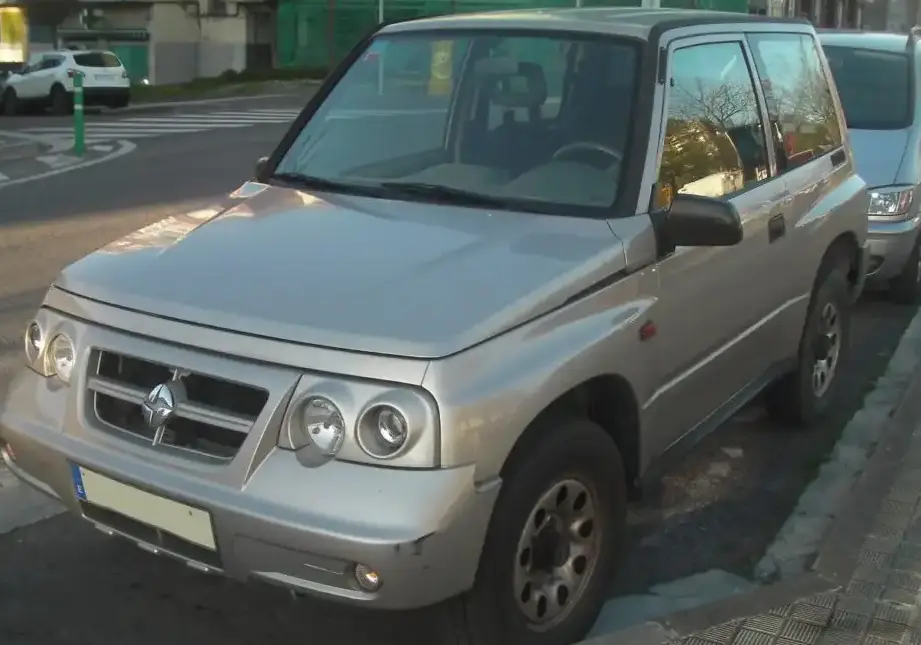
The Santana 300 1.6 HDi 4WD, produced between 2006 and 2009, represents a unique offering within the Santana 300/350 range. Positioned as a practical and capable SUV, this variant combined a relatively modest diesel engine with a four-wheel-drive system, aiming to provide all-weather capability and reasonable fuel economy. The Santana 300 series itself was a continuation of the original Santana Land Rover, produced under license in Spain after the British manufacturer’s privatization. This model aimed to fill a niche for a rugged, no-frills SUV, particularly in markets where off-road capability was valued. The 1.6 HDi 4WD trim occupied a middle ground in the lineup, offering a more affordable entry point into the 4×4 world compared to higher-powered or more luxuriously equipped versions.
Technical Specifications
| Brand | Santana |
| Model | 300/350 |
| Generation | 300 |
| Type (Engine) | 1.6 HDi (90 Hp) 4WD |
| Start of production | 2006 |
| End of production | 2009 |
| Powertrain Architecture | Internal Combustion engine |
| Body type | SUV |
| Seats | 4 |
| Doors | 3 |
| Fuel consumption (urban) | 6.8 l/100 km (34.6 US mpg) |
| Fuel consumption (extra urban) | 5.1 l/100 km (46.1 US mpg) |
| Fuel consumption (combined) | 5.7 l/100 km (41.3 US mpg) |
| CO2 emissions | 149 g/km |
| Fuel Type | Diesel |
| Maximum speed | 160 km/h (99.42 mph) |
| Weight-to-power ratio | 14.5 kg/Hp |
| Weight-to-torque ratio | 6.1 kg/Nm |
| Power | 90 Hp @ 4000 rpm |
| Power per litre | 57.7 Hp/l |
| Torque | 215 Nm @ 1750 rpm (158.58 lb.-ft. @ 1750 rpm) |
| Engine layout | Front, Longitudinal |
| Engine Model/Code | DV6ATED4 |
| Engine displacement | 1560 cm3 (95.2 cu. in.) |
| Number of cylinders | 4 |
| Engine configuration | Inline |
| Cylinder Bore | 75 mm (2.95 in.) |
| Piston Stroke | 88.3 mm (3.48 in.) |
| Compression ratio | 18:1 |
| Number of valves per cylinder | 4 |
| Fuel injection system | Diesel Commonrail |
| Engine aspiration | Turbocharger, Intercooler |
| Valvetrain | DOHC |
| Engine oil capacity | 3.75 l (3.96 US qt | 3.3 UK qt) |
| Kerb Weight | 1304 kg (2874.83 lbs.) |
| Max. weight | 1650 kg (3637.63 lbs.) |
| Max load | 346 kg (762.8 lbs.) |
| Fuel tank capacity | 42 l (11.1 US gal | 9.24 UK gal) |
| Length | 3660 mm (144.09 in.) |
| Width | 1630 mm (64.17 in.) |
| Height | 1665 mm (65.55 in.) |
| Wheelbase | 2200 mm (86.61 in.) |
| Front track | 1395-1405 mm (54.92 – 55.31 in.) |
| Rear track | 1400-1410 mm (55.12 – 55.51 in.) |
| Ride height (ground clearance) | 210 mm (8.27 in.) |
| Minimum turning circle | 9.8 m (32.15 ft.) |
| Drivetrain Architecture | All wheel drive (4×4) |
| Number of gears | 5 |
| Gearbox type | Manual transmission |
| Front suspension | Independent, McPherson with coil spring and anti-roll bar |
| Rear suspension | Rigid axle suspension, Coil spring |
| Front brakes | Disc, 290×10 mm |
| Rear brakes | Drum |
| Steering type | Cone worm with recirculation balls |
| Power steering | Hydraulic |
| Wheel rims size | 15 |
Powertrain & Engine Architecture
The heart of the Santana 300 1.6 HDi 4WD is the DV6ATED4 engine, a 1.6-liter inline-four cylinder diesel. This engine, developed by PSA Peugeot Citroën and widely used across various European vehicles, is characterized by its common-rail direct injection system. This system allows for precise fuel delivery, contributing to improved fuel efficiency and reduced emissions. The DV6 features a turbocharger with an intercooler, boosting power output to 90 horsepower and 215 Nm (158.58 lb.-ft.) of torque. The engine utilizes a double overhead camshaft (DOHC) valvetrain with four valves per cylinder, optimizing gas flow for enhanced performance. The engine is longitudinally mounted in the chassis. The five-speed manual transmission was the only gearbox option available for this variant. It’s a relatively simple, robust unit designed for durability rather than sporty performance.
Driving Characteristics
The 90 hp output and the five-speed manual transmission provide adequate, but not exhilarating, performance. Acceleration is modest, and the vehicle feels most comfortable cruising at highway speeds. The torque, peaking at 1750 rpm, provides sufficient pulling power for everyday driving and light off-road work. The 4×4 system, engaging the front wheels when rear wheel slip is detected, enhances traction on slippery surfaces. Compared to higher-powered Santana 300 variants, the 1.6 HDi feels noticeably slower, particularly when fully loaded. However, the lower power output also contributes to better fuel economy. The gear ratios are geared towards fuel efficiency and usability, rather than outright speed.
Equipment & Trim Levels
The Santana 300 1.6 HDi 4WD was typically equipped with basic, functional features. Standard equipment generally included power steering, central locking, and a basic audio system. Interior upholstery was typically hard-wearing cloth. Air conditioning was often an optional extra. The dashboard layout was simple and utilitarian, prioritizing functionality over aesthetics. Optional extras could include alloy wheels, upgraded audio systems, and a sunroof. The trim level was generally considered entry-level within the 4×4 Santana range, appealing to buyers seeking a practical and affordable off-road vehicle.
Chassis & Braking
The Santana 300 utilizes a body-on-frame construction, contributing to its ruggedness and off-road capability. The front suspension employs an independent McPherson strut setup with coil springs and an anti-roll bar, providing a reasonable level of ride comfort. The rear suspension features a rigid axle with coil springs, prioritizing durability and load-carrying capacity. The braking system consists of disc brakes on the front wheels and drum brakes on the rear. While adequate for normal driving conditions, the braking performance is not particularly strong compared to more modern SUVs. The hydraulic power steering provides reasonable assistance, but lacks the precision of more advanced systems.
Market Reception & Comparison
The Santana 300 1.6 HDi 4WD was generally well-received as a practical and affordable 4×4 vehicle. Critics praised its rugged construction, all-weather capability, and reasonable fuel economy. However, the modest power output and basic interior were often cited as drawbacks. Compared to other trims in the Santana 300 lineup, such as those equipped with larger engines, the 1.6 HDi offered a more economical option, but at the expense of performance. Its fuel economy of around 41.3 US mpg combined was competitive for its class. Reliability was generally good, although the diesel engine required regular maintenance to ensure optimal performance.
Legacy
The Santana 300 1.6 HDi 4WD has developed a reputation as a reliable and durable workhorse. The DV6ATED4 engine, while not known for its refinement, is generally considered robust and capable of high mileage with proper maintenance. In the used car market, these vehicles are often sought after by those seeking a simple, affordable, and capable 4×4. Parts availability can be a challenge, as Santana production ceased in 2011, but many components are shared with other PSA vehicles, making sourcing replacements possible. The Santana 300 1.6 HDi 4WD represents a unique blend of ruggedness, practicality, and affordability, cementing its place as a distinctive vehicle in the SUV landscape.
