
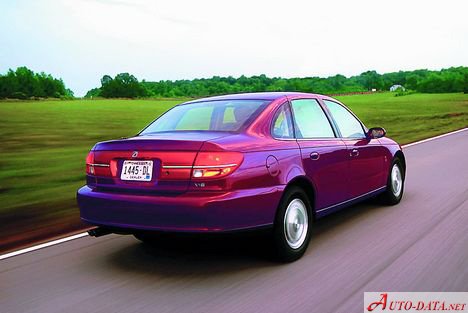
The Saturn LS, produced from 1999 to 2004, represented Saturn’s entry into the mid-size sedan segment. Positioned above the SL and SC models, the LS aimed to offer a more refined and upscale experience while retaining the brand’s core values of innovative design and customer-focused service. This generation of the LS was a single generation model, representing a significant step forward for Saturn in terms of both styling and mechanical sophistication. It competed with established American and Japanese sedans like the Honda Accord, Toyota Camry, and Ford Taurus.
Saturn LS 3.0 i V6 24V: An Overview
The Saturn LS 3.0 i V6 24V was the primary powertrain offering for the model, featuring a 3.0-liter V6 engine. The LS was notable for its polymer body panels – a signature Saturn feature – mounted on a steel space frame. This construction method aimed to reduce weight and improve corrosion resistance. The vehicle was exclusively offered as a four-door sedan with seating for five passengers. The LS sought to carve out a niche for itself by offering a unique blend of American practicality and European-inspired design.
Engine & Performance
The heart of the Saturn LS 3.0 i V6 24V is the L81 3.0-liter V6 engine, producing 185 horsepower at 5600 rpm and 190.29 lb.-ft. of torque at 3600 rpm. This naturally aspirated engine utilizes a multi-port fuel injection system and a double overhead camshaft (DOHC) valvetrain with four valves per cylinder. The engine’s displacement of 2962 cm³ (180.75 cubic inches) provides a good balance of power and efficiency. Acceleration from 0 to 60 mph was achieved in approximately 7.8 seconds, and the vehicle had a top speed of 114.95 mph (185 km/h). The engine’s power-to-weight ratio of 7.8 kg/Hp and torque-to-weight ratio of 5.6 kg/Nm contributed to its responsive driving characteristics. The engine is transversely mounted at the front of the vehicle, driving the front wheels through a four-speed automatic transmission.
Design & Features
The Saturn LS featured a distinctive exterior design characterized by its rounded lines and sculpted body panels. The polymer body panels, while unconventional, offered benefits in terms of dent resistance and corrosion protection. Inside, the LS offered a comfortable and well-appointed cabin for its time. Standard features included air conditioning, power windows and locks, and an AM/FM stereo. Safety features, increasingly important in the early 2000s, included an anti-lock braking system (ABS). The interior design prioritized ergonomics and ease of use, reflecting Saturn’s commitment to customer satisfaction. The trunk offered a usable 16.42 cubic feet of space, providing ample room for luggage and cargo. The LS’s suspension, consisting of a spring strut front suspension and a coil spring rear suspension, aimed to provide a comfortable ride while maintaining reasonable handling characteristics.
Market Position
Saturn, as a brand, was created by General Motors in the early 1980s to compete with Japanese automakers. The LS was intended to broaden Saturn’s appeal beyond the compact and subcompact segments. While the LS didn’t achieve the sales volume of its more established competitors, it played a crucial role in establishing Saturn as a viable brand with a distinct identity. The polymer body panels and customer-focused sales experience were key differentiators. The LS represented Saturn’s attempt to move upmarket and offer a more sophisticated product to American consumers.
Technical Specifications
| Brand | Saturn |
| Model | LS |
| Type (Engine) | 3.0 i V6 24V (185 Hp) |
| Start of production | May, 1999 |
| End of production | June, 2004 |
| Powertrain Architecture | Internal Combustion engine |
| Body type | Sedan |
| Seats | 5 |
| Doors | 4 |
| Fuel consumption (economy) – urban | 11.2 l/100 km (21 US mpg, 25.2 UK mpg, 8.9 km/l) |
| Fuel consumption (economy) – extra urban | 8.1 l/100 km (29 US mpg, 34.9 UK mpg, 12.3 km/l) |
| Fuel consumption (economy) – combined | 9.4 l/100 km (25 US mpg, 30.1 UK mpg, 10.6 km/l) |
| Fuel Type | Petrol (Gasoline) |
| Acceleration 0 – 100 km/h | 8.2 sec |
| Acceleration 0 – 62 mph | 8.2 sec |
| Acceleration 0 – 60 mph | 7.8 sec |
| Maximum speed | 185 km/h (114.95 mph) |
| Weight-to-power ratio | 7.8 kg/Hp, 128 Hp/tonne |
| Weight-to-torque ratio | 5.6 kg/Nm, 178.5 Nm/tonne |
| Power | 185 Hp @ 5600 rpm |
| Power per litre | 62.5 Hp/l |
| Torque | 258 Nm @ 3600 rpm (190.29 lb.-ft. @ 3600 rpm) |
| Engine layout | Front, Transverse |
| Engine Model/Code | L81 |
| Engine displacement | 2962 cm3 (180.75 cu. in.) |
| Number of cylinders | 6 |
| Engine configuration | V-engine |
| Cylinder Bore | 86 mm (3.39 in.) |
| Piston Stroke | 85 mm (3.35 in.) |
| Compression ratio | 10:1 |
| Number of valves per cylinder | 4 |
| Fuel injection system | Multi-port manifold injection |
| Engine aspiration | Naturally aspirated engine |
| Valvetrain | DOHC |
| Engine oil capacity | 4.7 l (4.97 US qt | 4.14 UK qt) |
| Coolant | 8 l (8.45 US qt | 7.04 UK qt) |
| Kerb Weight | 1445 kg (3185.68 lbs.) |
| Trunk (boot) space – minimum | 465 l (16.42 cu. ft.) |
| Fuel tank capacity | 60 l (15.85 US gal | 13.2 UK gal) |
| Length | 4835 mm (190.35 in.) |
| Width | 1755 mm (69.09 in.) |
| Height | 1430 mm (56.3 in.) |
| Wheelbase | 2705 mm (106.5 in.) |
| Front track | 1520 mm (59.84 in.) |
| Rear (Back) track | 1510 mm (59.45 in.) |
| Drivetrain Architecture | The Internal combustion engine (ICE) drives the front wheels of the vehicle. |
| Drive wheel | Front wheel drive |
| Number of gears and type of gearbox | 4 gears, automatic transmission |
| Front suspension | Spring Strut |
| Rear suspension | Coil spring |
| Front brakes | Ventilated discs |
| Rear brakes | Disc |
| Assisting systems | ABS (Anti-lock braking system) |
| Steering type | Steering rack and pinion |
| Power steering | Hydraulic Steering |
| Tires size | 205/55 R16 |
