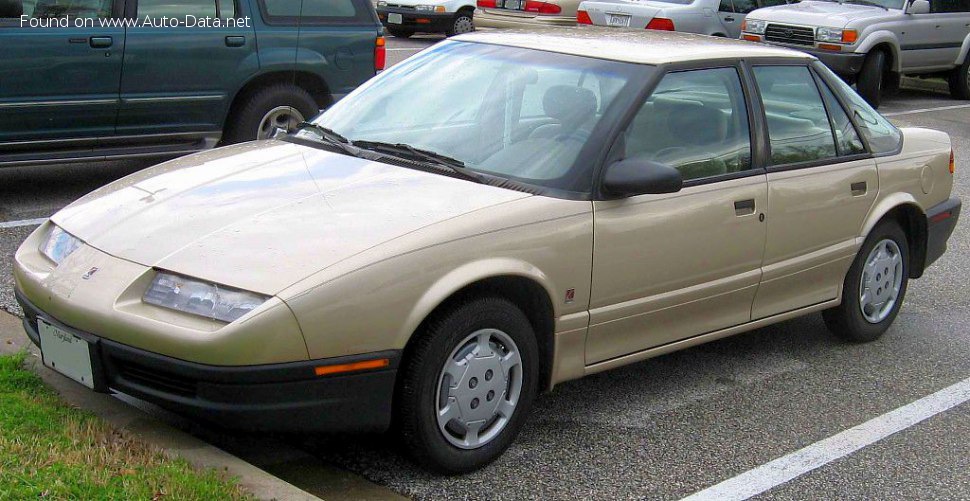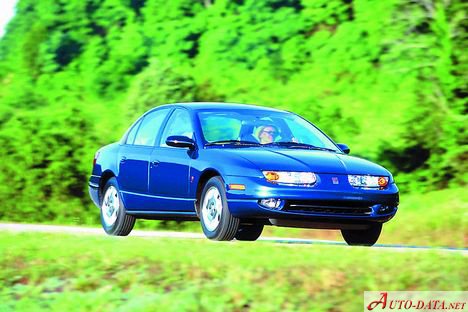
The Saturn SL, specifically the 55-Type variant with the 1.9i 16V engine producing 126 horsepower, represents a significant chapter in the history of General Motors’ attempt to revolutionize the American automotive market. Produced from 1995 to 2003, the SL was a compact sedan designed to compete with established Japanese imports, offering a unique blend of styling, features, and a different dealership experience. The SL was the cornerstone of the Saturn brand, embodying its commitment to customer satisfaction and innovative manufacturing processes. While not a performance leader, the SL prioritized affordability, fuel efficiency, and a comfortable driving experience for the average American commuter.
Saturn SL (55-Type) 1.9i 16V: An Overview
The Saturn SL occupied the compact sedan segment, aiming to provide a practical and reliable vehicle for families and individuals. It was the first model introduced by Saturn, a brand created by General Motors in 1985 with the intention of challenging Japanese automakers on their own turf. The “55-Type” designation refers to a mid-cycle refresh implemented in 1999, bringing subtle styling updates and minor mechanical improvements. The SL’s defining characteristic was its polymer (plastic) body panels bonded to a steel space frame – a novel approach at the time intended to reduce corrosion and simplify repairs. This unique construction method, along with a no-haggle pricing policy at Saturn dealerships, set it apart from traditional American car buying experiences.
Engine & Performance
The 1.9i 16V engine powering the Saturn SL is a naturally aspirated, inline-four cylinder gasoline engine. Displacing 1901 cubic centimeters (116.01 cubic inches), it generates 126 horsepower at 5600 rpm and 165 Newton-meters (121.7 lb.-ft.) of torque at 4800 rpm. This engine, designated as the LL0, features multi-port fuel injection and a double overhead camshaft (DOHC) valvetrain with four valves per cylinder. While not exceptionally powerful, the engine provides adequate performance for everyday driving. Acceleration from 0 to 60 mph is achieved in approximately 8.6 seconds, and the vehicle has a top speed of 160 km/h (99.42 mph). The engine’s power-to-weight ratio is 8.6 kg/Hp, and its torque-to-weight ratio is 6.6 kg/Nm. Fuel economy is a strong point, with combined fuel consumption rated at 7.4 l/100 km (31.8 US mpg, 38.2 UK mpg, 13.5 km/l). The engine requires 3.8 liters (4.02 US quarts) of engine oil and 6.5 liters (6.87 US quarts) of coolant.
Design & Features
The Saturn SL is a four-door, five-seat sedan with a relatively conservative design. Its most notable feature is its body construction – the use of dent-resistant plastic body panels over a steel frame. This design was intended to reduce the likelihood of rust and make minor repairs easier and more affordable. The interior of the SL is functional and straightforward, prioritizing practicality over luxury. Standard features typically included air conditioning, power steering, and an AM/FM radio. Safety features, while limited by the standards of the time, included an anti-lock braking system (ABS). The SL’s trunk offers 343 liters (12.11 cubic feet) of cargo space. The vehicle rides on 185/65 R15 tires. The SL’s dimensions are: length 4524 mm (178.11 in), width 1687 mm (66.42 in), height 1397 mm (55 in), and wheelbase 2601 mm (102.4 in).
Technical Specifications
| Brand | Saturn |
| Model | SL |
| Generation | SL (55-Type) |
| Type (Engine) | 1.9i 16V (126 Hp) |
| Start of production | 1995 |
| End of production | 2003 |
| Powertrain Architecture | Internal Combustion engine |
| Body type | Sedan |
| Seats | 5 |
| Doors | 4 |
| Fuel consumption (urban) | 8.7 l/100 km (27 US mpg, 32.5 UK mpg, 11.5 km/l) |
| Fuel consumption (extra urban) | 6.2 l/100 km (37.9 US mpg, 45.6 UK mpg, 16.1 km/l) |
| Fuel consumption (combined) | 7.4 l/100 km (31.8 US mpg, 38.2 UK mpg, 13.5 km/l) |
| Fuel Type | Petrol (Gasoline) |
| Acceleration 0 – 100 km/h | 9 sec |
| Acceleration 0 – 62 mph | 9 sec |
| Acceleration 0 – 60 mph | 8.6 sec |
| Maximum speed | 160 km/h (99.42 mph) |
| Weight-to-power ratio | 8.6 kg/Hp |
| Weight-to-torque ratio | 6.6 kg/Nm |
| Power | 126 Hp @ 5600 rpm |
| Torque | 165 Nm @ 4800 rpm (121.7 lb.-ft. @ 4800 rpm) |
| Engine layout | Front, Transverse |
| Engine Model/Code | LL0 |
| Engine displacement | 1901 cm3 (116.01 cu. in.) |
| Number of cylinders | 4 |
| Engine configuration | Inline |
| Cylinder Bore | 82 mm (3.23 in.) |
| Piston Stroke | 90 mm (3.54 in.) |
| Compression ratio | 9.5:1 |
| Number of valves per cylinder | 4 |
| Fuel injection system | Multi-port manifold injection |
| Engine aspiration | Naturally aspirated engine |
| Valvetrain | DOHC |
| Engine oil capacity | 3.8 l (4.02 US qt | 3.34 UK qt) |
| Coolant | 6.5 l (6.87 US qt | 5.72 UK qt) |
| Kerb Weight | 1088 kg (2398.63 lbs.) |
| Trunk (boot) space – minimum | 343 l (12.11 cu. ft.) |
| Fuel tank capacity | 46 l (12.15 US gal | 10.12 UK gal) |
| Length | 4524 mm (178.11 in.) |
| Width | 1687 mm (66.42 in.) |
| Height | 1397 mm (55 in.) |
| Wheelbase | 2601 mm (102.4 in.) |
| Front track | 1443 mm (56.81 in.) |
| Rear (Back) track | 1422 mm (55.98 in.) |
| Drivetrain Architecture | Front wheel drive |
| Number of gears and type of gearbox | 5 gears, manual transmission |
| Front suspension | Coil spring |
| Rear suspension | Coil spring |
| Front brakes | Ventilated discs |
| Rear brakes | Drum |
| Assisting systems | ABS (Anti-lock braking system) |
| Steering type | Steering rack and pinion |
| Power steering | Hydraulic Steering |
| Tires size | 185/65 R15 T |
Despite its innovative approach, the Saturn brand ultimately struggled to gain significant market share and was discontinued in 2010 as part of General Motors’ restructuring following the 2008 financial crisis. However, the Saturn SL remains a notable example of GM’s attempt to challenge the status quo and offer a different kind of automotive experience to American consumers.