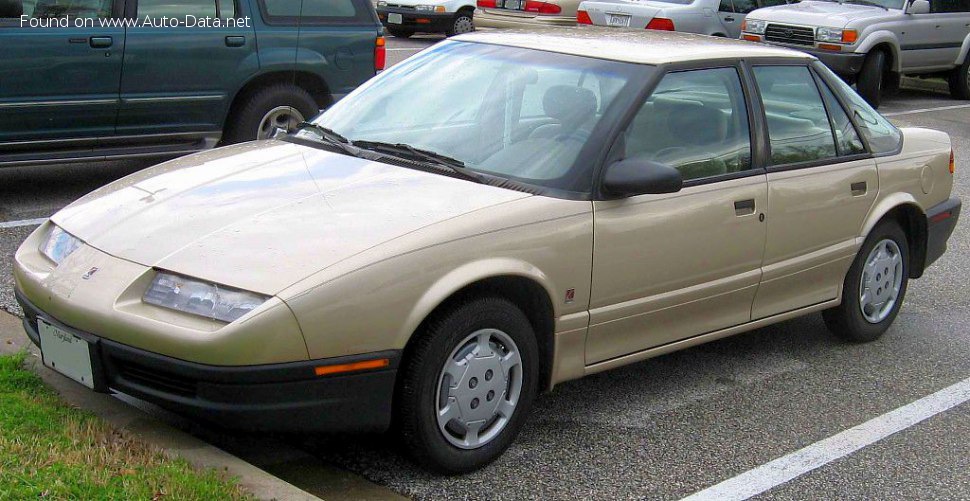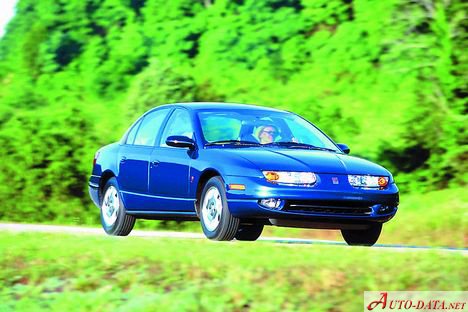
The Saturn SL, specifically the 55-Type model with the 1.9i 16V engine, represents a significant chapter in the history of General Motors’ attempt to revolutionize the American automotive market. Produced from 1995 to 2003, the SL was a compact sedan designed to compete with established Japanese imports like the Honda Civic and Toyota Corolla. It was a key model in Saturn’s early lineup, embodying the brand’s unique “no-haggle” sales approach and focus on customer service. While not a performance leader, the SL offered a practical and relatively affordable transportation option, and its design was considered refreshingly different for its time. The 1.9i 16V variant, producing 126 horsepower, was a common configuration, offering a balance of fuel efficiency and adequate power for everyday driving.
Saturn SL (55-Type) 1.9i 16V: A Detailed Overview
The Saturn SL (55-Type) was the first sedan offered by the Saturn brand, launched as part of GM’s effort to create a new division focused on innovation and customer satisfaction. The “55-Type” designation refers to a mid-cycle refresh introduced in 1998, featuring subtle styling updates and improvements to interior materials. The SL aimed to provide a different ownership experience, emphasizing a relaxed and transparent buying process. Its polymer body panels – a key feature of early Saturns – were designed to be dent-resistant and easily repairable, though they presented challenges in terms of paint adhesion and long-term durability. The SL’s impact wasn’t necessarily in groundbreaking technology, but in its attempt to redefine the car-buying experience and offer a uniquely American alternative to import brands.
Engine & Performance
The heart of the Saturn SL 1.9i 16V is a 1.9-liter inline four-cylinder engine, designated the LL0 engine code. This naturally aspirated engine produces 126 horsepower at 5600 rpm and 165 Newton-meters (121.7 lb.-ft.) of torque at 4800 rpm. While not a powerhouse, the engine provides sufficient power for typical commuting and highway driving. The engine features a multi-port fuel injection system and a double overhead camshaft (DOHC) valvetrain, contributing to its relatively efficient operation. Power is delivered to the front wheels through a four-speed automatic transmission. Acceleration from 0 to 60 mph is achieved in approximately 9.1 seconds, and the vehicle has a top speed of 160 km/h (99.42 mph). The engine’s power-to-weight ratio is 8.6 kg/Hp, and its torque-to-weight ratio is 6.6 kg/Nm. Fuel economy is rated at 7.8 l/100 km combined (30.2 US mpg, 36.2 UK mpg, 12.8 km/l), with 9.4 l/100 km (25 US mpg) in urban conditions and 6.5 l/100 km (36.2 US mpg) on the highway.
Design & Features
The Saturn SL is a four-door, five-seat sedan with a relatively compact footprint. Its design, while not overtly sporty, was considered modern and distinctive for the mid-1990s. The most notable design element was the use of polymer (plastic) body panels over a steel frame. These panels were intended to be corrosion-resistant and easier to repair than traditional steel bodywork. Inside, the SL offered a functional and reasonably comfortable interior, though material quality was often criticized as being somewhat basic. Standard features typically included air conditioning, power steering, and an AM/FM radio. Safety features for the era included anti-lock brakes (ABS), which were becoming increasingly common on new vehicles. The trunk offers 343 liters (12.11 cubic feet) of storage space. The SL’s focus was on practicality and affordability, making it a sensible choice for budget-conscious buyers.
Technical Specifications
| Brand | Saturn |
| Model | SL |
| Generation | SL (55-Type) |
| Type (Engine) | 1.9i 16V (126 Hp) Automatic |
| Start of production | 1995 |
| End of production | 2003 |
| Powertrain Architecture | Internal Combustion engine |
| Body type | Sedan |
| Seats | 5 |
| Doors | 4 |
| Fuel consumption (urban) | 9.4 l/100 km (25 US mpg) |
| Fuel consumption (extra urban) | 6.5 l/100 km (36.2 US mpg) |
| Fuel consumption (combined) | 7.8 l/100 km (30.2 US mpg) |
| Fuel Type | Petrol (Gasoline) |
| Acceleration 0 – 100 km/h | 9.6 sec |
| Acceleration 0 – 62 mph | 9.6 sec |
| Acceleration 0 – 60 mph | 9.1 sec |
| Maximum speed | 160 km/h (99.42 mph) |
| Weight-to-power ratio | 8.6 kg/Hp |
| Weight-to-torque ratio | 6.6 kg/Nm |
| Power | 126 Hp @ 5600 rpm |
| Torque | 165 Nm @ 4800 rpm (121.7 lb.-ft. @ 4800 rpm) |
| Engine layout | Front, Transverse |
| Engine Model/Code | LL0 |
| Engine displacement | 1901 cm3 (116.01 cu. in.) |
| Number of cylinders | 4 |
| Engine configuration | Inline |
| Cylinder Bore | 82 mm (3.23 in.) |
| Piston Stroke | 90 mm (3.54 in.) |
| Compression ratio | 9.5:1 |
| Number of valves per cylinder | 4 |
| Fuel injection system | Multi-port manifold injection |
| Engine aspiration | Naturally aspirated engine |
| Valvetrain | DOHC |
| Engine oil capacity | 3.8 l (4.02 US qt | 3.34 UK qt) |
| Coolant | 6.5 l (6.87 US qt | 5.72 UK qt) |
| Kerb Weight | 1088 kg (2398.63 lbs.) |
| Trunk (boot) space – minimum | 343 l (12.11 cu. ft.) |
| Fuel tank capacity | 46 l (12.15 US gal | 10.12 UK gal) |
| Length | 4524 mm (178.11 in.) |
| Width | 1687 mm (66.42 in.) |
| Height | 1397 mm (55 in.) |
| Wheelbase | 2601 mm (102.4 in.) |
| Front track | 1443 mm (56.81 in.) |
| Rear (Back) track | 1422 mm (55.98 in.) |
| Drivetrain Architecture | Front wheel drive |
| Number of gears and type of gearbox | 4 gears, automatic transmission |
| Front suspension | Coil spring |
| Rear suspension | Coil spring |
| Front brakes | Ventilated discs |
| Rear brakes | Drum |
| Assisting systems | ABS (Anti-lock braking system) |
| Steering type | Steering rack and pinion |
| Power steering | Hydraulic Steering |
| Tires size | 185/65 R15 T |
| Wheel rims size | 15 |
The Saturn SL, while not a groundbreaking vehicle in terms of performance or technology, played a crucial role in establishing the Saturn brand and challenging the conventional car-buying experience. Its blend of practicality, affordability, and a unique sales approach resonated with a segment of the American car market, and it remains a fondly remembered vehicle for those who sought an alternative to the established automotive giants.