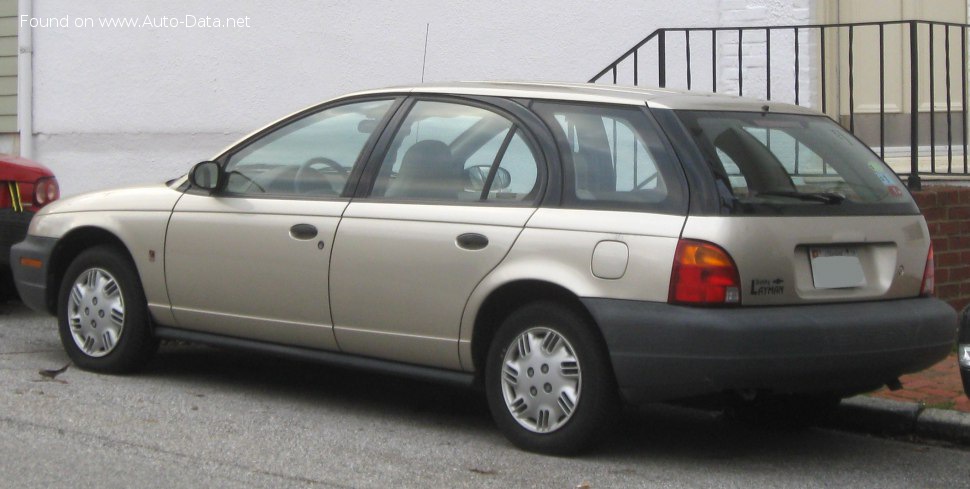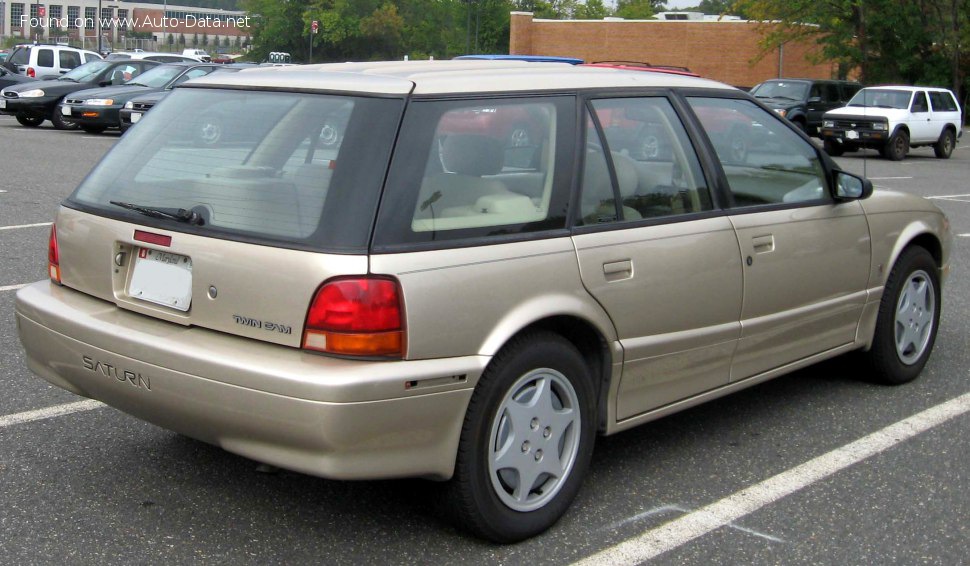
The Saturn SW 1.9i, produced between 1992 and 1996, represents a unique chapter in American automotive history. As the first model offered by the then-new Saturn Corporation, a General Motors division designed to compete with Japanese imports, the SW was a compact station wagon intended to offer a different ownership experience. Marketed for its fuel efficiency, affordability, and a no-haggle sales process, the SW aimed to disrupt the traditional American car buying model. While not a high-performance vehicle, the Saturn SW 1.9i carved a niche for itself as a practical and reliable family car, particularly appealing to buyers seeking a sensible alternative to larger, more expensive options.
Saturn SW 1.9i: A Detailed Overview
The Saturn SW, standing for Station Wagon, was a key component of Saturn’s initial lineup, alongside the SL sedan and SC coupe. It was designed to appeal to a broad demographic, emphasizing practicality and value. The SW’s distinctive styling, though somewhat conservative by today’s standards, was intended to project an image of modern efficiency. The 1.9i designation refers to the engine displacement, and the 100 horsepower output. The car was primarily sold in the United States and Canada, and did not see significant sales in other markets. It was a pivotal model for Saturn, establishing the brand’s identity and laying the groundwork for future models.
Engine & Performance
The Saturn SW 1.9i was powered by a 1.9-liter inline four-cylinder engine, designated the L24. This naturally aspirated engine produced 100 horsepower at 5000 rpm and 155 Nm (114.32 lb.-ft.) of torque at 2400 rpm. While not particularly powerful, the engine was known for its durability and fuel efficiency. The engine featured a single overhead camshaft (OHC) valvetrain with two valves per cylinder and multi-port fuel injection. The engine’s power-to-weight ratio was 93.1 Hp/tonne, and the torque-to-weight ratio was 144.3 Nm/tonne. The engine’s 1901 cm³ displacement (116.01 cu. in.) and 9.3:1 compression ratio contributed to its balanced performance. The engine required 3.8 liters (4.02 US qt, 3.34 UK qt) of engine oil and 6.5 liters (6.87 US qt, 5.72 UK qt) of coolant for optimal operation. The engine was transversely mounted at the front of the vehicle, driving the front wheels through a five-speed manual transmission.
Design & Features
The Saturn SW 1.9i was a five-door station wagon with seating for five passengers. Its body style offered a practical and versatile cargo area, making it suitable for families and those needing to transport larger items. The SW’s exterior design was characterized by its rounded edges and relatively compact dimensions. The vehicle measured 4478 mm (176.3 in) in length, 1718 mm (67.64 in) in width, and 1364 mm (53.7 in) in height. The wheelbase was 2601 mm (102.4 in), providing a stable ride. Safety features for the time included an Anti-lock Braking System (ABS), which was becoming increasingly common on new vehicles. The SW featured a steering rack and pinion system with hydraulic power steering for ease of maneuverability. The vehicle rode on 175/70 R 14 S tires. The interior was designed with practicality in mind, offering comfortable seating and a functional dashboard layout. The SW’s kerb weight of 1074 kg (2367.76 lbs) contributed to its relatively good fuel economy.
Technical Specifications
| Brand | Saturn |
| Model | SW |
| Generation | SW |
| Type (Engine) | 1.9i (100 Hp) |
| Start of production | 1992 |
| End of production | 1996 |
| Powertrain Architecture | Internal Combustion engine |
| Body type | Station wagon (estate) |
| Seats | 5 |
| Doors | 5 |
| Fuel consumption (combined) | 7.5 l/100 km |
| Fuel consumption (US mpg) | 31.4 US mpg |
| Fuel consumption (UK mpg) | 37.7 UK mpg |
| Fuel consumption (km/l) | 13.3 km/l |
| Fuel Type | Petrol (Gasoline) |
| Weight-to-power ratio | 10.7 kg/Hp |
| Power | 100 Hp @ 5000 rpm |
| Power per litre | 52.6 Hp/l |
| Torque | 155 Nm @ 2400 rpm |
| Torque (lb.-ft.) | 114.32 lb.-ft. @ 2400 rpm |
| Engine layout | Front, Transverse |
| Engine Model/Code | L24 |
| Engine displacement | 1901 cm3 |
| Engine displacement (cu. in.) | 116.01 cu. in. |
| Number of cylinders | 4 |
| Engine configuration | Inline |
| Cylinder Bore | 82 mm |
| Cylinder Bore (in.) | 3.23 in. |
| Piston Stroke | 90 mm |
| Piston Stroke (in.) | 3.54 in. |
| Compression ratio | 9.3:1 |
| Number of valves per cylinder | 2 |
| Fuel injection system | Multi-port manifold injection |
| Engine aspiration | Naturally aspirated engine |
| Valvetrain | OHC |
| Engine oil capacity | 3.8 l |
| Engine oil capacity (US qt) | 4.02 US qt |
| Engine oil capacity (UK qt) | 3.34 UK qt |
| Coolant | 6.5 l |
| Coolant (US qt) | 6.87 US qt |
| Coolant (UK qt) | 5.72 UK qt |
| Kerb Weight | 1074 kg |
| Kerb Weight (lbs.) | 2367.76 lbs. |
| Fuel tank capacity | 49 l |
| Fuel tank capacity (US gal) | 12.94 US gal |
| Fuel tank capacity (UK gal) | 10.78 UK gal |
| Length | 4478 mm |
| Length (in.) | 176.3 in. |
| Width | 1718 mm |
| Width (in.) | 67.64 in. |
| Height | 1364 mm |
| Height (in.) | 53.7 in. |
| Wheelbase | 2601 mm |
| Wheelbase (in.) | 102.4 in. |
| Front track | 1443 mm |
| Front track (in.) | 56.81 in. |
| Rear track | 1422 mm |
| Rear track (in.) | 55.98 in. |
| Drivetrain Architecture | Front wheel drive |
| Number of gears | 5 |
| Gearbox type | Manual transmission |
| Front suspension | Spring Strut |
| Rear suspension | Double wishbone |
| Front brakes | Ventilated discs |
| Rear brakes | Drum |
| Assisting systems | ABS (Anti-lock braking system) |
| Steering type | Steering rack and pinion |
| Power steering | Hydraulic Steering |
| Tires size | 175/70 R 14 S |