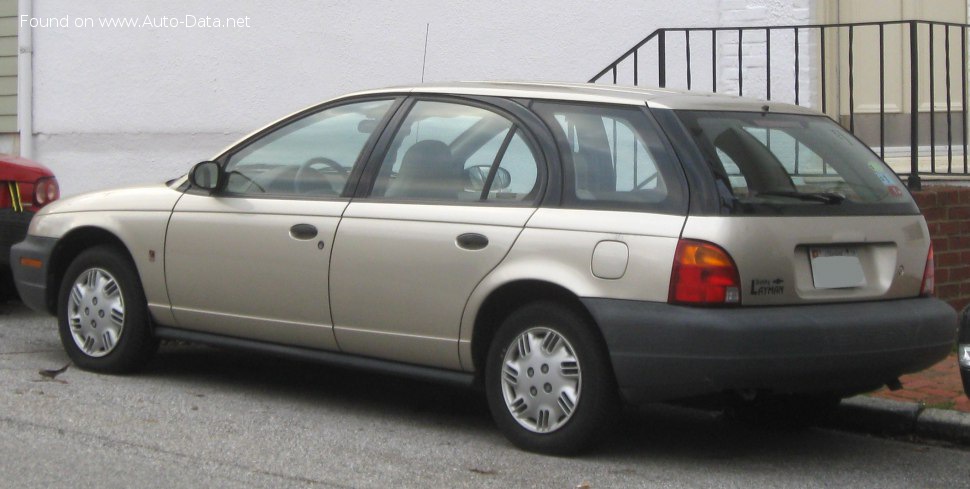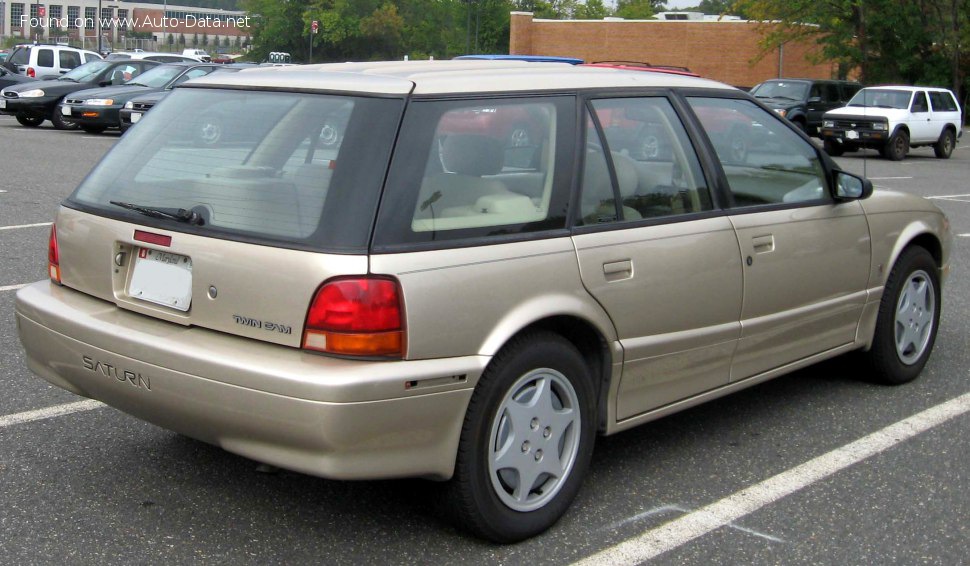
The Saturn SW 1.9i 16V, produced between 1995 and 1996, represents a unique chapter in the history of General Motors and the Saturn brand. Introduced as part of Saturn’s initial lineup in the early 1990s, the SW (Station Wagon) was designed to challenge conventional automotive thinking, particularly in the compact segment. The Saturn SW aimed to provide a different ownership experience, emphasizing customer service and a non-traditional dealership model. This model, while not a high-volume seller, was significant for its innovative plastic body panels and focus on practicality. The 1.9i 16V variant, equipped with a 1.9-liter inline-four engine producing 126 horsepower, offered a balance of fuel efficiency and adequate performance for everyday driving.
Saturn SW 1.9i 16V: A Detailed Overview
The Saturn SW 1.9i 16V occupied the compact station wagon segment, a category that was becoming increasingly popular with families seeking versatility and affordability. It was positioned as a practical alternative to sedans and hatchbacks, offering increased cargo space and a more accommodating interior. The SW distinguished itself with its distinctive styling, characterized by rounded edges and the aforementioned plastic body panels, which were designed to be dent-resistant and easily replaceable. The 16-valve engine configuration was a key feature, enhancing the engine’s breathing and contributing to improved power output compared to earlier 8-valve versions.
Engine & Performance
The heart of the Saturn SW 1.9i 16V is a 1.9-liter (1901 cm3 or 116.01 cu. in.) inline-four cylinder engine. This naturally aspirated engine, designated as the LL0 engine code, produces 126 horsepower at 5600 rpm and 165 Nm (121.7 lb.-ft.) of torque at 4800 rpm. The engine features a multi-port fuel injection system and a double overhead camshaft (DOHC) valvetrain with four valves per cylinder, contributing to its relatively efficient operation. The power-to-weight ratio is 8.9 kg/Hp, or 112.3 Hp/tonne, while the torque-to-weight ratio is 6.8 kg/Nm, or 147.1 Nm/tonne. Power delivery is adequate for typical commuting and highway driving, though it’s not designed for rapid acceleration. The engine is transversely mounted at the front of the vehicle, driving the front wheels through a 5-speed manual transmission. Fuel consumption is rated at 8.3 l/100 km (28.3 US mpg, 34 UK mpg, 12 km/l).
Design & Features
The Saturn SW is a five-door station wagon (estate) with seating for five passengers. Its most notable design element is its polymer (plastic) body panels, mounted on a steel space frame. This construction method was intended to reduce weight, improve corrosion resistance, and simplify repairs. The interior is functional and straightforward, prioritizing practicality over luxury. Standard features included basic instrumentation, cloth upholstery, and a relatively spacious cargo area. Safety features for the time included an Anti-lock Braking System (ABS), which was becoming increasingly common in the mid-1990s. The SW’s suspension consists of a spring strut setup at the front and a double wishbone configuration at the rear, providing a comfortable ride quality. Steering is rack and pinion with hydraulic power assistance. The vehicle rides on 195/60 R15 T tires.
Technical Specifications
| Brand | Saturn |
| Model | SW |
| Generation | SW |
| Type (Engine) | 1.9i 16V (126 Hp) |
| Start of production | 1995 |
| End of production | 1996 |
| Powertrain Architecture | Internal Combustion engine |
| Body type | Station wagon (estate) |
| Seats | 5 |
| Doors | 5 |
| Fuel consumption (combined) | 8.3 l/100 km |
| Fuel consumption (US mpg) | 28.3 US mpg |
| Fuel consumption (UK mpg) | 34 UK mpg |
| Fuel Type | Petrol (Gasoline) |
| Weight-to-power ratio | 8.9 kg/Hp |
| Weight-to-torque ratio | 6.8 kg/Nm |
| Power | 126 Hp @ 5600 rpm |
| Power per litre | 66.3 Hp/l |
| Torque | 165 Nm @ 4800 rpm / 121.7 lb.-ft. @ 4800 rpm |
| Engine layout | Front, Transverse |
| Engine Model/Code | LL0 |
| Engine displacement | 1901 cm3 / 116.01 cu. in. |
| Number of cylinders | 4 |
| Engine configuration | Inline |
| Cylinder Bore | 82 mm / 3.23 in. |
| Piston Stroke | 90 mm / 3.54 in. |
| Compression ratio | 9.5:1 |
| Number of valves per cylinder | 4 |
| Fuel injection system | Multi-port manifold injection |
| Engine aspiration | Naturally aspirated engine |
| Valvetrain | DOHC |
| Engine oil capacity | 3.8 l / 4.02 US qt | 3.34 UK qt |
| Coolant capacity | 6.5 l / 6.87 US qt | 5.72 UK qt |
| Kerb Weight | 1122 kg / 2473.59 lbs. |
| Fuel tank capacity | 49 l / 12.94 US gal | 10.78 UK gal |
| Length | 4478 mm / 176.3 in. |
| Width | 1718 mm / 67.64 in. |
| Height | 1376 mm / 54.17 in. |
| Wheelbase | 2601 mm / 102.4 in. |
| Front track | 1443 mm / 56.81 in. |
| Rear track | 1422 mm / 55.98 in. |
| Drivetrain Architecture | Front wheel drive |
| Drive wheel | Front wheel drive |
| Number of gears and type of gearbox | 5 gears, manual transmission |
| Front suspension | Spring Strut |
| Rear suspension | Double wishbone |
| Front brakes | Ventilated discs |
| Rear brakes | Drum |
| Assisting systems | ABS (Anti-lock braking system) |
| Steering type | Steering rack and pinion |
| Power steering | Hydraulic Steering |
| Tires size | 195/60 R15 T |
The Saturn SW 1.9i 16V, though a relatively short-lived model, remains a noteworthy example of GM’s attempt to innovate and offer a different automotive experience. Its unique construction, practical design, and focus on customer satisfaction set it apart from its competitors, leaving a lasting impression on the automotive landscape of the 1990s.