
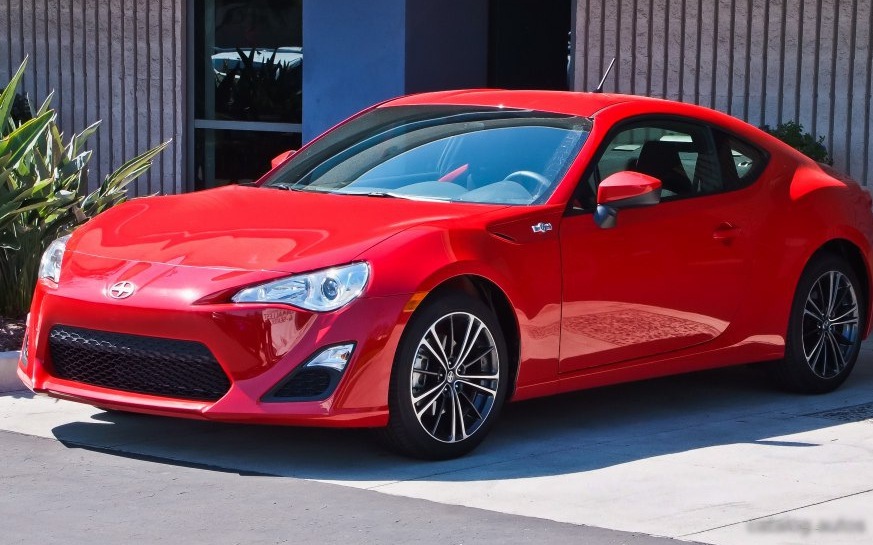
The Scion FR-S 2.0, produced from 2013 to 2016, was a rear-wheel-drive sports coupe that represented a return to the basics of driving enjoyment for the American market. Developed jointly with Subaru (resulting in the nearly identical Subaru BRZ), the FR-S aimed to provide an affordable and engaging driving experience, harking back to the spirit of classic Japanese sports cars. It was a key model in Scion’s lineup, intended to attract a younger demographic and establish the brand as a purveyor of driver-focused vehicles. The FR-S was part of the first generation, and was a significant departure from Scion’s previously more urban-focused offerings.
Technical Specifications
| Brand | Scion |
| Model | FR-S |
| Generation | FR-S |
| Type (Engine) | 2.0 (200 Hp) |
| Start of production | 2013 |
| End of production | 2016 |
| Powertrain Architecture | Internal Combustion engine |
| Body type | Coupe |
| Seats | 4 |
| Doors | 2 |
| Fuel consumption (economy) – urban | 10.4 l/100 km (22.6 US mpg) |
| Fuel consumption (economy) – extra urban | 6.4 l/100 km (36.8 US mpg) |
| Fuel consumption (economy) – combined | 7.8 l/100 km (30.2 US mpg) |
| CO2 emissions | 181 g/km |
| Fuel Type | Petrol (Gasoline) |
| Acceleration 0 – 100 km/h | 7.6 sec |
| Acceleration 0 – 62 mph | 7.6 sec |
| Acceleration 0 – 60 mph | 7.2 sec |
| Maximum speed | 225 km/h (139.81 mph) |
| Weight-to-power ratio | 6.3 kg/Hp |
| Weight-to-torque ratio | 6.1 kg/Nm |
| Power | 200 Hp @ 7000 rpm |
| Torque | 205 Nm @ 6400-6600 rpm (151.2 lb.-ft. @ 6400-6600 rpm) |
| Engine layout | Front, Longitudinal |
| Engine Model/Code | FA20 |
| Engine displacement | 1998 cm3 (121.93 cu. in.) |
| Number of cylinders | 4 |
| Engine configuration | Boxer |
| Cylinder Bore | 86 mm (3.39 in.) |
| Piston Stroke | 86 mm (3.39 in.) |
| Compression ratio | 12.5:1 |
| Number of valves per cylinder | 4 |
| Fuel injection system | Direct injection |
| Engine aspiration | Naturally aspirated engine |
| Valvetrain | DOHC |
| Engine oil capacity | 5.4 l (5.71 US qt | 4.75 UK qt) |
| Coolant | 7.2 l (7.61 US qt | 6.34 UK qt) |
| Kerb Weight | 1251 kg (2757.98 lbs.) |
| Trunk (boot) space – minimum | 195 l (6.89 cu. ft.) |
| Fuel tank capacity | 50 l (13.21 US gal | 11 UK gal) |
| Length | 4234 mm (166.69 in.) |
| Width | 1775 mm (69.88 in.) |
| Height | 1285 mm (50.59 in.) |
| Wheelbase | 2570 mm (101.18 in.) |
| Front track | 1519 mm (59.8 in.) |
| Rear (Back) track | 1539 mm (60.59 in.) |
| Ride height (ground clearance) | 124 mm (4.88 in.) |
| Drag coefficient (Cd) | 0.27 |
| Minimum turning circle (turning diameter) | 11.0 m (36.09 ft.) |
| Drivetrain Architecture | Rear wheel drive |
| Number of gears and type of gearbox | 6 gears, manual transmission |
| Front suspension | Independent type McPherson |
| Rear suspension | Double wishbone |
| Front brakes | Ventilated discs |
| Rear brakes | Ventilated discs |
| Assisting systems | ABS (Anti-lock braking system) |
| Steering type | Steering rack and pinion |
| Power steering | Electric Steering |
| Tires size | 215/45 R17 |
| Wheel rims size | 7.0J x 17 |
Powertrain & Engine Architecture
The heart of the FR-S is the naturally aspirated 2.0-liter FA20 engine. This engine is a horizontally-opposed (boxer) four-cylinder, a design typically associated with Subaru. The boxer configuration contributes to a lower center of gravity, enhancing handling. The FA20 features direct injection and a dual overhead camshaft (DOHC) valvetrain with four valves per cylinder. This combination allows for efficient combustion and a respectable power output of 200 horsepower at 7,000 rpm and 151 lb-ft of torque between 6,400 and 6,600 rpm. The engine’s relatively high compression ratio of 12.5:1 necessitates premium fuel for optimal performance. The FR-S was exclusively offered with a six-speed manual transmission, prioritizing driver engagement. The transmission featured short throws and a precise feel, complementing the car’s sporty character.
Driving Characteristics
The FR-S, with its 200 hp and rear-wheel drive layout, offered a distinctly different driving experience compared to many front-wheel-drive competitors. While not exceptionally powerful, the engine’s responsiveness and the car’s light weight (around 2,758 lbs) made it feel quicker than the numbers suggest. The manual transmission’s well-chosen gear ratios encouraged spirited driving, and the rear-wheel-drive configuration allowed for controlled oversteer, appealing to enthusiasts. The steering was precise and communicative, providing good feedback to the driver. However, the engine’s torque peak was relatively high in the rev range, meaning drivers often needed to work the engine to extract maximum performance. Compared to a hypothetical FR-S with a more powerful engine, this 2.0L version prioritized balance and affordability over outright speed.
Equipment & Trim Levels
The FR-S was relatively sparsely equipped, reflecting its focus on driving dynamics and affordability. Standard features included air conditioning, power windows and locks, a basic audio system, and stability control. The interior was functional and straightforward, with supportive sport seats. Available options included a BeSpoke audio system with a touchscreen display, keyless entry, and push-button start. Interior upholstery was primarily cloth, with leather options available on some models. The FR-S did not offer a wide range of trim levels; it was largely sold as a single, well-equipped model with a few optional packages.
Chassis & Braking
The FR-S featured a MacPherson strut front suspension and a double wishbone rear suspension, designed to provide responsive handling and good ride quality. The chassis was engineered for rigidity, minimizing body roll during cornering. The braking system consisted of ventilated disc brakes on all four wheels, providing adequate stopping power for the car’s weight and performance. Anti-lock brakes (ABS) were standard. The relatively lightweight construction of the FR-S contributed to its nimble handling characteristics. The suspension tuning was firm, prioritizing handling over comfort, but remained reasonably compliant for everyday driving.
Market Reception & Comparison
The Scion FR-S was generally well-received by automotive critics, who praised its engaging driving dynamics, affordability, and unique character. It was often compared to the Subaru BRZ, with which it shared most of its mechanical components. The FR-S was seen as a refreshing alternative to more mainstream sports coupes, offering a purer driving experience. Fuel economy was respectable, averaging around 30 mpg combined. Reliability was generally good, although some owners reported minor issues with the engine’s oil consumption. Compared to other sports cars in its price range, the FR-S offered a more focused driving experience, sacrificing some comfort and practicality for performance and handling.
Legacy
The Scion FR-S, along with the Subaru BRZ, helped to revive the affordable rear-wheel-drive sports car segment. While Scion was eventually discontinued in 2016, the FR-S (and its subsequent Toyota 86/GR86 iterations) continued to be produced. The FA20 engine proved to be a robust and reliable powerplant, and the FR-S remains a popular choice among enthusiasts in the used car market. Its simple design, engaging driving dynamics, and affordability have made it a cult favorite, and it continues to be a popular platform for modification and track use. The FR-S’s influence can be seen in the design and engineering of other modern sports cars, demonstrating its lasting impact on the automotive landscape.
