
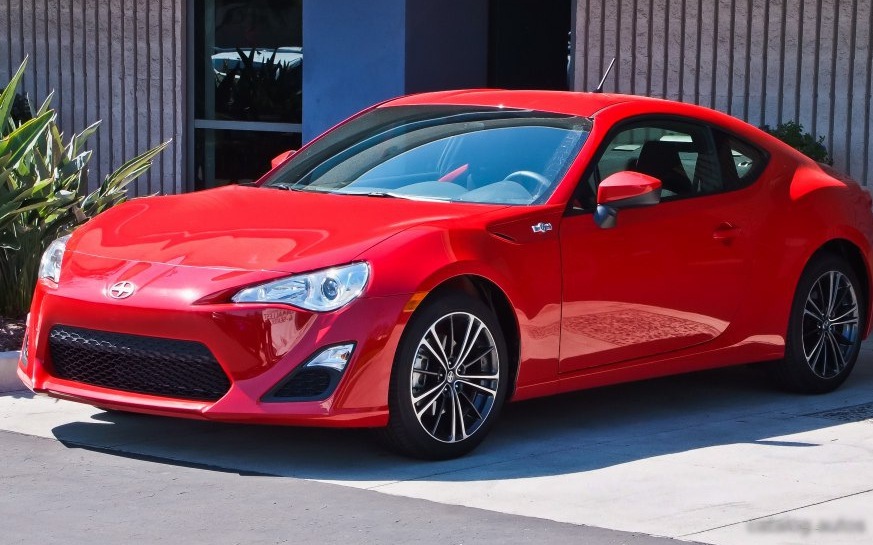
The Scion FR-S 2.0 (200 Hp) Automatic, produced between 2013 and 2016, represented a unique offering in the American sports coupe market. Developed jointly by Scion (Toyota’s youth-oriented brand at the time) and Subaru, the FR-S, along with its Subaru BRZ sibling, aimed to revive the affordable, rear-wheel-drive sports car formula. This particular variant, equipped with the 2.0-liter naturally aspirated engine and a six-speed automatic transmission, served as a more accessible entry point into the FR-S lineup, prioritizing ease of use over the more engaging experience offered by the manual transmission. It was positioned as a comfortable daily driver with a sporty edge, appealing to buyers who desired the FR-S’s styling and handling characteristics without the learning curve of a manual gearbox.
Technical Specifications
| Brand | Scion |
| Model | FR-S |
| Generation | FR-S |
| Type (Engine) | 2.0 (200 Hp) Automatic |
| Start of production | 2013 |
| End of production | 2016 |
| Powertrain Architecture | Internal Combustion engine |
| Body type | Coupe |
| Seats | 4 |
| Doors | 2 |
| Fuel consumption (economy) – urban | 9.6 l/100 km (24.5 US mpg) |
| Fuel consumption (economy) – extra urban | 5.7 l/100 km (41.3 US mpg) |
| Fuel consumption (economy) – combined | 7.1 l/100 km (33.1 US mpg) |
| CO2 emissions | 181 g/km |
| Fuel Type | Petrol (Gasoline) |
| Acceleration 0 – 100 km/h | 8.2 sec |
| Acceleration 0 – 62 mph | 8.2 sec |
| Acceleration 0 – 60 mph | 7.8 sec |
| Maximum speed | 209 km/h (129.87 mph) |
| Weight-to-power ratio | 6.4 kg/Hp |
| Weight-to-torque ratio | 6.2 kg/Nm |
| Power | 200 Hp @ 7000 rpm |
| Torque | 205 Nm @ 6400-6600 rpm (151.2 lb.-ft. @ 6400-6600 rpm) |
| Engine layout | Front, Longitudinal |
| Engine Model/Code | FA20 |
| Engine displacement | 1998 cm3 (121.93 cu. in.) |
| Number of cylinders | 4 |
| Engine configuration | Boxer |
| Cylinder Bore | 86 mm (3.39 in.) |
| Piston Stroke | 86 mm (3.39 in.) |
| Compression ratio | 12.5:1 |
| Number of valves per cylinder | 4 |
| Fuel injection system | Direct injection |
| Engine aspiration | Naturally aspirated engine |
| Valvetrain | DOHC |
| Engine oil capacity | 5.4 l (5.71 US qt | 4.75 UK qt) |
| Coolant | 7.2 l (7.61 US qt | 6.34 UK qt) |
| Kerb Weight | 1273 kg (2806.48 lbs.) |
| Trunk (boot) space – minimum | 195 l (6.89 cu. ft.) |
| Fuel tank capacity | 50 l (13.21 US gal | 11 UK gal) |
| Length | 4234 mm (166.69 in.) |
| Width | 1775 mm (69.88 in.) |
| Height | 1285 mm (50.59 in.) |
| Wheelbase | 2570 mm (101.18 in.) |
| Front track | 1519 mm (59.8 in.) |
| Rear (Back) track | 1539 mm (60.59 in.) |
| Ride height (ground clearance) | 124 mm (4.88 in.) |
| Drag coefficient (Cd) | 0.27 |
| Minimum turning circle (turning diameter) | 11.0 m (36.09 ft.) |
| Drivetrain Architecture | Rear wheel drive |
| Number of gears and type of gearbox | 6 gears, automatic transmission |
| Front suspension | Independent type McPherson |
| Rear suspension | Double wishbone |
| Front brakes | Ventilated discs |
| Rear brakes | Ventilated discs |
| Assisting systems | ABS (Anti-lock braking system) |
| Steering type | Steering rack and pinion |
| Power steering | Electric Steering |
| Tires size | 215/45 R17 |
| Wheel rims size | 7.0J x 17 |
Powertrain & Engine Architecture
The heart of the FR-S 2.0 Automatic is the FA20 2.0-liter horizontally-opposed (boxer) four-cylinder engine. This engine, co-developed with Subaru, features direct fuel injection and a dual overhead camshaft (DOHC) valvetrain with four valves per cylinder. The boxer configuration contributes to a low center of gravity, enhancing handling balance. The FA20 produces 200 horsepower at 7,000 rpm and 151.2 lb-ft of torque between 6,400 and 6,600 rpm. The automatic transmission is a conventional six-speed unit, offering smooth shifts but lacking the responsiveness of the available six-speed manual. While the automatic transmission was designed to provide a more relaxed driving experience, it did impact acceleration slightly compared to the manual version.
Driving Characteristics
The FR-S 2.0 Automatic delivers a distinct driving experience focused on balance and handling. The rear-wheel-drive layout, combined with the low center of gravity, provides a nimble feel. However, the automatic transmission’s programming prioritizes fuel efficiency and comfort over aggressive shifting. Acceleration from 0-60 mph takes approximately 7.8 seconds, slightly slower than the manual variant. The gear ratios are tuned for everyday usability, offering adequate power for merging and highway cruising. While not a powerhouse, the engine is responsive and enjoys being revved, encouraging drivers to explore its upper RPM range. The steering is precise and well-weighted, providing good feedback to the driver.
Equipment & Trim Levels
The FR-S 2.0 Automatic came standard with features such as air conditioning, power windows and locks, a basic audio system with USB connectivity, and stability control. Interior upholstery was typically cloth, with options for leather or Alcantara available on higher trim levels. Optional extras included a touchscreen infotainment system with navigation, a premium audio upgrade (often a Pioneer system), keyless entry, and a rear spoiler. The automatic transmission was often bundled with certain convenience packages, making it difficult to find a bare-bones FR-S Automatic.
Chassis & Braking
The FR-S utilizes a McPherson strut front suspension and a double wishbone rear suspension, tuned for a balance between comfort and handling. The chassis is relatively lightweight, contributing to the car’s agility. Braking duties are handled by ventilated disc brakes on all four wheels, providing adequate stopping power. ABS (Anti-lock Braking System) is standard. The suspension setup is firm but not overly harsh, offering a comfortable ride on most road surfaces. The relatively narrow tires (215/45 R17) prioritize grip over outright comfort.
Market Reception & Comparison
Critics generally praised the FR-S for its handling and affordability, but the automatic transmission received mixed reviews. Many reviewers felt that the automatic diminished the driving experience compared to the manual. Fuel economy was considered respectable, averaging around 33.1 US mpg in combined driving. Compared to the manual FR-S, the automatic version offered slightly lower fuel economy. Against competitors like the Mazda MX-5 Miata (which offered a more refined driving experience but less practicality) and the Honda Civic Si (which prioritized front-wheel-drive performance), the FR-S carved out a niche as a stylish and affordable rear-wheel-drive sports coupe.
Legacy
The Scion FR-S, including the 2.0 Automatic variant, has gained a loyal following among enthusiasts. The FA20 engine is known for its reliability, and the relatively simple mechanical design makes it a popular choice for modifications. While the FR-S was discontinued after the 2016 model year (and subsequently rebadged as the Toyota 86), it remains a popular choice in the used car market. The automatic transmission models are generally more affordable than their manual counterparts, making them an accessible entry point into the world of rear-wheel-drive sports cars. Common issues with these vehicles are relatively minor, often relating to oil leaks or wear and tear on suspension components, and are generally inexpensive to address.
