
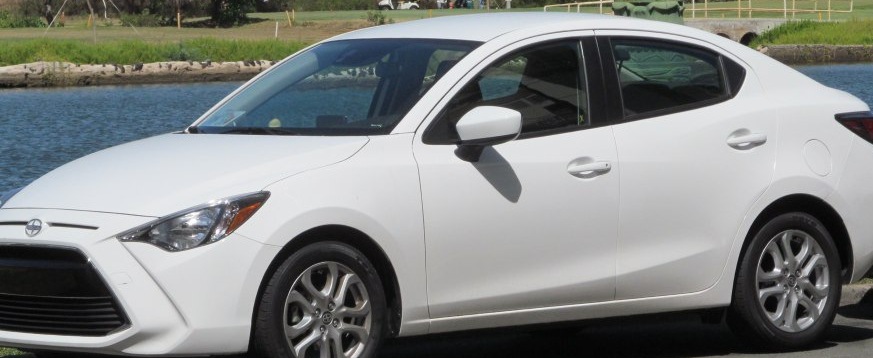
The Scion iA 1.5, produced for the 2016 and 2017 model years (though often considered a 2015 model due to early releases), represented a significant entry for the Scion brand into the subcompact sedan segment. This model, built in partnership with Mazda and based on the Mazda2 platform, aimed to provide a stylish, fuel-efficient, and well-equipped vehicle at an accessible price point. The iA was discontinued after the 2016 model year when Scion was dissolved, but it was quickly rebadged as the Toyota Yaris iA for 2017, continuing its production run. The 1.5-liter engine paired with a six-speed automatic transmission was the sole powertrain offering, positioning it as the most convenient, though not necessarily the most performance-oriented, option within the iA lineup.
Technical Specifications
| Brand | Scion |
| Model | iA |
| Generation | iA |
| Type (Engine) | 1.5 (106 Hp) Automatic |
| Start of production | 2015 |
| End of production | 2016 |
| Powertrain Architecture | Internal Combustion engine |
| Body type | Sedan |
| Seats | 5 |
| Doors | 4 |
| Fuel consumption (economy) – urban | 7.1 l/100 km (33.1 US mpg) |
| Fuel consumption (economy) – extra urban | 5.6 l/100 km (42 US mpg) |
| Fuel consumption (economy) – combined | 6.4 l/100 km (36.8 US mpg) |
| Fuel Type | Petrol (Gasoline) |
| Weight-to-power ratio | 10.3 kg/Hp |
| Weight-to-torque ratio | 7.8 kg/Nm |
| Power | 106 Hp @ 6000 rpm |
| Power per litre | 70.9 Hp/l |
| Torque | 140 Nm @ 4000 rpm (103.26 lb.-ft. @ 4000 rpm) |
| Engine layout | Front, Transverse |
| Engine displacement | 1496 cm3 (91.29 cu. in.) |
| Number of cylinders | 4 |
| Engine configuration | Inline |
| Cylinder Bore | 76 mm (2.99 in.) |
| Piston Stroke | 82.6 mm (3.25 in.) |
| Compression ratio | 12:1 |
| Number of valves per cylinder | 4 |
| Fuel injection system | Direct injection |
| Engine aspiration | Naturally aspirated engine |
| Valvetrain | DOHC |
| Engine oil capacity | 4.2 l (4.44 US qt | 3.7 UK qt) |
| Kerb Weight | 1096 kg (2416.27 lbs.) |
| Fuel tank capacity | 44 l (11.62 US gal | 9.68 UK gal) |
| Length | 4346 mm (171.1 in.) |
| Width | 1694 mm (66.69 in.) |
| Height | 1486 mm (58.5 in.) |
| Wheelbase | 2570 mm (101.18 in.) |
| Front track | 1496 mm (58.9 in.) |
| Rear (Back) track | 1486 mm (58.5 in.) |
| Ride height (ground clearance) | 140 mm (5.51 in.) |
| Minimum turning circle (turning diameter) | 9.8 m (32.15 ft.) |
| Drivetrain Architecture | The Internal combustion engine (ICE) drives the front wheels of the vehicle. |
| Drive wheel | Front wheel drive |
| Number of gears and type of gearbox | 6 gears, automatic transmission |
| Front suspension | Independent type McPherson |
| Rear suspension | Semi-independent, coil spring |
| Front brakes | Ventilated discs |
| Rear brakes | Drum |
| Assisting systems | ABS (Anti-lock braking system) |
| Steering type | Steering rack and pinion |
| Power steering | Electric Steering |
| Tires size | 185/60 R16 |
| Wheel rims size | 5.5J x 16 |
Powertrain & Engine Architecture
The Scion iA’s engine is a 1.5-liter inline-four cylinder gasoline engine, designated as the 2NR-E by Mazda. This engine utilizes direct fuel injection, a feature relatively uncommon in this class at the time, contributing to its efficiency and responsiveness. The engine employs a double overhead camshaft (DOHC) valvetrain with four valves per cylinder, optimizing airflow for improved power output. The 2NR-E engine produces 106 horsepower at 6000 rpm and 103 lb-ft of torque at 4000 rpm. The six-speed automatic transmission, also sourced from Mazda, is a conventional torque-converter automatic. It’s designed for smooth shifts and fuel efficiency rather than aggressive performance. The transmission lacks a manual shift mode, focusing on ease of use for the average driver.
Driving Characteristics
The 1.5-liter engine and automatic transmission combination in the iA delivers adequate, but not exhilarating, performance. Acceleration is best described as sufficient for everyday driving, with a 0-60 mph time estimated around 9.5 seconds. The automatic transmission is tuned for fuel economy, meaning it prioritizes higher gears at lower speeds. This can sometimes result in a slight hesitation when needing to accelerate quickly, such as when merging onto a highway. Compared to a manual transmission version (which wasn’t offered in the US market), the automatic sacrifices some responsiveness. However, it provides a more relaxed driving experience, particularly in stop-and-go traffic. The gear ratios are fairly widely spaced, contributing to the engine’s fuel efficiency but also limiting its ability to maintain high speeds on inclines.
Equipment & Trim Levels
The Scion iA was relatively well-equipped for its price point. Standard features included a 7-inch touchscreen infotainment system with a rearview camera, Bluetooth connectivity, and a six-speaker audio system. Other standard amenities included air conditioning, power windows and locks, and keyless entry. Safety features were also comprehensive, including antilock brakes, stability control, and a suite of airbags. The iA was offered in a single, well-equipped trim level, with limited options available. Customers could choose from a selection of exterior colors and add optional floor mats or a cargo net. Interior upholstery was a durable cloth material, and the dashboard featured a simple, functional design.
Chassis & Braking
The iA’s chassis is based on the Mazda2 platform, known for its responsive handling and relatively lightweight construction. The front suspension utilizes an independent McPherson strut setup, while the rear suspension employs a semi-independent torsion beam. This configuration provides a good balance between ride comfort and handling precision. The iA features ventilated disc brakes at the front and drum brakes at the rear. While the front discs provide adequate stopping power, the rear drums are a cost-saving measure that slightly compromises overall braking performance. The electric power steering provides light and precise steering feel, making it easy to maneuver in tight spaces.
Market Reception & Comparison
The Scion iA was generally well-received by automotive critics. It was praised for its stylish design, fuel efficiency, and generous standard features. However, some reviewers noted the engine’s lack of power and the automatic transmission’s sometimes hesitant behavior. Compared to other subcompact sedans like the Honda Fit and Nissan Versa, the iA offered a more premium feel and a more engaging driving experience. Its fuel economy, averaging around 36.8 US mpg combined, was competitive within its class. Reliability was also a strong point, benefiting from Mazda’s engineering expertise.
Legacy
The Scion iA, and its subsequent Toyota Yaris iA iteration, has proven to be a reliable and affordable used car option. The 2NR-E engine and Mazda-sourced automatic transmission have demonstrated good long-term durability. Common maintenance items, such as oil changes and brake pad replacements, are relatively inexpensive. The iA’s simple design and readily available parts contribute to its ease of maintenance. Today, the iA remains a popular choice for budget-conscious buyers seeking a fuel-efficient and well-equipped subcompact sedan. Its association with Mazda’s engineering continues to enhance its reputation for quality and reliability in the used car market.
