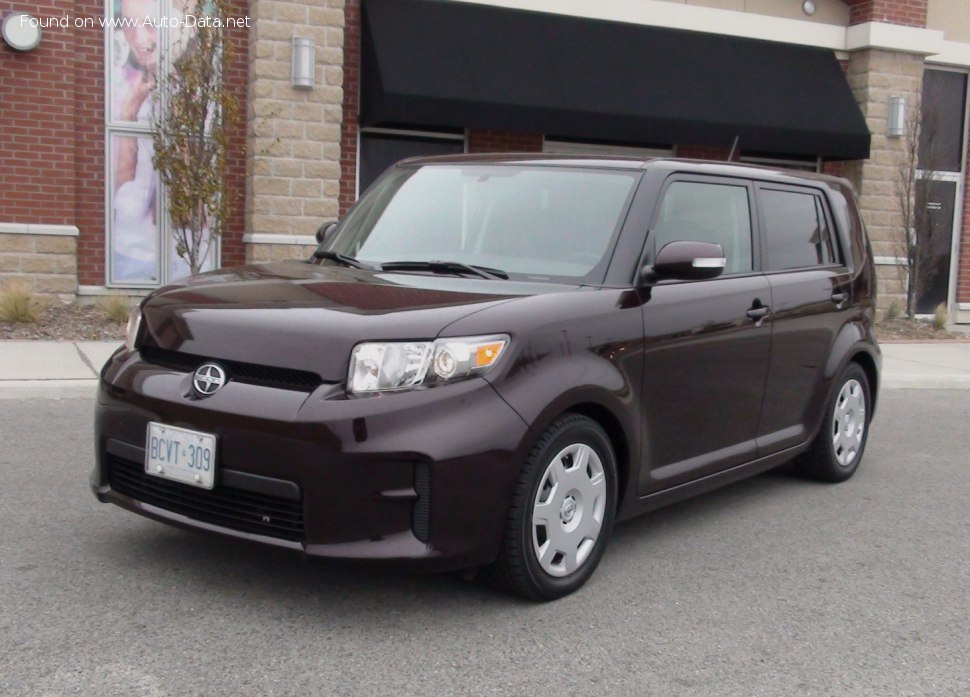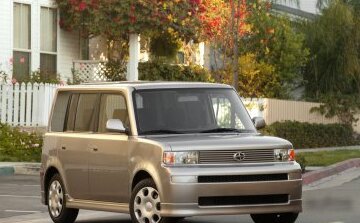
The Scion xB, first introduced in 2003, represented a bold departure from conventional automotive design, particularly within the North American market. The 1.5i 16V (108 hp) Automatic variant, produced from 2003 through 2008, served as the entry point into the xB lineup. Positioned as an affordable and uniquely styled urban vehicle, it quickly gained a following for its boxy silhouette and surprisingly spacious interior. The xB was built on Toyota’s MC platform (internally designated as the NCP30 series), sharing components with the Toyota Echo and Yaris. This first generation xB was exclusively sold in North America, marking a key element of Scion’s brand identity as a youthful and expressive marque.
Technical Specifications
| Brand | Scion |
| Model | xB |
| Generation | xB I |
| Type (Engine) | 1.5 i 16V (108 Hp) Automatic |
| Start of production | 2003 |
| End of production | 2008 |
| Powertrain Architecture | Internal Combustion engine |
| Body type | Minivan |
| Seats | 5 |
| Doors | 5 |
| Fuel consumption (economy) – urban | 7.6 l/100 km (30.9 US mpg) |
| Fuel consumption (economy) – extra urban | 6.7 l/100 km (35.1 US mpg) |
| Fuel Type | Petrol (Gasoline) |
| Weight-to-power ratio | 10.1 kg/Hp |
| Weight-to-torque ratio | 10.3 kg/Nm |
| Power | 108 Hp @ 6000 rpm |
| Power per litre | 72.2 Hp/l |
| Torque | 105 Nm @ 4200 rpm (77.44 lb.-ft. @ 4200 rpm) |
| Engine layout | Front, Transverse |
| Engine Model/Code | 1NZ-FE |
| Engine displacement | 1496 cm3 (91.29 cu. in.) |
| Number of cylinders | 4 |
| Engine configuration | Inline |
| Cylinder Bore | 75 mm (2.95 in.) |
| Piston Stroke | 84.7 mm (3.33 in.) |
| Compression ratio | 10.5:1 |
| Number of valves per cylinder | 4 |
| Fuel injection system | Multi-port manifold injection |
| Engine aspiration | Naturally aspirated engine |
| Valvetrain | DOHC |
| Engine oil capacity | 3.7 l (3.91 US qt | 3.26 UK qt) |
| Kerb Weight | 1086 kg (2394.22 lbs.) |
| Fuel tank capacity | 45 l (11.89 US gal | 9.9 UK gal) |
| Length | 3945 mm (155.31 in.) |
| Width | 1689 mm (66.5 in.) |
| Height | 1640 mm (64.57 in.) |
| Wheelbase | 2500 mm (98.43 in.) |
| Front track | 1455 mm (57.28 in.) |
| Rear (Back) track | 1430 mm (56.3 in.) |
| Drivetrain Architecture | The Internal combustion engine (ICE) drives the front wheels of the vehicle. |
| Drive wheel | Front wheel drive |
| Number of gears and type of gearbox | 4 gears, automatic transmission |
| Front suspension | Spring Strut |
| Rear suspension | Torsion |
| Front brakes | Ventilated discs |
| Rear brakes | Drum |
| Assisting systems | ABS (Anti-lock braking system) |
| Steering type | Steering rack and pinion |
| Tires size | 185/60 R15 |
| Wheel rims size | 5.5J x 15 |
Powertrain & Engine Architecture
The heart of the xB 1.5i Automatic is the 1NZ-FE engine, a 1.5-liter inline-four cylinder gasoline engine. This engine is known for its reliability and fuel efficiency, rather than outright performance. The 1NZ-FE utilizes a multi-port fuel injection system, delivering fuel directly to each intake port. It features a double overhead camshaft (DOHC) valvetrain, operating 16 valves (four per cylinder). The engine’s 108 horsepower at 6000 rpm and 105 Nm (77.44 lb-ft) of torque at 4200 rpm are modest, but sufficient for city driving. Paired with a four-speed automatic transmission, the powertrain prioritizes smooth operation and ease of use over sporty acceleration. The automatic transmission was a common choice for xB buyers seeking a hassle-free driving experience.
Driving Characteristics
The 1.5L engine and four-speed automatic combination in the xB delivers a comfortable, if not exhilarating, driving experience. Acceleration is adequate for merging onto highways and navigating city streets, but it’s not particularly quick. The automatic transmission is tuned for fuel economy, with relatively conservative gear ratios. This results in a noticeable delay in downshifts when needing to accelerate quickly. Compared to the five-speed manual transmission option, the automatic xB feels noticeably slower. The focus is on providing a relaxed and predictable driving experience, making it well-suited for commuting and everyday errands. The relatively light weight of the vehicle (1086 kg / 2394 lbs) helps to mitigate the engine’s modest power output.
Equipment & Trim Levels
The base xB 1.5i Automatic came standard with features such as air conditioning, power windows and locks, and an AM/FM stereo with a CD player. Interior upholstery was typically a durable cloth material. Optional extras included a sunroof, upgraded audio systems, and alloy wheels. The interior design was minimalist and functional, emphasizing space and practicality. The xB’s boxy shape translated into a surprisingly roomy cabin, offering ample headroom and legroom for both front and rear passengers. The rear seats could be folded down to create a larger cargo area, further enhancing the vehicle’s versatility.
Chassis & Braking
The xB utilizes a front-wheel-drive layout with a simple suspension setup. The front suspension consists of MacPherson strut springs, while the rear employs a torsion beam axle. This configuration provides a comfortable ride quality, although it’s not particularly sporty. Braking duties are handled by ventilated discs at the front and drum brakes at the rear. Anti-lock Braking System (ABS) was standard, enhancing safety. The steering is rack and pinion, providing reasonably precise control. The xB’s relatively narrow tires (185/60 R15) contribute to its fuel efficiency but limit grip during cornering.
Market Reception & Comparison
The Scion xB was initially met with mixed reactions. Its unconventional styling was polarizing, but it quickly gained a loyal following among younger buyers who appreciated its unique aesthetic and practicality. Critics praised the xB’s spacious interior, fuel efficiency, and affordability. However, the 1.5L engine and automatic transmission were often criticized for their lack of power and responsiveness. Compared to other small cars of the era, such as the Honda Civic or Toyota Corolla, the xB offered a different proposition – prioritizing style and space over performance and refinement. The automatic transmission version, while popular for its convenience, consistently lagged behind the manual in performance reviews.
Legacy
The first-generation Scion xB established a strong identity for the Scion brand and paved the way for future models. The 1NZ-FE engine, in particular, proved to be remarkably reliable, with many examples exceeding 200,000 miles with proper maintenance. The xB’s simple mechanicals and readily available parts contribute to its continued affordability and ease of repair. On the used car market today, the xB 1.5i Automatic remains a popular choice for budget-conscious buyers seeking a unique and practical vehicle. While not a performance machine, its reliability, spaciousness, and distinctive styling have ensured its enduring appeal. The xB’s influence can be seen in the growing popularity of small, boxy urban vehicles in subsequent years.