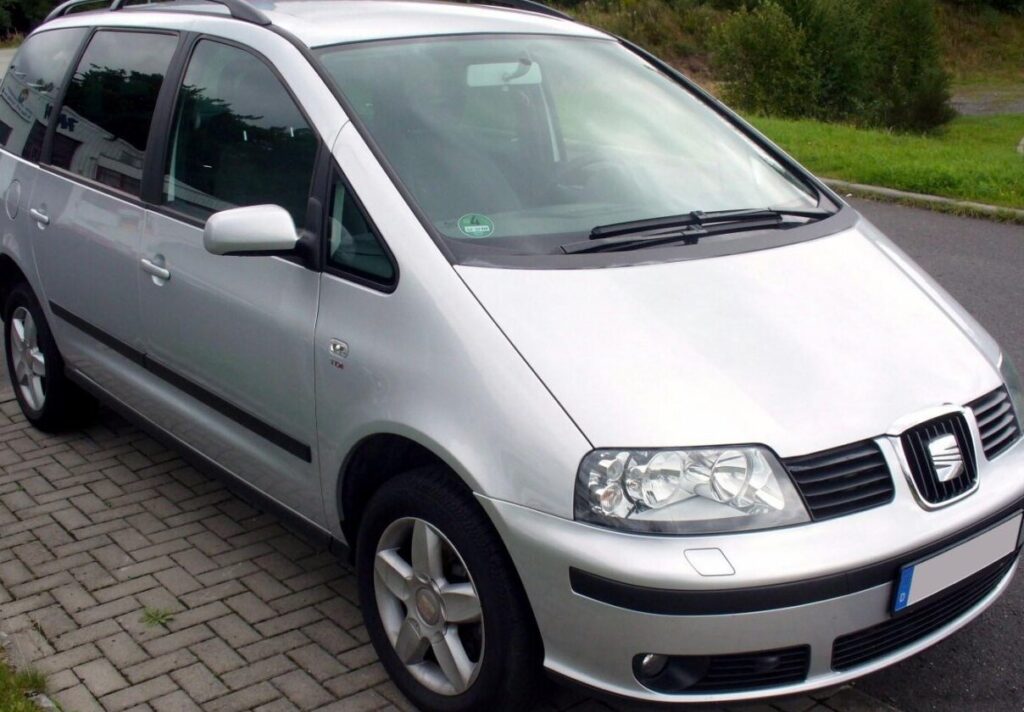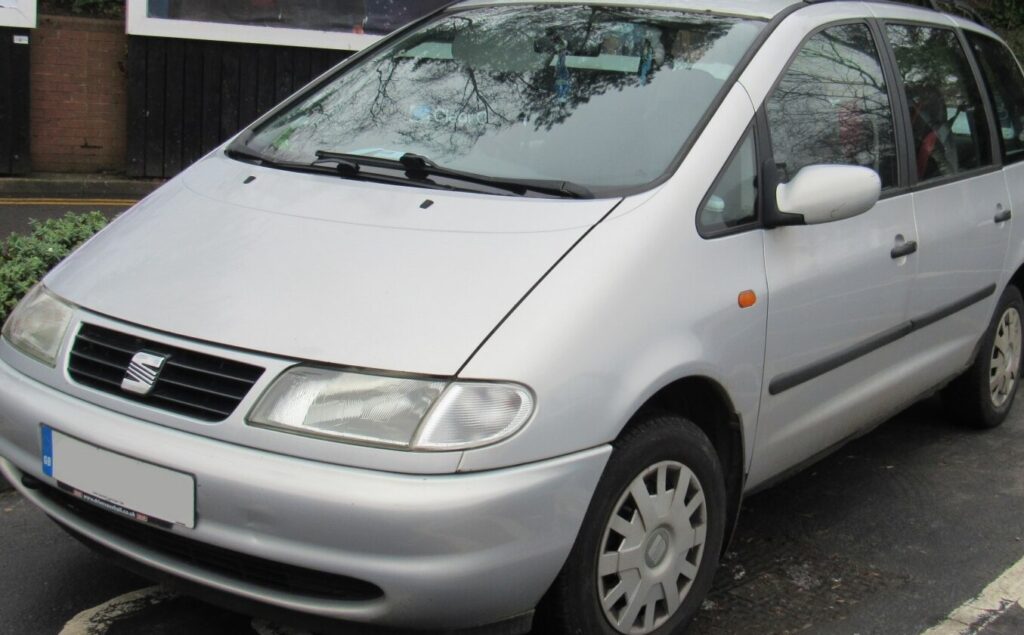
The Seat Alhambra I (7M) 1.8 T 20V, produced between May 1998 and February 2000, represents a significant entry in Seat’s foray into the large MPV (Multi-Purpose Vehicle) segment. Developed in collaboration with Volkswagen – sharing a platform and many components with the VW Sharan – the Alhambra aimed to provide a spacious, practical, and relatively affordable seven-seater option for European families. This particular 1.8-liter turbocharged variant occupied a mid-range position within the Alhambra lineup, offering a balance between performance and fuel economy, appealing to buyers who didn’t require the larger engines but still desired a responsive driving experience. The 7M series was the first generation of the Alhambra, establishing the model’s core characteristics.
Technical Specifications
| Brand | Seat |
| Model | Alhambra |
| Generation | Alhambra I (7M) |
| Type (Engine) | 1.8 T 20V (150 Hp) |
| Start of production | May, 1998 |
| End of production | February, 2000 |
| Powertrain Architecture | Internal Combustion engine |
| Body type | Minivan, MPV |
| Seats | 7 |
| Doors | 5 |
| Fuel consumption (urban) | 14 l/100 km (16.8 US mpg, 20.2 UK mpg, 7.1 km/l) |
| Fuel consumption (extra urban) | 8 l/100 km (29.4 US mpg, 35.3 UK mpg, 12.5 km/l) |
| Fuel Type | Petrol (Gasoline) |
| Acceleration 0 – 100 km/h | 12 sec |
| Acceleration 0 – 62 mph | 12 sec |
| Acceleration 0 – 60 mph | 11.4 sec |
| Maximum speed | 194 km/h (120.55 mph) |
| Weight-to-power ratio | 11.7 kg/Hp, 85.5 Hp/tonne |
| Weight-to-torque ratio | 8.4 kg/Nm, 119.7 Nm/tonne |
| Power | 150 Hp @ 5700 rpm |
| Power per litre | 84.2 Hp/l |
| Torque | 210 Nm @ 1750 rpm (154.89 lb.-ft. @ 1750 rpm) |
| Engine layout | Front, Transverse |
| Engine Model/Code | AJH |
| Engine displacement | 1781 cm3 (108.68 cu. in.) |
| Number of cylinders | 4 |
| Engine configuration | Inline |
| Cylinder Bore | 81 mm (3.19 in.) |
| Piston Stroke | 86.4 mm (3.4 in.) |
| Compression ratio | 9.5:1 |
| Number of valves per cylinder | 5 |
| Fuel injection system | Multi-port manifold injection |
| Engine aspiration | Turbocharger |
| Valvetrain | OHC |
| Engine oil capacity | 4.5 l (4.76 US qt | 3.96 UK qt) |
| Coolant | 7 l (7.4 US qt | 6.16 UK qt) |
| Kerb Weight | 1754 kg (3866.91 lbs.) |
| Max. weight | 2400 kg (5291.09 lbs.) |
| Max load | 646 kg (1424.19 lbs.) |
| Trunk (boot) space – minimum | 256 l (9.04 cu. ft.) |
| Trunk (boot) space – maximum | 1597 l (56.4 cu. ft.) |
| Fuel tank capacity | 70 l (18.49 US gal | 15.4 UK gal) |
| Length | 4617 mm (181.77 in.) |
| Width | 1810 mm (71.26 in.) |
| Height | 1728 mm (68.03 in.) |
| Wheelbase | 2835 mm (111.61 in.) |
| Front track | 1528 mm (60.16 in.) |
| Rear (Back) track | 1514 mm (59.61 in.) |
| Drivetrain Architecture | The Internal combustion engine (ICE) drives the front wheels of the vehicle. |
| Drive wheel | Front wheel drive |
| Number of gears and type of gearbox | 5 gears, manual transmission |
| Front suspension | Wishbone |
| Rear suspension | Inclined Lever |
| Front brakes | Ventilated discs |
| Rear brakes | Disc |
| Assisting systems | ABS (Anti-lock braking system) |
| Steering type | Steering rack and pinion |
| Power steering | Hydraulic Steering |
| Tires size | 205/60 R16 |
Powertrain & Engine Architecture
The heart of the Alhambra 1.8 T 20V is the AJH engine code, a 1.8-liter inline-four cylinder gasoline engine. This engine is part of the Volkswagen Group’s EA827 family, known for its robust construction and tuning potential. The “20V” designation refers to the five valves per cylinder (three intake, two exhaust), contributing to improved volumetric efficiency and broader torque curve. A single turbocharger, utilizing a wastegate system, forces air into the engine, significantly boosting power output. Fuel delivery is managed by a multi-port fuel injection system, providing precise fuel metering for optimal combustion. The engine’s 9.5:1 compression ratio strikes a balance between performance and the ability to run on readily available fuel grades. The five-speed manual transmission was the standard offering, providing drivers with full control over the engine’s power. The transmission’s gear ratios were tuned for a blend of acceleration and highway cruising efficiency.
Driving Characteristics
The 150 horsepower and 210 Nm (155 lb-ft) of torque offered by the 1.8T engine provided adequate performance for the Alhambra, especially considering its size and weight. Acceleration to 60 mph took around 11.4 seconds, and top speed was approximately 120 mph. While not a sports car, the Alhambra 1.8T offered sufficient power for overtaking maneuvers and maintaining comfortable cruising speeds on the highway. Compared to the base engine options, the 1.8T provided a noticeable improvement in responsiveness. However, it didn’t match the outright performance of the larger 2.8-liter VR6 engine. The five-speed manual transmission allowed for precise gear selection, maximizing the engine’s power band. The turbocharger did introduce a degree of turbo lag, but once spooled up, it delivered a strong surge of power.
Equipment & Trim Levels
The Alhambra 1.8T typically came with a reasonable level of standard equipment. This included power windows, central locking, power steering, and an ABS anti-lock braking system. Interior upholstery was typically cloth, with options for upgraded materials. Air conditioning was often standard, though some base models may have offered it as an option. Optional extras included alloy wheels, a sunroof, and a more advanced audio system. The dashboard layout was functional and straightforward, prioritizing usability over stylistic flair. The Alhambra’s spacious interior was a key selling point, offering comfortable seating for seven passengers.
Chassis & Braking
The Alhambra utilized a front-wheel-drive layout with independent wishbone suspension at the front and an inclined lever rear suspension. This setup provided a reasonable balance between ride comfort and handling. The front brakes were ventilated discs, offering good stopping power, while the rear brakes were solid discs. The steering was rack and pinion with hydraulic power assistance, providing a responsive and precise feel. The Alhambra’s weight distribution was relatively balanced, contributing to stable handling characteristics. Stabilizer bars were fitted to both the front and rear axles to reduce body roll during cornering.
Market Reception & Comparison
The Seat Alhambra 1.8T was generally well-received by automotive critics. It was praised for its spacious interior, comfortable ride, and relatively affordable price. The 1.8T engine was considered a good compromise between performance and fuel economy. Compared to the base engine options, the 1.8T offered a significant improvement in driving experience. However, some critics noted the presence of turbo lag and the lack of a more premium interior compared to some of its competitors. Fuel economy was respectable for a vehicle of its size, averaging around 29 mpg on the highway. Reliability was generally good, although some owners reported minor issues with the turbocharger and fuel injection system.
Legacy
The Seat Alhambra I (7M) 1.8 T 20V remains a popular choice in the used car market, particularly for families seeking a spacious and practical MPV. The AJH engine is known for its durability, although regular maintenance is essential to prevent issues. Parts availability is generally good, thanks to the Alhambra’s shared components with the VW Sharan. While not as sought-after as some of the more performance-oriented models in the Seat lineup, the Alhambra 1.8T offers a compelling combination of practicality, affordability, and reasonable performance, making it a solid choice for those seeking a reliable and versatile family vehicle.