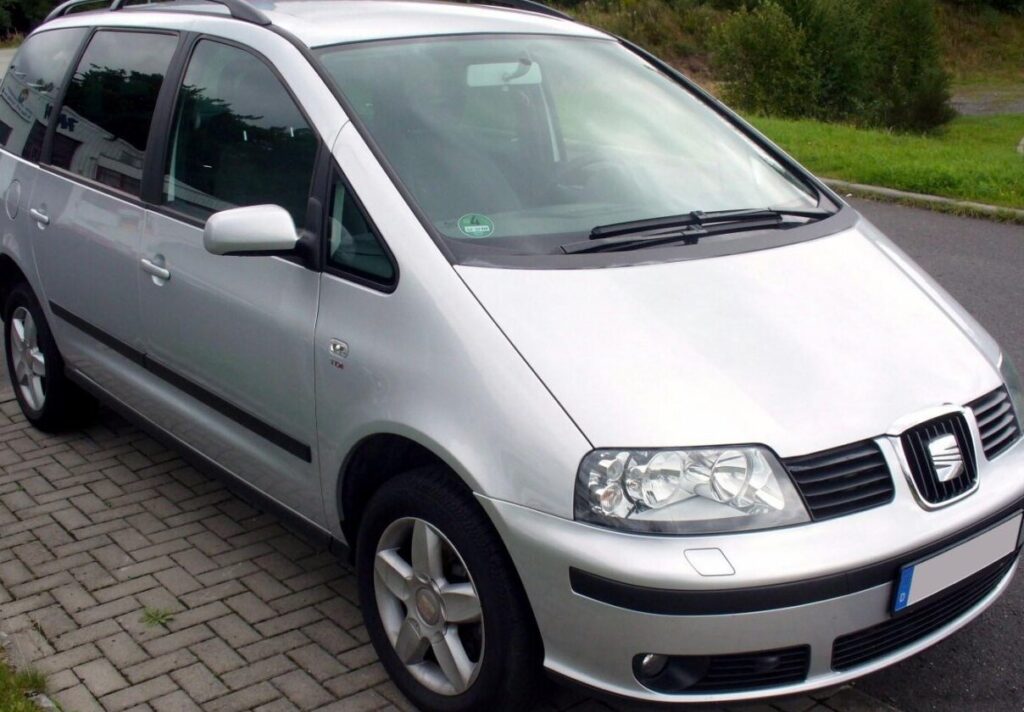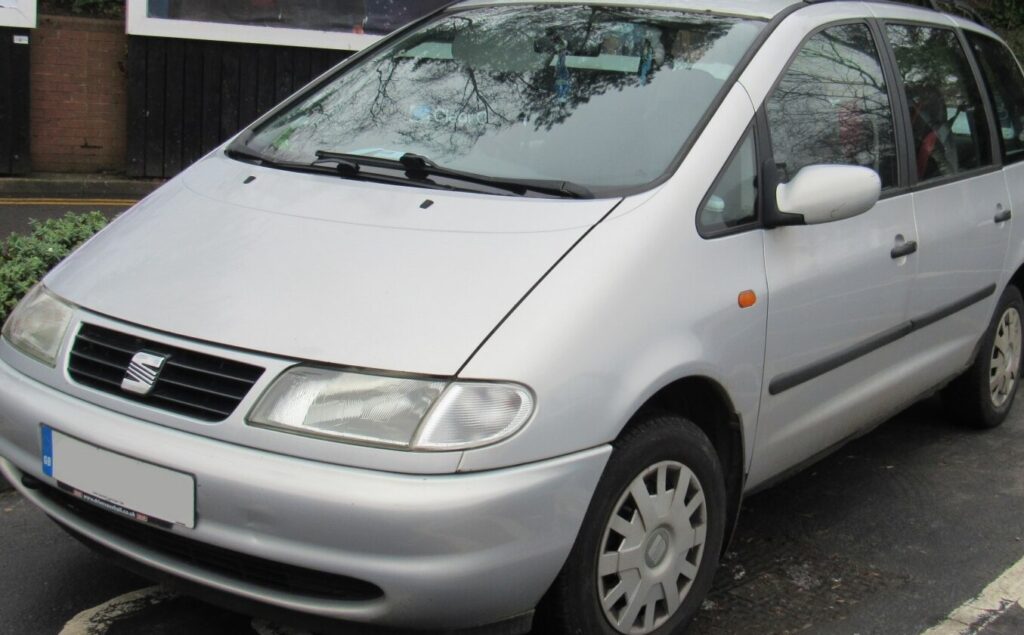
The Seat Alhambra I (7M) 1.9 TDI 110 hp Automatic, produced between September 1997 and February 2000, represents a significant entry in Seat’s foray into the large MPV (Multi-Purpose Vehicle) segment. Developed in collaboration with Volkswagen – sharing a platform and many components with the VW Sharan – the Alhambra aimed to provide a spacious, practical, and relatively affordable seven-seater option for European families. This particular variant, equipped with the 1.9-liter TDI engine and a four-speed automatic transmission, occupied a middle ground in the Alhambra lineup, offering a balance between fuel efficiency, usability, and cost. It was positioned below the more powerful petrol variants and the higher-output TDI models, targeting buyers prioritizing economy and ease of driving over outright performance.
Technical Specifications
| Brand | Seat |
| Model | Alhambra |
| Generation | Alhambra I (7M) |
| Type (Engine) | 1.9 TDI (110 Hp) Automatic |
| Start of production | September, 1997 |
| End of production | February, 2000 |
| Powertrain Architecture | Internal Combustion engine |
| Body type | Minivan, MPV |
| Seats | 7 |
| Doors | 5 |
| Fuel consumption (urban) | 10.4 l/100 km (22.6 US mpg, 27.2 UK mpg, 9.6 km/l) |
| Fuel consumption (extra urban) | 6.4 l/100 km (36.8 US mpg, 44.1 UK mpg, 15.6 km/l) |
| Fuel Type | Diesel |
| Acceleration 0 – 100 km/h | 19.1 sec |
| Acceleration 0 – 62 mph | 19.1 sec |
| Acceleration 0 – 60 mph | 18.1 sec |
| Maximum speed | 169 km/h (105.01 mph) |
| Weight-to-power ratio | 15.9 kg/Hp, 62.7 Hp/tonne |
| Weight-to-torque ratio | 7.5 kg/Nm, 134 Nm/tonne |
| Power | 110 Hp @ 4150 rpm |
| Power per litre | 58 Hp/l |
| Torque | 235 Nm @ 1900 rpm (173.33 lb.-ft. @ 1900 rpm) |
| Engine layout | Front, Transverse |
| Engine Model/Code | AFN, AVG |
| Engine displacement | 1896 cm3 (115.7 cu. in.) |
| Number of cylinders | 4 |
| Engine configuration | Inline |
| Cylinder Bore | 79.5 mm (3.13 in.) |
| Piston Stroke | 95.5 mm (3.76 in.) |
| Compression ratio | 19.5:1 |
| Number of valves per cylinder | 2 |
| Fuel injection system | Direct injection |
| Engine aspiration | Turbocharger, Intercooler |
| Valvetrain | OHC |
| Engine oil capacity | 4.3 l (4.54 US qt | 3.78 UK qt) |
| Coolant | 6.8 l (7.19 US qt | 5.98 UK qt) |
| Kerb Weight | 1754 kg (3866.91 lbs.) |
| Max. weight | 2400 kg (5291.09 lbs.) |
| Max load | 646 kg (1424.19 lbs.) |
| Trunk (boot) space – minimum | 256 l (9.04 cu. ft.) |
| Trunk (boot) space – maximum | 1597 l (56.4 cu. ft.) |
| Fuel tank capacity | 70 l (18.49 US gal | 15.4 UK gal) |
| Length | 4617 mm (181.77 in.) |
| Width | 1810 mm (71.26 in.) |
| Height | 1728 mm (68.03 in.) |
| Wheelbase | 2835 mm (111.61 in.) |
| Front track | 1528 mm (60.16 in.) |
| Rear (Back) track | 1514 mm (59.61 in.) |
| Drivetrain Architecture | The Internal combustion engine (ICE) drives the front wheels of the vehicle. |
| Drive wheel | Front wheel drive |
| Number of gears and type of gearbox | 5 gears, automatic transmission |
| Front suspension | Wishbone |
| Rear suspension | Inclined Lever |
| Front brakes | Ventilated discs |
| Rear brakes | Disc |
| Assisting systems | ABS (Anti-lock braking system) |
| Steering type | Steering rack and pinion |
| Power steering | Hydraulic Steering |
| Tires size | 205/60 R16 |
| Wheel rims size | 16 |
Powertrain & Engine Architecture
The heart of this Alhambra variant is the 1.9-liter (1896 cc) inline four-cylinder diesel engine, typically identified by engine codes AFN or AVG. This engine belongs to Volkswagen Group’s well-regarded TDI (Turbocharged Direct Injection) family. The direct injection system, coupled with a turbocharger and intercooler, allowed for a good balance of power and fuel economy. The engine utilizes an overhead camshaft (OHC) valvetrain with two valves per cylinder. The 110 horsepower output is achieved at 4150 rpm, while the peak torque of 235 Nm (173.33 lb-ft) is available from a low 1900 rpm, providing ample pulling power for a vehicle of this size. The four-speed automatic transmission, while not offering the most modern gear ratios, was chosen for its ease of use and suitability for family transport. It’s a conventional hydraulic automatic, known for its relative simplicity and robustness.
Driving Characteristics
The 1.9 TDI Automatic Alhambra wasn’t designed for spirited driving. Acceleration was leisurely, with a 0-60 mph time around 18.1 seconds. The automatic transmission, while smooth, contributed to a noticeable delay in response compared to the manual versions. However, the engine’s strong low-end torque made it perfectly adequate for everyday driving, especially when fully loaded with passengers and luggage. The gear ratios were optimized for fuel efficiency rather than performance, meaning the engine often operated at relatively low rpm during cruising. This contributed to a quiet and comfortable ride, but could feel strained when attempting to overtake or climb steep hills. Compared to the 1.8L petrol versions, the TDI offered significantly better fuel economy and more torque, but at the expense of outright power. Compared to the more powerful 1.9 TDI 150 hp variant, this version felt noticeably slower and less refined.
Equipment & Trim Levels
The 1.9 TDI Automatic Alhambra typically came with a reasonable level of standard equipment. This included central locking, electric front windows, power steering, and an ABS anti-lock braking system. Interior upholstery was usually a durable cloth material, with a functional, if somewhat basic, dashboard layout. Optional extras included air conditioning, alloy wheels, a sunroof, and upgraded audio systems. Higher trim levels, such as the ‘Stella’ or ‘Trend’ variants, added features like rear electric windows, upgraded interior trim, and more sophisticated audio systems. The focus was on practicality and family-friendliness, rather than luxury.
Chassis & Braking
The Alhambra I utilized a front-wheel-drive layout with a relatively simple suspension setup. The front suspension featured independent wishbones, while the rear employed an inclined lever arrangement. This setup prioritized ride comfort over handling precision. Braking was provided by ventilated discs on the front wheels and solid discs on the rear. The ABS system helped to maintain steering control during emergency braking. Stabilizer bars were fitted to both the front and rear axles to reduce body roll, but the Alhambra’s high center of gravity meant it wasn’t a particularly sporty vehicle to drive.
Market Reception & Comparison
The Seat Alhambra, and specifically the 1.9 TDI Automatic variant, was generally well-received by critics as a practical and spacious MPV. Its fuel economy was a major selling point, particularly in Europe where diesel fuel was often cheaper than petrol. However, the automatic transmission was sometimes criticized for its sluggishness and lack of responsiveness. Compared to the VW Sharan, the Alhambra often offered a slightly lower price point, making it an attractive option for budget-conscious buyers. Reliability was generally good, although the turbocharger and fuel injection system could require attention over time.
Legacy
The Seat Alhambra I (7M) 1.9 TDI Automatic, while not a performance icon, remains a popular choice in the used car market today. The 1.9 TDI engine is known for its durability and relatively low running costs, provided it’s well-maintained. Common issues include turbocharger failure, injector problems, and wear and tear on the automatic transmission. However, parts availability is generally good, and the Alhambra’s simple construction makes it relatively easy to repair. It represents a solid, practical, and affordable option for families needing a spacious and versatile vehicle, and its enduring popularity is a testament to its well-engineered design.