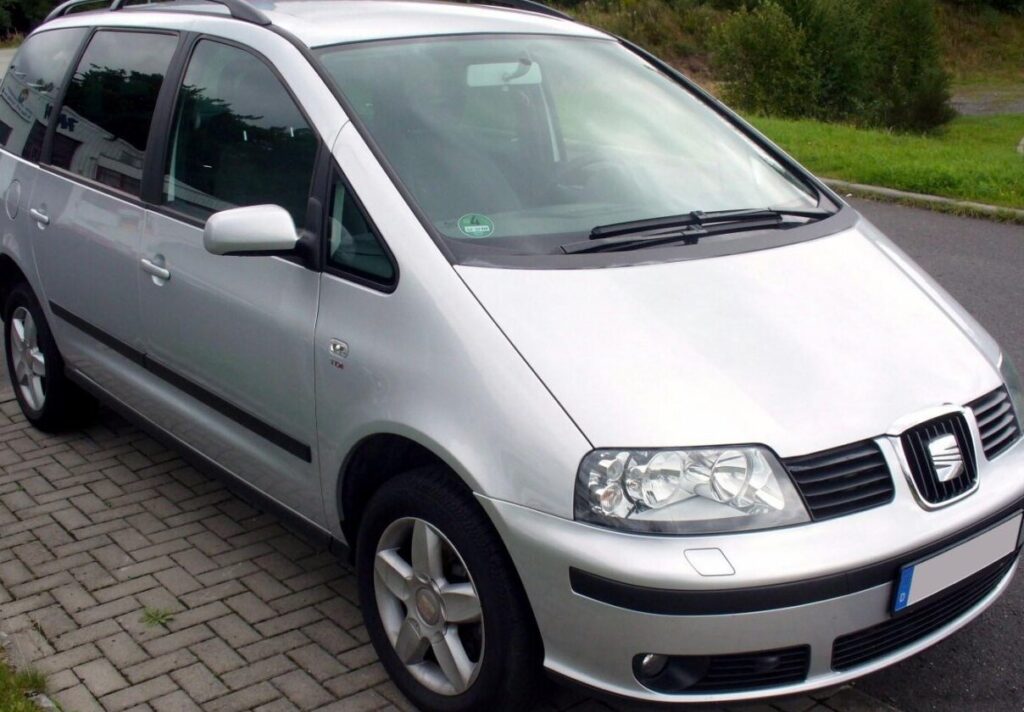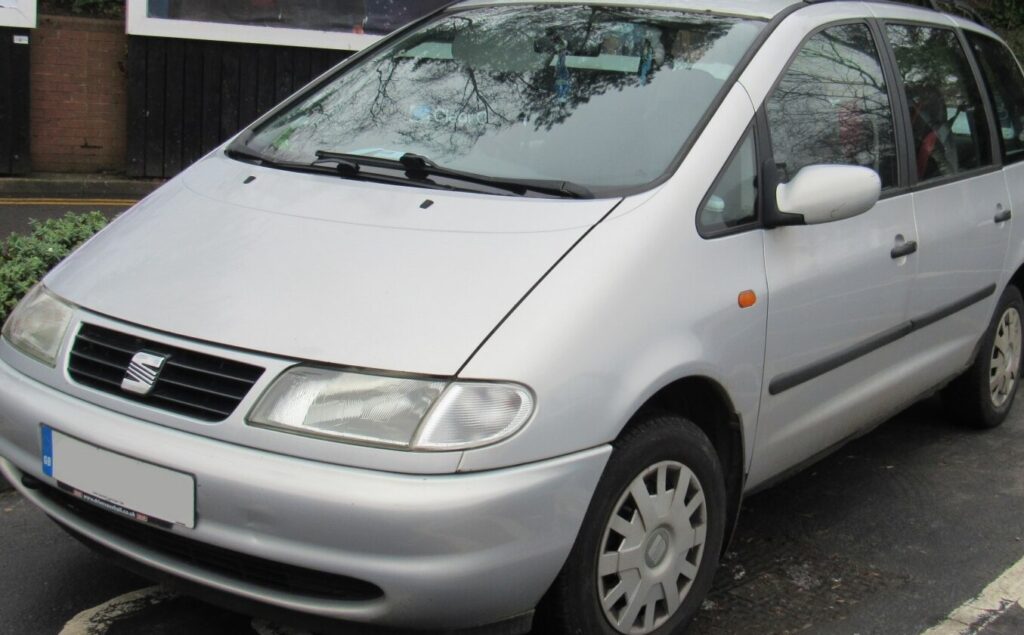
The Seat Alhambra I (7M) 2.0 i, produced between March 1996 and February 2000, represents a significant entry in Seat’s foray into the multi-purpose vehicle (MPV) segment. Developed in collaboration with Volkswagen – sharing a platform and many components with the VW Sharan – the Alhambra aimed to provide European families with a spacious, practical, and relatively affordable seven-seater. The 2.0 i variant, equipped with a 115 horsepower engine, occupied a mid-range position within the Alhambra lineup, offering a balance between performance and fuel economy. It was positioned below the more powerful VR6 models and above the diesel options, targeting buyers who prioritized smooth operation and lower initial cost over outright speed.
Technical Specifications
| Brand | Seat |
| Model | Alhambra |
| Generation | Alhambra I (7M) |
| Type (Engine) | 2.0 i (115 Hp) |
| Start of production | March, 1996 |
| End of production | February, 2000 |
| Powertrain Architecture | Internal Combustion engine |
| Body type | Minivan, MPV |
| Seats | 7 |
| Doors | 5 |
| Fuel consumption (urban) | 13.4 l/100 km (17.6 US mpg, 21.1 UK mpg, 7.5 km/l) |
| Fuel consumption (extra urban) | 7.7 l/100 km (30.5 US mpg, 36.7 UK mpg, 13 km/l) |
| Fuel consumption (combined) | 9.1 l/100 km (25.8 US mpg, 31 UK mpg, 11 km/l) |
| Fuel Type | Petrol (Gasoline) |
| Acceleration 0 – 100 km/h | 15.4 sec |
| Acceleration 0 – 62 mph | 15.4 sec |
| Acceleration 0 – 60 mph | 14.6 sec |
| Maximum speed | 177 km/h (109.98 mph) |
| Weight-to-power ratio | 14.2 kg/Hp, 70.2 Hp/tonne |
| Weight-to-torque ratio | 9.9 kg/Nm, 101.3 Nm/tonne |
| Power | 115 Hp @ 5400 rpm |
| Power per litre | 58 Hp/l |
| Torque | 166 Nm @ 3200 rpm (122.44 lb.-ft. @ 3200 rpm) |
| Engine layout | Front, Transverse |
| Engine Model/Code | ADY |
| Engine displacement | 1984 cm3 (121.07 cu. in.) |
| Number of cylinders | 4 |
| Engine configuration | Inline |
| Cylinder Bore | 82.5 mm (3.25 in.) |
| Piston Stroke | 92.8 mm (3.65 in.) |
| Compression ratio | 10:1 |
| Number of valves per cylinder | 2 |
| Fuel injection system | Multi-port manifold injection |
| Engine aspiration | Naturally aspirated engine |
| Valvetrain | OHC |
| Engine oil capacity | 4 l (4.23 US qt | 3.52 UK qt) |
| Coolant capacity | 7 l (7.4 US qt | 6.16 UK qt) |
| Kerb Weight | 1638 kg (3611.17 lbs.) |
| Max. weight | 2400 kg (5291.09 lbs.) |
| Max load | 762 kg (1679.92 lbs.) |
| Trunk (boot) space – minimum | 256 l (9.04 cu. ft.) |
| Trunk (boot) space – maximum | 852 l (30.09 cu. ft.) |
| Fuel tank capacity | 70 l (18.49 US gal | 15.4 UK gal) |
| Length | 4620 mm (181.89 in.) |
| Width | 1810 mm (71.26 in.) |
| Height | 1730 mm (68.11 in.) |
| Wheelbase | 2835 mm (111.61 in.) |
| Front track | 1510 mm (59.45 in.) |
| Rear track | 1505 mm (59.25 in.) |
| Drivetrain Architecture | Front wheel drive |
| Number of gears | 5 gears, manual transmission |
| Front suspension | Wishbone |
| Rear suspension | Inclined Lever |
| Front brakes | Ventilated discs |
| Rear brakes | Disc |
| Assisting systems | ABS (Anti-lock braking system) |
| Steering type | Steering rack and pinion |
| Power steering | Hydraulic Steering |
| Tires size | 195/65 R15 |
Powertrain & Engine Architecture
The Alhambra 2.0 i utilized the ADY engine code, a 1.984-liter inline-four cylinder gasoline engine. This engine was part of Volkswagen Group’s EA827 family, known for its relatively simple and robust design. The ADY featured a single overhead camshaft (OHC) operating two valves per cylinder. Fuel delivery was managed by a multi-port fuel injection system, providing adequate atomization for efficient combustion. The engine’s 115 horsepower output at 5400 rpm and 166 Nm (122.44 lb-ft) of torque at 3200 rpm were considered modest, but sufficient for comfortable family transportation. The engine was transversely mounted, driving the front wheels. The Alhambra 2.0 i was typically paired with a five-speed manual transmission, although a four-speed automatic transmission was also available, albeit less common. The automatic transmission, while offering convenience, did impact acceleration and fuel economy.
Driving Characteristics
The 2.0 i Alhambra with the manual transmission offered acceptable, if not exhilarating, performance. Acceleration to 60 mph took around 14.6 seconds, and top speed was approximately 109.98 mph. The engine felt somewhat strained when fully loaded with passengers and luggage, particularly on inclines. The automatic transmission version further diminished performance, adding a noticeable delay in response. Gear ratios were geared towards fuel efficiency rather than outright speed. The steering was light and easy, making maneuvering in urban environments straightforward, but lacked the feedback desired by more enthusiastic drivers. The suspension, tuned for comfort, absorbed bumps reasonably well, but body roll was noticeable during cornering.
Equipment & Trim Levels
The Alhambra 2.0 i typically came equipped with features considered standard for a family MPV of its era. These included power windows, central locking, and an adjustable steering column. Higher trim levels offered options such as air conditioning, alloy wheels, and a radio/cassette player. Interior upholstery was typically cloth, with a durable and practical design. The dashboard layout was functional and straightforward, prioritizing ease of use. Optional extras included a sunroof, rear parking sensors, and upgraded audio systems. The Alhambra’s modular seating arrangement allowed for flexible configuration, with the rear seats capable of being folded flat or removed entirely to maximize cargo space.
Chassis & Braking
The Alhambra I (7M) utilized a front-wheel-drive layout with independent wishbone suspension at the front and an inclined lever rear suspension. This setup prioritized ride comfort and space efficiency. Braking duties were handled by ventilated discs at the front and solid discs at the rear. Anti-lock Braking System (ABS) was standard, enhancing safety during emergency braking situations. The steering system employed a hydraulic power steering rack and pinion, providing assisted steering with a relatively large turning circle. The standard tire size was 195/65 R15, offering a balance between grip and ride comfort.
Market Reception & Comparison
The Seat Alhambra 2.0 i was generally well-received by automotive critics as a practical and spacious family vehicle. However, its performance was often criticized as being underwhelming, particularly when compared to the more powerful VR6 models. Fuel economy was considered reasonable for its class, but not exceptional. Compared to the VW Sharan, the Alhambra offered a similar package at a slightly lower price point, making it an attractive option for budget-conscious buyers. The diesel variants of the Alhambra offered superior fuel economy, but at the expense of refinement and performance. The 2.0 i model struck a compromise between these extremes, appealing to those who valued a smooth and relatively quiet driving experience.
Legacy
The Seat Alhambra I (7M) 2.0 i, while not a performance icon, proved to be a reliable and durable vehicle. The ADY engine, when properly maintained, is known for its longevity. Common issues include wear and tear on suspension components and occasional problems with the fuel injection system. On the used car market, the Alhambra 2.0 i represents a relatively affordable entry point into the MPV segment. Its spacious interior and practical features continue to appeal to families seeking a versatile and dependable vehicle. While newer MPVs offer more advanced technology and improved fuel efficiency, the Alhambra I (7M) 2.0 i remains a testament to the enduring appeal of a well-designed and thoughtfully engineered family vehicle.