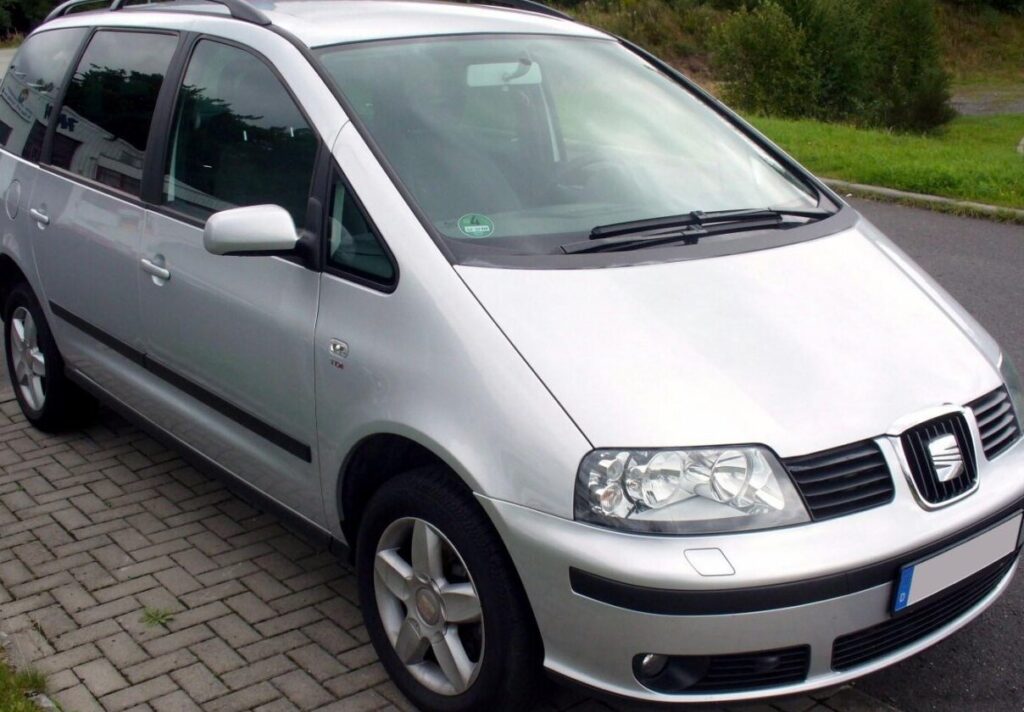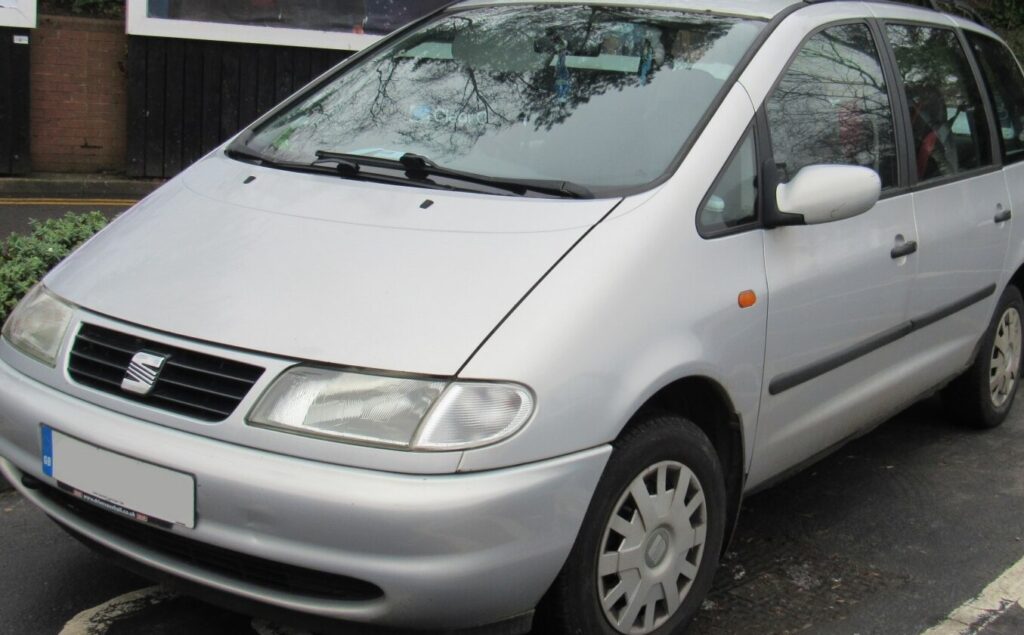
The Seat Alhambra I (7M) 2.0 i Automatic, produced between March 1996 and February 2000, represents a significant entry in Seat’s foray into the large MPV (Multi-Purpose Vehicle) segment. Developed in collaboration with Volkswagen – sharing a platform and many components with the VW Sharan – the Alhambra aimed to provide a spacious, practical, and relatively affordable seven-seater option for European families. This particular variant, equipped with the 2.0-liter inline-four engine producing 115 horsepower and paired with a four-speed automatic transmission, occupied a mid-range position within the Alhambra lineup, offering a balance between performance and ease of use. It was positioned below the more powerful 2.8 VR6 models and above the fuel-efficient, though slower, 1.9 TDI diesel versions.
Technical Specifications
| Brand | Seat |
| Model | Alhambra |
| Generation | Alhambra I (7M) |
| Type (Engine) | 2.0 i (115 Hp) Automatic |
| Start of production | March, 1996 |
| End of production | February, 2000 |
| Powertrain Architecture | Internal Combustion engine |
| Body type | Minivan, MPV |
| Seats | 7 |
| Doors | 5 |
| Fuel consumption (urban) | 16.5 l/100 km (14.3 US mpg, 17.1 UK mpg, 6.1 km/l) |
| Fuel consumption (extra urban) | 8.6 l/100 km (27.4 US mpg, 32.8 UK mpg, 11.6 km/l) |
| Fuel consumption (combined) | 9.1 l/100 km (25.8 US mpg, 31 UK mpg, 11 km/l) |
| Fuel Type | Petrol (Gasoline) |
| Acceleration 0 – 100 km/h | 17.2 sec |
| Acceleration 0 – 62 mph | 17.2 sec |
| Acceleration 0 – 60 mph | 16.3 sec |
| Maximum speed | 172 km/h (106.88 mph) |
| Weight-to-power ratio | 14.2 kg/Hp, 70.2 Hp/tonne |
| Weight-to-torque ratio | 9.9 kg/Nm, 101.3 Nm/tonne |
| Power | 115 Hp @ 5400 rpm |
| Power per litre | 58 Hp/l |
| Torque | 166 Nm @ 3200 rpm (122.44 lb.-ft. @ 3200 rpm) |
| Engine layout | Front, Transverse |
| Engine Model/Code | ADY |
| Engine displacement | 1984 cm3 (121.07 cu. in.) |
| Number of cylinders | 4 |
| Engine configuration | Inline |
| Cylinder Bore | 82.5 mm (3.25 in.) |
| Piston Stroke | 92.8 mm (3.65 in.) |
| Compression ratio | 10:1 |
| Number of valves per cylinder | 2 |
| Fuel injection system | Multi-port manifold injection |
| Engine aspiration | Naturally aspirated engine |
| Valvetrain | OHC |
| Engine oil capacity | 4 l (4.23 US qt | 3.52 UK qt) |
| Coolant capacity | 7 l (7.4 US qt | 6.16 UK qt) |
| Kerb Weight | 1638 kg (3611.17 lbs.) |
| Max. weight | 2400 kg (5291.09 lbs.) |
| Max load | 762 kg (1679.92 lbs.) |
| Trunk (boot) space – minimum | 256 l (9.04 cu. ft.) |
| Trunk (boot) space – maximum | 852 l (30.09 cu. ft.) |
| Fuel tank capacity | 70 l (18.49 US gal | 15.4 UK gal) |
| Length | 4620 mm (181.89 in.) |
| Width | 1810 mm (71.26 in.) |
| Height | 1730 mm (68.11 in.) |
| Wheelbase | 2835 mm (111.61 in.) |
| Front track | 1510 mm (59.45 in.) |
| Rear track | 1505 mm (59.25 in.) |
| Drivetrain Architecture | Front wheel drive |
| Number of gears | 4 |
| Gearbox type | Automatic transmission |
| Front suspension | Wishbone |
| Rear suspension | Inclined Lever |
| Front brakes | Ventilated discs |
| Rear brakes | Disc |
| Assisting systems | ABS (Anti-lock braking system) |
| Steering type | Steering rack and pinion |
| Power steering | Hydraulic Steering |
| Tires size | 195/65 R15 |
| Wheel rims size | 15 |
Powertrain & Engine Architecture
The heart of this Alhambra variant is the ADY engine, a 1.984-liter (121.07 cubic inches) inline-four cylinder gasoline engine. This engine, part of Volkswagen Group’s EA827 family, utilizes a cast iron block with an aluminum cylinder head. It features a single overhead camshaft (OHC) operating two valves per cylinder. Fuel delivery is managed by a multi-port fuel injection system, providing a balance between efficiency and performance. The ADY engine produces 115 horsepower at 5400 rpm and 166 Nm (122.44 lb-ft) of torque at 3200 rpm. The four-speed automatic transmission, while providing convenience, was a relatively conventional unit for the time. It lacks the sophistication of modern automatic transmissions with more gears and electronic control, resulting in noticeable shifts and a less refined driving experience.
Driving Characteristics
The 2.0 i Automatic Alhambra wasn’t designed for spirited driving. With a 0-60 mph time of around 16.3 seconds and a top speed of 106.88 mph, performance is best described as adequate. The automatic transmission contributes to a somewhat sluggish feel, particularly during overtaking maneuvers. The gear ratios are spaced to prioritize fuel economy and smooth cruising rather than rapid acceleration. Compared to the manual transmission versions of the same engine, the automatic suffers a noticeable performance penalty. The higher-output VR6 models offered significantly more power and a more engaging driving experience, but at a higher price point. The 1.9 TDI diesel, while slower in outright acceleration, provided superior fuel economy and a more flexible torque curve.
Equipment & Trim Levels
The 2.0 i Automatic trim generally included features such as power windows, central locking, power steering, and an anti-lock braking system (ABS). Interior upholstery typically consisted of cloth seats, with options for upgraded materials available. Dashboard configuration was functional and straightforward, prioritizing practicality over luxury. Common optional extras included air conditioning, alloy wheels, and a radio/cassette player. Higher trim levels, often denoted by specific packages, added features like sunroofs, upgraded sound systems, and additional safety equipment.
Chassis & Braking
The Alhambra I (7M) utilizes a front-wheel-drive layout with independent wishbone suspension at the front and an inclined lever rear suspension. This setup provides a reasonable level of ride comfort, although it’s not particularly sporty. The front brakes are ventilated discs, offering adequate stopping power, while the rear brakes are solid discs. The steering is rack and pinion with hydraulic assistance, providing a relatively light and easy steering feel. The standard tire size is 195/65 R15, mounted on 15-inch steel or alloy wheels.
Market Reception & Comparison
The Seat Alhambra, and specifically the 2.0 i Automatic variant, was generally well-received by critics as a practical and spacious family vehicle. However, the automatic transmission was often criticized for its lack of responsiveness and its impact on fuel economy. Compared to the VW Sharan, the Alhambra often offered a slightly more affordable price point, making it an attractive option for budget-conscious buyers. The 1.9 TDI diesel versions were praised for their fuel efficiency, while the VR6 models appealed to those seeking more performance. Reliability was generally good, although some owners reported issues with the automatic transmission over the long term.
Legacy
Today, the Seat Alhambra I (7M) 2.0 i Automatic is a relatively affordable used car option. The ADY engine is known for its durability, although regular maintenance is crucial to prevent issues. The automatic transmission, however, remains a potential weak point, and prospective buyers should carefully inspect its condition. While not a performance icon, the Alhambra remains a practical and spacious MPV, offering a comfortable and reliable transportation solution for families. Its collaborative development with Volkswagen ensured a degree of engineering robustness and parts availability that continues to benefit owners today.