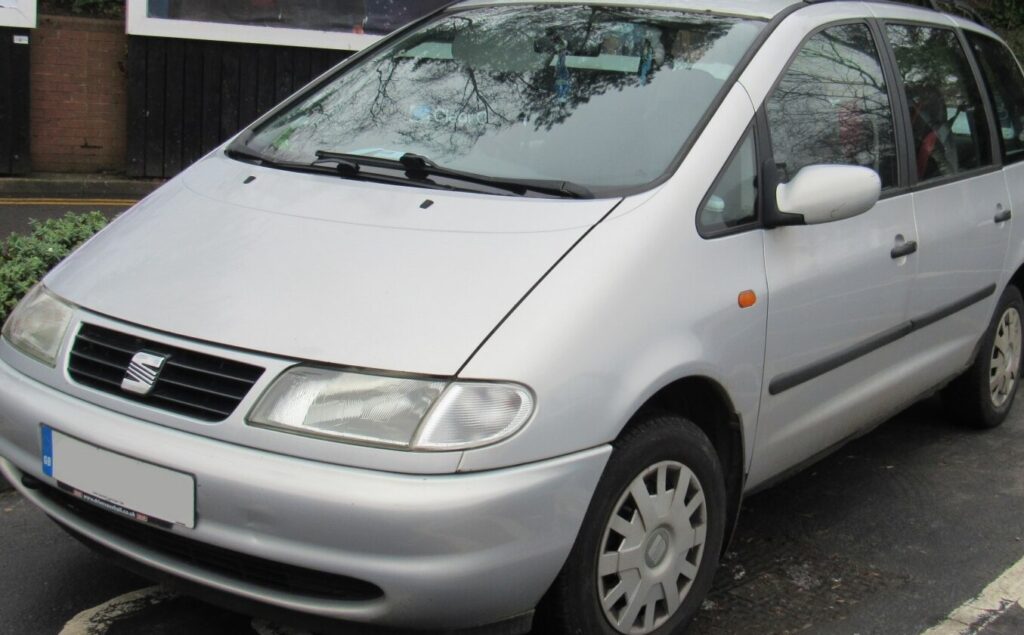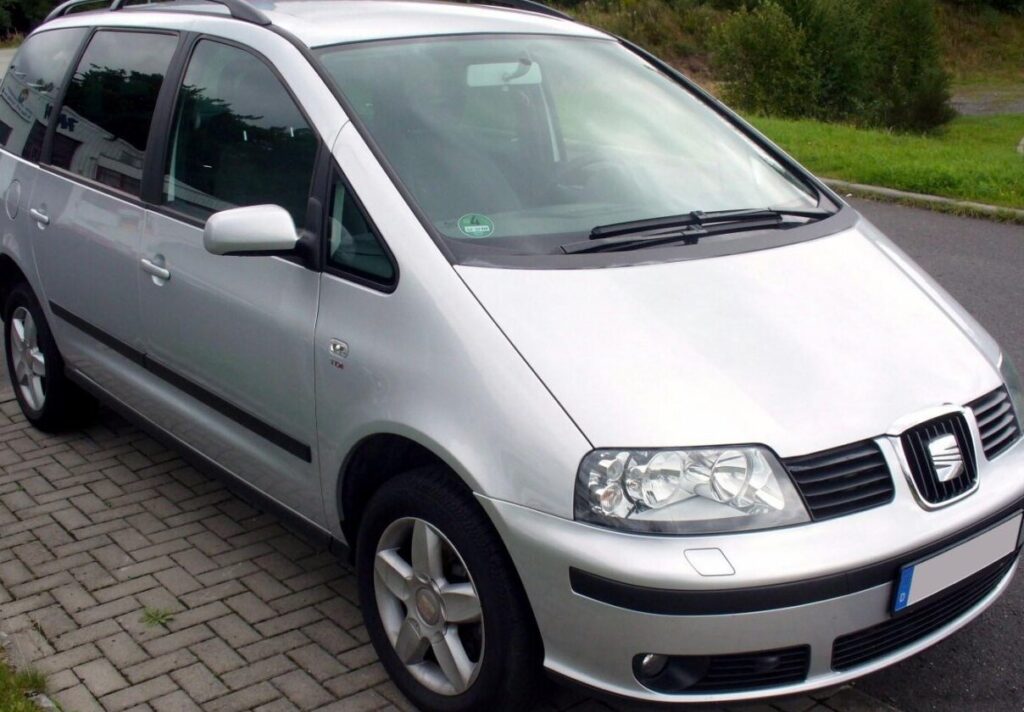
The Seat Alhambra I, specifically the 1.8 Turbo (150 hp) variant produced from 2000 to 2010, represents a significant offering in the European MPV (Multi-Purpose Vehicle) segment. Part of the 7M facelift generation, this model aimed to provide a spacious and practical vehicle for families, sharing its platform and much of its engineering with the Volkswagen Sharan. The Alhambra, and this trim level in particular, was positioned as a competitor to vehicles like the Renault Espace and Citroën Evasion, offering a blend of comfort, utility, and a relatively affordable price point within the larger MPV class. This version was a mainstay of the Alhambra lineup throughout its production run, offering a balance between performance and fuel economy.
Technical Specifications
| Brand | Seat |
| Model | Alhambra |
| Generation | Alhambra I (7M, facelift 2000) |
| Type (Engine) | 1.8 T (150 Hp) |
| Start of production | 2000 year |
| End of production | 2010 year |
| Powertrain Architecture | Internal Combustion engine |
| Body type | Minivan, MPV |
| Seats | 7 |
| Doors | 5 |
| Fuel consumption (economy) – urban (NEDC) | 13 l/100 km (18.1 US mpg, 21.7 UK mpg, 7.7 km/l) |
| Fuel consumption (economy) – extra urban (NEDC) | 7.4 l/100 km (31.8 US mpg, 38.2 UK mpg, 13.5 km/l) |
| Fuel consumption (economy) – combined (NEDC) | 9.4 l/100 km (25 US mpg, 30.1 UK mpg, 10.6 km/l) |
| CO2 emissions (NEDC) | 225 g/km |
| Fuel Type | Petrol (Gasoline) |
| Acceleration 0 – 100 km/h | 10.9 sec |
| Acceleration 0 – 62 mph | 10.9 sec |
| Acceleration 0 – 60 mph | 10.4 sec |
| Maximum speed | 199 km/h (123.65 mph) |
| Emission standard | Euro 4 |
| Weight-to-power ratio | 10.7 kg/Hp, 93.8 Hp/tonne |
| Weight-to-torque ratio | 7.3 kg/Nm, 137.6 Nm/tonne |
| Power | 150 Hp @ 5500 rpm |
| Power per litre | 84.2 Hp/l |
| Torque | 220 Nm @ 1800 rpm (162.26 lb.-ft. @ 1800 rpm) |
| Engine layout | Front, Transverse |
| Engine Model/Code | AWC |
| Engine displacement | 1781 cm3 (108.68 cu. in.) |
| Number of cylinders | 4 |
| Engine configuration | Inline |
| Cylinder Bore | 81 mm (3.19 in.) |
| Piston Stroke | 86.4 mm (3.4 in.) |
| Compression ratio | 9.5:1 |
| Number of valves per cylinder | 5 |
| Fuel injection system | Multi-port manifold injection |
| Engine aspiration | Turbocharger, Intercooler |
| Valvetrain | DOHC |
| Engine oil capacity | 4.5 l (4.76 US qt | 3.96 UK qt) |
| Coolant | 7 l (7.4 US qt | 6.16 UK qt) |
| Kerb Weight | 1599 kg (3525.19 lbs.) |
| Max. weight | 2450 kg (5401.33 lbs.) |
| Max load | 851 kg (1876.13 lbs.) |
| Trunk (boot) space – minimum | 256 l (9.04 cu. ft.) |
| Trunk (boot) space – maximum | 2610 l (92.17 cu. ft.) |
| Fuel tank capacity | 70 l (18.49 US gal | 15.4 UK gal) |
| Max. roof load | 75 kg (165.35 lbs.) |
| Permitted trailer load with brakes (12%) | 1900 kg (4188.78 lbs.) |
| Permitted trailer load without brakes | 700 kg (1543.24 lbs.) |
| Permitted towbar download | 85 kg (187.39 lbs.) |
| Length | 4634 mm (182.44 in.) |
| Width | 1810 mm (71.26 in.) |
| Height | 1762 mm (69.37 in.) |
| Wheelbase | 2835 mm (111.61 in.) |
| Front track | 1520-1532 mm (59.84 – 60.31 in.) |
| Rear (Back) track | 1506-1518 mm (59.29 – 59.76 in.) |
| Front overhang | 892 mm (35.12 in.) |
| Rear overhang | 907 mm (35.71 in.) |
| Drag coefficient (Cd) | 0.31 |
| Minimum turning circle (turning diameter) | 10.9 m (35.76 ft.) |
| Drivetrain Architecture | The Internal combustion engine (ICE) drives the front wheels of the vehicle. |
| Drive wheel | Front wheel drive |
| Number of gears and type of gearbox | 6 gears, manual transmission |
| Front suspension | Independent type McPherson, Transverse stabilizer |
| Rear suspension | Transverse stabilizer, Trailing arm, Coil spring |
| Front brakes | Ventilated discs |
| Rear brakes | Disc |
| Assisting systems | ABS (Anti-lock braking system) |
| Steering type | Steering rack and pinion |
| Power steering | Hydraulic Steering |
| Tires size | 215/55 R16; 225/45 R17 |
| Wheel rims size | 6J x 16; 7J x 17 |
Powertrain & Engine Architecture
The heart of this Alhambra variant is the 1.8-liter turbocharged four-cylinder engine, designated as the AWC engine code. This engine is a member of the Volkswagen Group’s EA827 family. It utilizes a multi-port fuel injection system and a K03 turbocharger with an intercooler to boost power output. The engine features a double overhead camshaft (DOHC) valvetrain with five valves per cylinder (three intake, two exhaust), contributing to its relatively high specific output. The 150 horsepower peak is achieved at 5500 rpm, while the 220 Nm (162 lb-ft) of torque is readily available from 1800 rpm, providing good low-end and mid-range responsiveness. The engine’s transverse mounting and front-wheel-drive configuration were standard for this class of vehicle. The Alhambra 1.8T typically came equipped with a 6-speed manual transmission, although a 5-speed automatic was also available, though less common.
Driving Characteristics
The 1.8T engine in the Alhambra offered a reasonable balance between performance and fuel economy. While not a sports car, the 150 hp output provided adequate power for highway cruising and overtaking maneuvers. Acceleration from 0-60 mph took around 10.4 seconds. The turbocharger did introduce a degree of turbo lag, particularly at lower engine speeds, but once spooled up, it delivered a noticeable surge in power. Compared to the base engine options available on the Alhambra, the 1.8T provided a significantly more refined and enjoyable driving experience. The automatic transmission, when equipped, offered smooth shifts but could sometimes feel hesitant during quick acceleration. The manual transmission provided more driver control and a slightly more engaging experience.
Equipment & Trim Levels
The 1.8T Alhambra typically came with a decent level of standard equipment. This included power windows, central locking, air conditioning, and an integrated radio/CD player. Higher trim levels added features such as alloy wheels, upgraded upholstery, a sunroof, and climate control. The interior was designed with practicality in mind, offering a spacious cabin with flexible seating arrangements. The seven seats could be configured in various ways to maximize cargo space or passenger comfort. Optional extras included rear parking sensors, a navigation system, and leather upholstery.
Chassis & Braking
The Alhambra’s chassis featured an independent McPherson strut suspension at the front and a trailing arm setup with coil springs at the rear. This configuration provided a comfortable ride quality, although it wasn’t particularly sporty. The front brakes were ventilated discs, while the rear brakes were solid discs. Anti-lock Braking System (ABS) was standard, enhancing safety. Stabilizer bars were fitted to both the front and rear axles to reduce body roll during cornering.
Market Reception & Comparison
The Seat Alhambra 1.8T was generally well-received by automotive critics. It was praised for its spacious interior, comfortable ride, and relatively affordable price. The 1.8T engine was considered a good compromise between performance and fuel economy. Compared to the diesel variants, the 1.8T offered a quieter and more refined driving experience, but it did suffer from slightly higher fuel consumption. Against competitors like the Renault Espace and Citroën Evasion, the Alhambra offered a compelling package with a focus on practicality and value.
Legacy
The Seat Alhambra I, particularly the 1.8T variant, has proven to be a relatively reliable vehicle. The engine, while turbocharged, is generally robust if properly maintained. Common issues include turbocharger wear and potential problems with the cooling system. In the used car market, the Alhambra 1.8T remains a popular choice for families seeking a spacious and affordable MPV. Its practicality, combined with the decent performance of the 1.8T engine, makes it a viable option for those looking for a well-rounded vehicle.