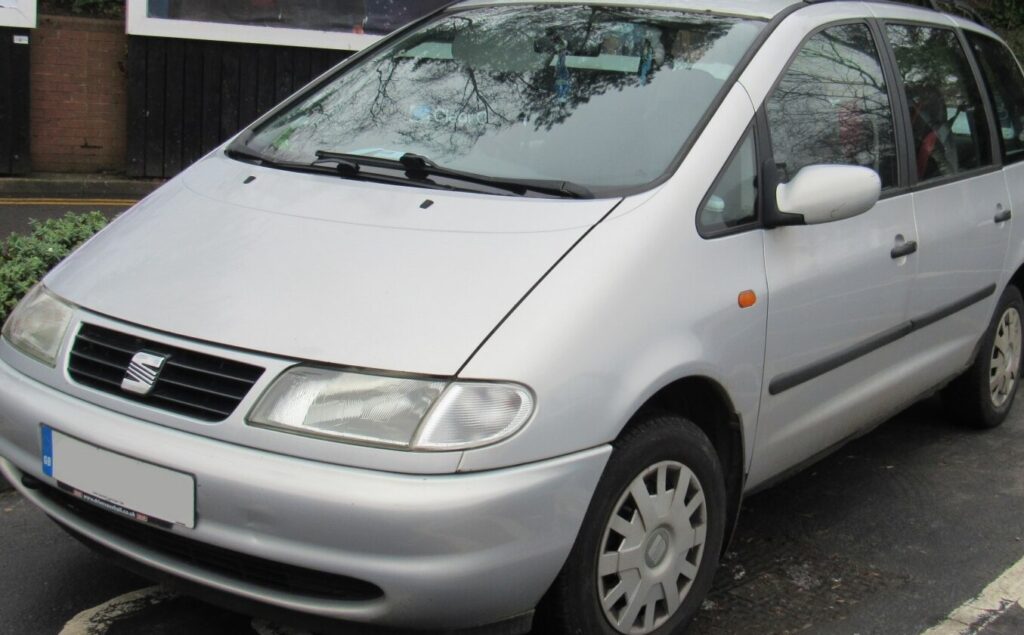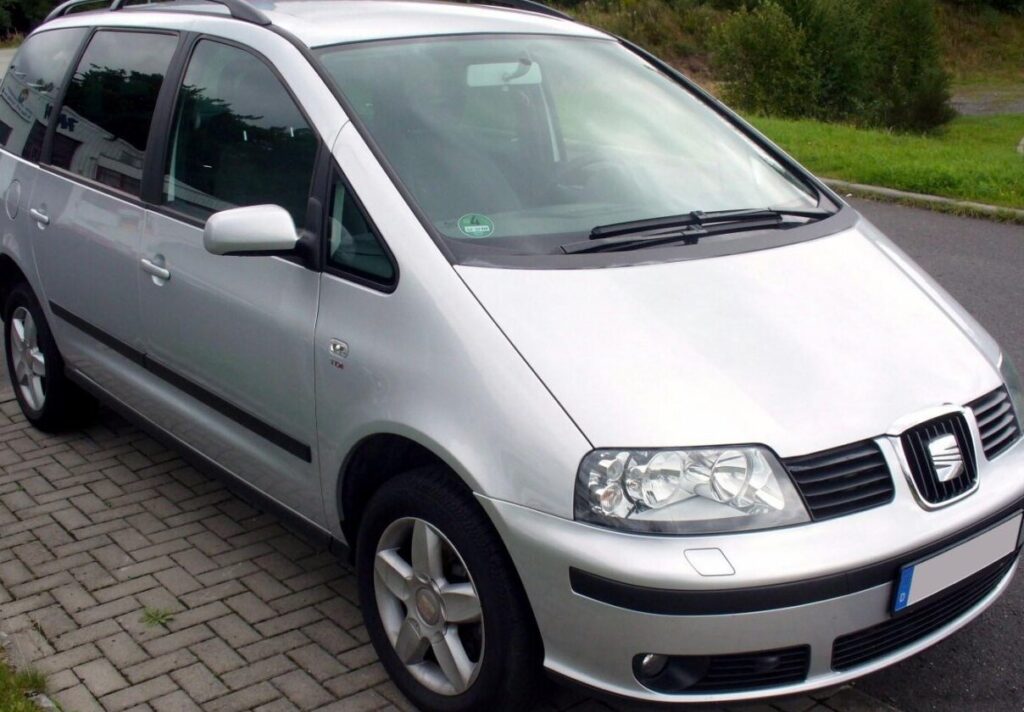
The Seat Alhambra I (7M), particularly the facelifted version introduced in 2000, represented Seat’s entry into the large MPV (Multi-Purpose Vehicle) segment. Produced from 2000 through 2010, the Alhambra was a collaborative effort with Volkswagen, sharing its platform and many components with the Volkswagen Sharan. This first generation Alhambra, designated the 7M chassis code, aimed to provide a spacious and practical vehicle for families, offering seven-seat capability and a versatile interior. The 2.0-liter (115 hp) variant occupied a mid-range position in the Alhambra lineup, offering a balance between affordability and performance, appealing to buyers who didn’t require the more powerful engine options but still desired a comfortable and well-equipped MPV.
Technical Specifications
| Brand | Seat |
| Model | Alhambra |
| Generation | Alhambra I (7M, facelift 2000) |
| Type (Engine) | 2.0 (115 Hp) |
| Start of production | 2000 year |
| End of production | 2010 year |
| Powertrain Architecture | Internal Combustion engine |
| Body type | Minivan, MPV |
| Seats | 7 |
| Doors | 5 |
| Fuel consumption (urban) | 12.8 l/100 km (18.4 US mpg, 22.1 UK mpg) |
| Fuel consumption (extra urban) | 7.4 l/100 km (31.8 US mpg, 38.2 UK mpg) |
| Fuel consumption (combined) | 9.4 l/100 km (25 US mpg, 30.1 UK mpg) |
| CO2 emissions | 223 g/km |
| Fuel Type | Petrol (Gasoline) |
| Acceleration 0 – 100 km/h | 15.2 sec |
| Acceleration 0 – 62 mph | 15.2 sec |
| Acceleration 0 – 60 mph | 14.4 sec |
| Maximum speed | 177 km/h (109.98 mph) |
| Emission standard | Euro 4 |
| Weight-to-power ratio | 13.7 kg/Hp |
| Weight-to-torque ratio | 9.3 kg/Nm |
| Power | 115 Hp @ 5200 rpm |
| Torque | 170 Nm @ 2600 rpm (125.39 lb.-ft. @ 2600 rpm) |
| Engine layout | Front, Transverse |
| Engine Model/Code | ATM |
| Engine displacement | 1984 cm3 (121.07 cu. in.) |
| Number of cylinders | 4 |
| Engine configuration | Inline |
| Cylinder Bore | 82.5 mm (3.25 in.) |
| Piston Stroke | 92.8 mm (3.65 in.) |
| Compression ratio | 10:1 |
| Number of valves per cylinder | 2 |
| Fuel injection system | Multi-port manifold injection |
| Engine aspiration | Naturally aspirated |
| Valvetrain | SOHC |
| Engine oil capacity | 4 l (4.23 US qt | 3.52 UK qt) |
| Coolant capacity | 7 l (7.4 US qt | 6.16 UK qt) |
| Kerb Weight | 1578 kg (3478.89 lbs.) |
| Max. weight | 2430 kg (5357.23 lbs.) |
| Max load | 852 kg (1878.34 lbs.) |
| Trunk (boot) space – minimum | 256 l (9.04 cu. ft.) |
| Trunk (boot) space – maximum | 2610 l (92.17 cu. ft.) |
| Fuel tank capacity | 70 l (18.49 US gal | 15.4 UK gal) |
| Max. roof load | 75 kg (165.35 lbs.) |
| Permitted trailer load (braked) | 1800 kg (3968.32 lbs.) |
| Permitted trailer load (unbraked) | 700 kg (1543.24 lbs.) |
| Permitted towbar download | 85 kg (187.39 lbs.) |
| Length | 4634 mm (182.44 in.) |
| Width | 1810 mm (71.26 in.) |
| Height | 1762 mm (69.37 in.) |
| Wheelbase | 2835 mm (111.61 in.) |
| Front track | 1532 mm (60.31 in.) |
| Rear track | 1518 mm (59.76 in.) |
| Drag coefficient (Cd) | 0.31 |
| Minimum turning circle | 10.9 m (35.76 ft.) |
| Drivetrain | Front wheel drive |
| Number of gears | 6 gears, manual transmission |
| Front suspension | Independent type McPherson, Transverse stabilizer |
| Rear suspension | Trailing arm, Coil spring, Transverse stabilizer |
| Front brakes | Ventilated discs |
| Rear brakes | Disc |
| Assisting systems | ABS (Anti-lock braking system) |
| Steering type | Steering rack and pinion |
| Power steering | Hydraulic |
| Tires size | 215/55 R16 |
| Wheel rims size | 6J x 16 |
INTRODUCTION
The Seat Alhambra I, facelifted in 2000, was a significant model for the Spanish automaker, marking its serious attempt to compete in the burgeoning MPV market. Built on the Volkswagen Group’s PL45 (1HX0/A3) platform, shared with the VW Sharan and Ford Galaxy, the Alhambra offered a compelling package of space, practicality, and relatively affordable pricing. The 2.0-liter, 115 horsepower version, equipped with a manual transmission, was positioned as a sensible choice for families prioritizing fuel efficiency and everyday usability over outright performance. It served as a stepping stone into the Alhambra range, offering a more accessible price point than the more powerful 2.8-liter VR6 option.
Powertrain & Engine Architecture
The Alhambra 2.0 utilized the Volkswagen Group’s ATM engine code, a naturally aspirated, inline-four cylinder gasoline engine displacing 1984cc. This engine featured a single overhead camshaft (SOHC) valvetrain with two valves per cylinder. Fuel delivery was managed by a multi-port fuel injection system. The ATM engine, while not particularly powerful, was known for its relative reliability and straightforward design. The 115 hp output was achieved at 5200 rpm, with a torque figure of 170 Nm (125.39 lb.-ft.) available at 2600 rpm. The engine’s transverse mounting and front-wheel-drive configuration were standard for vehicles in this class. The six-speed manual transmission provided a reasonable spread of gears, although it wasn’t geared for particularly rapid acceleration.
Driving Characteristics
The 2.0-liter Alhambra with a manual transmission offered a comfortable, if not exhilarating, driving experience. Acceleration was modest, taking around 15.2 seconds to reach 62 mph (100 km/h). The engine felt strained when fully loaded with passengers and luggage, particularly on inclines. The six-speed gearbox helped to keep the engine within its optimal operating range, but the lack of significant low-end torque meant frequent downshifts were often necessary. Compared to the VR6 version, the 2.0 felt noticeably slower and less refined. However, it offered better fuel economy and a lighter front-end feel, making it more manageable in everyday driving situations. The steering was light and precise, and the suspension provided a reasonably comfortable ride, although it could feel somewhat wallowy when cornering.
Equipment & Trim Levels
The 2.0-liter Alhambra typically came with a decent level of standard equipment, although it was less lavishly equipped than the higher-spec VR6 models. Standard features generally included power windows, central locking, air conditioning, and an integrated radio/cassette player. Higher trim levels offered options such as alloy wheels, upgraded upholstery, a sunroof, and rear parking sensors. Interior upholstery was typically cloth, with a functional and durable design. The dashboard layout was straightforward and easy to use, with clearly labeled controls. The Alhambra’s modular seating arrangement allowed for a variety of configurations, maximizing interior space and versatility.
Chassis & Braking
The Alhambra’s chassis featured an independent McPherson strut suspension at the front and a trailing arm setup with coil springs at the rear. A transverse stabilizer bar was fitted to both axles to reduce body roll. The braking system consisted of ventilated discs at the front and solid discs at the rear. Anti-lock Braking System (ABS) was standard, providing enhanced stopping power and stability. The suspension was tuned for comfort rather than sporty handling, prioritizing a smooth ride over sharp cornering. The Alhambra’s relatively high weight (1578 kg / 3478.89 lbs) contributed to its somewhat ponderous handling characteristics.
Market Reception & Comparison
The Seat Alhambra 2.0 was generally well-received by automotive critics as a practical and affordable MPV. It was praised for its spacious interior, versatile seating arrangement, and reasonable fuel economy. However, it was often criticized for its lack of outright performance and its somewhat bland styling. Compared to the VR6 version, the 2.0 offered a more economical option for buyers who didn’t require the extra power. It also proved to be more reliable in the long run, as the simpler engine design was less prone to mechanical issues. Against competitors like the Renault Espace and Citroën Evasion, the Alhambra offered a compelling combination of value and practicality.
Legacy
The Seat Alhambra I, including the 2.0-liter variant, has proven to be a relatively durable and reliable vehicle. While not without its quirks, the ATM engine is generally considered to be robust and long-lasting, provided it receives regular maintenance. Today, the Alhambra can be found on the used car market at affordable prices, making it an attractive option for budget-conscious families. However, potential buyers should be aware of potential issues such as corrosion and wear and tear on suspension components. Despite its age, the Alhambra remains a practical and versatile MPV, offering a spacious interior and a comfortable ride.