Technical Specifications
| Brand | Seat |
| Model | Alhambra |
| Generation | Alhambra II (7N) |
| Type | 1.4 TSI (150 Hp) Ecomotive 7 Seat |
| Start of production | May, 2011 |
| End of production | 2015 |
| Powertrain Architecture | Internal Combustion engine |
| Body type | Minivan, MPV |
| Seats | 7 |
| Doors | 5 |
| Fuel consumption (urban) | 9.2 l/100 km (25.6 US mpg, 30.7 UK mpg, 10.9 km/l) |
| Fuel consumption (extra urban) | 6.1 l/100 km (38.6 US mpg, 46.3 UK mpg, 16.4 km/l) |
| Fuel consumption (combined) | 7.2 l/100 km (32.7 US mpg, 39.2 UK mpg, 13.9 km/l) |
| CO2 emissions | 167 g/km |
| Fuel Type | Petrol (Gasoline) |
| Acceleration 0 – 100 km/h | 10.7 sec |
| Acceleration 0 – 62 mph | 10.7 sec |
| Acceleration 0 – 60 mph | 10.2 sec |
| Maximum speed | 197 km/h (122.41 mph) |
| Emission standard | Euro 5 |
| Weight-to-power ratio | 11.8 kg/Hp, 84.7 Hp/tonne |
| Weight-to-torque ratio | 7.4 kg/Nm, 135.5 Nm/tonne |
| Power | 150 Hp @ 5800 rpm |
| Power per litre | 107.9 Hp/l |
| Torque | 240 Nm @ 1500-4000 rpm (177.01 lb.-ft. @ 1500-4000 rpm) |
| Engine layout | Front, Transverse |
| Engine Model/Code | CAVA, CNWB, CTHA |
| Engine displacement | 1390 cm3 (84.82 cu. in.) |
| Number of cylinders | 4 |
| Engine configuration | Inline |
| Cylinder Bore | 76.5 mm (3.01 in.) |
| Piston Stroke | 75.6 mm (2.98 in.) |
| Compression ratio | 10:1 |
| Number of valves per cylinder | 4 |
| Fuel injection system | Direct injection |
| Engine aspiration | Turbocharging and Supercharger, Intercooler |
| Engine oil capacity | 4 l (4.23 US qt | 3.52 UK qt) |
| Coolant | 5.6 l (5.92 US qt | 4.93 UK qt) |
| Kerb Weight | 1771 kg (3904.39 lbs.) |
| Max. weight | 2480 kg (5467.46 lbs.) |
| Max load | 709 kg (1563.08 lbs.) |
| Trunk (boot) space – minimum | 267 l (9.43 cu. ft.) |
| Trunk (boot) space – maximum | 1339 l (47.29 cu. ft.) |
| Fuel tank capacity | 70 l (18.49 US gal | 15.4 UK gal) |
| Permitted trailer load with brakes (12%) | 1800 kg (3968.32 lbs.) |
| Length | 4854 mm (191.1 in.) |
| Width | 1904 mm (74.96 in.) |
| Height | 1720 mm (67.72 in.) |
| Wheelbase | 2919 mm (114.92 in.) |
| Front track | 1557 mm (61.3 in.) |
| Rear (Back) track | 1605 mm (63.19 in.) |
| Minimum turning circle | 11.9 m (39.04 ft.) |
| Drivetrain Architecture | Front wheel drive |
| Number of gears and type of gearbox | 6 gears, manual transmission |
| Front suspension | Independent, type McPherson with coil spring and anti-roll bar |
| Rear suspension | Independent coil spring |
| Front brakes | Ventilated discs, 314 mm |
| Rear brakes | Disc, 282 mm |
| Assisting systems | ABS (Anti-lock braking system) |
| Steering type | Steering rack and pinion |
| Power steering | Electric Steering |
| Tires size | 205/60 R16; 215/60 R16; 225/50 R17 |
| Wheel rims size | 6.5J x 16 |
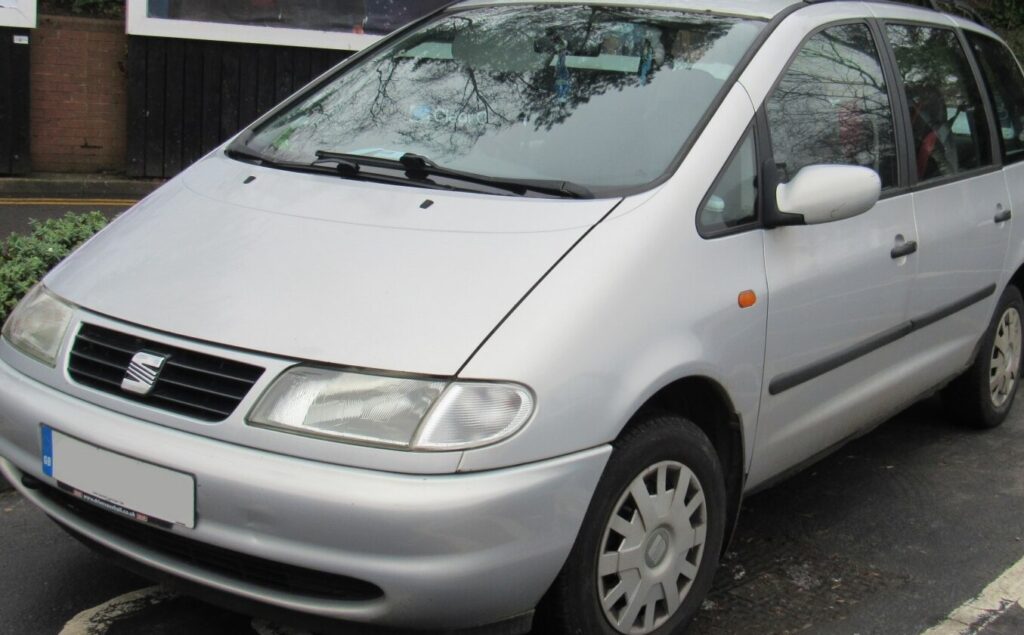
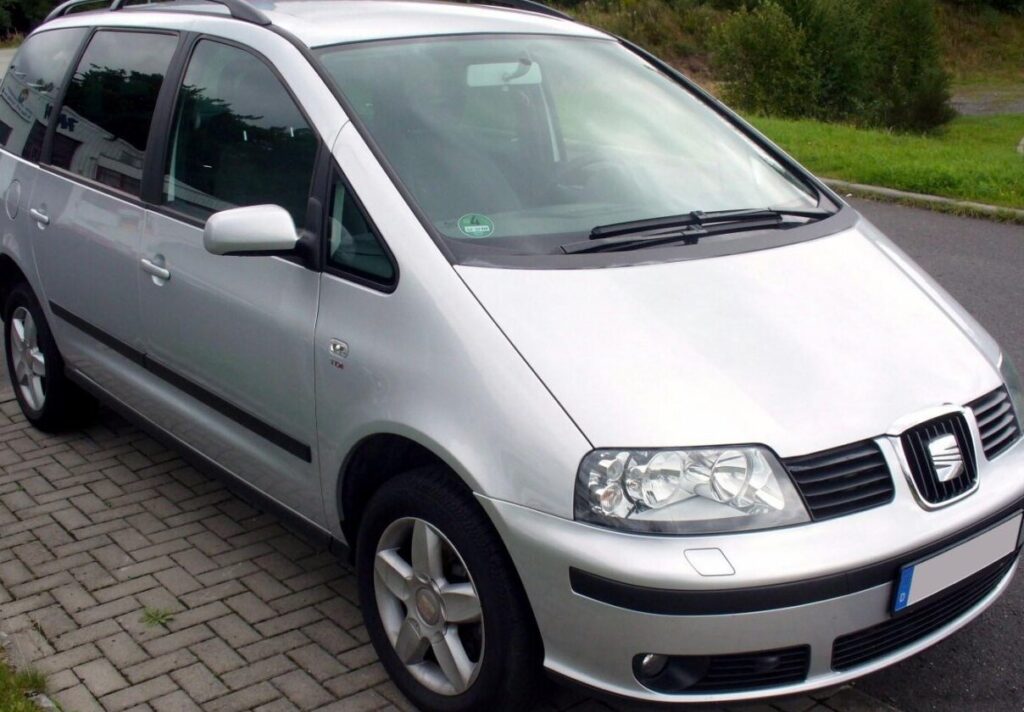
The Seat Alhambra II (7N) 1.4 TSI 150 hp Ecomotive 7-seat model, produced from May 2011 to 2015, represents a significant iteration of Seat’s large MPV offering. Positioned as a fuel-efficient option within the Alhambra range, it aimed to balance practicality, space, and reasonable running costs. The 7N generation Alhambra, co-developed with Volkswagen (sharing its platform with the VW Sharan), was designed to compete with established MPVs like the Ford Galaxy and Renault Espace, offering a seven-seat configuration and a focus on family transport. This particular variant, with its 1.4 TSI engine and Ecomotive designation, targeted buyers seeking lower emissions and improved fuel economy without sacrificing too much performance.
Powertrain & Engine Architecture
The heart of the Alhambra 1.4 TSI Ecomotive is the CAVA, CNWB, or CTHA engine code, a 1.4-liter turbocharged four-cylinder gasoline engine. This engine is notable for its combination of turbocharging and direct fuel injection, a configuration designed to deliver both performance and efficiency. The engine utilizes a twin-charger system – a supercharger for low-end torque and a turbocharger for higher-speed power. This setup minimizes turbo lag and provides a relatively linear power delivery. The direct injection system precisely meters fuel into the cylinders, improving combustion efficiency and reducing emissions. The engine’s 1390cc displacement produces 150 horsepower at 5800 rpm and 240 Nm (177 lb-ft) of torque between 1500 and 4000 rpm. The engine is transversely mounted at the front of the vehicle. The Alhambra 1.4 TSI Ecomotive was exclusively offered with a 6-speed manual transmission, prioritizing fuel economy over the convenience of an automatic.
Driving Characteristics
The 1.4 TSI engine in the Alhambra provides adequate performance for everyday driving, but it’s not a particularly sporty engine. Acceleration from 0-60 mph takes around 10.2 seconds, and top speed is 197 km/h (122 mph). The twin-charger system helps to mitigate turbo lag, providing a usable amount of torque from low engine speeds, which is beneficial for maneuvering a large MPV in urban environments. However, when fully loaded with passengers and luggage, the engine can feel strained, especially when overtaking or climbing hills. Compared to the more powerful 2.0 TDI diesel variants, the 1.4 TSI offers less outright performance but a smoother, quieter driving experience. The 6-speed manual transmission is well-matched to the engine, with gear ratios designed to maximize fuel efficiency and provide reasonable acceleration.
Equipment & Trim Levels
The Ecomotive trim level of the Alhambra focused on fuel efficiency and environmental friendliness. Standard equipment typically included air conditioning, alloy wheels, a radio/CD player, electric front windows, and ABS brakes. Higher trim levels, available as options, added features such as a touchscreen infotainment system, navigation, rear parking sensors, automatic climate control, and leather upholstery. The 7-seat configuration was standard, with the rear seats folding flat into the floor to maximize cargo space. Interior upholstery was typically cloth, with the option of leather upgrades. The dashboard layout was functional and straightforward, prioritizing usability over stylistic flair.
Chassis & Braking
The Alhambra II (7N) utilizes an independent suspension system on both the front and rear axles. The front suspension employs McPherson struts with coil springs and an anti-roll bar, while the rear suspension features an independent coil spring setup. This configuration provides a comfortable ride quality, although it’s not particularly sporty. Braking duties are handled by ventilated discs on the front wheels and solid discs on the rear. ABS (Anti-lock Braking System) is standard. The Alhambra’s weight (approximately 1771 kg / 3904 lbs) necessitates a robust braking system to ensure safe stopping distances.
Market Reception & Comparison
The Seat Alhambra 1.4 TSI Ecomotive was generally well-received by critics as a practical and fuel-efficient MPV. However, some reviewers noted that the engine could feel underpowered when the vehicle was fully loaded. Compared to the diesel variants, the 1.4 TSI offered lower running costs in terms of fuel, but potentially higher maintenance costs due to the complexity of the twin-charger system. The Alhambra’s spacious interior and versatile seating configuration were consistently praised. Fuel economy figures of around 32.7 US mpg (combined) were competitive for its class.
Legacy
The 1.4 TSI engine, while generally reliable, can be prone to issues with the turbocharger and supercharger systems if not properly maintained. Regular oil changes and adherence to the manufacturer’s service schedule are crucial. The Alhambra II (7N) has proven to be a durable and practical MPV, and well-maintained examples continue to be popular on the used car market. The Ecomotive variant, with its focus on fuel efficiency, remains an attractive option for buyers seeking a spacious and economical family vehicle. The 1.4 TSI engine, despite its complexity, offers a good balance of performance and efficiency for those who prioritize fuel economy over outright power.