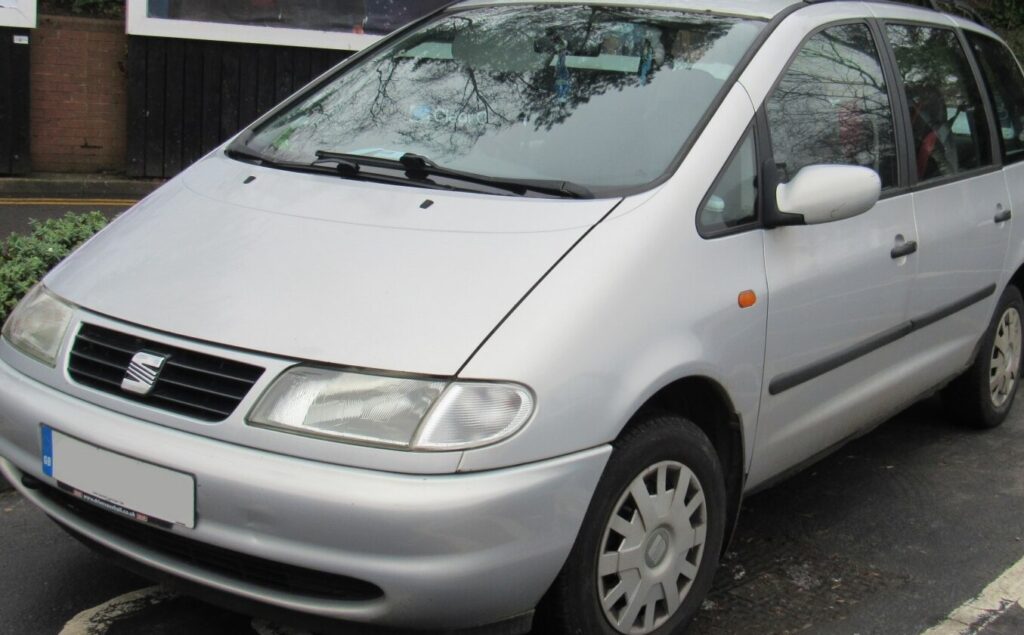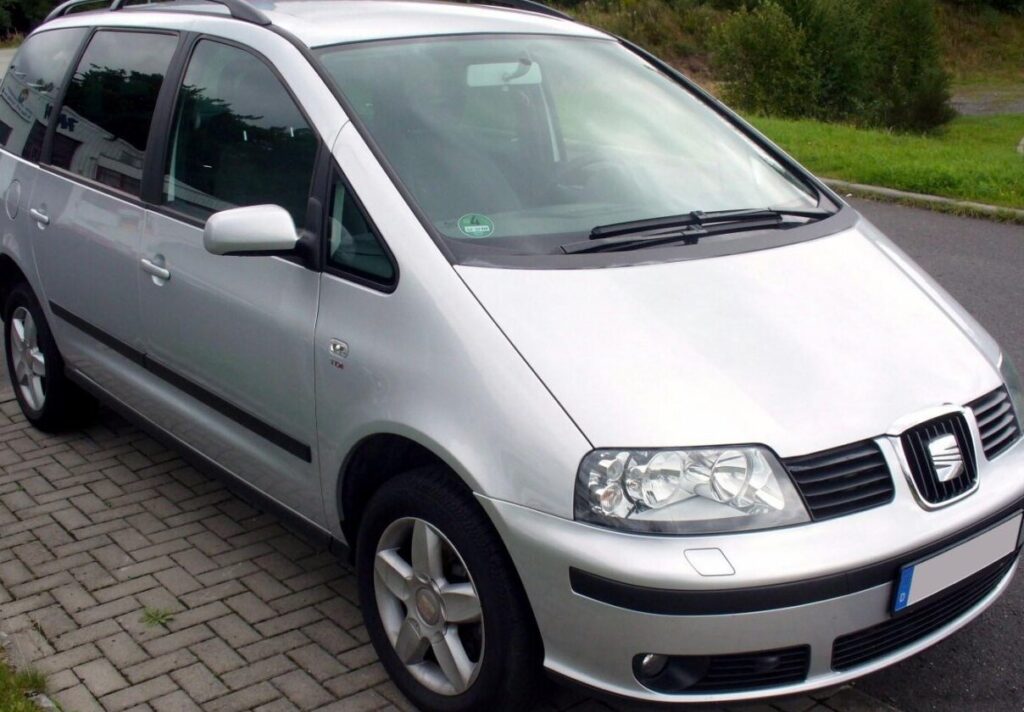
The Seat Alhambra II (7N) 1.4 TSI 150 hp Ecomotive, produced from May 2011 to 2015, represents a significant iteration of Seat’s large MPV offering. Positioned as a fuel-efficient option within the Alhambra range, it aimed to balance practicality with reasonable running costs. The 7N generation Alhambra, co-developed with Volkswagen (sharing its platform with the VW Sharan), was designed to compete in the European minivan segment, offering a spacious and versatile vehicle for families. This particular variant, with its turbocharged engine and Ecomotive technology, was intended to appeal to buyers seeking a blend of performance and economy. It sat in the mid-range of the Alhambra lineup, offering a step up from the base models while remaining more accessible than the higher-powered trims.
Technical Specifications
| Brand | Seat |
| Model | Alhambra |
| Generation | Alhambra II (7N) |
| Type (Engine) | 1.4 TSI (150 Hp) Ecomotive Technology |
| Start of production | May, 2011 |
| End of production | 2015 |
| Powertrain Architecture | Internal Combustion engine |
| Body type | Minivan, MPV |
| Seats | 5 |
| Doors | 5 |
| Fuel consumption (urban) | 9.2 l/100 km (25.6 US mpg, 30.7 UK mpg, 10.9 km/l) |
| Fuel consumption (extra urban) | 6.1 l/100 km (38.6 US mpg, 46.3 UK mpg, 16.4 km/l) |
| Fuel consumption (combined) | 7.2 l/100 km (32.7 US mpg, 39.2 UK mpg, 13.9 km/l) |
| CO2 emissions | 167 g/km |
| Fuel Type | Petrol (Gasoline) |
| Acceleration 0 – 100 km/h | 10.7 sec |
| Acceleration 0 – 62 mph | 10.7 sec |
| Acceleration 0 – 60 mph | 10.2 sec |
| Maximum speed | 197 km/h (122.41 mph) |
| Emission standard | Euro 5 |
| Weight-to-power ratio | 11.5 kg/Hp, 87.1 Hp/tonne |
| Weight-to-torque ratio | 7.2 kg/Nm, 139.3 Nm/tonne |
| Power | 150 Hp @ 5800 rpm |
| Power per litre | 107.9 Hp/l |
| Torque | 240 Nm @ 1500-4000 rpm (177.01 lb.-ft. @ 1500-4000 rpm) |
| Engine layout | Front, Transverse |
| Engine Model/Code | CAVA, CNWB, CTHA |
| Engine displacement | 1390 cm3 (84.82 cu. in.) |
| Number of cylinders | 4 |
| Engine configuration | Inline |
| Cylinder Bore | 76.5 mm (3.01 in.) |
| Piston Stroke | 75.6 mm (2.98 in.) |
| Compression ratio | 10:1 |
| Number of valves per cylinder | 4 |
| Fuel injection system | Direct injection |
| Engine aspiration | Turbocharging and Supercharger, Intercooler |
| Engine oil capacity | 4 l (4.23 US qt | 3.52 UK qt) |
| Coolant | 5.6 l (5.92 US qt | 4.93 UK qt) |
| Kerb Weight | 1723 kg (3798.56 lbs.) |
| Max. weight | 2290 kg (5048.59 lbs.) |
| Max load | 567 kg (1250.02 lbs.) |
| Trunk (boot) space – minimum | 809 l (28.57 cu. ft.) |
| Trunk (boot) space – maximum | 2430 l (85.81 cu. ft.) |
| Fuel tank capacity | 70 l (18.49 US gal | 15.4 UK gal) |
| Permitted trailer load with brakes (12%) | 1800 kg (3968.32 lbs.) |
| Length | 4854 mm (191.1 in.) |
| Width | 1904 mm (74.96 in.) |
| Height | 1720 mm (67.72 in.) |
| Wheelbase | 2919 mm (114.92 in.) |
| Front track | 1557 mm (61.3 in.) |
| Rear (Back) track | 1605 mm (63.19 in.) |
| Minimum turning circle | 11.9 m (39.04 ft.) |
| Drivetrain Architecture | Front wheel drive |
| Number of gears and type of gearbox | 6 gears, manual transmission |
| Front suspension | Independent, type McPherson with coil spring and anti-roll bar |
| Rear suspension | Independent coil spring |
| Front brakes | Ventilated discs, 314 mm |
| Rear brakes | Disc, 282 mm |
| Assisting systems | ABS (Anti-lock braking system) |
| Steering type | Steering rack and pinion |
| Power steering | Electric Steering |
| Tires size | 205/60 R16; 215/60 R16; 225/50 R17 |
| Wheel rims size | 6.5J x 16 |
Powertrain & Engine Architecture
The heart of the Alhambra 1.4 TSI Ecomotive is the CAVA, CNWB, or CTHA engine code, a 1.4-liter inline-four cylinder gasoline engine. This engine is notable for its combination of turbocharging and supercharging – a relatively uncommon setup. The supercharger provides immediate boost at low engine speeds, eliminating turbo lag and improving responsiveness during initial acceleration. As engine speed increases, the turbocharger takes over, delivering higher boost levels for sustained power. Direct fuel injection further enhances efficiency and performance. The engine produces 150 horsepower at 5800 rpm and 240 Nm (177 lb-ft) of torque between 1500 and 4000 rpm. This engine was paired with a 6-speed manual transmission, which was the standard offering for this variant. The Ecomotive designation indicates the inclusion of fuel-saving technologies, such as start-stop functionality and regenerative braking, aimed at reducing emissions and improving fuel economy.
Driving Characteristics
The 1.4 TSI engine, while offering a reasonable level of performance, wasn’t designed for outright speed. Acceleration from 0-100 km/h (0-62 mph) takes around 10.7 seconds. The strength of this engine lies in its mid-range torque, making it well-suited for everyday driving and carrying a full load of passengers and luggage. The 6-speed manual transmission provides adequate control, but the engine can feel strained when pushed hard, particularly when fully loaded or climbing hills. Compared to the more powerful 2.0 TDI diesel variants, the 1.4 TSI offers less overall grunt, but it provides a smoother and quieter driving experience. The gear ratios are tuned for fuel efficiency, prioritizing comfortable cruising over rapid acceleration.
Equipment & Trim Levels
The Alhambra 1.4 TSI Ecomotive typically came with a respectable level of standard equipment. This included air conditioning, electric windows, central locking, a basic audio system, and alloy wheels. Safety features such as ABS, traction control, and multiple airbags were also standard. Higher trim levels offered options like climate control, a more advanced infotainment system with navigation, parking sensors, and leather upholstery. The interior generally featured durable, family-friendly materials, with a focus on practicality rather than luxury. The dashboard layout was functional and straightforward, prioritizing ease of use.
Chassis & Braking
The Alhambra II (7N) utilizes an independent suspension setup, with McPherson struts at the front and a multi-link system at the rear. This provides a comfortable ride quality, absorbing bumps and imperfections in the road effectively. The front brakes are ventilated discs, providing ample stopping power, while the rear brakes are solid discs. The steering is electrically assisted, offering a light and precise feel. Stabilizer bars are fitted to both the front and rear axles to reduce body roll during cornering. The Alhambra’s weight, around 1723 kg (3798.56 lbs), contributes to a feeling of stability, but also impacts agility.
Market Reception & Comparison
The Seat Alhambra 1.4 TSI Ecomotive was generally well-received by critics as a practical and fuel-efficient MPV. However, some reviewers noted that the engine could feel underpowered when the vehicle was fully loaded. Compared to the diesel variants, the 1.4 TSI offered lower running costs in terms of fuel, but potentially higher maintenance costs due to the complexity of the turbocharged engine. The fuel economy figures of 7.2 l/100 km (32.7 US mpg) were competitive for its class, making it an attractive option for families seeking to minimize their fuel bills.
Legacy
The 1.4 TSI engine, while generally reliable, is known to require regular maintenance, particularly regarding the timing chain. The Alhambra II (7N) as a whole has proven to be a durable and practical vehicle, and well-maintained examples continue to be sought after in the used car market. The Ecomotive technology, while not groundbreaking, contributed to the Alhambra’s appeal as a fuel-efficient MPV. Today, these vehicles represent a good value proposition for buyers seeking a spacious and versatile family vehicle, provided they are aware of the potential maintenance requirements of the 1.4 TSI engine.