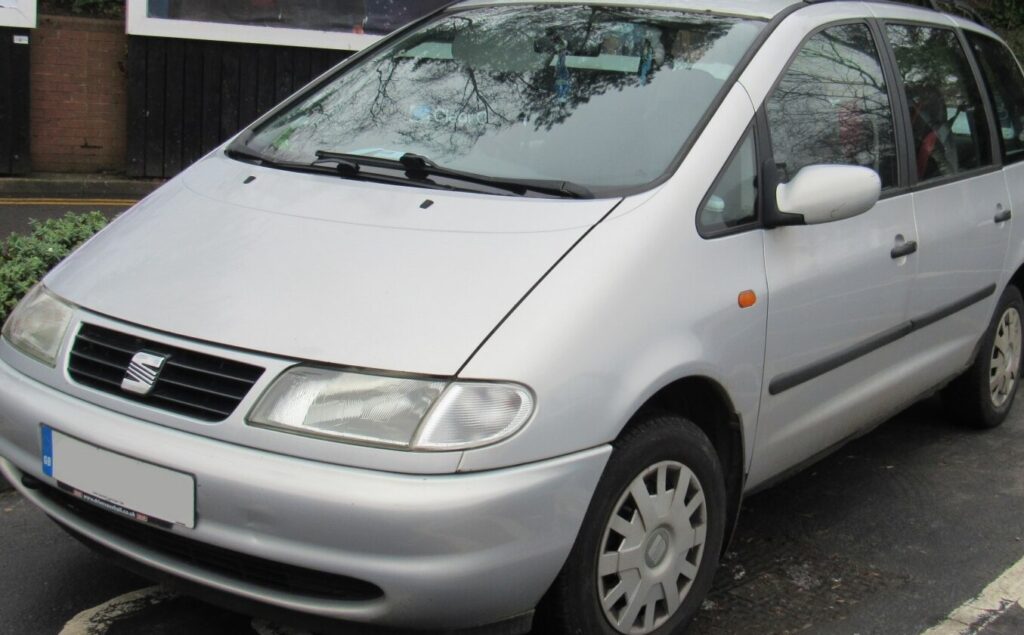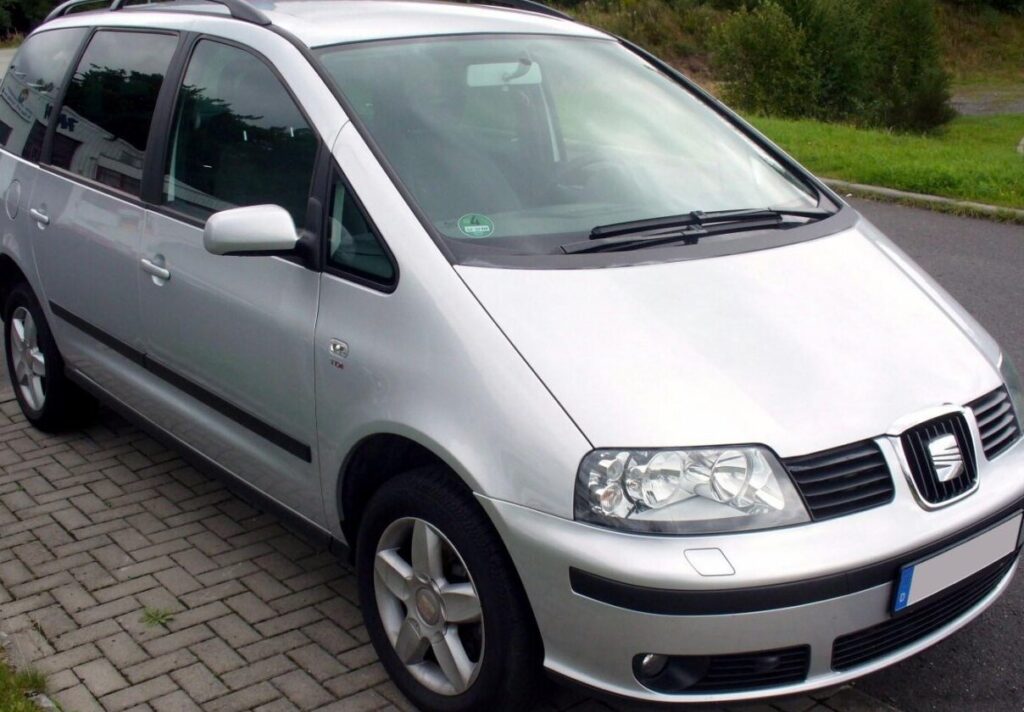
The Seat Alhambra II (7N) 2.0 TDI 136 hp 7-seat variant was produced from June 2010 to 2015. Positioned as a mid-range offering within the second generation Alhambra lineup (7N, sharing a platform with the Volkswagen Sharan and Ford Galaxy), it aimed to balance fuel efficiency, practicality, and affordability for families. The 7N generation represented a significant upgrade over its predecessor, offering increased space, improved safety features, and a more refined driving experience. This particular engine and transmission combination was a popular choice in European markets, offering a compromise between the lower-powered gasoline engines and the more expensive, higher-output diesel options.
Technical Specifications
| Brand | Seat |
| Model | Alhambra |
| Generation | Alhambra II (7N) |
| Type | 2.0 TDI (136 Hp) 7 Seat |
| Start of production | June, 2010 |
| End of production | 2015 |
| Powertrain Architecture | Internal Combustion engine |
| Body type | Minivan, MPV |
| Seats | 7 |
| Doors | 5 |
| Fuel consumption (urban) | 6.8 l/100 km (34.6 US mpg, 41.5 UK mpg, 14.7 km/l) |
| Fuel consumption (extra urban) | 4.8 l/100 km (49 US mpg, 58.9 UK mpg, 20.8 km/l) |
| Fuel consumption (combined) | 5.5 l/100 km (42.8 US mpg, 51.4 UK mpg, 18.2 km/l) |
| CO2 emissions | 143 g/km |
| Fuel Type | Diesel |
| Acceleration 0 – 100 km/h | 11.1 sec |
| Acceleration 0 – 62 mph | 11.1 sec |
| Acceleration 0 – 60 mph | 10.5 sec |
| Maximum speed | 192 km/h (119.3 mph) |
| Emission standard | Euro 5 |
| Weight-to-power ratio | 13.4 kg/Hp, 74.6 Hp/tonne |
| Weight-to-torque ratio | 5.7 kg/Nm, 175.6 Nm/tonne |
| Power | 136 Hp @ 4200 rpm |
| Power per litre | 69.1 Hp/l |
| Torque | 320 Nm @ 1750-2500 rpm (236.02 lb.-ft. @ 1750-2500 rpm) |
| Engine layout | Front, Transverse |
| Engine Model/Code | CFFA |
| Engine displacement | 1968 cm3 (120.09 cu. in.) |
| Number of cylinders | 4 |
| Engine configuration | Inline |
| Cylinder Bore | 81 mm (3.19 in.) |
| Piston Stroke | 95.5 mm (3.76 in.) |
| Compression ratio | 16.5:1 |
| Number of valves per cylinder | 4 |
| Fuel injection system | Diesel Commonrail |
| Engine aspiration | Turbocharger, Intercooler |
| Engine oil capacity | 4.3 l (4.54 US qt | 3.78 UK qt) |
| Coolant | 8 l (8.45 US qt | 7.04 UK qt) |
| Kerb Weight | 1822 kg (4016.82 lbs.) |
| Max. weight | 2500 kg (5511.56 lbs.) |
| Max load | 678 kg (1494.73 lbs.) |
| Trunk (boot) space – minimum | 267 l (9.43 cu. ft.) |
| Trunk (boot) space – maximum | 2297 l (81.12 cu. ft.) |
| Fuel tank capacity | 70 l (18.49 US gal | 15.4 UK gal) |
| Length | 4854 mm (191.1 in.) |
| Width | 1904 mm (74.96 in.) |
| Height | 1720 mm (67.72 in.) |
| Wheelbase | 2919 mm (114.92 in.) |
| Front track | 1569 mm (61.77 in.) |
| Rear (Back) track | 1617 mm (63.66 in.) |
| Minimum turning circle | 11.9 m (39.04 ft.) |
| Drivetrain Architecture | Front wheel drive |
| Number of gears | 6 gears, manual transmission |
| Front suspension | Independent, type McPherson with coil spring and anti-roll bar |
| Rear suspension | Independent coil spring |
| Front brakes | Ventilated discs |
| Rear brakes | Disc |
| Tires size | 205/60 R16 96H; 215/60 R16 95H; 225/50 R17 98H; 225/45 R18 95W |
| Wheel rims size | 6.5J x 16; 7.0J x 17; 7.5J x 18 |
Powertrain & Engine Architecture
The Alhambra 2.0 TDI 136 hp utilizes the CFFA engine code, a member of the Volkswagen Group’s common rail diesel engine family. This 1968cc inline-four cylinder engine features a turbocharger with an intercooler to enhance power and efficiency. The engine employs a 16.5:1 compression ratio and four valves per cylinder, contributing to its relatively high output for its displacement. Fuel is delivered via a common rail direct injection system, allowing for precise fuel metering and optimized combustion. The engine’s design prioritizes torque delivery at lower RPMs, making it well-suited for hauling passengers and cargo. The six-speed manual transmission was the standard offering, providing a good balance between fuel economy and driver control.
Driving Characteristics
The 136 hp 2.0 TDI engine in the Alhambra provided adequate, though not exhilarating, performance. Acceleration from 0-60 mph took around 10.5 seconds, and top speed was approximately 119 mph. The engine’s strength lay in its mid-range torque, making overtaking and highway cruising relatively effortless. Compared to the more powerful 170 hp TDI variant, the 136 hp version felt noticeably less responsive, particularly when fully loaded with passengers and luggage. However, the lower power output also translated to improved fuel economy. The manual transmission offered precise shifts, and the gear ratios were well-matched to the engine’s torque curve. The Alhambra’s suspension provided a comfortable ride, absorbing bumps and imperfections in the road effectively, though it wasn’t particularly sporty in handling.
Equipment & Trim Levels
The 2.0 TDI 136 hp Alhambra typically came with a respectable level of standard equipment. This included air conditioning, electric front windows, central locking, a basic audio system, and ABS brakes. Higher trim levels, such as the Stylance and Reference, added features like alloy wheels, rear parking sensors, a multi-function steering wheel, and upgraded upholstery. Optional extras included a navigation system, leather seats, a panoramic sunroof, and a DVD entertainment system for rear passengers. Interior upholstery was typically cloth, with the option of leather on higher trims. The dashboard layout was functional and straightforward, prioritizing ease of use over stylistic flair.
Chassis & Braking
The Alhambra 7N utilized a McPherson strut front suspension and an independent coil spring rear suspension. This setup provided a good balance between ride comfort and handling stability. The front brakes were ventilated discs, while the rear brakes were solid discs. ABS (Anti-lock Braking System) was standard, enhancing braking performance and safety. The Alhambra’s weight, around 1822 kg (4017 lbs), meant that the braking system needed to work effectively to provide adequate stopping power. Stabilizer bars were fitted to both the front and rear axles to reduce body roll during cornering.
Market Reception & Comparison
The Seat Alhambra 2.0 TDI 136 hp was generally well-received by automotive critics as a practical and economical family vehicle. It was praised for its spacious interior, comfortable ride, and good fuel economy. However, some reviewers noted that the engine could feel underpowered when fully loaded. Compared to the Volkswagen Sharan and Ford Galaxy, which shared the same platform, the Alhambra often offered a more competitive price point. The 136 hp TDI variant was positioned as a more affordable alternative to the higher-output TDI models, appealing to buyers who prioritized fuel efficiency and practicality over outright performance. Reliability was generally good, though like all diesel engines, it was susceptible to issues with the diesel particulate filter (DPF) if not driven on longer journeys regularly.
Legacy
The Seat Alhambra 2.0 TDI 136 hp has proven to be a relatively reliable and durable vehicle. On the used car market, these models are often sought after for their practicality and affordability. The CFFA engine, while not without its potential issues (such as DPF clogging and turbocharger wear), is generally considered to be robust and long-lasting if properly maintained. Regular servicing, including oil changes and filter replacements, is crucial for ensuring the longevity of this powertrain. Today, the Alhambra 7N remains a popular choice for families seeking a spacious and economical MPV.