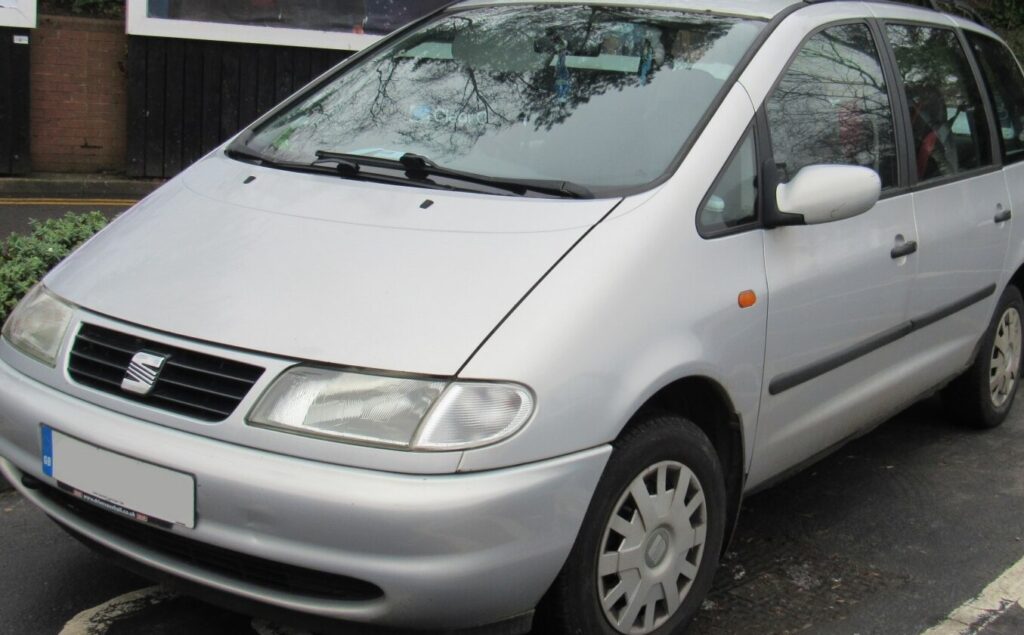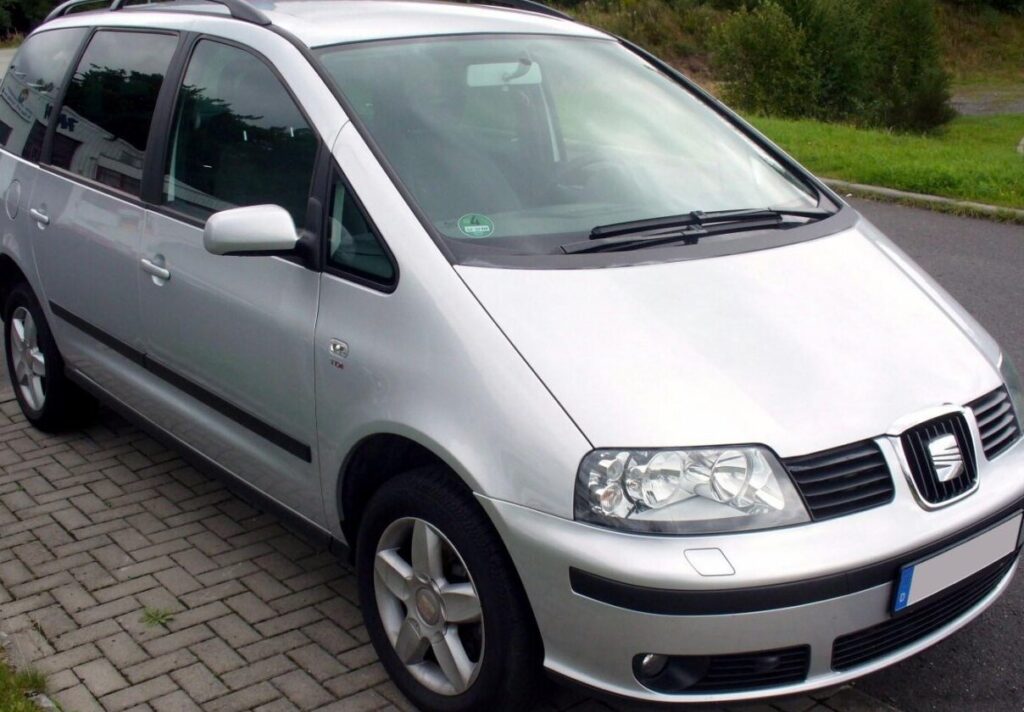
The Seat Alhambra II (7N) 2.0 TDI 140 hp 4Drive 7-seat model, produced from June 2010 to 2015, represents a significant iteration of Seat’s large MPV offering. Positioned within the second generation of the Alhambra (7N series), this variant aimed to provide a balance between fuel efficiency, practicality, and all-weather capability. The Alhambra, developed in collaboration with Volkswagen and Ford (sharing a platform with the VW Sharan and Ford Galaxy), was primarily marketed in Europe as a spacious and versatile family vehicle. This specific 2.0 TDI 4Drive trim occupied a mid-range position in the Alhambra lineup, offering a step up in performance and traction compared to the base models while remaining more accessible than the higher-powered variants.
Technical Specifications
| Brand | Seat |
| Model | Alhambra |
| Generation | Alhambra II (7N) |
| Type | 2.0 TDI (140 Hp) 4Drive 7 Seat |
| Start of production | June, 2010 |
| End of production | 2015 |
| Powertrain Architecture | Internal Combustion engine |
| Body type | Minivan, MPV |
| Seats | 7 |
| Doors | 5 |
| Fuel consumption (urban) | 7.5 l/100 km (31.4 US mpg, 37.7 UK mpg, 13.3 km/l) |
| Fuel consumption (extra urban) | 5.4 l/100 km (43.6 US mpg, 52.3 UK mpg, 18.5 km/l) |
| Fuel consumption (combined) | 6.2 l/100 km (37.9 US mpg, 45.6 UK mpg, 16.1 km/l) |
| CO2 emissions | 162 g/km |
| Fuel Type | Diesel |
| Acceleration 0 – 100 km/h | 11.4 sec |
| Acceleration 0 – 62 mph | 11.4 sec |
| Acceleration 0 – 60 mph | 10.8 sec |
| Maximum speed | 191 km/h (118.68 mph) |
| Emission standard | Euro 5 |
| Weight-to-power ratio | 13.9 kg/Hp, 72.1 Hp/tonne |
| Weight-to-torque ratio | 6.1 kg/Nm, 164.8 Nm/tonne |
| Power | 140 Hp @ 4200 rpm |
| Power per litre | 71.1 Hp/l |
| Torque | 320 Nm @ 1750-2500 rpm (236.02 lb.-ft. @ 1750-2500 rpm) |
| Engine layout | Front, Transverse |
| Engine Model/Code | CFFB |
| Engine displacement | 1968 cm3 (120.09 cu. in.) |
| Number of cylinders | 4 |
| Engine configuration | Inline |
| Cylinder Bore | 81 mm (3.19 in.) |
| Piston Stroke | 95.5 mm (3.76 in.) |
| Compression ratio | 16.5:1 |
| Number of valves per cylinder | 4 |
| Fuel injection system | Diesel Commonrail |
| Engine aspiration | Turbocharger, Intercooler |
| Engine oil capacity | 4.3 l (4.54 US qt | 3.78 UK qt) |
| Coolant | 8 l (8.45 US qt | 7.04 UK qt) |
| Kerb Weight | 1942 kg (4281.38 lbs.) |
| Max. weight | 2580 kg (5687.93 lbs.) |
| Max load | 638 kg (1406.55 lbs.) |
| Trunk (boot) space – minimum | 267 l (9.43 cu. ft.) |
| Trunk (boot) space – maximum | 2297 l (81.12 cu. ft.) |
| Fuel tank capacity | 70 l (18.49 US gal | 15.4 UK gal) |
| Length | 4854 mm (191.1 in.) |
| Width | 1904 mm (74.96 in.) |
| Height | 1720 mm (67.72 in.) |
| Wheelbase | 2919 mm (114.92 in.) |
| Front track | 1569 mm (61.77 in.) |
| Rear (Back) track | 1617 mm (63.66 in.) |
| Minimum turning circle | 11.9 m (39.04 ft.) |
| Drive wheel | All wheel drive (4×4) |
| Number of gears | 6 gears, manual transmission |
| Front suspension | Independent, type McPherson with coil spring and anti-roll bar |
| Rear suspension | Independent coil spring |
| Front brakes | Ventilated discs, 314 mm |
| Rear brakes | Disc, 282 mm |
| Assisting systems | ABS (Anti-lock braking system) |
| Steering type | Steering rack and pinion |
| Power steering | Electric Steering |
| Tires size | 205/60 R16 96H; 215/60 R16 95H; 225/50 R17 98H; 225/45 R18 95W |
| Wheel rims size | 6.5J x 16; 7.0J x 17; 7.5J x 18 |
Powertrain & Engine Architecture
The heart of the Alhambra 2.0 TDI 140 hp is the CFFB engine code, a 1968cc inline-four cylinder diesel engine. This engine utilizes a common rail direct injection system, delivering fuel at extremely high pressure for optimized combustion. A turbocharger with an intercooler is employed to boost power output and improve efficiency. The engine features four valves per cylinder, contributing to its breathing efficiency. The 16.5:1 compression ratio is typical for a diesel engine, maximizing energy extraction from the fuel. The engine is transversely mounted in the front of the vehicle. The 6-speed manual transmission was standard, providing a good balance between fuel economy and driver control. The 4Drive all-wheel-drive system uses a viscous coupling to distribute torque between the front and rear axles, enhancing traction in slippery conditions.
Driving Characteristics
The 140 hp output, coupled with 320 Nm of torque available from 1750-2500 rpm, provided adequate performance for everyday driving and long-distance journeys. While not particularly sporty, the Alhambra 2.0 TDI offered sufficient power for overtaking and maintaining highway speeds, even when fully loaded. The manual transmission allowed for precise gear selection, but the gear ratios were tuned more for fuel economy than outright acceleration. Compared to the higher-output 170 hp TDI version, this variant felt noticeably less responsive, particularly when climbing hills or carrying a full complement of passengers. However, the lower power output also contributed to slightly better fuel economy. The 4Drive system provided enhanced stability and grip, especially on wet or loose surfaces, making it a safer and more confident option for drivers in regions with inclement weather.
Equipment & Trim Levels
The Alhambra 2.0 TDI 4Drive 7-seat typically came equipped with a respectable level of standard features. These included air conditioning, electric front windows, central locking, and an audio system with CD player. Higher trim levels, often denoted by “Style” or “Sport” designations, added features such as alloy wheels, rear parking sensors, cruise control, and upgraded interior upholstery. Optional extras included a panoramic sunroof, leather seats, a navigation system, and a rear entertainment system. Interior trim generally featured durable cloth upholstery, with plastic accents on the dashboard and door panels. The dashboard layout was functional and straightforward, prioritizing usability over aesthetic flair.
Chassis & Braking
The Alhambra’s chassis featured independent suspension all around, with McPherson struts at the front and a multi-link setup at the rear. This configuration provided a comfortable ride quality, absorbing bumps and imperfections in the road surface effectively. The front brakes were ventilated discs, providing ample stopping power, while the rear brakes were solid discs. Anti-lock Braking System (ABS) was standard, enhancing safety during emergency braking maneuvers. Stabilizer bars were fitted to both the front and rear axles to reduce body roll during cornering. The steering was rack and pinion with electric power assistance, offering a light and responsive feel.
Market Reception & Comparison
The Seat Alhambra 2.0 TDI 4Drive was generally well-received by automotive critics as a practical and versatile MPV. Its spacious interior, comfortable ride, and all-wheel-drive capability were praised. However, some reviewers noted that the interior design was somewhat bland and that the driving experience lacked the dynamism of some competitors. Compared to the front-wheel-drive versions, the 4Drive model offered superior traction and handling, but at the expense of slightly increased fuel consumption and weight. Against rivals like the VW Sharan and Ford Galaxy, the Alhambra offered a similar package, often at a slightly more competitive price point.
Legacy
The CFFB engine, while generally reliable, is known to require regular maintenance, particularly regarding the diesel particulate filter (DPF). Proper servicing and the use of high-quality diesel fuel are crucial to prevent DPF blockages and ensure long-term engine health. The 6-speed manual transmission is also considered durable, but clutch wear should be monitored, especially with frequent use in urban environments. Today, the Alhambra 2.0 TDI 4Drive represents a relatively affordable and practical option in the used MPV market. Its spacious interior, all-wheel-drive capability, and reasonable running costs make it a popular choice for families and those requiring a versatile vehicle for both work and leisure.